
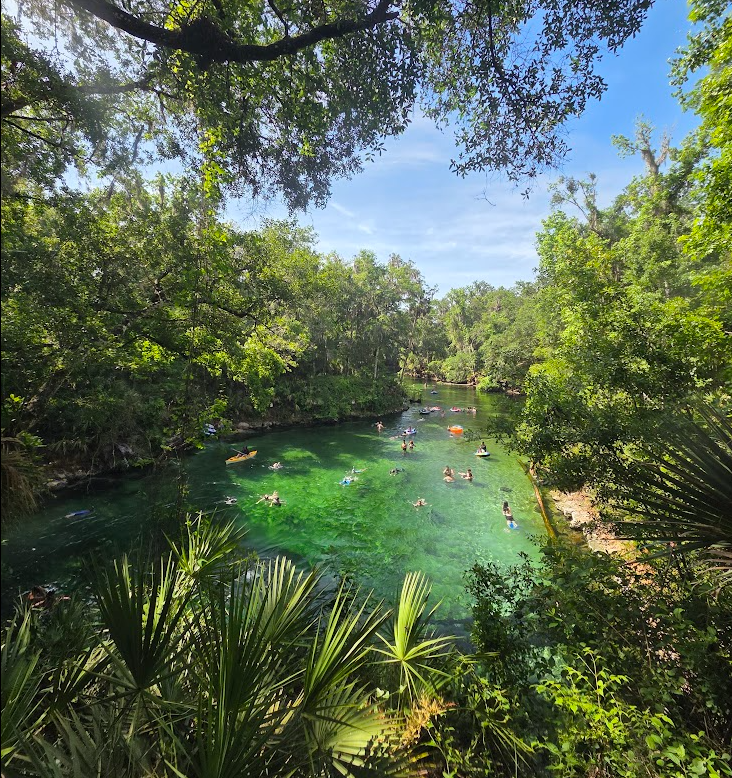
If you’ve ever wanted swim alongside manatees, tube a crystal-clear spring run, hike through Florida scrubs, and reminisce in a 150-year-old house that once welcomed steamboats on the St. Johns River – all in a single day – then it’s time to visit Blue Spring State Park.
Less than 35 miles north of Orlando, this first-magnitude spring is one of the best places in the world to see manatees.
Quick Facts
- Location: Orange City, FL (35 miles north of Orlando)
- Water Temp: 72°F year-round
- Entrance Fee: $6 per vehicle
- Reservations: Not required
- Hours: Open daily from 8 am to sundown, 365 days a year
- Activities: Swimming, Snorkeling, Scuba Diving, Tubing, Kayaking, Canoeing, Paddleboarding, hiking, biking, fishing, camping, boat tours
- Wildlife: Manatees, gar, bass, mullet, turtles, gators, otters, deer, scrub jays and other birds
- Best For: Families, manatee seekers, hikers, anybody looking for a nature retreat in Central Florida
Overview
Blue Spring is not just one of Florida’s great spring state parks – it’s a full-on wildlife exhibition. Every winter, hundreds of manatees migrate upriver into the warm, 72°F waters of the spring run. This phenomenon is almost incomprehensible: in 2024, the park recorded a single-day count of 932 manatees, the highest concentration ever recorded at a single site.
This spring offers more than just manatees: it is excellent for swimming, snorkeling, hiking, and diving – even offering a quarter-mile tubing run. Year-round, the elevated boardwalk offers views of dozens to hundreds large longnose and Florida gar enjoying the spring run. Invasives are common here, and we normally see tilapia and even large pacu fish. The historic Thursby House sits on a shell mound at the confluence of the spring run and the St. Johns River, serving as a monument to pre-tourist Florida.
Blue Spring feeds the St. Johns River with over 100 million gallons per day. This state park protects over 2,600 acres of spring basin, pine scrub, oak hammock, and river frontage. In the 1970s it was dilapidated, but has turned around into a great conservation success story.
One piece of planning advice before anything else: arrive early.
Note: Blue Spring State Park is implementing a reservation system, beginning in July 2026. This should mitigate the previous issues of having to show up early and wait in line to guarantee entry.
Things to Do at Blue Spring State Park
Blue Spring offers a full calendar of activities for you to select from:
- Swimming and snorkeling in the spring run (April to mid-November)
- Tubing the short spring run (April to mid-November)
- Scuba diving (subject to conditions)
- Kayaking and canoeing on the Blue Spring Run and St. Johns River
- Paddleboarding on the river and spring run
- St. Johns River boat tours (year-round)
- Hiking – especially on the Boardwalk Trail and Pine Island Trail
- Biking on the Spring-to-Spring paved trail
- Fishing on the St. Johns River
- Manatee viewing from the boardwalk (mid-November through March)
- Thursby House tours and historical exhibits
- Wildlife watching and birding
- Firefly viewing in late March to early April
- Camping and on-site cabins
Swimming at Blue Spring State Park
Swimming season runs from April 1st to November 14th on Blue Spring’s run. The water is a shade of glowing blue-green, and the clarity lets you see every pebble and fish scale on the hundreds of gar.
Swimmers carry their tubes or themselves up the boardwalk to an entry point just below the spring boil, then float back down to the main swimming dock – a short ¼-mile journey on the water. Multiple access points let you enter and exit, and you can repeat the route to your heart’s content.
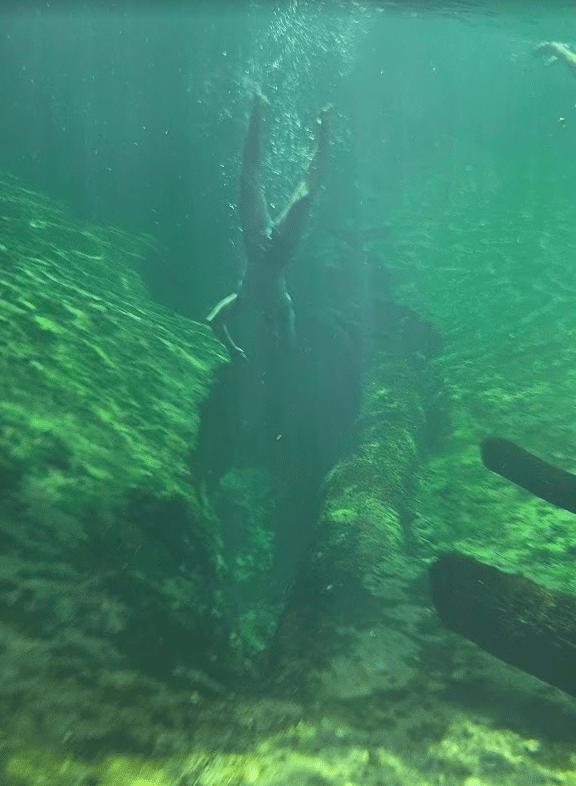
Swimming is not permitted in the spring run during manatee season from mid-November to mid-March, when the entire run is protected as a manatee refuge.
Important notes for swimmers:
- No jumping or diving (the run is shallow)
- No climbing on the spring banks or trees
- No disposable plastic bottles, grocery bags, or glass containers in the swim area
- No coolers
- No pets, radios/speakers, tobacco, or vapes in the swimming area
- Swimming after hours is prohibited
- No lifeguards are on duty – swim at your own risk
I would like to emphasize the “no climbing on the spring banks”. Nearly every time we visit, people are climbing the spring banks and jumping in. This is an issue due to erosion. The park has shut down in the past due to erosion projects, totally rebuilding the living retaining wall. Every person that climbs up pushes a little bit of dirt back into the spring run, causing damage to the bank. If it gets bad again, they will have to shut down the park again to fix it. While the park has not enforced the no climbing on the banks rule in our experience, visitors are encouraged to educate others and report offenders.
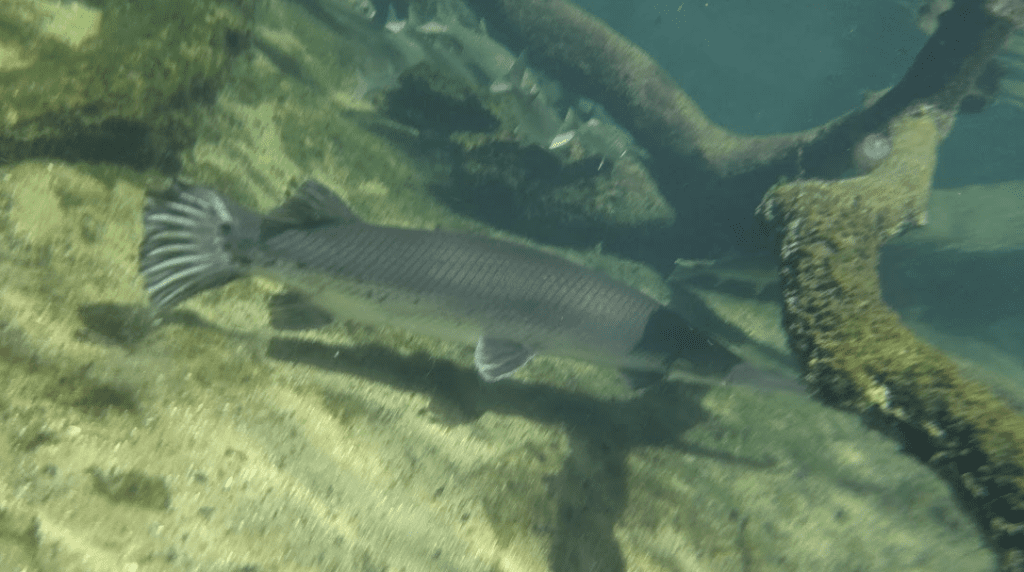
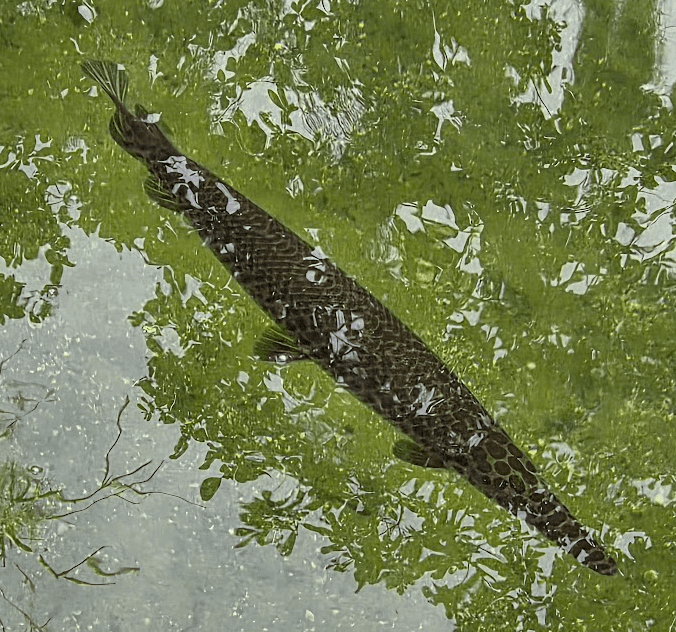
One of the best surprises of swimming at Blue Spring is the high population of huge gar – both Longnose and Florida. These prehistoric fish grow to impressive sizes in the spring run – some reaching 4 to 6 feet in length.
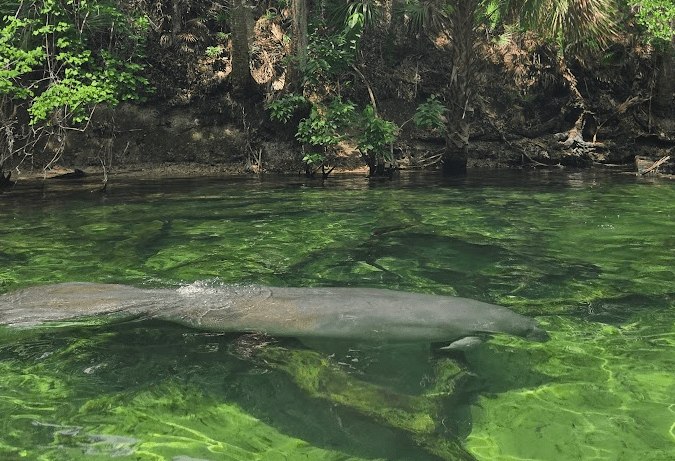
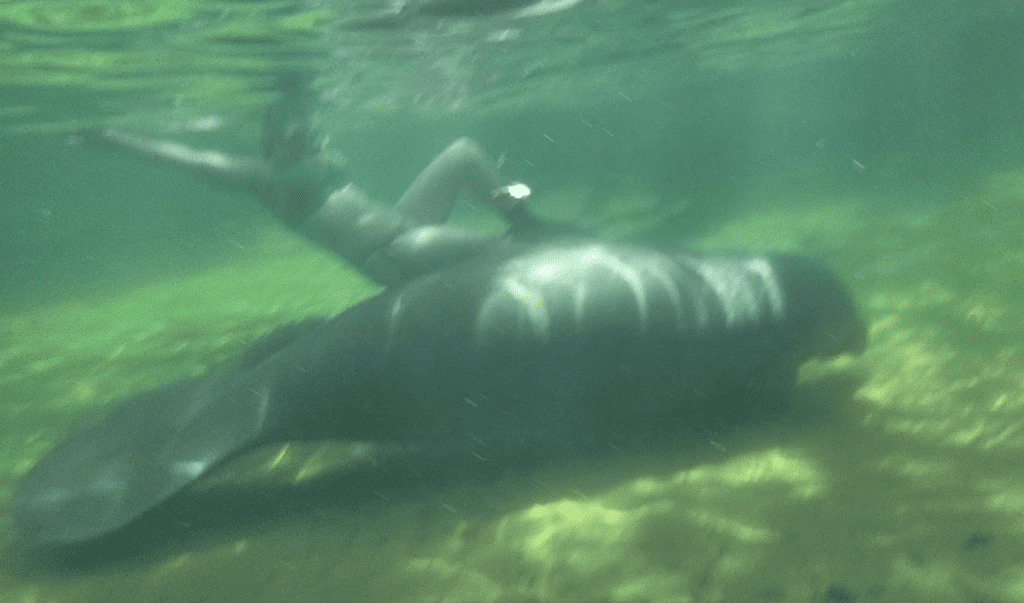
Manatees are common too. Even outside of manatee season, occasional manatees will wander into the spring run, leading to unforgettable encounters. While intentional interaction is illegal, the manatees may come up to you. They seem to especially like playing with bathing suit strings, as we found out.
The spring pool has both shallow and deeper sections, with a very deep vent suitable for diving.
Tubing the Spring Run
Someone has to say it, so I will: tubing at Rock Springs/Kelly Park is way better than at Blue Springs.
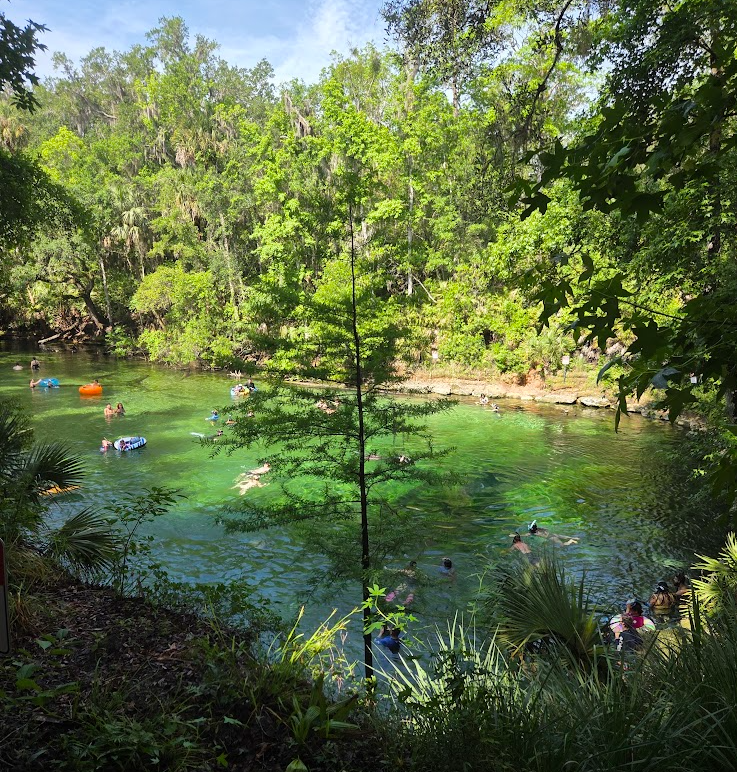
While popular at Blue Springs, the run is very short and requires walking against the 100 million gallon per day current to reach the start point. Tube rentals are available on-site, but if you are a strong swimmer, I would just float/snorkel down the run.
Having both tubed and snorkeled the run, we just snorkel it. It isn’t worth the hassle in our opinion to bring or rent tubes. After you float down the run, a journey of only several minutes, you must walk back up to the start to repeat.
Tubing is only available during swimming season, when the spring is open for water activities. During manatee season, tubing and swimming are not permitted.
Kayaking and Paddling
Kayaks and Canoes are available for rent at Blue Springs Adventures at the end of the Boardwalk Trail along the St. Johns River. Paddling adds a new perspective to the park, though access varies by season:
- Spring/Summer/Fall (swimming season): Paddlers can explore Blue Spring Run outside of the swimming hours (10am to 5pm). Paddlers should remain in their vessels, and paddling up the spring run on an early morning is said to be extraordinary.
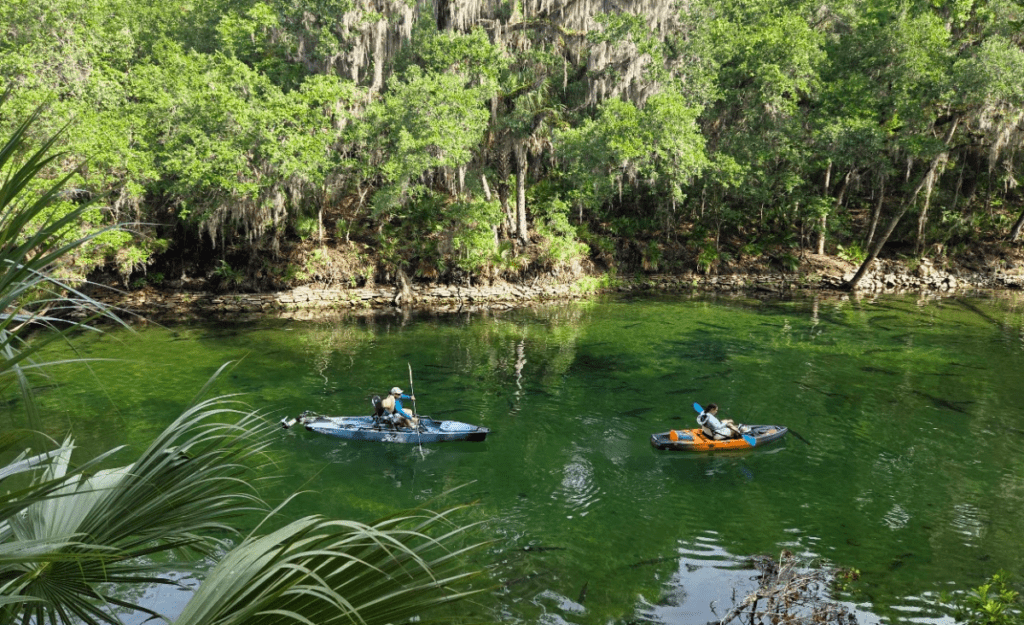
- Winter (manatee season): When the spring run is closed to water activities, paddlers can still explore the St. Johns River from the park’s launch point. Manatees frequently approach kayaks on the river, leading to profound wildlife encounters. Do not touch, feed, or pursue the manatees, observe from your vessel without chasing.
The St. Johns River Cruise is a 2-hour narrated pontoon boar tour departing from the Thursby House landing. It is available year-round at 10am and 1pm.
The Boardwalk Trail and the Thursby House
The half-mile boardwalk is the backbone of every Blue Spring visit in any season. Starting form the parking lot, it runs parallel to the entire spring run from the St. Johns River confluence all the way up top the spring vent, with multiple viewing platforms and overlooks.
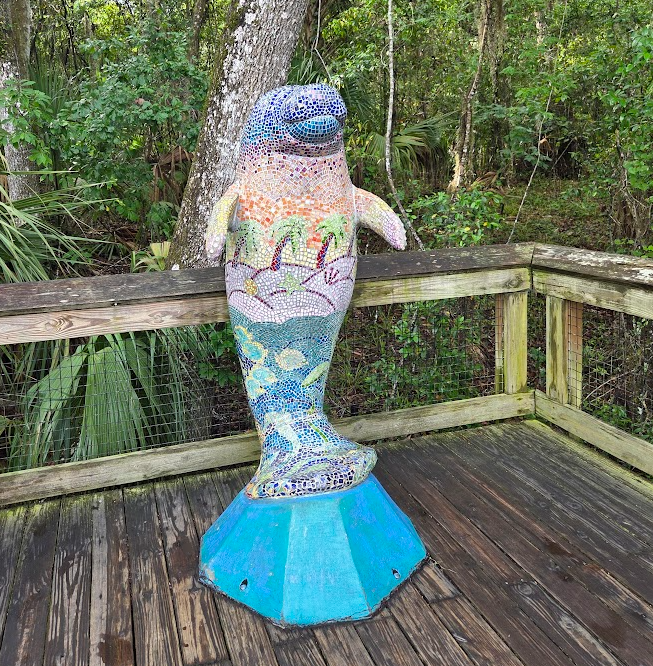
Even without manatees, you’ll see huge schools of fish, especially gar along the spring run. The boardwalk is different in each season: in summer, you’ll primarily see fish, and in winter, you’ll see up to hundreds of manatees of all sizes.
The Thursby House stands at the far end of the boardwalk and serves as a window into the old Florida that most visitors never think about. The Louis P. Thursby House was built in 1872 on a shell mound and offers a window into pioneer-era Florida.
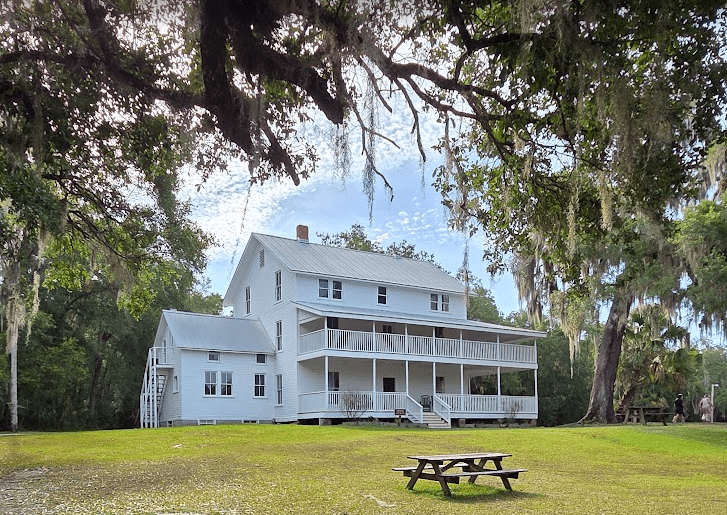
The house has been restored into a handsome white-framed structure with wraparound porches, and it honestly makes me jealous. If I lived in 1800s Florida, I would want to be at the Thursby House. Today, it is turned into a free museum listed on the National Register of Historic Places.
A Word on Manatee Season
If you’re visiting between mid-November and March, you are visiting during manatee season.
Manatees cannot tolerate cold temperatures and go to the 72°F spring when river temperatures drop to unsafe conditions.
Here’s how to see the most manatees at Blue Spring State Park:
- The colder the air and river temperature, the more manatees will congregate in the run. A hard cold front is best.
- Arrive within the first hour the park is open. The manatees may disperse into the river as the water warms with the sun, so earlier is better.
- January is the peak month.
- Check the Save the Manatee Club’s live webcam to gauge current presence and river temperature.
Remember that water activities in the spring run are prohibited during manatee season, and you must not approach, touch, or feed them.
Best Time to Visit
Honestly, Blue Spring State Park is great to visit year-round.
Here’s what to expect in different seasons:
- January: Peak Manatee Season. This is the best month to see large numbers of manatees congregate.
- Late March-Early April: Firefly Season. This is a lesser-known Blue Spring event, and the park closing time is extended for two weeks to allow visitors to witness the firefly light show.
- April-May: Swimming Season Opens. Manatees depart as the river warms, and the spring run opens for water activities. Wildflowers bloom and crowds are moderate.
- June-August: Summer. This is the hottest and the most crowded for swimming season. This is also when the spring feels the most refreshing, but I would avoid due to the crowds.
- November: Manatee Season Begins. The spring is still open for swimming until mid-month, and the first manatees begin arriving as the river cools.
Weekdays are dramatically less crowded than weekends. Tuesday and Wednesday are best for solitude.
Reservations are available as of July 2026, so book ahead to guarantee entry.
During manatee season and peak summer season, arrive by 7:30am at the latest. 6:30am-7am is safer. Get in line, relax, drink your coffee and read a book. It’s the only way to guarantee entry.
Worst Time to Visit
Overcrowded weekends, especially in the dog days of summer. Holidays are another key time to avoid due to crowds.
Entrance Fees, Hours, and Reservations
Admission: $6 per vehicle, $2 per person for pedestrians, cyclists, and extra passengers
Hours: Open daily from 8am to sundown, 365 days/year

Swimming Season: approximately April 1 – November 14
Manatee Season: approximately November 15 – Match 31
Reservations are now available for day use as of July 2026. Camping and cabins require reservations through the Florida State Parks system.
Registration is required for scuba diving, along with proof of certification and a dive partner.
Reservations are recommended for boat tours and may be used to enter even when the park is at capacity.
For the most up-to-date information, visit: https://www.floridastateparks.org/parks-and-trails/blue-spring-state-park
How to Get There
Address: 2100 W. French Avenue, Orange City, FL 32763
This park is approximately 35 miles from Orlando in Orange City.
What to Bring
Year-round:
- Camera or phone
- Good hiking shoes
- Mineral sunscreen
- Money for entry
- Water
- Snacks, lunch
- Bug Spray
- Reservation
For swimming season also bring:
- Shoes for hiking and traction on the rocky bottom as you hike up the tube run
- Tevas or Chacos are ideal so you only need to bring one pair
- Swimsuit
- Your own tube (renting is expensive)
- A small hand or battery operated air pump
- Dry bag for your phone and keys
- Towels
- Mask and Snorkel
- Change of clothes if you don’t plan to hang out to dry off
For manatee season also bring:
- Layers – winter mornings can be chilly, but you may want to shed some clothes on a longer hike
- A hat and gloves if it is especially chilly
What Not to Bring
- Glass containers
- Disposable plastic bottles and grocery bags
- Coolers
- Pets in the swimming area
- Tobacco and nicotine products including vapes
- Radios, speakers, and loud music
Tips to Avoid Crowds
- Arrive before 8am. Especially in the summer and peak manatee season.
- Camp or book a cabin. You will get the park to yourself in the early morning – best for wildlife.
- Book a bout tour. You can gain entry even when the park hits capacity.
- Visit on weekdays. Tuesday and Wednesday are the lightest crowds.
- Go in shoulder season. Late October and April-May offer the full park experience with fewer visitors.
- Check the webcam before driving to better judge timing and attendance.
- Hike the Pine Island Trail while others crowd the boardwalks. Even on capacity days, the long Pine Island Trail is nearly empty.
- For firefly viewing, book camping or cabins ahead of time.
Where to Stay Nearby
The most immersive option is to camp or stay I the cabins at Blue Spring State Park. The campground is within walking distance of the spring, and siz two-bedroom cabins are available.
Deland would be an excellent college town to stay at, packed with local restaurants, cafes, and galleries. It would also be a good place for dinner afterwards.
For more options for hotels, stay in Sanford or Lake Mary.
Nearby Things to Do
Blue Spring State Park is central to many natural and cultural Central Florida destinations suitable to parksmaxxers:
- De Leon Springs State Park (30 mins north) – famous for the spring swimming area and the Old Sugar Mill Pancake House, where you can cook your own pancakes on the griddle.
- Hontoon Island State Park (adjacent) – A peaceful island state park renowned for paddling but also available via ferry. Good for hiking, paddling, and primitive camping.
- Wekiwa Springs State Park (30 mins southwest) – Another great springs state park, this time even closer to Orlando. Exceptional hiking on the Volksmarch Trail.
- Rock Springs/Kelly Park (40 mins southwest) – Sorry Blue Springs, the Rock Springs tubing run knocks this one out of the park. This is the optimal pairing for a springs-focused trip.
- Lake Woodruff National Wildlife Refuge (20 mins north) – Undiscovered even by most locals, this offers extraordinary birding and wildlife driving loops.
- Daytona Beach (45 mins northeast) – In case you are a beach person too.
- Lyonia Preserve (20 mins east) – 360 acres of restored Florida scrub habitat in Deltona, Florida. After swimming with a manatee, head here to meet Florida’s only endemic bird: the Scrub Jay.
Other Springs Near Blue Spring State Park
If you are a springsmaxxer, check out the other springs nearby:
- De Leon Springs State Park (30 mins north): A beautiful, clear spring with a large swim area in a natural setting. This also feeds the St. Johns River and is an iconic stop for the Old Sugar Mill Restaurant.
- Wekiwa Springs State Park (30 mins southwest): Excellent swimming, kayaking, and hiking. Requires day-use reservations. If you are lucky, you will see an endangered Orlando Cave Crayfish like we did.
- Rock Springs/Kelly Park (40 mins southwest): Distinctive crystal-clear spring with one of the best tubing runs in the entire state. Show up early to guarantee entry.
- Alexander Springs (60 mins northwest): One of the most spacious and peaceful springs in the Ocala National Forest with good kayaking and camping.
- Silver Springs State Park (75 minutes northwest): One of the world’s largest springs, with famous glass-bottom boat tours, and kayaking with wild monkeys.
Hiking Trails Near Blue Spring State Park
There are a few hiking opportunities in Blue Spring State Park:
- Blue Spring Boardwalk Trail (<1 mile, easy) – The Boardwalk Trail travels parallel to Blue Spring Run and allows visitors to observe water creatures like manatees, turtles, and gar at various viewing docks. There are concessions, picnic areas, and bathrooms. I recommend it to everybody.
- Pine Island Trail (7.3 miles, easy-moderate) – This out-and-back trail heads through a scrub forest to pine flatwoods and finally arrives at the St. Johns River. It follows the perimeter of the park and is almost devoid of people, even when the park is at capacity. The trick on this trail is protecting yourself from the sun in the scrub forest area. We hoped to see scrub jays but did not. Either way, the trail was very high quality, though it was due for a controlled burn.
- Blue Spring Stark Trail (2.8 miles, easy) – This twisting, turning trail is accessible via a different entrance/parking lot. A park ranger advised us to do this on our way home from the park, as reentry to Blue Springs can be tricky. As a result, we skipped it in favor of Lyonia Preserve. Should you hike it, it consists of hardwood hammock and sandy pine flatwoods.
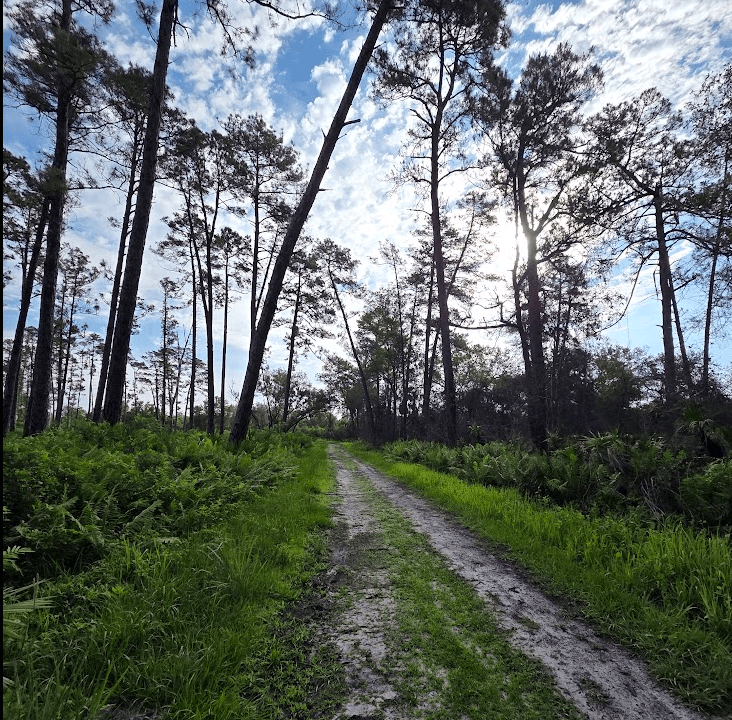
The Blue Springs Run Paddle is a 3-mile paddle trail which allows you to see a wider variety of birds and wildlife.
Restaurants Near Blue Spring State Park
The concession stand has food, snacks, drinks, and ice cream available inside the park. It is convenient for a quick snack or lunch if you forgot to grab a pub sub on the way in.
The Swamp House Grill is where I’d go for lunch or dinner in the area. After swimming in the springs, I always crave gator nuggets. This restaurant features casual waterfront dining right on the St. Johns River.
Orange City offers a variety of casual diners, and Deland has a notable small-town food scene.
Pros and Cons
Pros:
- The single best place to see wild West Indian manatees – with up to 932 recorded in a single day
- Crystal clear 72°F spring water that’s perfect for swimming in the summer and manatees in the winter
- The tube run is beautiful and endlessly repeatable
- Swimming alongside numerous large gar, occasional manatees, and persistent exotic species of fish
- The Thursby House – a remarkable insight into pioneer Florida
- The Pine Island Trail – no frills, superb hiking through diverse habitats that is crowd-free
- On-site paddle craft rentals
- Camping and cabin accommodations in the park
- Boat tours available year-round
- Scuba diving opportunities
- ADA-accessible boardwalk, fishing, and spring entry
- Firefly viewing in late March/early April as a spectacular bonus
- Leashed dogs welcome on trails and in camping areas
- Reservations are available to guarantee entry
Cons:
- The park regularly reaches capacity and closes – you must arrive early, especially in January and summers
- Advance reservations are required as of July 2026
- The spring run is closed to water activities for almost 5 months. Plan for a summer visit to swim
- No swimming with the manatees during manatee season
- No pets in the spring run
- No alcohol in the park
- The short tube run is frustratingly brief and leaves you wanting more
- Can feel crowded at the viewing areas on cold winter mornings
Sample Itinerary
Spring/Summer:
- 8:00am – enter the park
- 8:15am – hike the Pine Island Trail
- 11:00am – walk the boardwalk trail and check out the Thursby House
- 12:00pm – swim in the spring, feel the powerful water flow out oof the vent
- 12:30pm – snorkel or tube down the spring run
- 2:00pm – head out and enjoy a late lunch/early dinner
Manatee Season:
- 8:00am – enter the park
- 8:15am – walk straight to the boardwalk after parking
- 8:30am – view the manatees at each observation deck on the boardwalk, try to count them
- 10:00am – St. Johns River boat tour (make sure to book ahead of time)
- 12:00pm – lunch at the concession stand
- 12:30pm – hike the Pine Island Trail
- 3:00pm – return to the boardwalk for a final viewing
- 3:30pm – head out for an early dinner. Stop at Lyonia Preserve if you have enough energy for another hike

I left out paddling on purpose. Paddling can be fun here, but I would recommend either Emerald Cut/Rock Springs Run to Wekiva Island or a Hontoon Island paddle in favor of paddling at Blue Springs.
Frequently Asked Questions
Is Blue Spring State Park worth visiting?
Yes, this is one of the best state parks in Central Florida. The manatee viewing is one of the highest-regarded natural experiences in the American Southeast. The other best place to see manatees is at Three Sisters Springs in Crystal River. In the summer, the snorkeling provides an iconic pairing with the secluded hiking trails – especially when manatees are present.
Can you swim year-round?
No. Swimming season generally runs from April 1 to November 14. The rest of the year is manatee season, during which the entire spring run is closed to water activities like swimming, tubing, diving, snorkeling, and paddling. The main attraction during manatee season is viewing the manatees from the boardwalk.
Are there alligators?
Yes. Alligators are exceedingly common on the St. Johns River and are regularly sighted on the riverbanks and on the outside sections of the spring run. They are typically not present in the main swimming area during summer.
Do you need reservations to visit Blue Spring?
Yes, reservations are recommended and are available as of July 2026. Cabin and camping reservations can be made in advance. Visitors with camping or boat tour reservations are admitted even when the park is closed to day-use visitors.
Are there bathrooms available?
Yes, there are multiple restrooms in this park.
Can I swim with the manatees?
Yes, during swimming season. Manatees do occasionally enter the spring run and you may encounter them in the water. Intentional interaction, like touching or pursuing them is illegal. If a manatee approaches you, you are required to remain passive and let the animal control the encounter. During manatee season, no water activities are permitted.
What are the big fish in the spring?
They are mostly longnose gar, with some Florida gar mixed in. These are one of Florida’s most ancient freshwater fish, growing to 4-6 feet long and totally prehistoric. You are also likely to see bass, mullet, bluegill, and invasive species like tilapia and pacu.
Can I bring my dog to Blue Spring?
Leashed dogs are allowed in the hiking and camping areas, but not in the spring run or swim area.
When is firefly season at Blue Spring?
Firefly viewing is usually held for two weeks from late March – early April. The park closing time is extended so that visitors can see the light show after dark. Check the Florida State Parks website for specific dates each year.
Is there a live webcam for manatee viewing?
Yes. The Save the Manatee Club operates a live webcam during manatee season at savethemanatee.org. this can help to time your visit during a cold snap.
Can I scuba dive at Blue Spring?
Yes, divers must register at the entrance station and provide up-to-date registration. Divers must bring a partner. Guided scuba experiences are sometimes available.
How early should I arrive at Blue Spring?
In shoulder seasons, 30 mins is sufficient. During holidays, summer, and peak manatee viewing days, an hour or more is recommended.
Is Blue Spring or Wekiwa Springs better for manatees?
Blue Spring is far superior for manatee viewing opportunities. Three Sisters Springs in Crystal River is another excellent spot, with Hunter Springs Park as a backup if both are full.
How long should you spend at Blue Spring?
One-half day is sufficient, with a full day allowing opportunities to experience kayaking and boat tours in addition to swimming and hiking.
Our Experience at Blue Spring State Park
My wife and I visit Blue Spring State Park annually. Starting out, we would rent tubes and tube down the run, but it honestly is not worth it due to the short length of the run. Kelly Park/Rock Springs Run and the Ichetucknee River provide far better tubing experiences.
On recent visits, we show up a little early, but not as early as Kelly Park/Rock Springs required. 30-45 minutes is sufficient in shoulder seasons. We sip our coffee, eat breakfast, go for a walk, and read while waiting for the park to open.
Note: As of July 2026, reservations are now available, so there is no need to show up extra early to wait in line.
When the park opens, we start by hiking. Hiking in Florida heat is best done early, so that is what we start with. Once heated up, we jump in the springs. You walk or swim up to the vent, which is surprisingly difficult given the high current.
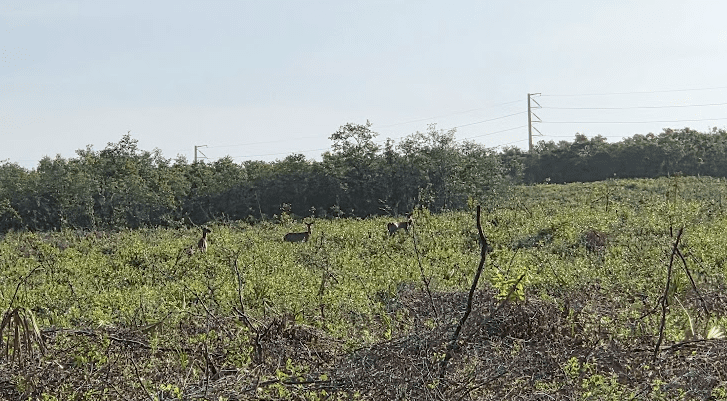
After the longer Pine Island Trail, we like to walk the boardwalk and see the Thursby House. We sit on the porch for a moment in jealousy of what life must have been like in the pioneer days, living on the spring run with the freedom to do whatever we wanted to.
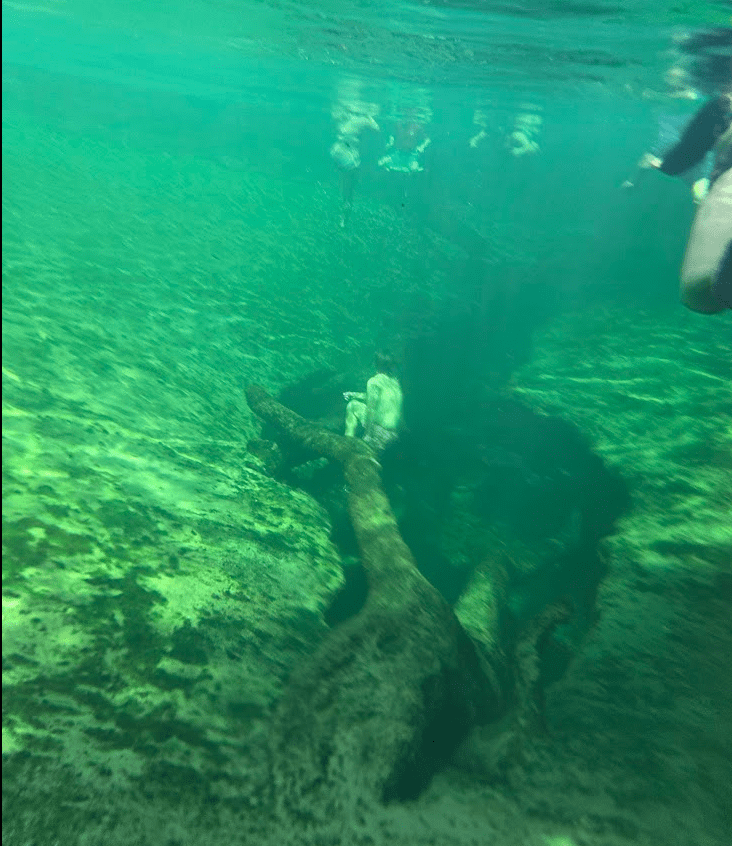
I free dive down into vent, starting by going to the level of the sunken logs. Once I remember how to free dive, I go to progressively lower shelves. I am only able to get to the 4th shelf usually, which is good because free diving is only really permitted to 50 feet or so.
I always try to touch the bottom of every spring we visit, and Blue Spring is one where I cannot.
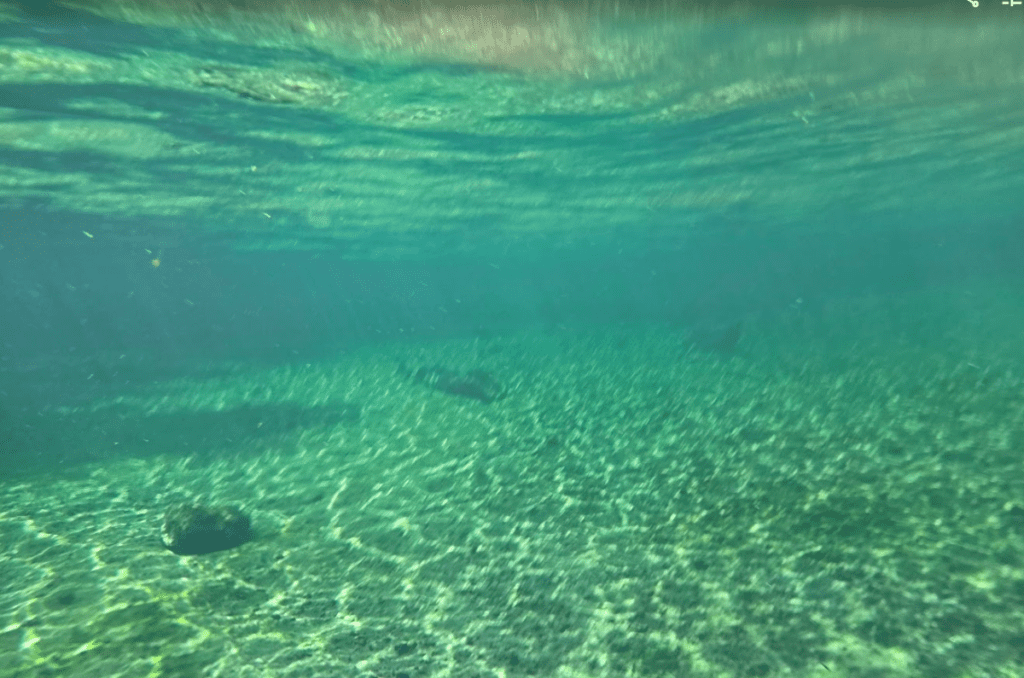
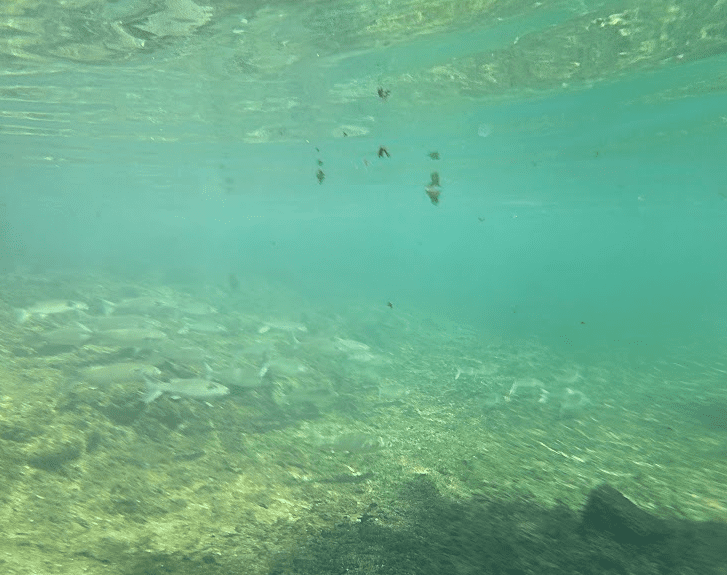
Defeated, we snorkel the spring run, checking out schools of catfish, gar, mullet, and more. The occasional pacu and tilapia change things up.
On our most recent visit in May, two manatees were present. One wanted to swim with us, to my wife’s delight. A “manatee watcher” was following the manatee on a kayak, telling people to stay out of the way. The manatee seemed to really like my wife, spending several minutes investigating and playing with her swimsuit strings.
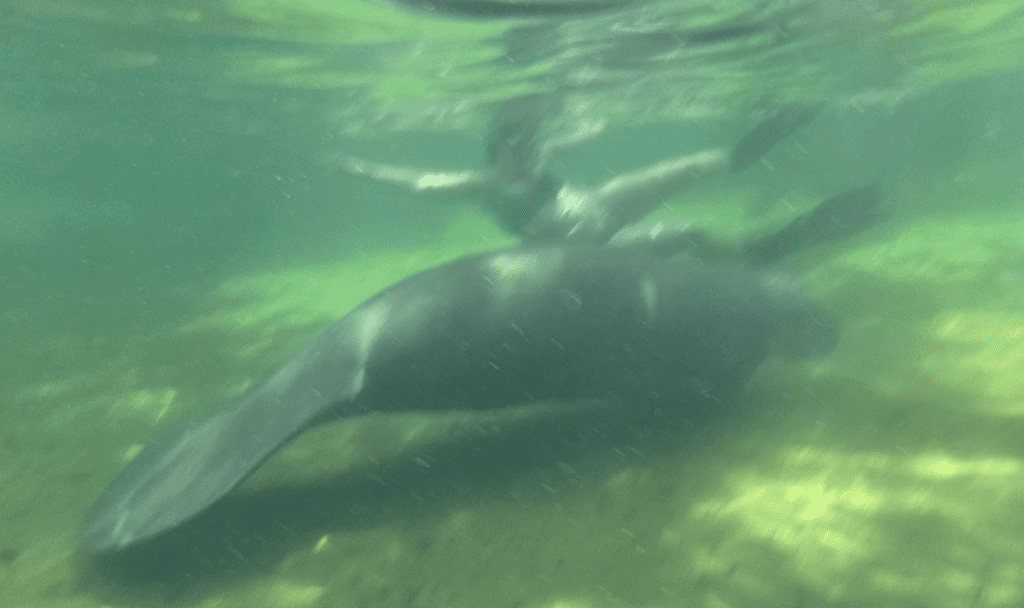
We snorkeled the spring run a few more times and headed out to Lyonia Preserve, in search of a Scrub Jay.
Final Thoughts
Blue Spring State Park is the most diverse natural experience withing easy reach of Orlando. For just six dollars, you can experience the winter manatee gathering or summer potential to swim with manatees and authentic Florida scrub habitat. Year-round, the Thursby House and Pine Island Trail along with the boardwalk and boat tours make this a place to return to again and again.
The secret is this: arrive early. This park rewards the early riser with quiet water and active wildlife.
You will want to return year after year, as we do.
Leave a Reply