
Crystal River Archaeological State Park preserves one of Florida’s most important Native American ceremonial sites, complete with ancient temple mounds, burial mounds, and one of the best river overlooks in Crystal River.
We visited in July of 2026, here’s what we learned, including how to work it into a trip built around scalloping.
Is Crystal River Archaeological State Park Worth Visiting?
Yes, especially if you are already nearby in Crystal River or Homosassa Springs. It’s a small site, and you can see it all in an hour or two. It is a National Historic Landmark with one of the most significant ceremonial complexes on the Gulf Coast. If you have any curiosity about Florida before European contact, it’s worth the small fee and short detour.
Quick Facts
Location: 3400 N Museum Point, Crystal River, FL 34428
Time Needed: 60-90 minutes
Best For: History lovers, families, photographers, travelers exploring Crystal River
Don’t Miss: Climbing Temple Mound A for the river view
Best Time to Visit: October-April for cooler weather, weekday mornings for fewer visitors
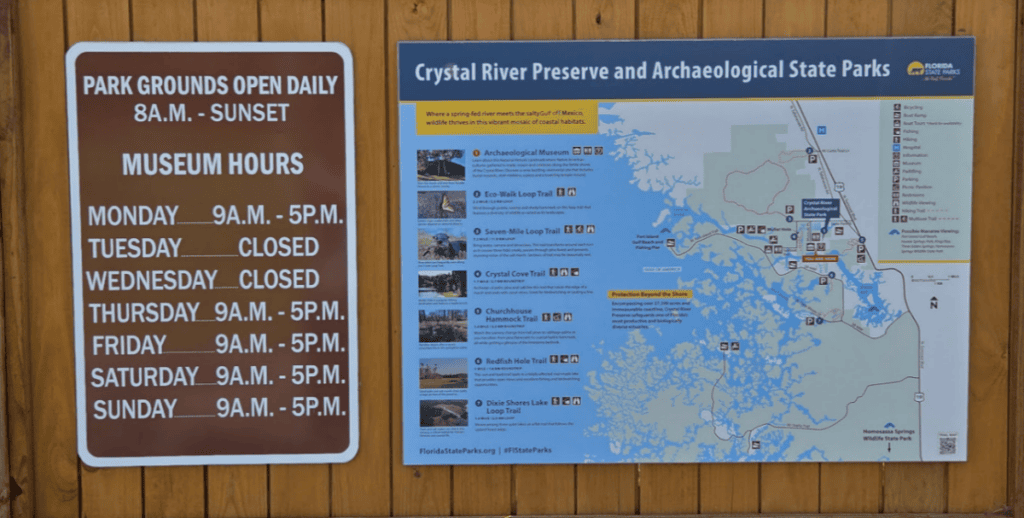
Hours: Park open daily from 8AM to sunset. Museum open The-Mon 9AM-5PM
Admission: $3 per vehicle (2–8 people), $2 per pedestrian or bicyclist
Official Website: floridastateparks.org/parks-and-trails/crystal-river-archaeological-state-park
Know Before You Go
Keep the following in mind as you plan your visit:
- Exact change is required for the honor box.
- The museum is closed Tuesday and Wednesday.
- Most visitor spend 1-2 hours.
- Temple Mound A has the best views.
- Much of the park has little shade.
- Combine it with Hunter Springs Park or Three Sisters Springs to cool off.
Overview Of Crystal River Archaeological State Park
Crystal River Archaeological State Park protects a 61-acre Native American ceremonial site that was active for roughly 1,600 years before being abandoned before European arrival. It’s now a National Historic Landmark, and it’s one of the longest continuously occupied sites in Florida.
Within the park are burial mounds, a temple mound complex, a plaza area, and a shell midden. These provide evidence of a coastal culture that thrived here on fishing, shellfish, and trade.
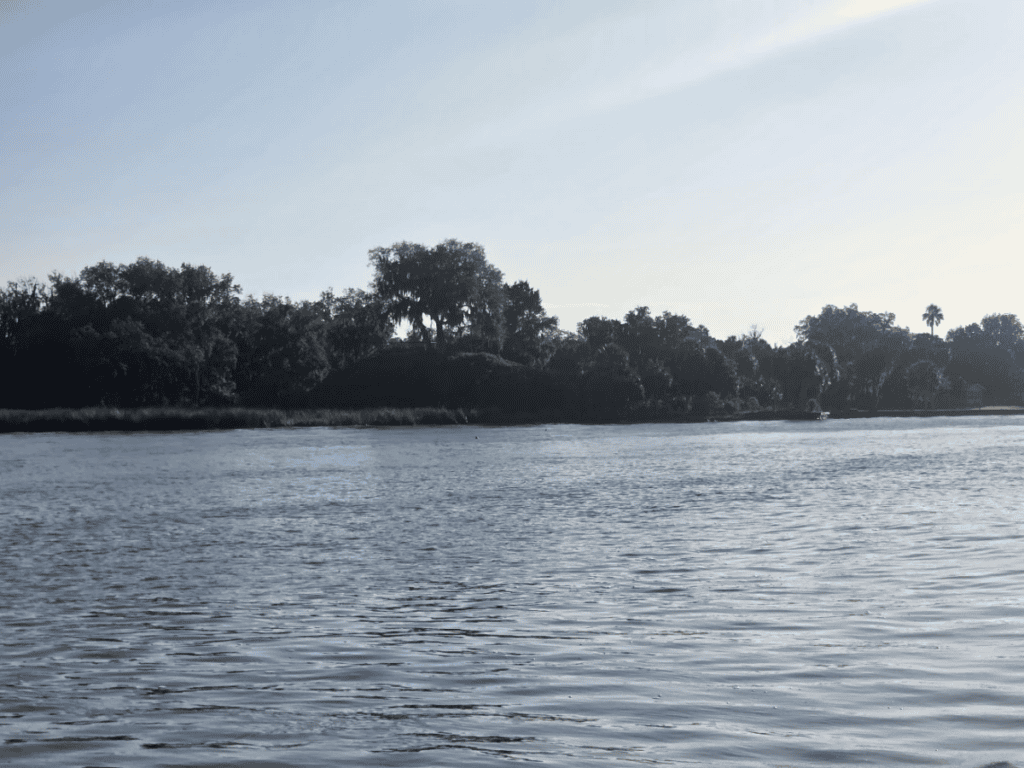
The site sits along the Crystal River, between Kings Bay and the Gulf of America, providing easy access to both freshwater and marine resources. Today it is quiet and walkable and has paved interpretive paths, a small museum, and probably the best river view in town.
Why Are the Crystal River Mounds Important?
Unlike many archaeological sites that served as small villages, Crystal River Archaeological State Park was a major ceremonial center for Native peoples living along Florida’s Gulf Coast. For roughly 1,600 years, people gathered here for trade, religious ceremonies, burials, and community events.
Archaeologists have uncovered artifacts made from materials that originated hundreds of miles away, showing that Crystal River was connected to extensive trade networks across the Southeast. Because of its remarkable preservation and historical significance, the site was designated a National Historic Landmark and remains one of the most important pre-Columbian archaeological sites in Florida.
Best Things to Do at Crystal River Archaeological State Park
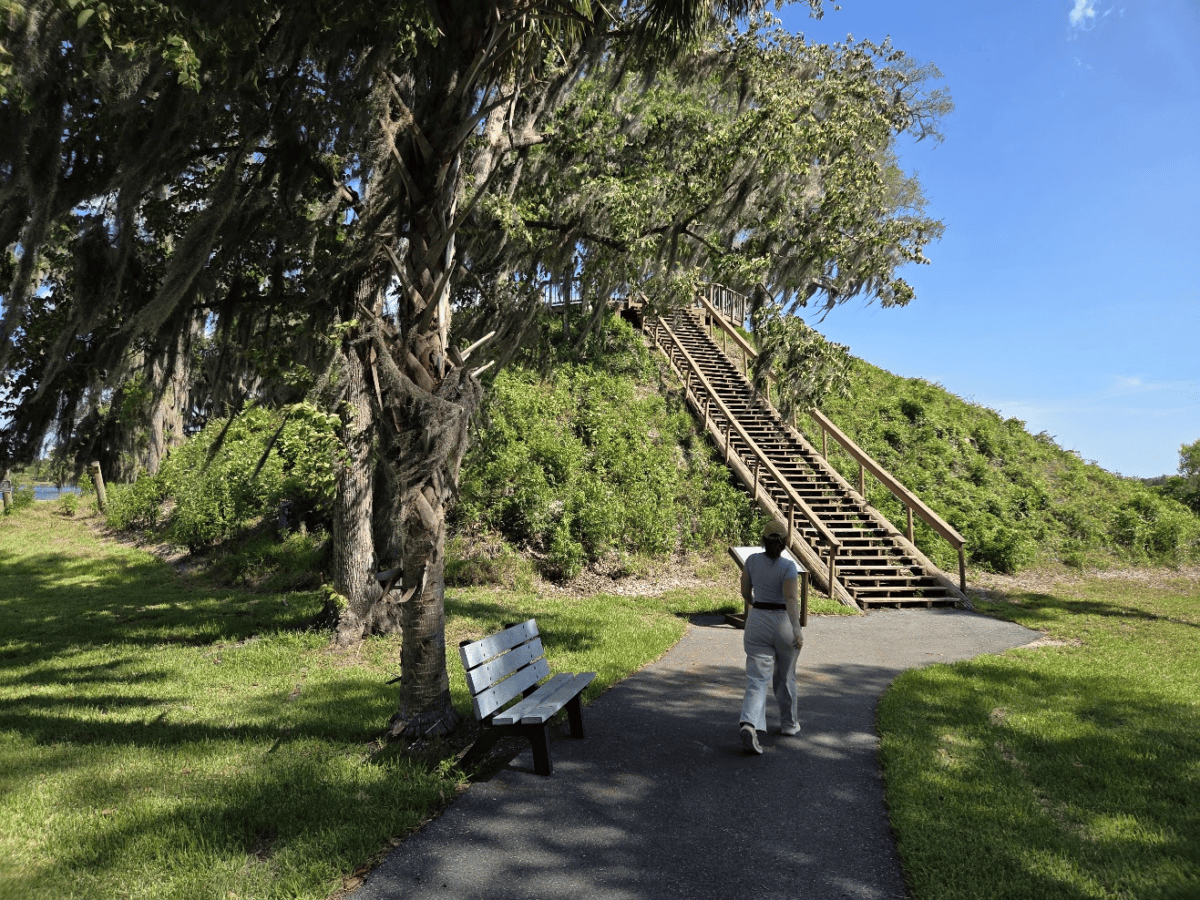
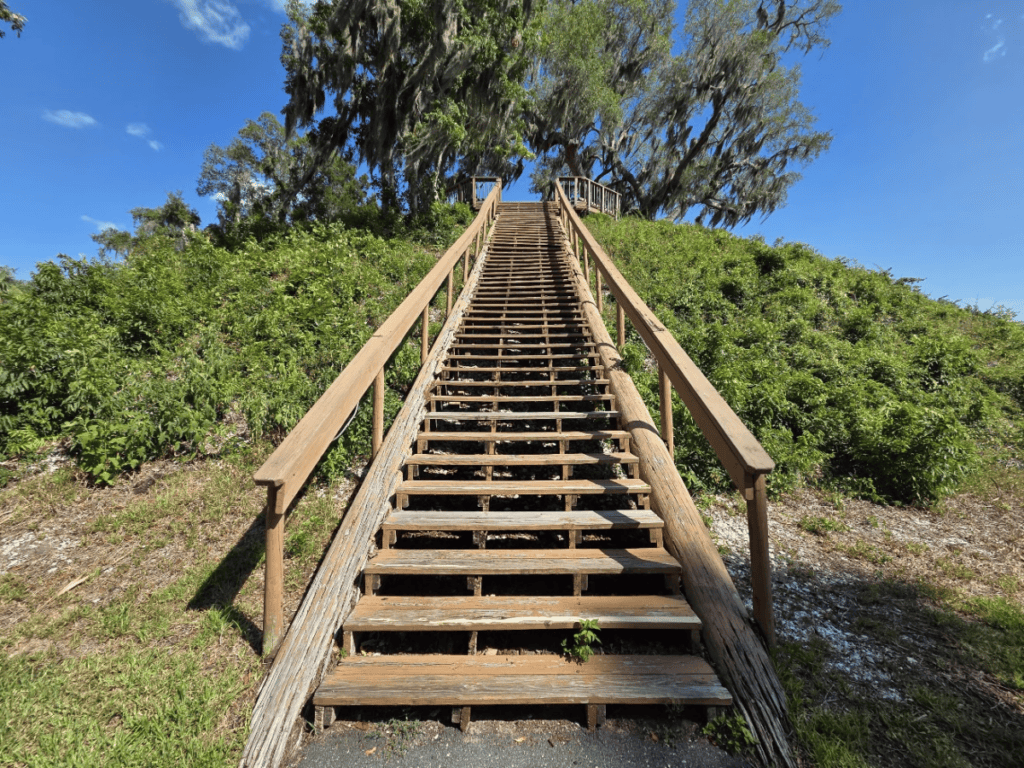
- Climb Temple Mound A – the largest mound on-site, with stairs leading to a platform overlooking the Crystal River.
- Walk the paved interpretive trail – a self-guided loop past the burial mounds, plaza, and shell midden, with signs explaining each sight.
- Visit the museum – artifacts, exhibits, and a short film on the prehistoric coastal dwellers who built the complex.
- Fish along the river – both catch-and-release and keeper fishing are allowed where permitted.
- Birdwatch – the park is part of the Great Florida Birding and Wildlife Trail, and the open mound clearings near the tree line are good for sightings.
- Picnic by the river – there’s a small picnic area with tables and grills near the museum, and benches at the top of Mound A.
Best Hikes
This is not a hiking heavy park, but the self-guided interpretive trail covers most of what you’ll want to see:
- Main Interpretive Loop – A flat, paved path connecting the museum, burial mounds, plaza, and shell midden. Easy for most fitness levels and strollers.
- Temple Mound A Climb – A short staircase to the best vantage point in the park.
For legitimate hiking, your best bet is down the road at Crystal River Preserve State Park, and we recommend the following trails:
- Crystal Cove Trail (1.7 miles) Beautiful shaded views along the river for a short walk before jumping in the springs.
- Crystal River Preserve Loop Trail (7.3 miles): This is a more serious hike with great scenery, but you will face challenging bugs and heat in the summer.
- Crystal River Preserve State Park Eco Walk (2.3 miles): A flat and well-marked trail through a marshy and forested area.
Key Areas in Crystal River Archaeological State Park
This is a relatively small park, but you should still know about the following areas:
- Museum and Visitor Center: Exhibits, artifacts, and the park’s video presentation. This is also where the restrooms and trail maps are.
- Temple Mound A: The tallest mound on-site, with a staircase and platform overlooking the river.
- Burial Mounds: Several smaller mounds along the interpretive path, with markers.
- The Plaza: The open ceremonial space at the center of the complex.
- Shell Midden: A large deposit of discarded shells that built up over centuries of use, visible along the trail.
- River Overlook and Picnic Area: Benches and a clear view near the museum.
Our Experience at Crystal River Archaeological State Park
We visited after scalloping at around 4pm on a July afternoon. Driving in, we had to deposit $3 cash to produce a hang tag for our car. Luckily, we researched this ahead of time and had exact change. Our visit was right before we went to Hunter Springs Park, which does not accept cash and only accepts card. If you visit Crystal River, make sure to bring both cash and card.
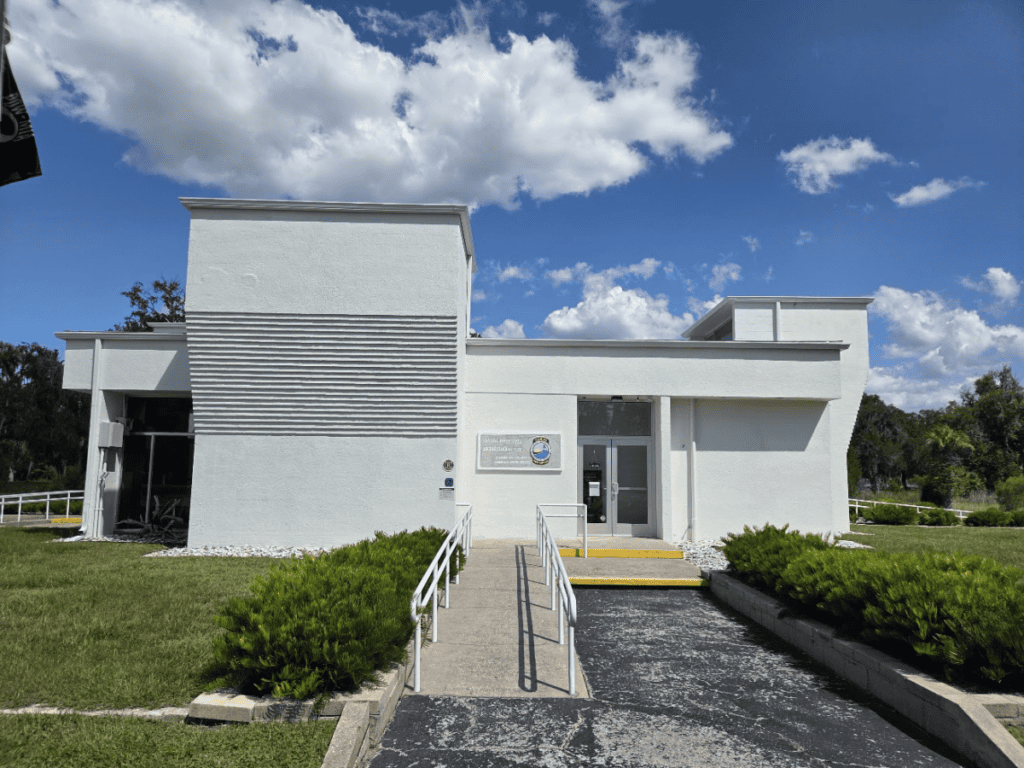
We started at the museum, where the park ranger oriented us and gave us a map. The museum was neat, and I particularly enjoyed seeing the evolution of arrowheads over the years.

The short (<10 minute) park film was useful and further described the lay of the land that we were about to see.
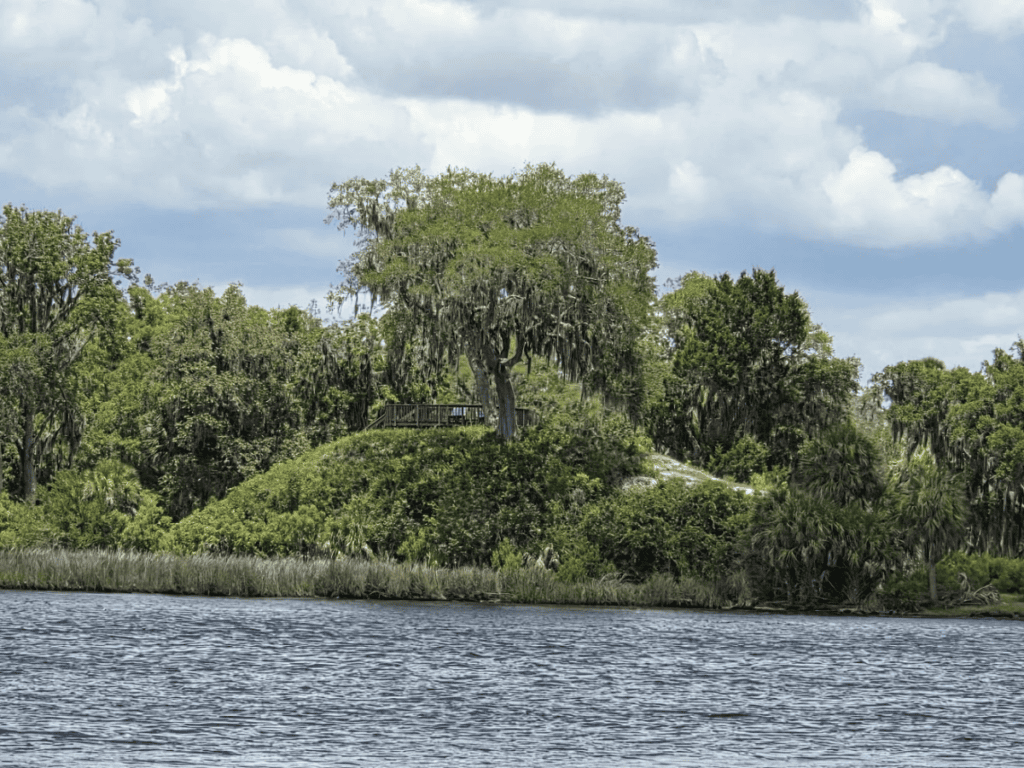
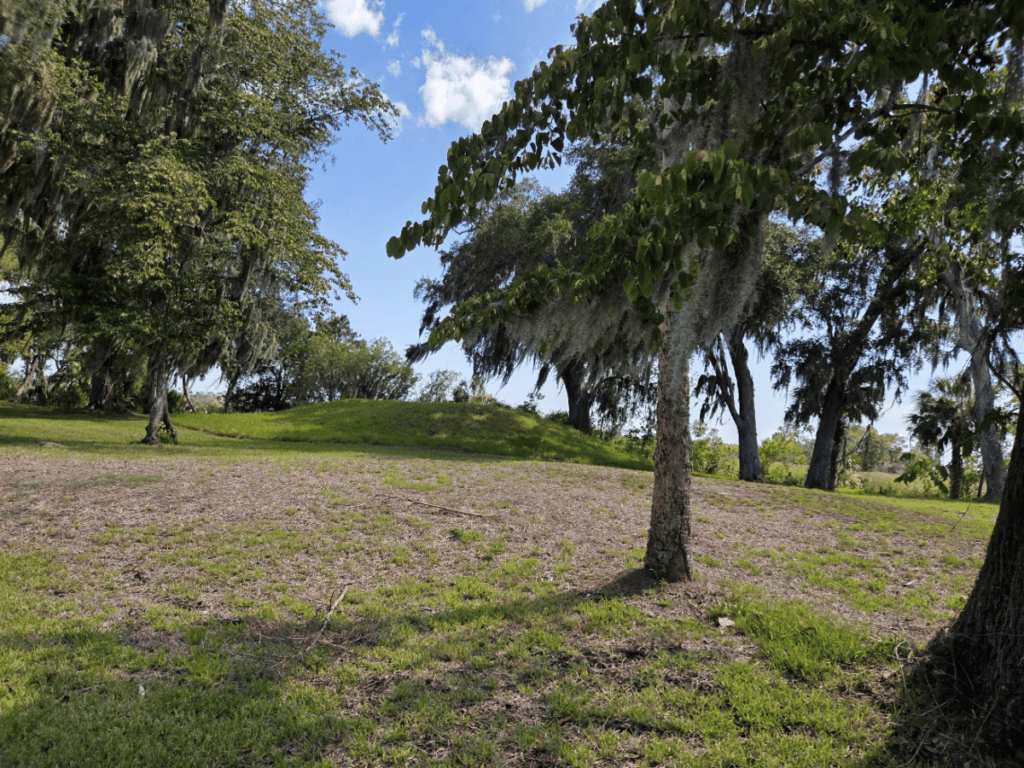
We walked counterclockwise along the interpretive trail and started with the smaller mounds. They were kind of cool, but Mound A really blew us away. We had seen this mound on the boat rides out to Crystal Bay for scalloping, but up close it was much larger than we had realized.
Climbing up the staircase gave us our best view yet of Crystal River, and we sat in the shade on a picnic bench and watched the boats go by for a few minutes. We could see why the Native Americans would want to build a mound like this, the view was incredible.
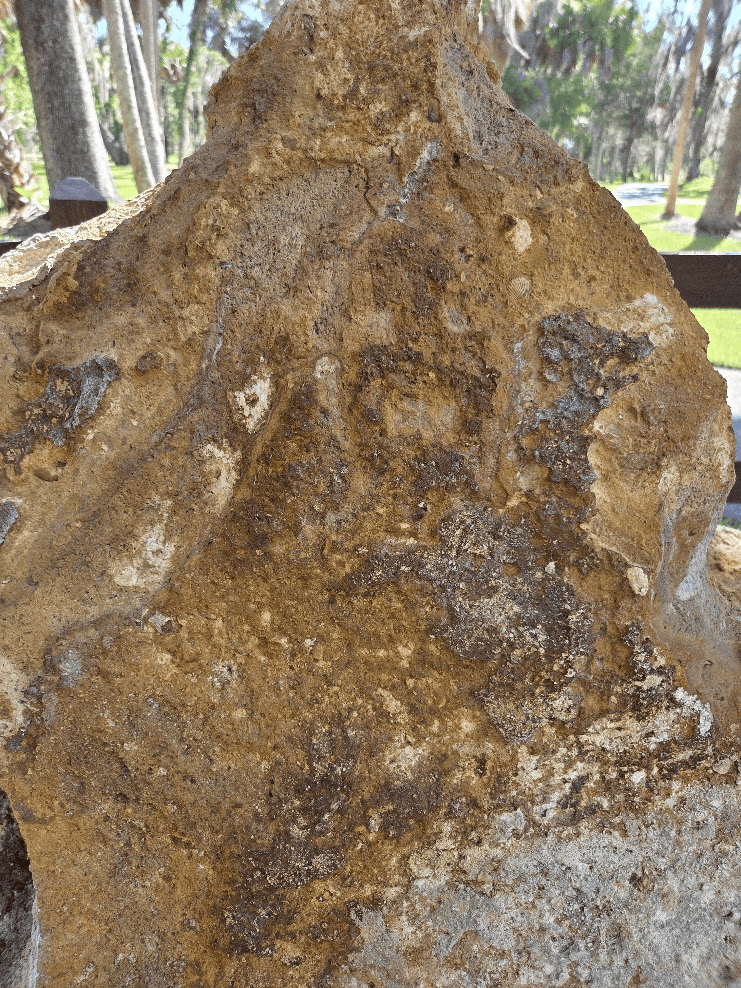
The stela we saw had a face carved into it, which was a little bit creepy. The wear and tear really took a number on this petroglyph.
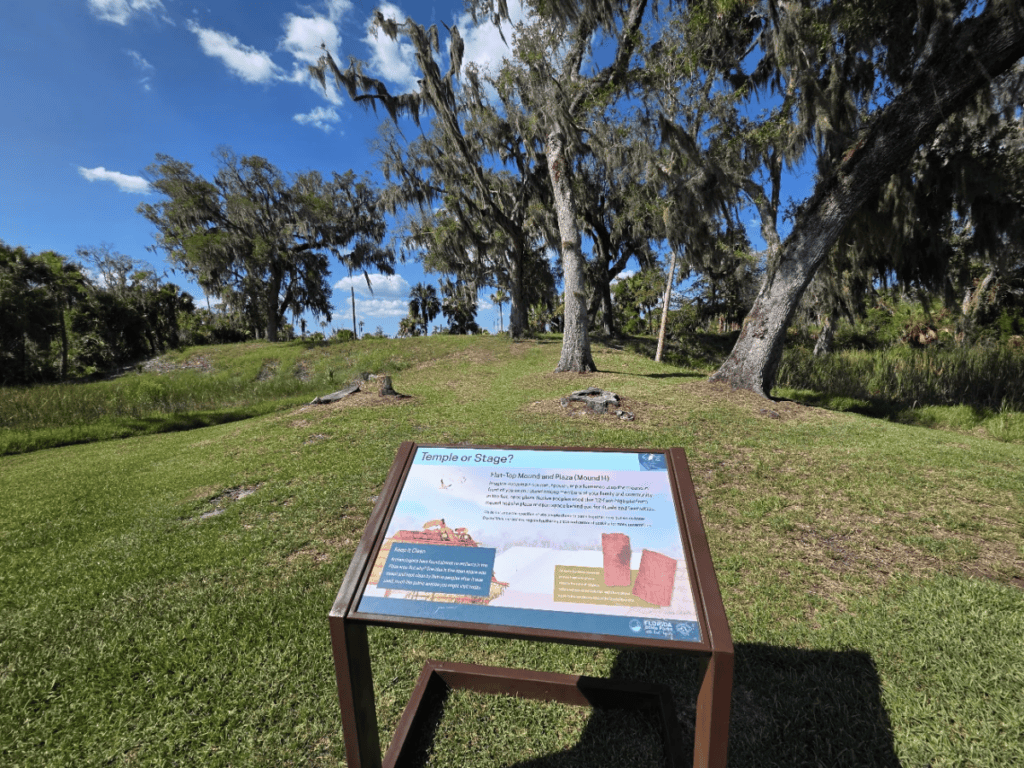
Our last stop was the flat-top mound and plaza (Mound H), which is currently unknown as to whether it is a temple or stage. I think it is a stage.
We saw only two additional groups during our visit, the park was far from crowded.
It was baking hot when we left, so we headed down the road to Hunter Springs Park to cool off.
Don’t Make Our Mistake
We visited in the heat of the day on a July afternoon. We were only outside for around 30-40 minutes, but it was enough to heat us up and start a sunburn. On our next visit, it would be ideal to go a different time of year or earlier in the day.
What We Would Do Differently
On a future visit, we would call ahead and learn about ranger-led programs, to gain additional context beyond the self-guided signage.
How To Visit in 1-2 Hours
This park is suited to a short visit, which makes it an easy add-on to a scalloping day of Crystal River itinerary.
If You Only Do One Thing
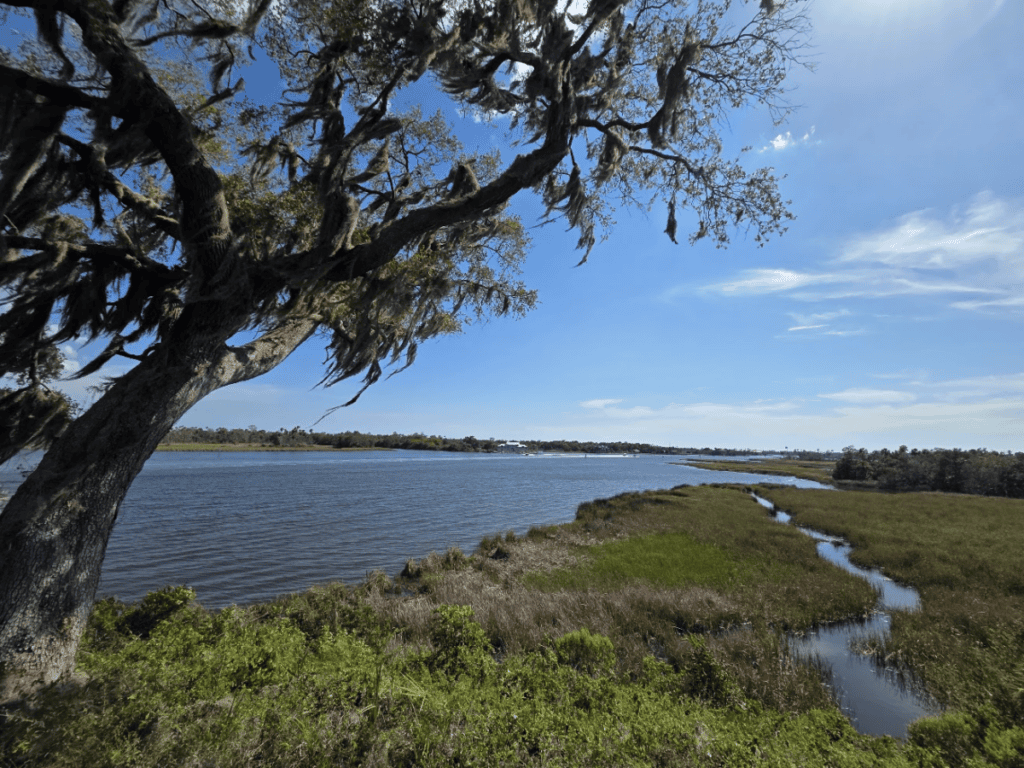
Climb Temple Mound A. It’s the tallest structure in the park, and the view over Crystal River is one of the best you’ll see.
Full-Day Itinerary
You realistically need about 60-90 minutes to experience Crystal River Archaeological State Park, but here is the exact itinerary we used to fit it in to a scalloping and springs day:
- 7:00AM – Start boating to the scalloping grounds
- 8:30AM – Scallop the grass flats of Crystal Bay until you limit out
- 1PM – Eat a picnic lunch as you ride back to the marina
- 3PM – Clean your scallops and put them in the fridge
- 4PM – Visit Crystal River Archaeological State Park and see museum and archaeological mounds
- 5:30PM – Drive to Hunter Springs Park, rinse off, relax, and watch the boats
- 6:30PM – Change into dinner clothes and drive over to Crackers
- 7PM – Eat fresh seafood at Crackers Bar & Grill before calling it a night
Where to Eat Near Crystal River Archaeological State Park
Downtown Crystal River is excellent for seafood, and Crystal River Archaeological State Park is just a few minutes away. Here are some of the top picks:
Crackers Bar and Grill – Right on the water, popular for casual seafood and drinks with a laid-back energy. The blackened grouper and gator were excellent.
Vintage on 5th – An upscale option in a historic home setting, with locally sourced ingredients for a nicer dinner.
Kane’s Cattle Co. – The spot for steak lovers.
Peck’s Old Port Cove – Fresh, locally caught seafood on the Homosassa River.
Cattle Dog Coffee Roasters – Our choice for breakfast and coffee to start off your day.
Where to Stay Near Crystal River Archaeological State Park
There is no camping or lodging within the state park, but there are plenty of nearby options:
Downtown Crystal River Hotels – There are several hotels within walking distance, including boutique inns near North Citrus Avenue. Staying downtown lets you walk to the park, restaurants, and shops.
Paddletail Waterfront Lodge – A popular waterfront option, and it has a package including lodging, swimming with manatees, a boat tour and kayaking all in one.
The Port Hotel and Marina – Waterfront accommodations with marina access.
Plantation on Crystal River – A larger resort option with its own pool and river access.
Crystal River campgrounds and vacation rentals – There are a multitude of options in the area for those wanting budget-friendly or independent lodging. We rented a large camper on our trip and brought our dog. The price was much lower than the nearby hotels, and we were only 10 minutes away from the action.
Tips For Visiting Crystal River Archaeological State Park
- Bring exact change for the $3 vehicle honor box.
- Check museum hours before you go (it’s closed Tuesday and Wednesday)
- Wear sun protection, as the mounds and plaza are mostly open with little shade
- Visit early on weekday mornings for the smallest crowds
- Keep dogs leashed, they are welcome on the grounds but not allowed inside the museum
- Bring a camera or binoculars, as the river overlook is a good spot to look for dolphins
Pros and Cons
Pros:
- Excellent value at just $3 per vehicle
- One of Florida’s most significant archaeological sites
- Great views from Temple Mound A
- Easy paved walking trail
- Family-friendly
- Combines well with springs and scalloping
Cons:
- Limited shade during summer
- Small park (most visits last under two hours)
- Not ideal for serious hikers
- Museum is closed Tuesday and Wednesday
- Requires exact change for the honor box
When to Visit Crystal River Archaeological State Park
Park is open from 8 a.m. until sunset, 365 days a year. The museum keeps separate hours: Thursday through Monday, 9 a.m. to 5 p.m., closed Tuesday and Wednesday.
We recommend visiting in the cooler months, October through April, when the open, sun-exposed mound areas are more comfortable to explore. If you’re visiting in summer around a scalloping trip, aim for early morning before the heat and humidity build.
Always check the park website or call ahead for the most up-to-date information, especially around museum hours and any scheduled tours or programs.
What to Bring to Crystal River Archaeological State Park
You do not need to bring much to enjoy this park, but we would recommend the following:
- $3 cash for vehicle entry
- Sunscreen and a hat
- Water
- Walking shoes
- A camera or binoculars
- Bug spray if you plan to sit still for any amount of time in the summer
Fees & Reservations
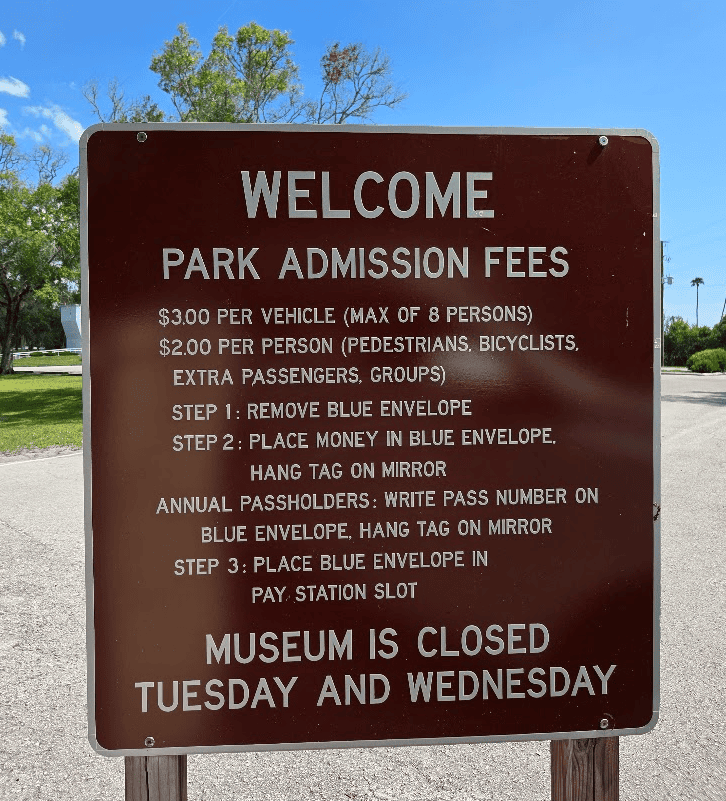
Admission is $3 per vehicle (covering 2–8 people), $3 for a single-occupant vehicle or motorcycle, and $2 for pedestrians or bicyclists. Fees are paid via an honor box at the entrance, and correct change is required.
No advance reservations are needed for general park entry; group tours or special programs may require separate arrangements through the park office.
Frequently Asked Questions
Is there an entrance fee for Crystal River Archaeological State Park?
Yes, but it’s modest: $3 per vehicle (up to 8 people) or $2 per pedestrian or bicyclist, paid at an honor box near the entrance.
What are the park’s hours?
The park grounds are open daily from 8 a.m. until sunset. The museum is open Thursday through Monday, 9 a.m. to 5 p.m., and closed Tuesday and Wednesday.
Is Crystal River Archaeological State Park worth visiting?
Yes. Most visitors spend just one to two hours here, making it an easy stop while exploring Crystal River. Between the museum, Temple Mound A, and the archaeological complex, it offers one of Florida’s best opportunities to learn about pre-Columbian Native American history without requiring a full day.
How long does it take to visit?
Most visitors spend 1 to 2 hours here, including the museum and the interpretive trail.
Is the park accessible?
Yes, the interpretive trail is paved, and the museum, restrooms, and parking are accessible.
Who should visit Crystal River Archaeological State Park?
This park is ideal for history lovers, families, visitors interested in Native American history, and scallopers looking for an afternoon activity. It may not be the best stop if you’re looking for long hikes or very active outdoor recreation.
Is the park good for kids?
Yes. The paved, flat interpretive trail is stroller- and kid-friendly, and the museum’s exhibits and video are engaging for older children with an interest in history.
Are pets allowed?
Yes, leashed dogs are welcome throughout the grounds, but they aren’t permitted inside the museum building.
Can you climb the Indian mounds?
Visitors can climb Temple Mound A using the staircase, but the other mounds are protected and should not be climbed.
Is the museum worth visiting?
Yes. The museum provides important context for the archaeological site through exhibits, artifacts, and a short introductory film.
Can you launch a kayak here?
No. While the park sits on the Crystal River, it is not a public paddling launch. Nearby launches include Hunter Springs Park and Kings Bay Park.
Can you picnic here?
Yes. Picnic tables and grills are available near the museum and river.
Is photography allowed?
Yes. Photography is permitted for personal use, and Temple Mound A offers one of the best panoramic views in Crystal River.
Can I fish at the park?
Yes, both catch-and-release and keeper fishing are available along the river where regulations allow. A Florida fishing license is required where applicable.
Is there hiking at the park?
There’s one main paved interpretive loop rather than traditional backcountry trails. If you want longer hikes, Crystal River Preserve State Park nearby has several miles of trail.
What wildlife can you see?
Visitors often report osprey, bald eagles, great blue herons, anhingas, white ibises, dolphins, lizards, and butterflies.
Can I combine a visit with a scalloping trip?
Yes, this is exactly how we did it. The park’s small size and short visit time make it an easy morning add-on before an afternoon scalloping charter, particularly during Crystal River’s scalloping season, which typically runs July 1 through late September.
Is there camping at the park?
No, there’s no camping on-site, but Crystal River has hotels and vacation rentals just minutes away.
What’s the significance of the mounds?
The site was a major ceremonial and burial complex used for roughly 1,600 years by pre-Columbian coastal peoples, and it’s recognized today as a National Historic Landmark.
Conclusion
Crystal River Archaeological State Park is a small park with an outsized story. It is one of the easiest and most worthwhile sights you can see on a Crystal River trip. Whether you are killing a couple hours after fishing or scalloping or building a full day around Nature Coast history, it’s worth the $3.
Other Sights Near Crystal River Archaeological State Park
Crystal River Preserve State Park (10 mins) — adjacent preserve with miles of trails and kayak launches
Three Sisters Springs (10 mins) — one of the top winter manatee viewing spots in the country
Hunter Springs Park (8 mins) – small city park with easy swim access to cool off
Homosassa Springs Wildlife State Park (20 mins) — manatees, native wildlife, and a spring-fed swimming area
Yulee Sugar Mill Ruins Historic State Park (25 mins) — a short drive away, with 19th-century sugar mill ruins
Fort Island Gulf Beach (15 mins) — a small, low-key Gulf-front beach nearby
Leave a Reply