
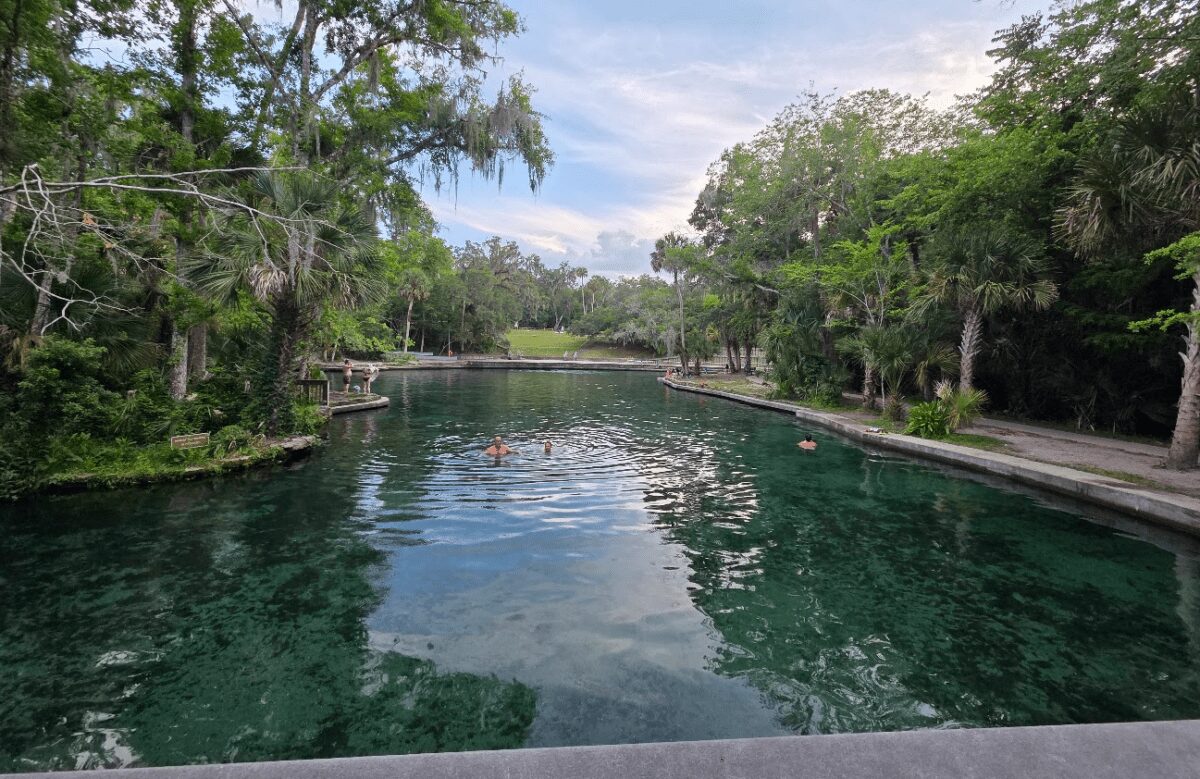
If you’re looking for a natural Central Florida escape, Wekiwa Springs State Park deserves a spot on your list. Wekiwa Springs State Park is located about 30 minutes from downtown Orlando and makes one of the best outdoor day trips from the city. This 7,000-acre sanctuary offers swimming in crystal-clear spring water, miles of hiking trails through diverse habitat, and paddling on the Wekiva River.
Whether you’re looking to swim, hike, or paddle, our complete guide has you covered to plan the perfect visit.
Wekiwa or Wekiva? The spring and the state park are spelled Wekiwa, the river is the Wekiva, and you’ll see both on signs and maps. (Wekiva Springs is also the name of the Seminole County community right next door; this guide covers the state park.)
Wekiwa Springs vs. Rock Springs: Which Should You Pick?
Pick Wekiwa Springs for a full day of swimming, hiking, and paddling; pick Rock Springs at Kelly Park if tubing is the whole point. They are 16 minutes apart and feed the same river, so the best answer is often both, but each one now needs its own advance booking.
| Wekiwa Springs State Park | Rock Springs (Kelly Park) | |
|---|---|---|
| Best for | Swimming, snorkeling, hiking, paddling | Tubing a 25-minute natural lazy river |
| Entry (as of Oct. 2026) | $6 per vehicle; day-use reservation required, up to 60 days ahead | $5 per vehicle; online entry ticket required since Oct. 1, 2026, up to 30 days ahead |
| Daily limit | Set by the park’s capacity | 280 tickets |
| Water | 72°F; swim area 2–5 feet deep | 68–72°F; shallow, fast-moving run |
| Hiking | Trails from 0.8 to 13.5 miles | Three short loops |
| Paddling | Rentals and a launch in the park | Not on the tube run |
| Managed by | Florida State Parks | Orange County Parks |
Quick Facts
- Location: 1800 Wekiwa Circle, Apopka, FL 32712 (29 minutes from downtown Orlando)
- Water Temp: 72°F year-round
- Entrance Fee: $6 per vehicle (2–8 people), $4 single-occupant vehicle, $2 pedestrians, cyclists, and extra passengers (as of October 2026)
- Reservations: Required for day use since 2025, book up to 60 days ahead
- Hours: 8 am – sundown, 365 days a year; swimming ends 30 minutes before closing
- Activities: Swimming, snorkeling, kayaking, canoeing, paddleboarding, hiking, mountain biking, horseback riding, fishing, camping, picnicking, wildlife watching
- Wildlife: Florida black bear, deer, turkey, gators, otters, the occasional manatee, birds, turtles – and the rare, endangered Orlando cave crayfish
- Best For: Families, hikers, Orlando vacationers, wildlife enthusiasts, and anybody looking for a glimpse of old Florida
Overview
Wekiwa Springs has been regularly visited since the 1800s, making it Orange County’s longest-running tourist attraction. While it is tucked behind a sprawling metro, this place still feels relatively wild.
The spring is a second-magnitude spring which discharges 43 million gallons of water a day from the Florida aquifer. The outflow combines with Rock Springs Run to form the Wekiva River – one of only two Wild and Scenic Rivers in Florida. The spring pool is large, around 200 feet by 100 feet, and provides both shallow area to wade and deep areas to swim. Two vents are visible, one substantially larger than the other.
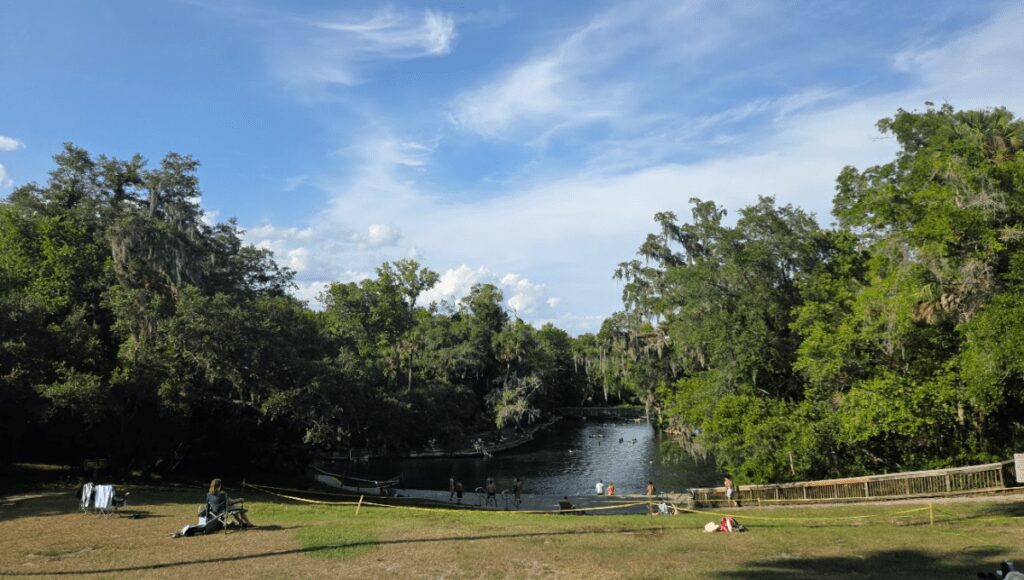
The state park is well-managed and encompasses over 7,000 acres of sand pine scrub, pine flatwoods, hardwood hammocks, and subtropical riverine forest. Deer are most seen, and black bears and woodpeckers are present. If you are extremely lucky, you might spot one of the most remarkable creatures in Florida: the Orlando cave crayfish, a white, blind, endangered species endemic to only a few locations in the world, all of which are in Orange and Seminole counties in Florida.
Wekiwa Springs State Park is one of the first to require day-use reservations. This decision was driven by the park’s extreme popularity and seems to keep the numbers down to minimize both crowds and environmental impact. Entry is possible with proper planning but may be challenging on Saturdays unless you get a reservation well in advance.
Terminology: Understanding Wekiva, Rock Springs, and Emerald Cut
Planning a trip to the Wekiva River can be confusing, with multiple parks, launch points, and names. In short: Wekiwa Springs is for swimming and the most family-friendly access point, Rock Springs at Kelly Park is for tubing, and the Emerald Cut on Rock Springs Run, reached from King’s Landing, is the best paddle in the system. For every launch point and my favorite way to enjoy each one, see my Emerald Cut to Wekiva Island paddling guide.
Who Should Visit Wekiwa Springs (and Who Should Skip It)
Visit if you want a little of everything close to Orlando: families get a 2–5 foot deep swim area, hikers get trails up to 13.5 miles, paddlers get rentals and a launch right in the park, and locals can drop in for an evening swim after work.
Skip it if you can’t plan ahead (no reservation, no entry), you want to tube (go to Rock Springs), you want to scuba dive (not allowed here), or you are chasing manatees in winter (Blue Spring State Park is far better for that).
Things to Do at Wekiwa Springs State Park
This is a large state park which can easily fill up a day’s worth of activities:
- Swimming and snorkeling in the spring pool
- Kayaking, canoeing, or paddleboarding on the Wekiva River and Rock Springs Run
- Hiking on over 25 miles of trails, including the famous Volksmarch Trail
- Mountain biking on multiuse trails
- Horseback riding on equestrian-friendly trails
- Fishing on the Wekiva River
- Camping in the park
- Picnicking in the grassy amphitheater overlooking the spring
- Geocaching within the park
- Wildlife watching and birding
- Visit the Nature Center on weekends
Swimming at Wekiwa Springs State Park
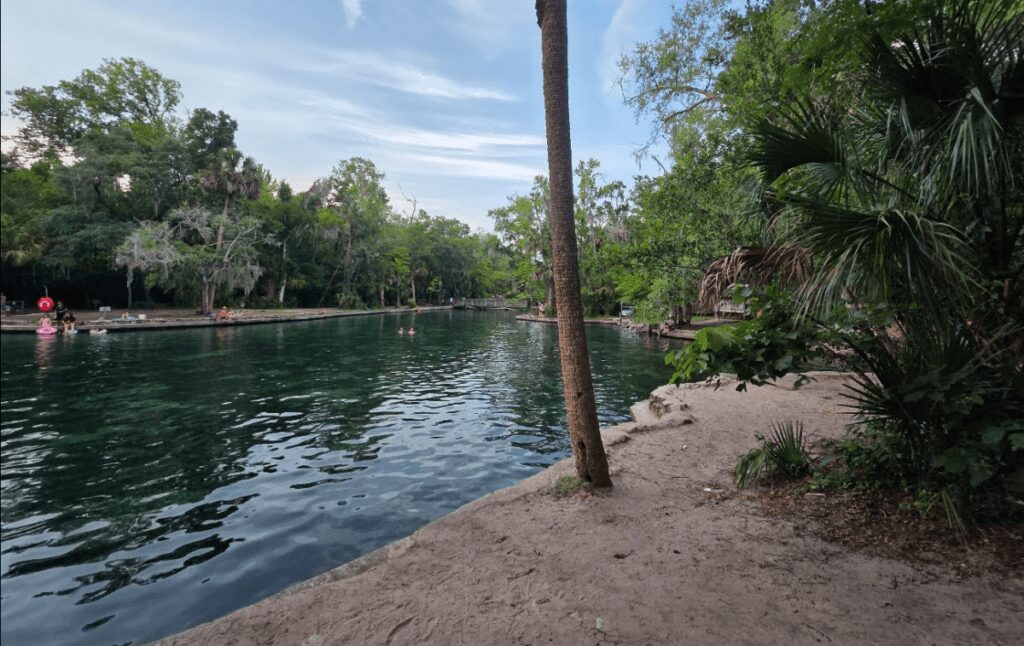
The spring pool is the highlight of any visit to Wekiwa Springs State Park, and it earns its reputation. Wekiwa Springs is clear, cool, and inviting.
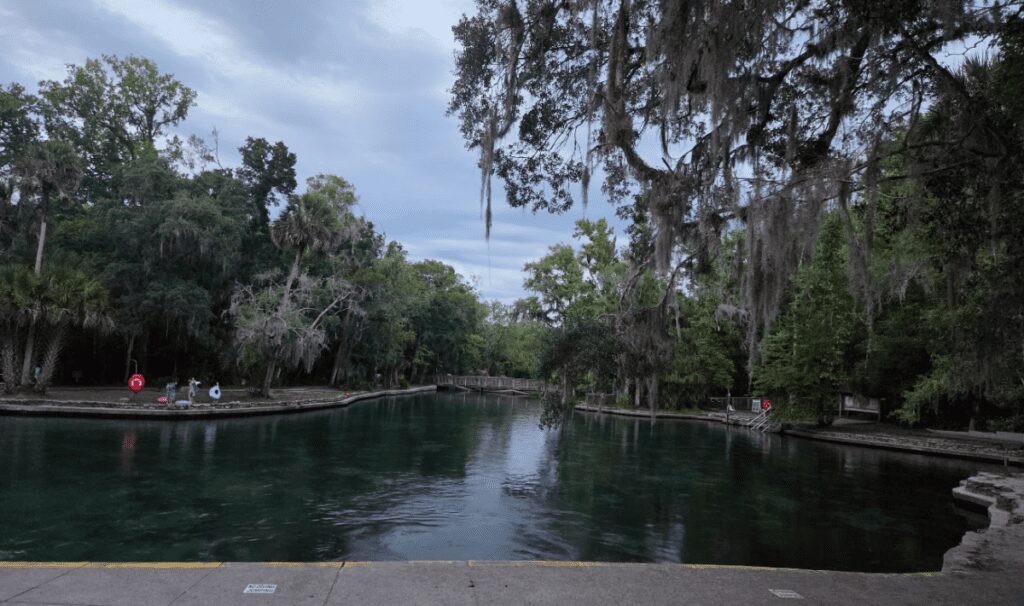
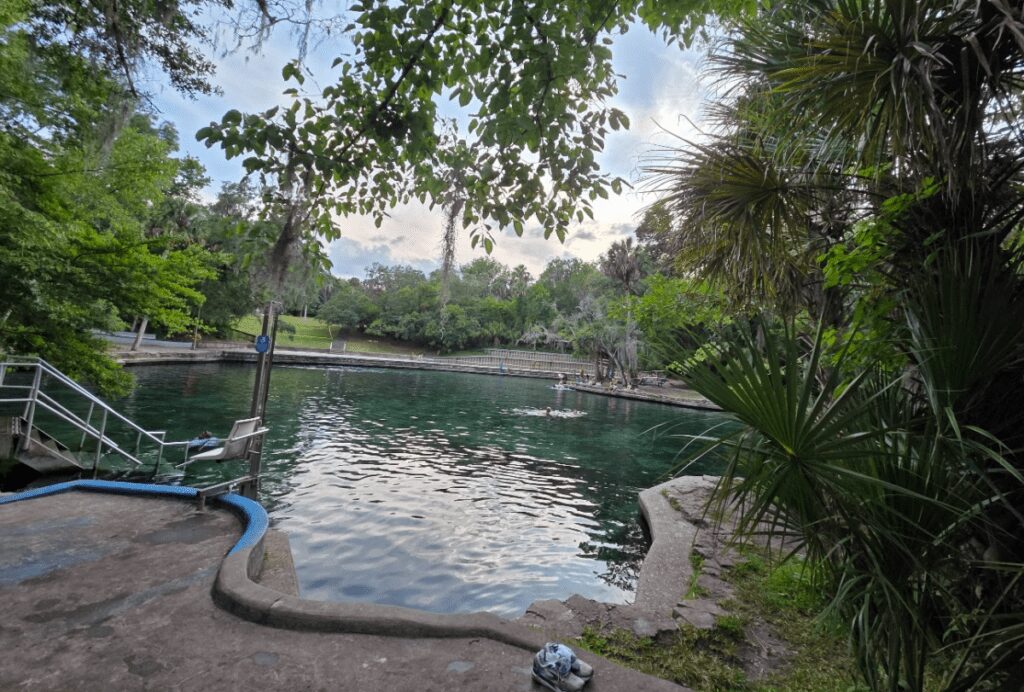
The swimming area is well-maintained, with concrete walkways and wooden footbridges. The main swim area is generally between 2-5 feet deep, with areas great for families. Because the water is so shallow, jumping and diving is prohibited.
While the general swimming area is pretty shallow, the main spring vent plunges deeper. I would estimate the depth at 15-20 feet. Please be careful if you snorkel down as it can get a little tight between the rocks, and the water flows out at a fast rate. The cavern turns into a cave, which is strictly off limits from diving.
Snorkeling is one of the best ways to experience Wekiwa Springs, as the clear water lets you see fish, plants, turtles, and if you are lucky, an Orlando cave crayfish. We observed massive schools containing thousands of mosquitofish and a lot of Plecostomus which live and hide under the metal forming the retaining wall.
No lifeguards are on duty, so swimming and snorkeling is at your own risk. Children must be accompanied by an adult. A chair lift is present, but it must be operated by park staff.
The park website states that swimming is not permitted in the Wekiwa Springs Run, Rock Springs Run, or the Wekiva River – only in the designated spring pool.
Kayaking and Paddling
If you’ve only been hiking and swimming here, you’re missing a lot of what Wekiwa Springs has to offer. This state park is home to extraordinary paddle opportunities on the Wekiva River.
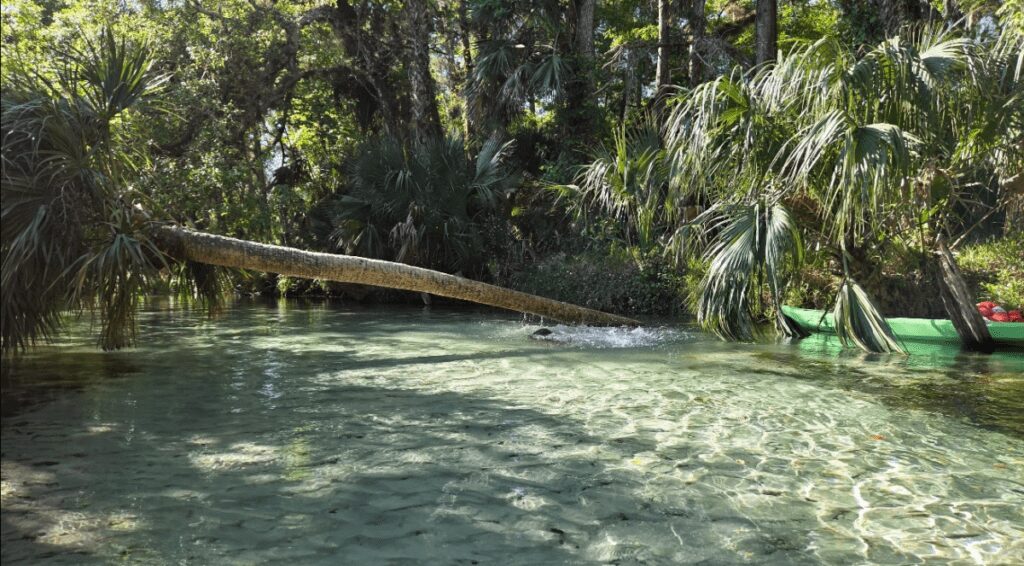
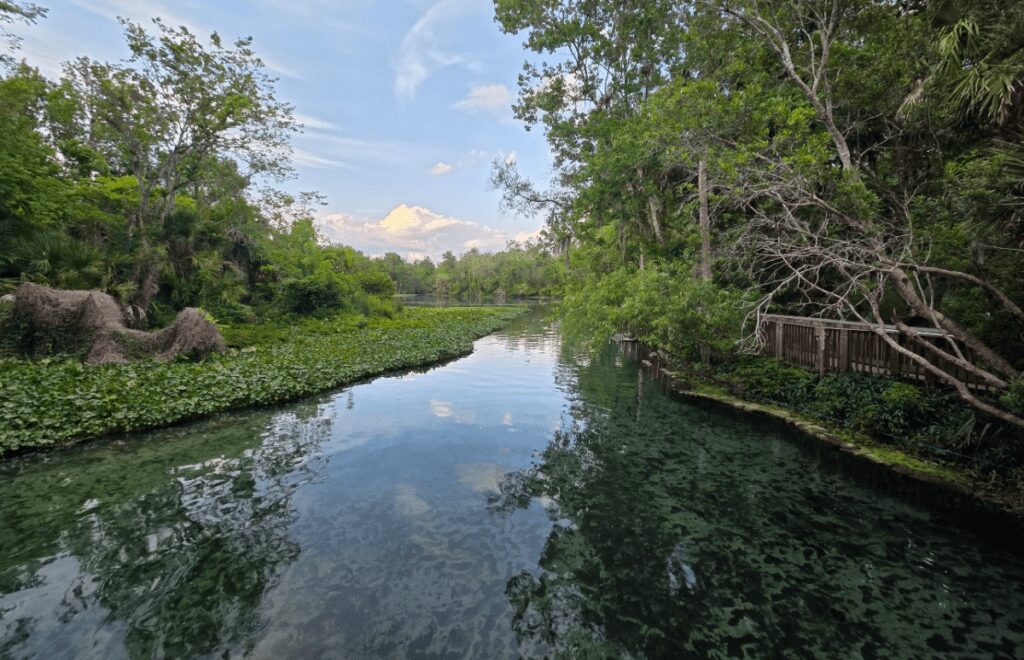
The Wekiva River is fed by two major springs; Rock Springs (located in Kelly Park) and Wekiwa Springs. It meanders through 16 miles of jungle-like subtropical forest before joining the St. Johns River. This river is so spectacular that it is federally designated as a Wild and Scenic River. Paddling it feels like time travel through a corridor of untouched Florida, complete with gators, snakes, herons, turtles, and otters.
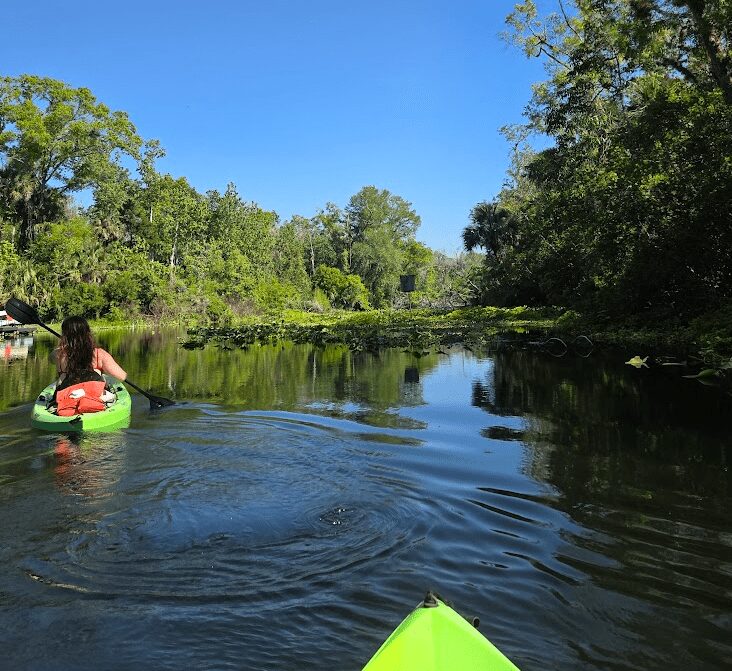
Onsite rentals are available for kayaks, canoes, and paddleboards at this state park through Wekiwa Springs Adventures. Kayak rentals start at 8 am, with the last rental departing at 6pm.
The launch point at Wekiwa Springs feeds into a shallow run before opening up into the river. Only non-motorized vessels are permitted to launch from the park. Motorized boats (with a max of 25HP) may use the Wekiva River but must launch from Wekiva Island or Katie’s Landing. If you paddle in from another launch, you’ll pay $2 per person to enter the park, and expect a few portages over uneven ground.
Primitive camping is available along the Wekiva River, though it is best accessed via Kings Landing so you don’t have to go against the current.
Paddle Day Trip Options on the Wekiva River
- Paddle downstream towards Wekiva Island for lunch, drinks, and live music on the weekends
- Launch point: Wekiwa Springs State Park
- Paddle upstream towards Rock Springs on the legendary Emerald Cut section of Rock Springs Run and float back down
- Launch point: King’s Landing
- Our favorite: Plan a longer 8.5-mile adventure from Kings Landing to Wekiva Island and take the shuttle back
- Launch point: King’s Landing
- The most extreme: Paddle from Wekiva Island to Katie’s Landing, a 9-mile journey through the most remote section of this river. You will have to arrange your own shuttle
- Launch point: Wekiva Island
The Volksmarch Trail: Our Favorite Hike
If there’s one hike at Wekiwa Springs State Park that you should know about, it’s the Volksmarch Trail. This trail is an exhibition of diverse Florida habitats and is a definite repeat.
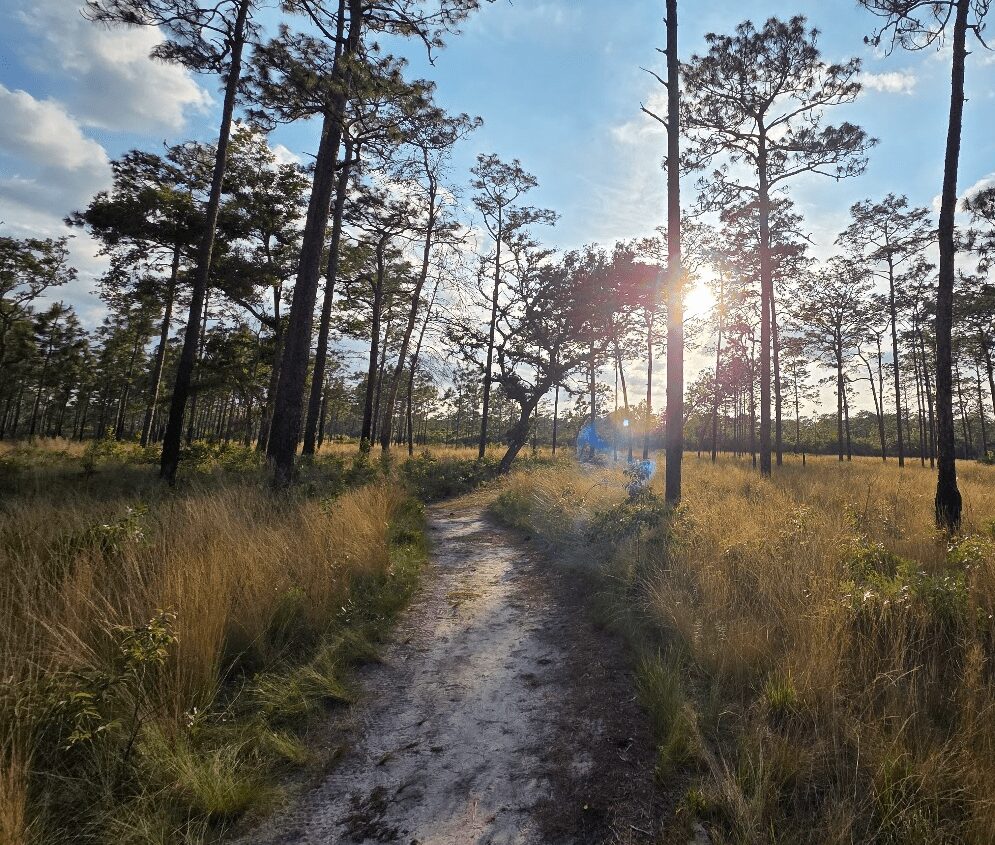
This 5.9-mile trail is accessible, rewarding, varied, and finishes with a swim. What more could you ask for?
We would rank it as easy to moderate, with a surprising 190 feet of elevation gain and sandy stretches. Allot 2-2.5 hours to hike it or 1.5 hours to run it (depending on pace).
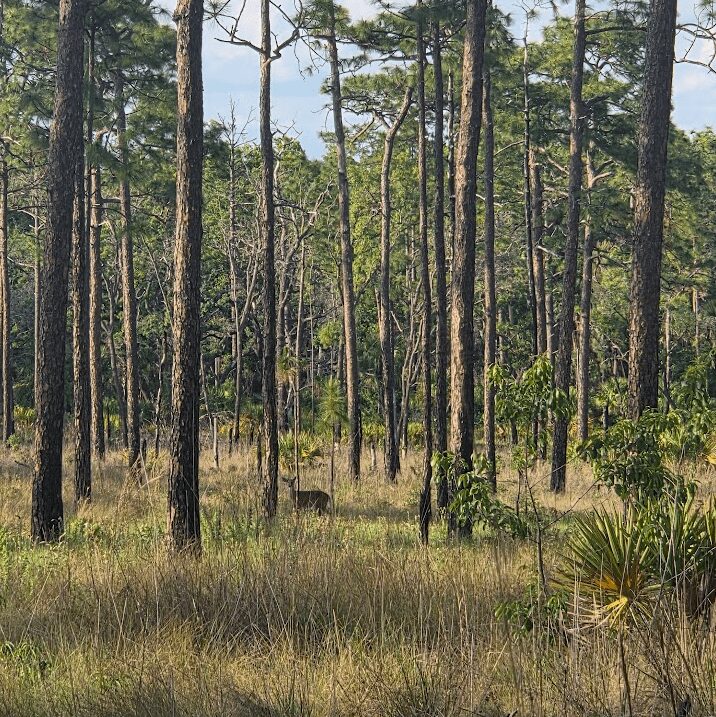
I would recommend hiking the loop counterclockwise. In the mornings and evenings you should expect to see a lot of wildlife, especially deer.
Make sure to bring water, as the sandhills do not have a lot of shade. Bring your AllTrails map and close-toed shoes, as well as bug spray.
If you are short on time, don’t worry, connecting trails exist for a shorter loop. Just make sure you are paying attention to the trail markers.
Hiking Tips:
- Bring water, the longer the trail the more you will need; the sandhills do not have a lot of shade
- Download offline maps before arrival (trail map QR codes are also posted at trailhead kiosks and the Ranger Station)
- Bring bug repellant and close-toed shoes
- Make noise and know how to act around black bears, they are known to inhabit this park (Stay calm, make yourself look large, and make a lot of noise. Do not run.)
- The park closes at sundown and you must be out by then, so start the long trails early
Best Time to Visit
| eason | Crowds | Why go |
|---|---|---|
| Fall and winter (September–February) | The lightest; September is still busy as summer crowds taper off | Comfortable hiking and swimming, less active bugs, the most visible wildlife, and your best chance to see manatees in the Wekiva River system |
| Spring (March–May) | Spring break crowds | Wildflowers and good weather, but you are reliant on the day-use reservation system to ensure entry |
| Summer (June–August) | Peak season; reservations can fill weeks in advance | The cool water is the most needed |
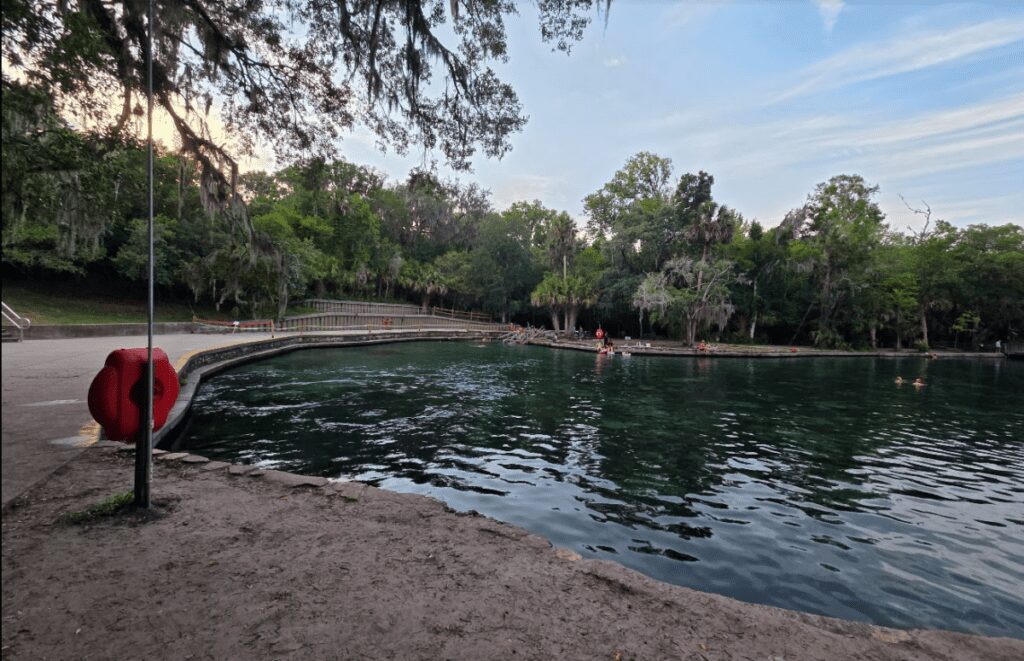
Early mornings are the best for hiking as wildlife will be the most active. I personally enjoy evenings the most for swimming, after the crowds die down.
Pro tip: Visit Wekiwa Springs in the winter. The water will feel warm and the hiking will be the most enjoyable. It’s a completely different experience than the summer.
Entrance Fees and Hours
| Entry or service | Fee (as of October 2026) |
|---|---|
| Vehicle (2–8 people) | $6 |
| Single-occupant vehicle | $4 |
| Pedestrians, cyclists, and extra passengers | $2 each |
| Paddlers entering from the river | $2 per person |
| Annual passholders | Covered by the pass (passengers of an Individual pass holder pay $2), but a reservation is still required |
| Campsite | $24 per night + tax, a $7 nightly utility fee, and a $6.70 nonrefundable reservation fee |
| Primitive campsite | $5 per person per night + tax |
Hours: Open daily, 8am until sundown, 365 days a year. Usually in the summer this is around 8pm. Swimming ends 30 minutes before the park closes. The Nature Center has restricted hours on weekends from 12pm-3pm, and the Watering Hole snack bar is open daily from 9am to 6pm.
How Day-Use Reservations Work
Reservations are required, and walk-ins are not permitted. They have been mandatory since September 2, 2025, implemented to eliminate the lines of cars which disrupted local traffic during peak season. Here is how to book:
- Create an account at reserve.floridastateparks.org ahead of time.
- Choose Wekiwa Springs State Park and your date, up to 60 days in advance.
- Pay the entry fee when you book ($6 per vehicle as of October 2026). There is no extra booking fee. Annual passholders select “Annual Passholder” as the payment option.
- Show your digital or printed receipt at the ranger station, plus your annual pass if you used one.
| Rule | How it works |
|---|---|
| Booking window | Up to 60 days ahead |
| Same-day | Available until the park’s daily limit is reached, but should not be relied upon |
| Walk-ins | Not permitted |
| Cancellations | Canceled reservations may be refunded; no-shows are not |
| Re-entry | Ask the ranger station for a re-entry ticket before you leave |
| Campers | Your camping reservation gets you in; no separate day-use reservation |
| Pavilion renters | Can pay for their guests’ reservations; contact the park at 407-553-4383 |
Reservations are required. This is a new rule, implemented to eliminate the lines of cars which disrupt local traffic during peak season.
- Reservations can be made up to 60 days in advance at the Florida State Parks website
- Same day reservations are available until the daily limit, but should not be relied upon
- Annual passholders still need a reservation
- The entry fee is paid at the time you book your reservation
- Camping reservations for developed and primitive sites require an additional fee
What If Wekiwa Springs Is Full?
If your date is sold out, keep checking the reservation site through the day, because openings appear as visitors leave. Without a reservation you will not get in, so have a backup: Rock Springs at Kelly Park (16 minutes away, online tickets required), Blue Spring State Park (48 minutes, also reservation-only), or a paddle from King’s Landing (16 minutes). For other Central Florida springs, check the below map of nearby springs.
How to Get There
Address: 1800 Wekiwa Circle, Apopka, FL 32712
This park is located less than 30 minutes from Orlando and is not far from modern conveniences.
What to Bring
I would recommend the following:
| Bring | Leave at home |
|---|---|
| Shoes for hiking, plus Crocs or Tevas for walking down to the spring | Alcohol |
| Swimsuit, towels, and a change of clothes if you don’t plan to hang out to dry off | Glass containers |
| Mineral sunscreen and bug spray | Drones |
| Mask and snorkel (fins if you like them) | Grills, pop-up tents, and canopies for the spring lawn |
| Water for hiking, plus snacks and lunch | Scuba or hookah gear |
| Your reservation receipt (and annual pass) | Pets in the swimming area |
| Money for the gift shop and snack bar |
For camping, plan for bear-proof food storage.
Tips to Avoid Crowds
- Book your reservation early – they can be made up to 60 days in advance. For summer weekends, this needs to be done as soon as possible.
- Visit on a weekday. Tuesday through Thursday have the lightest attendance year-round.
- Go in fall or winter. October through February have smaller crowds, comfortable weather for hiking, and the same 72°F spring water.
- Arrive right at opening or late in the evening. While early birds get the best parking spots and first access to kayak rentals, coming in the evening is a fun way to add a springs visit to your mid-week schedule.
- Book a concession tour. At the time of this writing, you are exempt from the day-use entry fee and have a smoother entry if you purchase a tour with Wekiwa Springs Adventures.
- Hike the Volksmarch Trail first. Heat up before jumping in to cool off, and the water will be more pleasant. The crowds may be starting to thin by the time you finish your hike.
- Check for closures before you go. Specific trails can be closed without much notice. Prescribed burns are possible. Check the park website before you go.
- Get a reentry pass before leaving. If you need to leave mid-day, get a re-entry ticket from the park ranger before exiting.
Where to Stay Nearby
First, I would recommend staying central to all of your Orlando destinations. If you came here solely to visit the attractions around the Wekiva River, stay in Altamonte Springs or Longwood for a variety of budget options.
Camping is available at Wekiwa Springs State Park with 60 sites in the sandhill campground, each with water, electric, a fire ring with grill, and a picnic table (some have sewer, and RVs up to 50 feet fit). Sites are $24 per night plus tax and fees as of October 2026. The most adventurous will want to primitive canoe-camp on the Wekiva River at Otter Camp or Big Buck Camp, or hike in to Camp Cozy (about 3 miles) or Big Fork (about 1 mile); call 407-553-4383 to reserve primitive sites up to 60 days ahead.
Nearby Things to Do
Wekiwa Springs is ideally situated for a full-day or multi-day Central Florida outdoor adventure:
| Place | Drive | Why go |
|---|---|---|
| Wekiva Island | 4 min | This is where to go to party on the river with an outdoor bar, grill, live music, kayak rentals, and volleyball |
| Rock Springs Run State Reserve | Adjacent (entrance in Sorrento) | About 14 miles of hiking trails and 17 miles of horse trails; $3 per vehicle |
| Kelly Park/Rock Springs | 16 min | One of the best tubing runs in the state, feeding the same river |
| Kings Landing | 16 min | The best launch point for the legendary Emerald Cut kayaking run |
| Lake Apopka Wildlife Drive | 22 min | A free 11-mile wildlife loop with world-class birding through restored wetlands |
| Mount Dora | 33 min | Charming lakeside town with antique shops, art galleries, and great restaurants |
Other Springs Near Wekiwa Springs State Park
- Rock Springs / Kelly Park – the best tubing run in Central Florida, with crystal-clear water flowing through a subtropical canopy. You must show up early to beat the capacity limit.
- Blue Spring State Park (30 minutes northeast) – Florida’s largest first-magnitude spring on the St. John’s River. This park is famous for massive winter manatee aggregations, and swimming/tubing are allowed outside manatee season.
- Alexander Springs (60 minutes north) – One of the most spacious and beautiful springs, with a large beach-like swimming area, great for families.
- DeLeon Springs State Park (45 minutes northeast) – A spring-fed swimming area paired with a famous pancake restaurant inside a restored sugar mill. There is no better place to fill up and go for a swim.
- Silver Springs State Park (75 minutes north) – World-famous glass-bottom boat tours over one of Florida’s most extraordinary springs. Also home to wild monkeys.
Hiking Trails Near Wekiwa Springs State Park
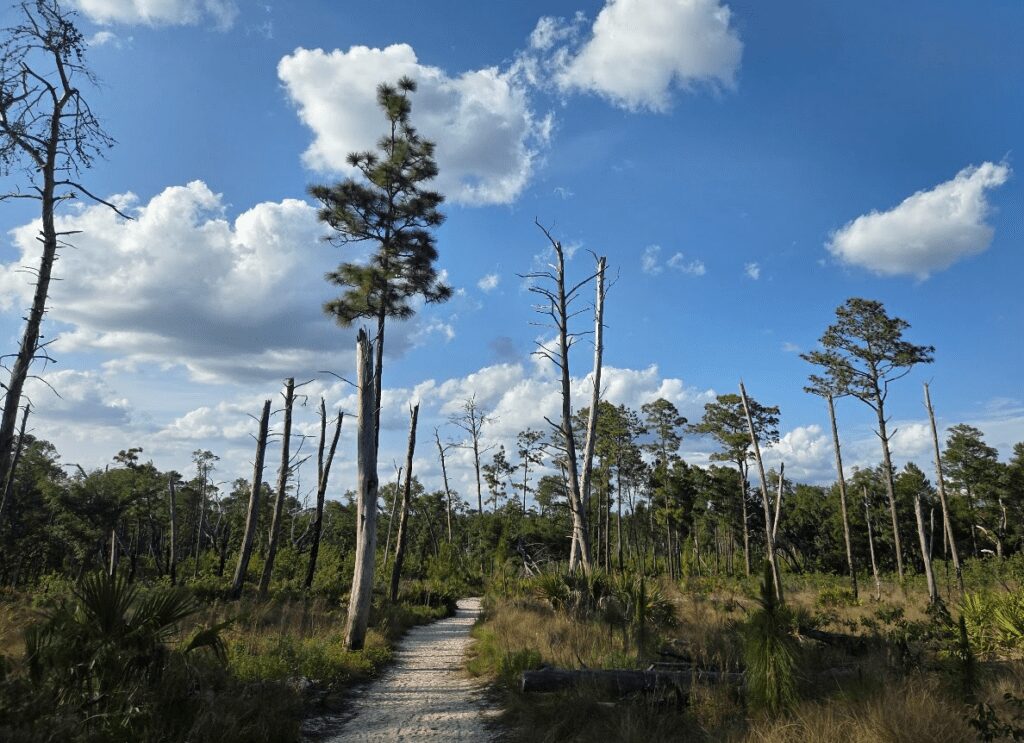
This park offers over 25 miles of multi-use trails through diverse ecosystems of sandhills, flatwoods, hammocks, and swamps.
The major trails are as follows:
- Wet-to-Dry Trail (0.8 miles, easy): This is the most popular short trail in the park. It runs along an ADA-compliant boardwalk from the spring outflow through a wet hardwood hammock and then drier upland habitat. This is great for families or people in a rush.
- Volksmarch Trail (5.9 miles, easy-moderate): The park’s best all-around hike. Not too short, not too long. Orange blazes guide you through pine flatwoods, open sandhills, longleaf pine uplands, and back to the spring. This is the trail we recommend to everyone who wants more than a swim.
- Wekiwa Springs White Trail Loop (12.5 miles, moderate): A longer, more demanding hike for the real ones. You will experience the park’s full range of habitats from wet riverine hammocks to dry scrubby sandhills. The Florida Trail Association built and maintains this trail. This trail is best for wildlife and solitude. Bring plenty of water and plan to see deer, turkeys, and possibly black bears.
- Mill Creek Loop Trail (3.4 miles, easy): The majority of this hike is along a sandy trail through flatlands. Bring bug spray and sun protection.
Hiking Tips:
- Bring water, the longer the trail the more you will need
- Download offline maps before arrival
- Bring bug repellant
- Make noise and know how to act around black bears, they are known to inhabit this park (Stay calm, make yourself look large, and make a lot of noise. Do not run.)
- Trails close one hour before sunset
Restaurants Near Wekiwa Springs State Park
There are lots of restaurants in Longwood and Altamonte Springs, but here are our best recommendations near the park:
- The Watering Hole: Inside Wekiwa Springs State Park, this restaurant is open from 9-6 daily.
- Without a Paddle Café and Wekiva Island: We recommend visiting this iconic riverfront hangout just downstream from the park for more of a party atmosphere. This food truck makes mean quesadillas and tacos.
For a sit-down restaurant nearby, head to the Goblin Market in Mount Dora. You may need a reservation, but it is worth it.
Pros and Cons
Pros:
- Closest spring to downtown Orlando
- Clear, constant spring water in an open, natural setting
- Less traffic backup with the day use fees
- On-site canoe and kayak rentals available
- On-site food and gift shop
- Great wildlife diversity, you may see deer, turkeys, and even black bears and the Orlando Cave Crayfish if you are lucky
- Lots of hiking opportunities in this park
- ADA accessibility for the boardwalk and chair lift
- Camping available right in the park
Cons:
- Day use reservations are now required
- No lifeguard on duty, you are responsible for your own safety
- Snokeling is restricted to the spring pool only
- The sandhill sections of the hiking trails are rough in the summer: cover up, wear sunscreen, and bring a lot of water
- Mosquitos love the lake near the spring
- Alcohol is not permitted in the park
Sample Itinerary
Get your reservation at least 2 weeks out from your planned date.
For a half-day at Wekiwa Springs State Park:
- Arrive at park open – 8 am
- Hike the Volksmarch trail – finish around 10 am
- Snorkel and swim in the spring until around noon
- Head out and eat lunch nearby
For a full-day summer Wekiva River experience:
- Start at Kings Landing at open. Paddle Emerald Cut and then to Wekiva Island.
- Take the shuttle back to Kings Landing at 3:30.
- At 4pm, eat a packed lunch or head to Wekiva Island for a quesadilla.
- Arrive at Wekiva Springs State Park around 4:30-5pm. Make sure to verify with the ranger when the park closes.
- Hike the Volksmarch Trail or a short trail if you are a slow hiker. You can take a connector and make the Volksmarch Trail shorter.
- At 6:30-7pm, swim until park closes. The water will be mostly empty, and the springs have a different feeling in the evening.
You can also combine Kelly Park/Rock Springs tubing with Wekiwa Springs State Park for an epic springs day. Just make sure to buy your Kelly Park entry ticket online first.
Frequently Asked Questions
Is it Wekiwa Springs or Wekiva Springs?
Both are used. The spring and state park are spelled Wekiwa, and the river is the Wekiva, so “Wekiva Springs” and “Wekiva State Park” point to the same place. Wekiva Springs is also a community in Seminole County next to the park.
Is Wekiwa Springs State Park worth visiting?
Absolutely: Wekiwa Springs is one of the finest natural experiences available within easy driving of Orlando. Between swimming at the spring, extraordinary hiking, world-class paddling on the Wild and Scenic River, and wildlife that ranges from black bears to endangered crayfish, this park offers something that no theme park can: a glimpse into real Florida, unchanged through the years.
Do you need reservations to visit Wekiwa Springs?
Yes, since September 2, 2025, and walk-ins aren’t permitted. Reservations can be made up to 60 days in advance at reserve.floridastateparks.org, and may be sold out weeks ahead of time for weekend visits in the summer.
How deep is Wekiwa Springs?
The main swim area is generally 2–5 feet deep. The main spring vent plunges deeper; I would estimate 15–20 feet.
Can you swim year-round?
Yes, the spring is a constant 72°F every day of the year. In the summer it is a great escape from the heat, and in the winter it can feel warm. The park is open year-round.
Are there alligators at Wekiwa Springs?
Yes, alligators are present. While sightings on the river are common and expected, alligators tend to stay away from the swimming area. The park monitors and will close it as needed.
Are there bathrooms available?
Yes, restroom facilities are available near the spring swimming area and throughout the campground.
Are pets allowed?
Leashed pets are allowed on the trails, but not the swimming area.
Can you bike at Wekiwa Springs?
Yes. There is a red-blazed bike trail that overlaps with portions of the hiking trail system. Mountain biking is popular here, especially in the cooler months.
Are manatees visible at Wekiwa Springs?
Occasionally in the winter, manatees will migrate up the St. Johns River into the Wekiva River for the warm spring water. Sightings are possible but not common. Blue Springs is the place to go for more frequent sightings in the area.
Our Experience at Wekiwa Springs State Park
We have been coming to Wekiwa Springs for years, and I have to say that the reservation system improved the park. You used to have to wait in lines similar to Kelly Park, which added stress and time to your visit. With the new reservation system, you can drop in for a quick swim after work without too much hassle.
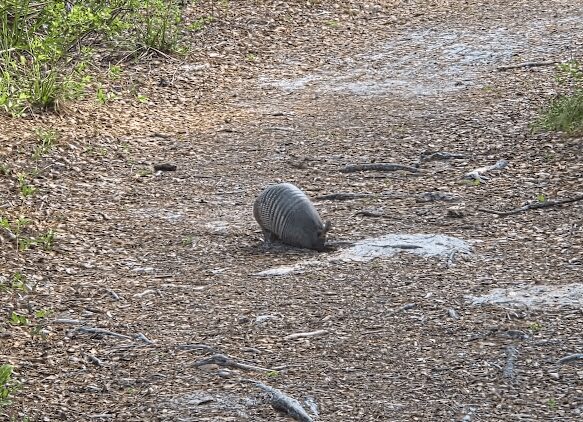
If you’ve been following Roam and Refine, you know that we like to heat up on a hike before jumping in to swim. The Volksmarch Trail is my favorite at this park, and it is just the right length to take a couple hours without burning you out. The most common animals we see on the trail are squirrels, deer, armadillos, and turkeys.
On our last visit, I got attacked by sweat bees on the trail. I would recommend bringing bug spray in the summer and avoiding brightly colored clothes, those seem to set them off.
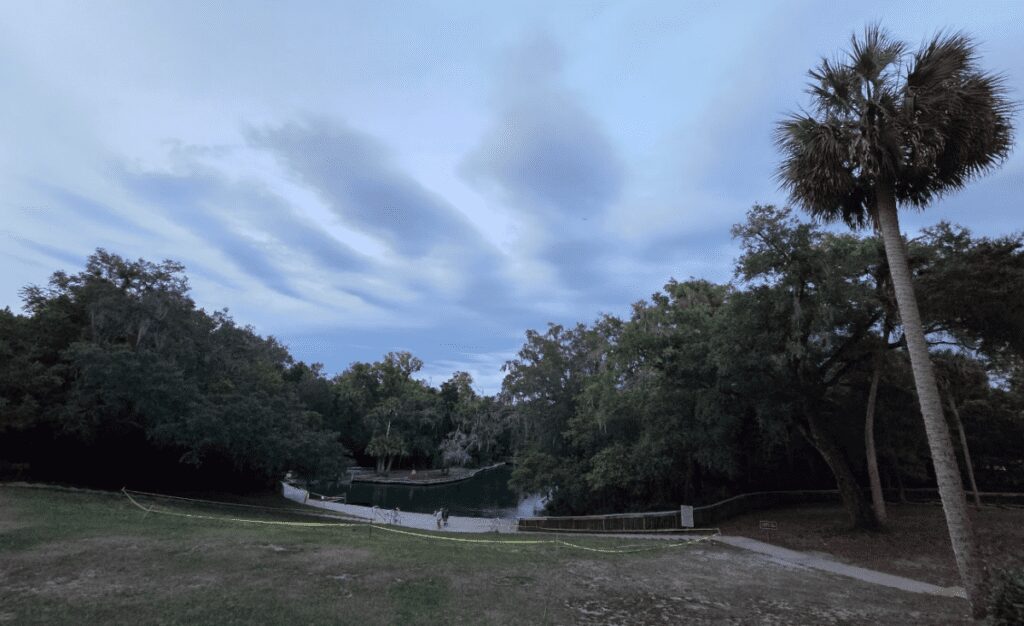
We arrived on an April evening, and the crowds had mostly dispersed, leaving us and a few swimmers in the spring pool.
Our most recent visit was something to remember – I have to tell you about the evening we saw an Orlando Cave Crayfish in the spring pool.
My wife and I jumped in to the refreshing water after our hike and made our rounds. By made our rounds, I mean snorkeled the perimeter of the pool and found all of the fish and turtles. During the rounds, we try to pick up all of the trash in the spring. We were very disappointed in the amount of garbage in Wekiwa Springs, it filled up both of my pockets. While we removed all we saw, I’m sure there was more. Do your part and pick up all the trash you see.
Our routine continued by swimming over to the vents. At the spring vent, there are two goals involving the outflowing water: touch the bottom and look for creatures. There is a major and a minor spring vent at Wekiwa. We did not mess with the minor much since it is kind of a narrow cave.
We dove down between the rocks at the major vent, which was pretty neat with the strong water outflow. The spring vent is surrounded by slippery rocks, covered in algae. There were also a significant number of Plecostomus living under the metal walls lining the pool, but they seemed to stay out of the vent.
On top of the slippery rocks, my wife called me over to see a crawfish. I moseyed my way over in the evening light and saw where she was pointing. This was no regular crawfish; it was pure translucent white and unbothered by us. On close inspection, the crawfish had no eyes. We left it alone and did not think much of it.
When I told my brother the next day about the crawfish, he let us know that it was actually really rare and a cool find. I went down the rabbit hole researching and learned that it was an Orlando Cave Crayfish. These are exceedingly rare and are almost never out in the open. They live in caves from the aquifer, and are found at only four locations in the world – all in Orange and Seminole County, Florida.
We learned that these little white crayfish are a critical indicator species living inside Florida’s drinking water supply, and that they are endangered. Since the crayfish was alive, I guess that means the aquifer is not totally contaminated.
If you are confused about the difference between crayfish, crawfish, and crawdads, we were too. We heard on a podcast earlier this year that crayfish are for studying, crawfish are for eating, and crawdads are for using to catch fish. They are all the same animal, different groups just interact and label them differently. The endangered Orlando Cave variant is squarely in the “crayfish” category, not to be eaten or used as bait.
Once it started to get dark, we headed home. The park ranger told us that we could stay until 8pm, so we made sure to get out before then.
What We Would Do Differently
- Wear bug spray and skip the bright colors on summer hikes; the sweat bees found me on the trail.
- Bring a small mesh bag for the trash we pick up in the spring, instead of stuffing it in our pockets.
- Book summer weekend reservations as soon as we know our dates.
Final Thoughts
Easily accessible from the Orlando metro, Wekiwa Springs State Park is a great park, offering unusual animal life and access to world-class paddling. The new reservation system actually improved the experience. Your visit is now streamlined, letting you roll in, park, hike, swim, and paddle – all without waiting in line.
If Wekiwa Springs gets you hooked, The Floridian’s Guide to Springsmaxxing lays out where to go next.

Leave a Reply