
Most runners have one or two long-run routes that they extend to fit each week’s mileage requirements. These routes are repetitive and boring: an out-and-back from the neighborhood and a loop around the park.
Trail running doesn’t have to mean repeating the same local loop every weekend. Trailsmaxxing is a simple system for discovering new trail running routes while following your normal marathon or half marathon training plan.
A trailsmaxxer operates differently, and every weekend run is a scouting mission. Every trail system within driving distance is a target: state parks, national forests, state forests, wildlife management areas, county greenways, and conservation easements are all fair game. As long as they contain a trail long enough to cover this week’s mileage, they are fair game. The location rotates, and the experience never gets stale.
Trailsmaxxing is the practice of using your weekly long run as the vehicle for systematically exploring every trail system in your region. You will build a library of routes, accumulate local knowledge, and treat each weekend long run as a real adventure rather than a maintenance task.
This guide will share everything I’ve learned so far in my short tenure as a trailsmaxxer.
Quick Take
- Best For: Half marathon, marathon, and ultra runners
- Time Required: One long run each week
- Difficulty: Beginner to Advanced
- Cost: Free (park entrance fees may apply)
- Gear Needed: Trail shoes, hydration, nutrition, downloaded map
- Goal: Explore every trail system within driving distance
What Trailsmaxxing Actually Is
Trailsmaxxing is not trail racing or ultramarathon training, though these make natural pairs. It’s not hiking with running shoes, and it’s not road running on dirt.
Trailsmaxxing is the deliberate accumulation of trail systems approached through the lens of your weekly run. The training is constant, but the terrain is variable, as each long run takes you somewhere new.
Instead of running the same trail or circuit on repeat, you rotate through every trail system in the region that meets your training plan’s length requirement. When your training block adds mileage, new trails that were previously too short become appropriate for your long run. When it tapers, revisit shorter systems.
After a year or two, the result is astounding. You will know your local landscape and have moved through it across every season. You know which trails drain well in the summer and which turn to mud the day after rain. You will be able to combine fitness with pre-season scouting for this fall’s hunt. You will be more confident, able to navigate safely through the wilderness. You will be a more fit athlete, and a more grounded outdoorsman.
I started trailsmaxxing after getting bored of extending the same neighborhood long run every weekend. Since then, I have run every trail in the local state forest, and discovered many other trails worth hiking and running in the vicinity that I never knew existed. This is now my favorite part of marathon training.
Who Should Try Trailsmaxxing?
This practice works well for:
- Marathon and half marathon runners
- Ultrarunners
- Trail runners
- Hunters looking to scout public land
- Hikers transitioning into running
- Outdoor enthusiasts tired of repetitive routes
Why the Long Run Makes the Most Sense
Any run could theoretically be used for trailsmaxxing, but the weekly long run is my choice for several reasons:
You have the time. Long runs are your longest effort of the week and are already carved into your schedule. They are typically run at a Zone 1-2 pace, which means your attention is available for the environment you’re moving through. You are not hammering a tempo run or blasting through intervals, so you have time to look around and turn at the right spot. Going slow is best so you don’t trip on rocks or roots, like I did on my first trail run.
The mileage requirement creates natural filtering. If this week’s long run is 12 miles, you need a trail system that has 12 miles of connected trail without repeating. This narrows your options and makes selection easier. Not every trail is long enough, and the ones that are direct you to more substantial parks and forests.
You only need one per week. Trailsmaxxing doesn’t require you to overhaul your training. Keep all of your weekday runs where they are, and keep speedwork on the tracks or roads. Take the long run somewhere new each week, and one new trail system per week adds up to 50 or more in a year.
The repetition builds knowledge. Running every trail in your region systematically, over multiple seasons, builds fluency. You understand how the land and watersheds work. You are more tuned-in for gardening, hunting, and fishing.
Here’s a quick comparison between a traditional long run and trail running:
| Traditional Long Run | Trailsmaxxing |
| Same route every week | New trail every week |
| Neighborhood roads | Public lands and forests |
| Familiar scenery | Constant exploration |
| Limited route knowledge | Growing trail inventory |
| Can become repetitive | Feels like an adventure |
What Counts as a Trail
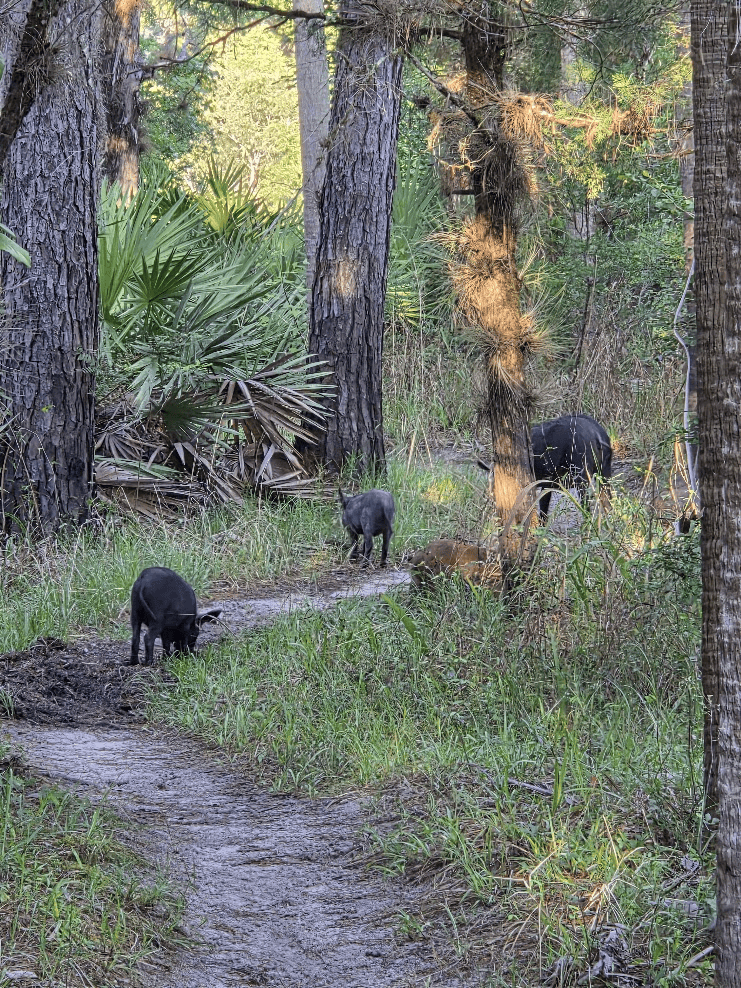
We define a trail as any managed path through natural or semi-natural land, regardless of who manages it. Here are some of the best places to find them:
State Parks and State Forests: These are the foundation of regional trails. State parks generally have well-maintained trails with marked loops. State forests usually have more extensive and wild networks, but they are less maintained and require more navigation and woodsmanship. State forests offer more total mileage and fewer people.
National Forests: Contain massive trail inventories and are excellent for long runs. The Chattahoochee-Oconee in Georgia, the Pisgah in North Carolina, and the Ocala in Florida contain miles and miles of trails. Consider yourself lucky if you live within an hour of a National Forest.
National Parks and National Monuments: Where trail running is permitted, NPS trails are normally phenomenal. Regulations vary by unit, so check before you go.
Wildlife Management Areas (WMAs): These are the best-kept secret for trail runners. WMAs are primarily managed for hunting and wildlife, which means that they have road systems, trails, and access routes that see almost no foot traffic outside of hunting season. The terrain is interesting, the mileage can be substantial, and you are likely to have the trail to yourself.
County and Municipal Parks: Some county parks have seriously invested in trail maintenance, while others have a half-mile paved loop. Check your and nearby counties, there may be a gem.
Rail-to-Trails and Greenways: These don’t have the technical character of other trails, but they are worth including for recovery long runs, bad weather, and easy-pace days. A 20-mile rail trail is useful.
Conservation Easements and Land Trust Properties: These are often overlooked because they are hard to find. Local and regional land trusts may hold trail access on properties that do not show up in all databases. The Florida Trail Association, the Appalachian Mountains Club, and state trail coalitions often maintain trail systems on private or conserved land, so make sure to get on their mailing list.
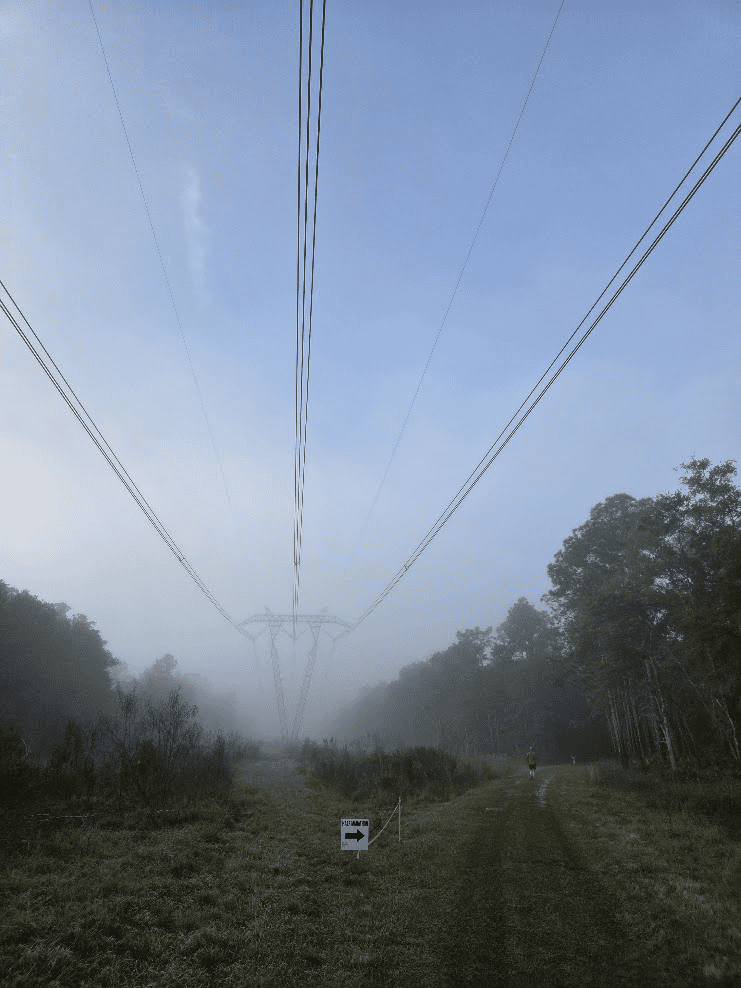
Utility Corridors and Water Authority Lands: Power line cuts, pipeline corridors, and watershed properties managed by municipal authorities sometimes have legal foot access. It’s worth researching what is in your region.
Matching Trails to Your Training Cycle
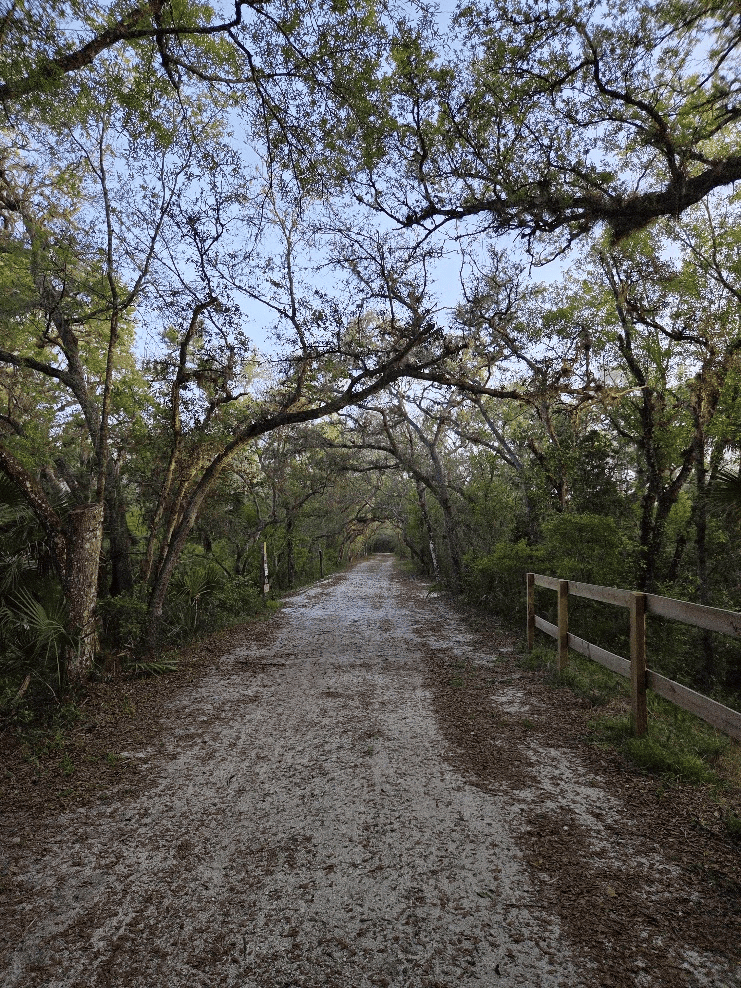
The core feature of trailsmaxxing is matching trail length to the week’s long run requirement. Your trail inventory needs to be organized by approximate mileage, and you need options at each mileage band to rotate through.
If these trails sound too long for you, try our guide to How to Start Running. Once you complete that and start our guide to Run Your First Half Marathon, do your long runs on trails.
I have lists in AllTrails with options saved for the following:
6-11 miles: Entry-level long runs, for base phase training and recovery weeks. You may be surprised at how many options there are in your area for this length of trail.
12-15 miles: Core long-run zone for recreational and half-marathon runners. This band requires trail systems with interconnected routes.
16-20 miles: Marathon training territory, requiring extensive trail networks like state forests with multiple systems, national forests, or large state parks. You may have to get creative by linking adjacent properties or parking in the middle and running both ways depending on where you live.
20+ miles: Ultra training or high-mileage marathon blocks. At this length, you have to be more strategic on route planning rather than following a single trail. Linking multiple trails across a forest or running point to point with a spouse or friend dropping you off will enable this length of run.
Build your inventory now, before you need it. Don’t wait until the week of an 18-mile run to figure out that there are no options in your region. Collect every option and assess mileage potential so that you will be ready for anything.
Building Your Trail Inventory
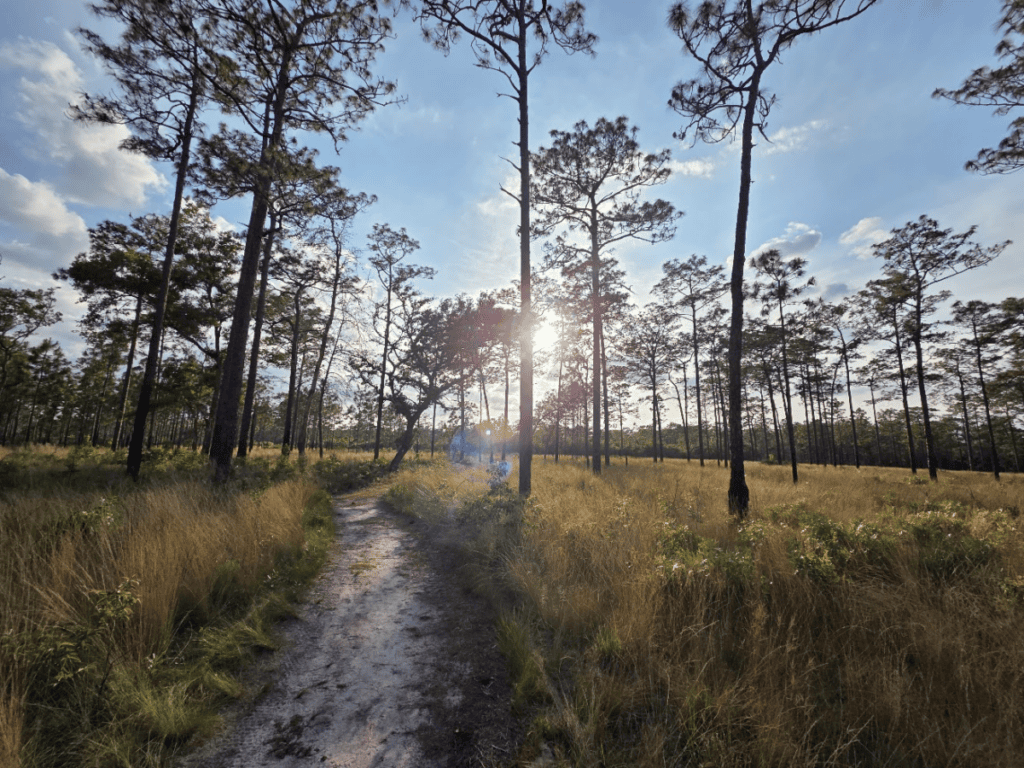
This is the hard part: you have to know what exists before you can begin your rotation. Here are the steps I use:
- County by county audit: Start with your home county and identify every natural area with trail access. Make sure to check each state park, state forest, county park, WMA, conservation property, national forest, and any other public land. Don’t filter by whether you think the trails are long enough. If they are 4 or more miles, catalog them.
- Push into surrounding counties: Trailsmaxxing, like parksmaxxing, expands outward by radius from home. Set a reasonable driving radius for a weekend morning (60-90 minutes each way or whatever you’re willing to commit to) and check for public land containing trails within that circle.
- Use AllTrails as a starting point: This is the most comprehensive database of mapped trails in the US. Search by area and filter by length to get a good idea of what exists. This app is not complete, and local trail systems, WMA access routes, and land trust properties may be missing.
- Cross-reference with state and federal agencies: Your state’s parks department likely has an official trail database. The US Forest Service maintains trail inventories, and the NPS has trail data for every park. Often, they will include additional trails that have not made their way into AllTrails yet.
- Find the local trail running community: Regions with a trail scene generally have a local trail running club, Facebook group, or a running store with group runs. Get plugged in and talk to people and learn about trails and connections you might not have found yet.
- Build your list: A spreadsheet works fine, and AllTrails lists that you curate are a good starting point. Make sure to note name, location, mileage, address, and any pertinent information. Keep the list updated.
Make sure to adjust your schedule to plan for the new (though usually short) time commitment of driving to trails. Here’s our guide to fitting fitness into a busy weekly schedule.
Weekly Rotation
Once you have a list of trails saved, the rotation is straightforward. When a long run week comes up, look at the week’s mileage and pull from an appropriate tier in your inventory. Try to prioritize trails that you haven’t run recently or within the current season.
Here are a few rules of thumb:
Run each trail in multiple seasons before declaring a verdict. A trail that is flooded and covered in bugs in July might be awesome in February.
Let the training cycle determine the tier. In base phase, you are running shorter long runs. As the cycle builds, move up tiers, then drop back down in the taper. The mileage constraint should be the primary filter.
Keep the radius elastic. If you have some extra free time, consider a trail further out. Stay closer to home if you have a tight schedule. Vacations offer the chance to run trails in new regions.
Log the conditions and the distance. Update your spreadsheet and note what the trail was like. Share pictures on AllTrails to help others.
Trail Running Gear: What Actually Matters
Most road running gear carries over. Here are some important differences:
Trail Shoes: Trail runners have outsoles designed to grip on dirt, roots, and rock that engage on loose terrain. You don’t need max cushion or carbon plates, you need grip and a secure fit. Keep a couple of options in rotation. Most of the time, conditions are favorable enough in Florida that I just run in road running shoes like Brooks Ghost.
Running Vest or Hydration Pack: This is one of the most important pieces of gear for long trail runs. If you’re going past 10 miles on a trail system, you need to carry enough fluid to finish safely. A soft flask or bladder-based pack is necessary for serious trailsmaxxing.
Soft Flasks: Even if you’re running a shorter trail, bring a little extra water beyond what you think you’ll need. Remember, there are no aid stations or convenience stores.
Navigation: Make sure your phone is charged and download Gaia GPS with the trail layer for your area. Run with your phone accessible. This is essential on less popular state forest trails and WMA access roads.
Trekking Poles: Optional for most, but a good idea in really hilly terrain.
A headlamp: If you are doing an afternoon or evening run, you need this. If you are starting early, you probably also need this. It doesn’t hurt to carry a lightweight headlamp in your pack.
A whistle: These weigh around an ounce and could save your life.
Safety and Self-Sufficiency

Trail running demands more self-sufficiency than road running. On a road, help is usually available. On a remote trail, it might not be.
File your route. Text your spouse or a friend with your AllTrails route and when you are going and they should expect to hear from you. This is the most important safety habit. You want to make sure somebody knows where you are.
Know the cell coverage situation. Many trail systems have no cell service. Check coverage maps and make sure to download offline maps. Personally, I bring a Garmin inReach on long runs and keep it in my fanny pack. I want to ensure I can get help on the way, and that they will know the exact place look for me.
Carry more than you think you need. On a road, you can DNF gracefully. On a trail, there are not easy options. Carry extra nutrition, extra water, and more emergency gear than you think you need.
Learn basic navigation. At the very least, learn how to orient yourself on a map, recognize when you go off trail, and make good decisions about turning around. The most dangerous thing you can do is keep going forward when you should go back.
Know the wildlife situation. This is region-specific. In Florida, watch for gators, bears, snakes, and hogs. In the Appalachian Mountains, watch for bears and snakes. In the West, watch for mountain lions and again, bears. Know what’s in your region, how to behave around it, and don’t run with both earbuds in.
Trail Running Etiquette
This is not complicated, but at least remember the following:
- Yield to horses.
- Yield to hikers on climbs, pass with communication on descent.
- Stay on trail and don’t shortcut switchbacks.
- Pack out everything. Put your gel wrappers in your pocket.
- Know hunting seasons and wear blaze orange if you’re in WMAs or state forests during hunting season. Better yet, avoid these trails during the season for maximum safety.
Seasonal Trail Running Calendar
Each season brings something different, and this is location-dependent.
Winter: conditions are the hardest in a lot of the country, but the best in the South and Southwest. If you are running up mountains, make sure to use microspikes and be smart about which trails are safe or not.
Spring: The most variable season. Some areas have wet trails, but Florida is dry and beautiful.
Summer: This is the toughest season, with humidity, heat, insects, snakes, and high vegetation. This is Florida monsoon season. Embrace the summer grind to build fall PRs.
Fall: Fall is another great time for trail running in most of the country. Cooler temperatures and firm ground are expected. Trail running may feel effortless and this is the time to drive out to further trails.
How to Start Trailsmaxxing
Continue to follow your existing training plan, and simply move your long run to a different trail this week. Find the closest trail system to your home that can hold your long run distance, download the map, and run it. Add it to your list. Next week, find a different one.
You don’t need to immediately buy anything new or commit to anything beyond your normal routine, other than directing one of your weekly runs to a trail.
The fitness takes care of itself, and your regional knowledge will accumulate.
What to Listen to While on Your Trail Run
I would recommend only one earbud, to maintain situational awareness and hear the morning animal and bird noises. You could listen to music, but my favorite choices are audiobooks and podcasts. Here are my favorites for a morning long trail run:
Can’t Hurt Me – David Goggins: You’ll feel unstoppable.
Smile, Or You’re Doing It Wrong – Andy Glaze: Hearing Andy’s resilience can help you build yours.
The King James Bible: The King James version of the Old Testament hits different when you’re 10 miles deep in the woods alone.
The Meateater Podcast: Long-form hunting podcast if you’re into that. I like listening and looking for animals.
Everyday Ultra: Long-form ultrarunning podcast that shares tips on training and performing ultramarathons.
The Florida Trail Runners Podcast: Long-form trail running podcast about Florida. Niche, but appropriate for Florida Trail Runners like me.
Quick-Start Checklist
You do not need everything in this list to start this week, but you should aim to do the following:
- Download AllTrails
- Download Gaia GPS for navigation backup
- Get a trail shoe or pick a current pair of running shoes with a lot of grip
- Get a running vest or hydration pack with 3L capacity or more
- Audit your county to find every managed area with trail access
- Build your trail inventory (through a spreadsheet or AllTrails list)
- Identify which tier matches your current long run distance
- Find a local trail running club
- Plan your first new trail – drive there this weekend
Common Mistakes
This is less forgiving than road running, so make sure to watch out for the following:
- Driving too far every weekend
- Running too fast. Make sure to slow down and watch for roots and rocks
- Running technical trails too fast
- Forgetting offline maps
- Underestimating water needs
- Underestimating nutrition needs
- Ignoring hunting season closures
- Never revisiting trails in different seasons
Frequently Asked Questions
Is trail running better than road running?
Neither is universally better. Trail running typically places less impact on your joints, builds more stabilizer strength, and offers constantly changing scenery. Road running makes it easier to maintain consistent pacing and prepare for road races. Most runners benefit from doing both.
Do I need trail running shoes?
Not always. Smooth trails and rail trails are often manageable in regular road shoes. Once trails become muddy, rocky, or technical, trail shoes provide significantly better grip and stability.
How far should I drive for a trail run?
Most trailsmaxxers choose a radius of 60 to 90 minutes for weekend long runs. Expanding your radius gradually allows you to discover new trail systems without spending more time driving than running.
What apps are best for finding trail runs?
AllTrails is the best starting point, but don’t stop there. Official state park websites, national forest trail maps, local trail running clubs, Gaia GPS, and regional hiking organizations often list trails that never appear in consumer apps.
Can beginners start trail running?
Absolutely. Beginners should start on well-marked, non-technical trails, slow their pace, and focus on staying upright rather than running fast. Trail experience develops quickly with consistent practice.
Do I have to be a fast runner to trailsmax?
No. Trail running pace is almost always slower than road running pace — more technical terrain, more elevation change, more navigation. Trailsmaxxing is about mileage coverage and terrain variety, not speed. If you can run a comfortable long run on roads, you can trailsmax. You’ll just run slower on trails, which is normal and expected.
What if my long run is only 6–8 miles? Are there enough trail systems that short?
Yes, the options are even more numerous at that length. Almost every regional trail system can handle a 6–8 mile run. At that mileage, you’ll exhaust your local inventory faster and need to push your radius outward sooner, which is fine. It just means you’re covering more geographic ground in the same number of weeks.
Can I trailsmax in a flat region without technical terrain?
Absolutely. Not all trails are singletrack through mountain terrain. Rails-to-trails, greenways, state forest roads, and flat pine flatwoods trails are all legitimate trailsmaxxing territory. Some of the best trail running in the country is in regions without significant elevation — the Florida Trail, the Pine Barrens of New Jersey, the bottomland forests of the Southeast. Flat terrain demands different fitness than hills, and it’s genuinely interesting to run.
How do I handle trails that are shorter than my long run distance?
Options: (1) Run an out-and-back on the main trail system plus a loop or two of connecting trails to hit mileage. (2) Drive to adjacent public land and link trail systems with a short road connector. (3) Run the trail, accept the shorter-than-prescribed long run, and treat it as an unplanned down week. (4) Add a road loop at the beginning or end to top up mileage. Don’t feel like trailsmaxxing requires every run to be exactly prescribed distance on trail only.
What about ticks and snakes?
Real concerns in most trail running regions. Spray your lower legs and shoes with permethrin-treated clothing or bug spray before going into wooded areas during tick season. Do a full tick check post-run. For snakes, watch where you step and don’t reach into places you can’t see. Most snake encounters on trail are non-events if you give them room. Running fast through brush during warm weather is the scenario most likely to result in a surprise encounter — slow down and pay attention in those conditions.
Can I trailsmax during marathon or race training?
Yes, and in many cases, trail long runs are better marathon preparation than road long runs, with more time on feet at equivalent effort, more strength work from terrain variability, less impact stress on legs from soft surfaces. The caveat is technical trail running can increase ankle injury risk if you’re not experienced. Build your trail skills gradually rather than jumping to the most technical terrain at peak training mileage.
How do I find trails that aren’t on AllTrails?
Local knowledge is the only reliable source. Join a local trail running group, a hiking club, or a hunting community in your region, all three communities know public land access that doesn’t show up in consumer databases. Check your state DNR’s official trail maps. Contact the managing office for state forest and WMA units directly. Show up at a local running store on group run day and ask the regulars.
Leave a Reply