

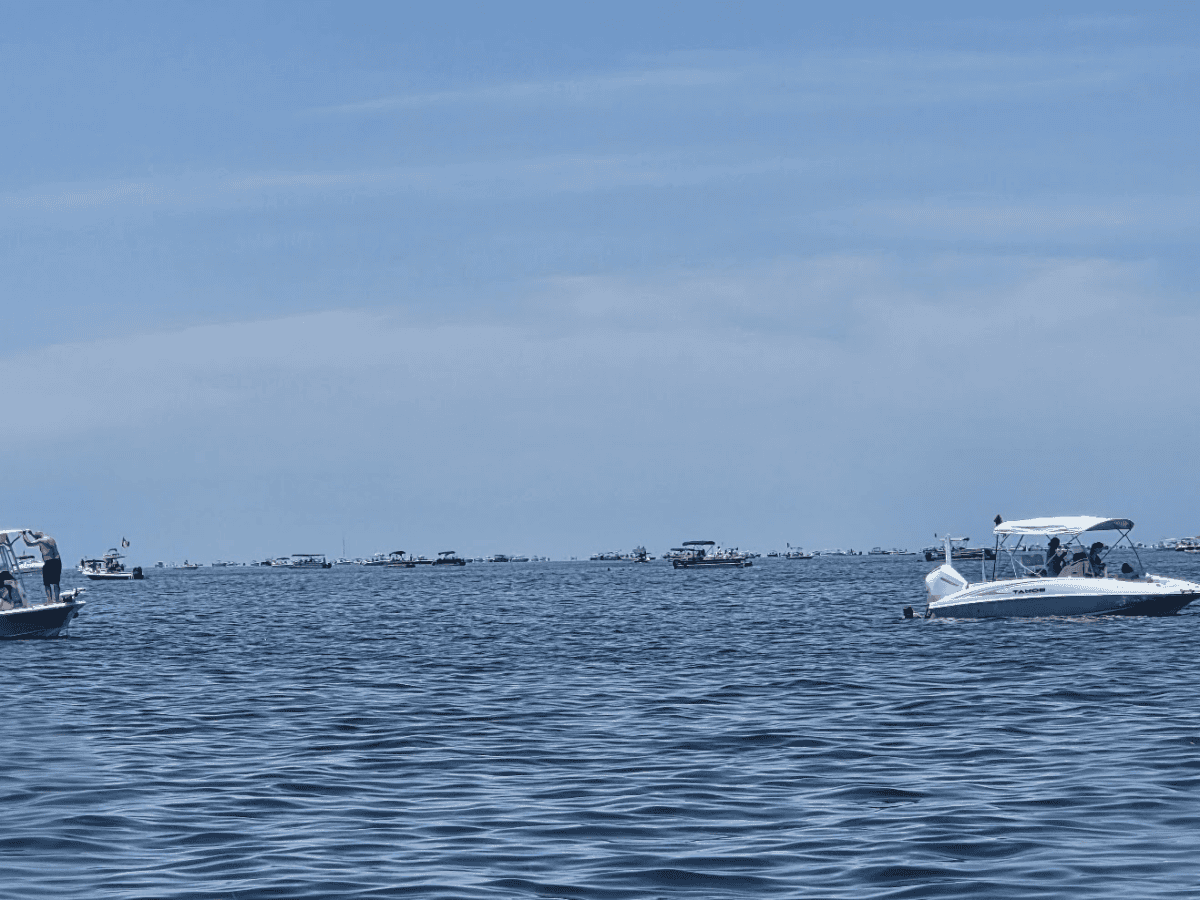
Here’s the real math behind buying versus renting a boat—and how it changes for Florida hunters and anglers. When your use case is filling the freezer, floating the Santa Fe, and hunting Florida’s backwaters, your conclusion might be different than for standard recreation.
Most of the rent vs. buy a boat content I see is for weekend recreational boaters who want to float around a lake with a cooler of beer. That’s not this post.
This one is for the central Florida outdoorsman, the guy whose boat isn’t a toy but a tool. You aren’t out to impress anybody, you’re trying to put crappie, bass, and catfish in the freezer. You want a boat you can take up the rivers for spring runs. You need something that can handle gator tags, duck season, and a few hog floats. Two or three times a year, you’re running down Crystal Bay or Cedar Key to scallop.
This use case changes the math significantly.
Quick Take
Before we dive into the details, here is a quick summary of this article:
Best For: Hunters, anglers, outdoorsmen
Best Choice for Most People: Buy a used jon boat with cash
Buy If: You’ll use it 12–20+ days/year
Rent If: You only boat a few weekends each year
Typical Annual Ownership Cost: $3,000–5,000
Break-Even: Roughly 10–20 trips per year
Should You Buy a Boat or Rent One?
Buy a used boat if:
- You fish monthly
- You duck hunt
- You draw gator tags
- You frequently visit springs
- You own a truck
- You can store a trailer
Rent if:
- You only scallop once a year
- You boat fewer than 10 days annually
- You don’t have storage
- You don’t tow
Buying New vs. Used vs. Renting
Here is a summarized comparison table of the options:
| Buy Used | Buy New | Rent |
| Lowest long-term cost | Highest cost | Lowest commitment |
| Highest flexibility | Warranty | No maintenance |
| Requires storage | Loan payments | Limited availability |
| Best for frequent users | Best for enthusiasts | Best for occasional users |
What Boat Ownership Actually Costs
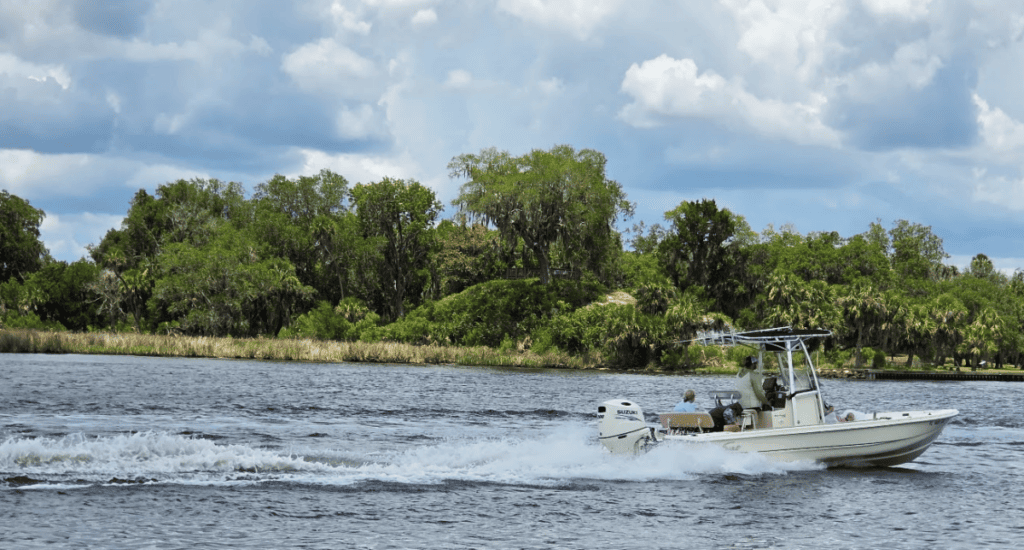
Before we talk scenarios, remember that the purchase price of a boat is only the beginning. The rule of thumb is to budget 10% of the boat’s purchase price annually for maintenance and upkeep, before we even talk about insurance, storage, registration, fuel, or interest.
For a purpose-built hunting and fishing rig in the $8,000-30,000 range, the annual cost of ownership lands somewhere between $2,000 and $8,000 per year depending on whether you buy new or used, whether you finance, how you store it, and how often something breaks.
Here are the major cost categories:
Depreciation is the silent killer. New boats lose 10-20% of their value in the first year and continue to depreciate at 5-10% annually for the first five years. After ten years, the value begins to stabilize. Aluminum jon boats and utility rigs hold their value reasonably well compared to fiberglass recreation boats, especially if you maintain them. Either way, you’re losing money on paper every year you own one.
Insurance for a small fishing or hunting boat typically runs $250-700/year for a trailered rig in the $8-30k range. Rates are 1-2% of hull value annually. Florida’s hurricane zone designation pushes premiums higher than northern states, but trailered boats are meaningfully cheaper to insure since you can move them ahead of storms. Agreed-value policies cost more but pay full replacement at claim time, and actual cash value (ACV) policies are cheaper but depreciate your boat at the moment you need to file a claim.
Storage is where central Florida works in your favor. If you have a truck and a trailer, dry storage at home costs nothing beyond the driveway or a simple shed. If you don’t have the space and need to pay for a storage facility, budget $80-200/month for dry storage. Wet slips aren’t relevant for the hunting/fishing boats in this article.
Maintenance on aluminum jon boats or shallow-draft skiffs are low compared to bigger rigs. Outboard service (annual tune-up, impeller, lower unit, spark plugs) runs $200-800/year at a shop. Add grease fittings, trailer bearings, bunks, and incidentals, and you’re looking at $1,000 or more per year if things are running clean. Budget at least $500-1,500/year in a repair reserve for the unexpected, like major lower unit issues, a prop strike, or electrical bugs.
Fuel for a small outboard on a jon boat or skiff is modest compared to larger boats. A small outboard running flat-out burns roughly 3-5 gallons per hour. Most inland river and spring run trips involve moderate throttle and significant idling, realistically $20-60 per day in fuel depending on distance. On the coast for scalloping, fuel becomes a bigger factor depending on how far offshore you’re running.
Registration and taxes in Florida for a small boat are moderate: annual registration for a boat under 16 feet runs $25-50, for slightly larger boats it’s more like $80. There is a one-time sales tax of 6% state and local surtax at purchase.
Purchase Decision: Jon Boat or Skiff?
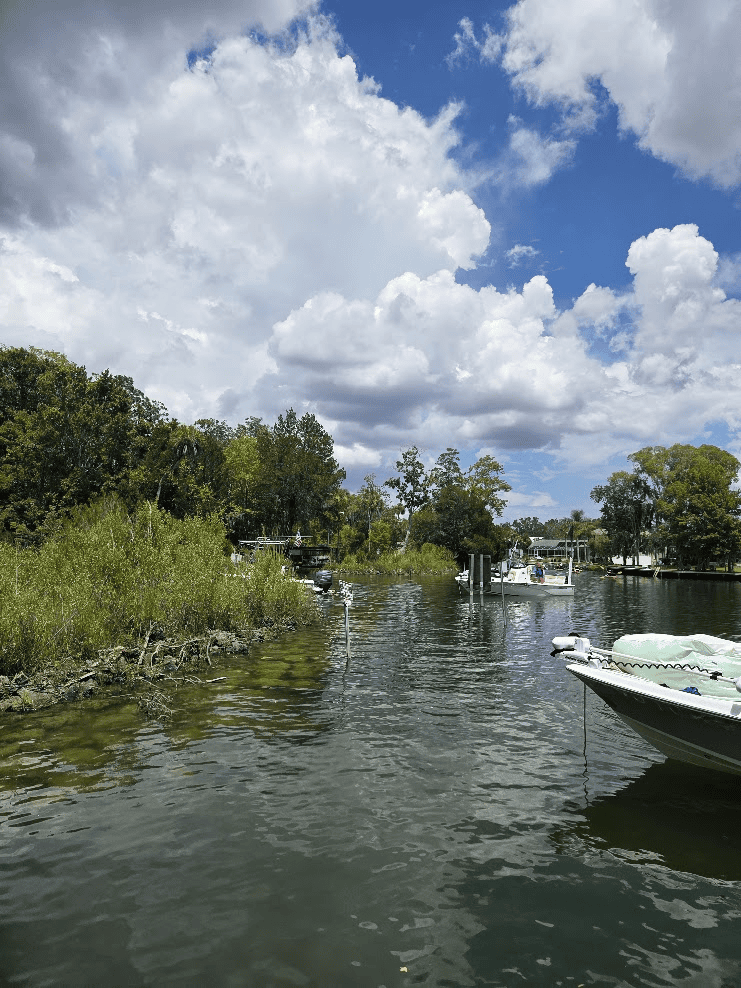
This is the first question to answer, and the central Florida use case gives us a clear recommendation.
The jon boat is the flat-bottomed aluminum workhorse. It drafts almost nothing, it’s almost indestructible, and it’s cheap to buy and maintain. A 16-18 foot aluminum jon boat with a 40-60HP tiller or console outboard is the workhorse configuration for freshwater and inshore light-salt use. New, a Tracker Grizzly or Lowe Roughneck in the 1648-1860 range runs $15,000-27,000 rigged with a motor and trailer. Purpose-built hunting packages with gator tail outboards are pushing $30,000 or more new. Used, you can find solid boats for $6,000-14,000.
The flats skiff (Carolina Skiff JV, Mako, and similar) sits one step up in capability and comfort. A semi-V or mod-V hull handles the chop of coastal runs better, gives a dryer, more comfortable ride, and usually has more features like consoles and live wells. If you’re spending hours on river runs, this will be more comfortable than a bare jon boat. For coastal fishing and scalloping, a medium-sized skiff gives more confidence.
The verdict is that a 16-18 foot aluminum jon boat with a 40-60HP motor is the right choice if your priorities are: duck hunting>gator/hog hunting>river fishing>springs>scallops. If you flip the order, a 16-20 foot skiff makes more sense.
You can find a well-kept 17ft skiff less than 10 years old for $10,000-18,000 depending on condition, hours, and motor vintage.
New or used? If you’re a serious outdoorsman, you should probably buy a used boat. New boats take their biggest depreciation hit in the first two to three years, and as a hunter or fisherman you are likely to scratch the boat up. A 3-5 year old rig lets the first owner take the major depreciation hit, and hopefully put the first scratch on it. A well-maintained, under 10-year-old Tracker or SeaArk is almost functionally identical to a new one.
The Full Annual Cost of Ownership: Two Real Scenarios
These costs apply whether the boat leaves the driveway or not.
Scenario 1: Used Jon Boat, Paid Cash ($8,000)
In this scenario, you buy a 2018-2020 Tracker Grizzly on Facebook Marketplace with a trailer and a used 40HP mercury engine.
| Cost Category | Annual Estimate (Low End) | Annual Estimate (High End) |
| Depreciation (~8% on older used boat) | $ 400 | $ 640 |
| Insurance (agreed value, trailered) | $ 250 | $ 350 |
| Registration & title | $ 75 | $ 75 |
| Annual outboard service + maintenance | $ 400 | $ 600 |
| Repair reserve | $ 500 | $ 800 |
| Fuel (25 days on the water, ~$40/day avg.) | $ 1,000 | $ 1,000 |
| Gear, license, incidentals | $ 200 | $ 400 |
| Annual Total | $ 2,825 | $ 3,865 |
| Monthly Total | $ 235 | $ 322 |
After the 5-year period, the boat will be worth approximately 6,000. At $8,000 cash and roughly $3,000/year in running costs, your true 5-year cost of ownership is approximately:
$8,000 (purchase) + ($3,000 × 5 years) – 6,000 (current value of boat) = $17,000 Over 5 years = ~$3,400/year fully loaded. With the low to high end estimates, this is likely to range from $2,825-$3,625 per year.
At 25 days on the water each year, the cost per trip is approximately $113-145 for a nice used jon boat, paid in cash.
Scenario 2: New Do-It-All Skiff, Financed ($31,000)
A 2026 Mako Pro Skiff 17 CC likely costs around $31,000 out-the-door. Financed at 8% interest over 5 years, the estimated monthly payment is $628.57.
| Cost Category | Annual Estimate (Low End) | Annual Estimate (High End) |
| Annual Depreciation (35-40% total over 5 years) | $ 2,170 | $ 2,800 |
| Loan Payments (628/mo) | $ 7,543 | $ 7,543 |
| Insurance (hull + liability, new boat) | $ 450 | $ 650 |
| Registration & title | $ 100 | $ 150 |
| Annual outboard service + maintenance | $ 400 | $ 800 |
| Repair reserve (new, lower risk) | $ 200 | $ 400 |
| Fuel (25 days on the water, ~$45/day avg.) | $ 1,125 | $ 1,125 |
| Gear, license, incidentals | $ 300 | $ 500 |
| Annual Total | $ 12,288 | $ 13,968 |
| Monthly Total | $ 1,024 | $ 1,164 |
Two things stand out. First, the loan payment alone nearly matches the entire annual cost of owning a paid-off used boat. Second, the depreciation hit is invisible in your monthly budget but very real when you go to sell it.
Total Interest at 8% over 60 months is approximately $6,700. That means you pay $37,700 for a $28,000 boat before you account for maintenance, insurance, or fuel, and after depreciation it might only be worth $18,600 at the end of the five years.
Our 5-year annual cost is estimated at $31,989-$37,239. The annual cost per year ranges from $6,398-7,448. Assuming 25 days annually on the water, this is $255-298 per trip.
Scenario 3: Used Skiff, Paid Cash ($15,000)
Purchasing a 10-year old used skiff like a Mako 17 with cash will significantly improve the math.
| Cost Category | Annual Estimate (Low End) | Annual Estimate (High End) |
| Annual Depreciation (35-40% total over 5 years) | $ 1,050 | $ 1,200 |
| Insurance (hull + liability, older boat) | $ 400 | $ 600 |
| Registration & title | $ 100 | $ 150 |
| Annual outboard service + maintenance | $ 400 | $ 800 |
| Repair reserve (older, higher risk) | $ 600 | $ 900 |
| Fuel (25 days on the water, ~$45/day avg.) | $ 1,125 | $ 1,125 |
| Gear, license, incidentals | $ 300 | $ 500 |
| Annual Total | $ 3,975 | $ 5,275 |
| Monthly Total | $ 331 | $ 440 |
The annual carrying cost drops to $4,125-$5,275/year. A $15,000, 10-year-old boat can be expected to be worth $9,000 in 5 years, representing significantly lower depreciation from buying new.
At 25 days on the water each year, expect each trip to cost $165-211.
The Rental Math: What Does Renting Really Cost?
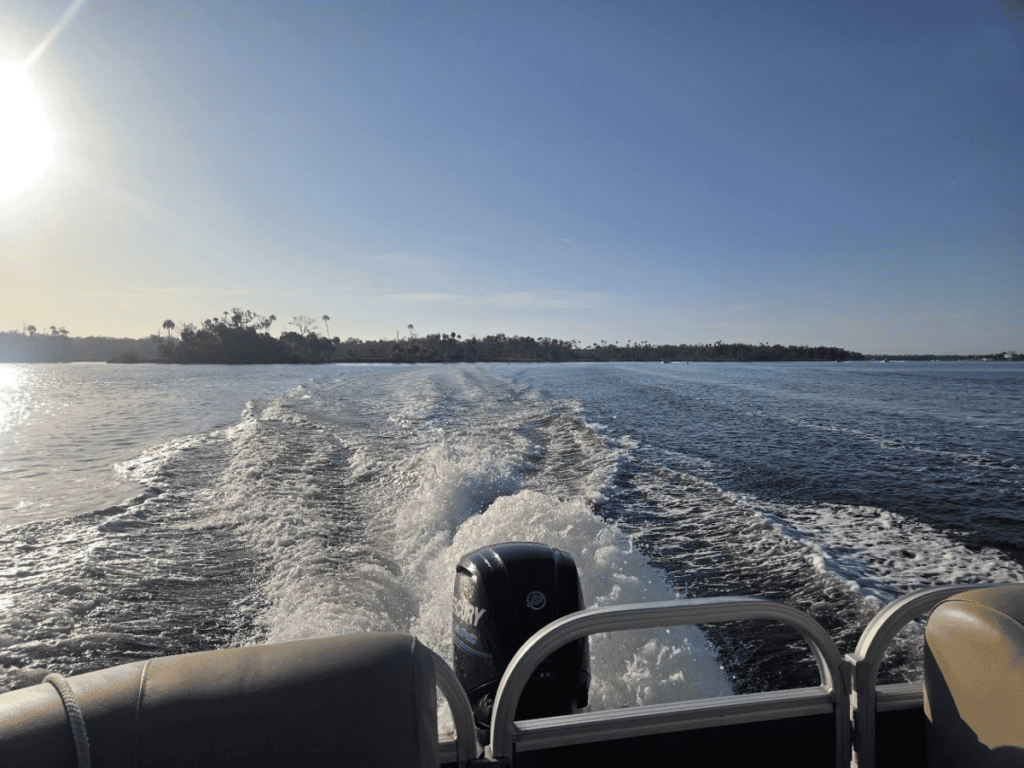
Boat rentals in Florida vary widely by type and location, but here’s a working framework:
- Basic freshwater fishing boat/jon boat: $90-200/day
- Pontoon (for a group of scallopers): $350-600/day
- Center console (coastal): $400-800/day
- Captained charter for specific fishing: $400-900/half-day
For some use cases, like duck hunting, renting does not make sense. The boat will not be set up right for what you need. And nobody is renting a boat for hog hunting.
For the purposes of the springs, fishing, and scalloping components, where you could theoretically rent, a reasonable average day rate is $200-400 for a functional boat on inland water.
The Breakeven Calculation
For each scenario, here’s the math:
Scenario 1: Used Jon Boat, Paid Cash (Average $3,345/ year true cost)
At $200/day rental: $3,345/200 = 16.7 days per year to break even.
At $300/day rental: $3,345/300 = 11.2 days per year to break even.
At $400/day rental: $3,345/400 = 8.4 days per year to break even.
Scenario 2: New Financed Skiff (Average $6,923/ year true cost)
At $200/day rental: $6,923/200 = 34.6 days per year to break even.
At $300/day rental: $6,923/300 = 23.1 days per year to break even.
At $400/day rental: $6,923/400 = 17.3 days per year to break even.
Scenario 3: Used Skiff, Paid Cash (Average $4,700/ year true cost)
At $200/day rental: $4,700/200 = 23.5 days per year to break even.
At $300/day rental: $4,700/300 = 15.7 days per year to break even.
At $400/day rental: $4,700/400 = 11.8 days per year to break even.
The Bottom Line

For most people, buying a used boat outright is the only ownership scenario that consistently beats renting on cost. If you will use your boat monthly or less, it does not make sense to buy new instead of used.
For the central Florida hunting and fishing lifestyle, 11-24 days per year is an easy threshold to clear. Duck season, spring bass, scalloping trips, and a few Suwannee River floats comfortably puts you in the money.
There are some trips you can’t rent for, as many of your best days on the water are impossible to access through a rental:
- 5AM duck hunt in flooded timber
- Gator tags with specific dates and bodies of water
- Spontaneous after-work fishing
- A spring weekend camping trip
- Scouting runs before the season opens
The ownership premium buys spontaneity and access, so you can go whenever you want without talking to the marina. For a hunter and angler, this is worth the cost difference, especially on a used boat.
The Role Depreciation Plays
Depreciation is where the debate goes sideways, since some ignore it and others obsess over it.
A new aluminum fishing or utility boat tends to depreciate as follows:
- Year 1: 15–20% loss (the “new boat penalty”)
- Years 2–5: 5–10% additional per year
- Years 6–10: 2–5% per year as depreciation slows
- After 10 years: Value largely stabilizes, often in the $2,000–$6,000 range for small aluminum rigs depending on condition
These numbers vary, and the curve does not stabilize as much for fiberglass skiffs.
Either way, if you purchase a 4-6 year old boat, you dodge the steepest part of the curve. Older boats depreciate at a slower rate, and they cost less to begin with.
If you buy a quality used boat, you spend less up front, absorb less depreciation, and still have a durable and functional rig.
Aluminum hulls specifically hold their value better than fiberglass over long periods.
Florida-Specific Use Case: Does the Math Change

Here’s how each activity can change the math:
Freshwater fishing (bass, catfish, crappie, bream): This is the highest-frequency use case and the one that most justifies ownership. You want the spontaneity premium here.
Duck Hunting: This is impossible to access via rental in any practical way. If you are a waterfowl hunter, boat ownership is basically a requirement. You need a blind-able jon boat in a dark green or camo finish.
Gator hunting: Tags are for a specific county or body of water, making renting tough. This is another messy activity where you either want your own boat or a guide.
Other Hunting by boat: This is not really a rentable activity. If you win the lottery to hunt on St. Vincent Island or other areas, you pretty much need your own boat.
Springs Hopping (Santa Fe, Suwannee, St. Johns): This is a use case where it is reasonable to rent, but you miss spontaneity by relying on a reservation.
Scalloping: This is where renting makes the most sense. Scalloping is seasonal, social, and group-oriented. If you buy a jon boat, it might make sense to still rent a pontoon boat and share cost with your friends. If you bought a skiff, that should be more than capable of handling the Gulf, especially in calm weather.
Questions and Assumptions to Address Before You Buy
The rent-vs-buy math is only as good as the assumptions underneath it. Here are the questions worth answering honestly before you commit:
How often will you actually go?
The single most common mistake boat buyers make is overestimating their use. Before you buy, track your actual outdoor trips for 3–6 months. If you’re currently going out once a month without a boat, how confident are you that you’ll go 2–3 times per month with one? The boat doesn’t create the time, it just removes one barrier.
Where will you store it?
If you have a house with a driveway or a shed and a truck, this is answered. If you’re renting or live in an HOA community, storage becomes a significant cost and logistical problem.
Do you own a vehicle that can tow it?
A 16–18 foot aluminum jon with a trailer typically weighs 1,400–2,200 lbs loaded. Most mid-size trucks and SUVs handle this fine. But if you’re driving a sedan or a small crossover, towing capacity is a real constraint.
Are you mechanically inclined?
A boat owner who can do basic outboard maintenance, change their own impeller, and diagnose electrical issues will spend dramatically less than someone who takes the boat to a shop for everything. Marine labor rates run $100–$150/hour in 2026, and an outboard service that would cost a competent DIYer $60 in parts costs $300–$400 at a shop.
What’s your actual waterway access?
If you’re hunting private land with a boat ramp, your access is locked in. If you’re hunting public land and need to compete for specific ramp access points or pull permits, boat ownership doesn’t solve the access problem.
Will you share the boat with hunting or fishing partners?
Shared ownership between two or three serious users dramatically improves the math. Two guys splitting a $14,000 used boat and $4,000/year in running costs changes the break-even from roughly 14–16 days per person to about 7–8 days per person per year, and the shared maintenance and trip planning tends to create more accountability about actually going. On a new $28,000 financed boat, a 50/50 split between two owners cuts the monthly payment in half and makes an otherwise borderline decision genuinely defensible.
What’s your comfort with mechanical risk?
Used boats come with unknown histories. An undetected cracked lower unit, a carburetor that’s been running lean for two years, or a trailer axle bearing on its last legs can turn an $8,000 deal into a $10,500 purchase in the first season. Always get a pre-purchase inspection from an independent marine mechanic. At $100–$150, it’s the best money you can spend.
Do you have the freezer space?
This is the one question nobody asks in a rent-vs-buy post, but for the harvest-focused angler and hunter, it matters. A boat that’s earning its keep filling the freezer with bass, bream, catfish, crappie, duck, and gator tail needs somewhere to put everything it produces. A dedicated chest freezer is a natural companion investment. Click here for our guide to organizing your chest freezer so you eat more wild game.
Frequently Asked Questions
Is financing a boat worth it?
Financing makes sense if you can comfortably afford the payments and plan to use the boat frequently. However, financing dramatically increases the total cost of ownership through interest while depreciation continues regardless of how you pay. You may be surprised at the amount of interest you will pay, run the numbers using a tool like: https://www.bankrate.com/loans/loan-calculator/
How long do aluminum boats last?
A well-maintained aluminum jon boat can last several decades. The outboard motor typically requires more attention than the hull itself, making maintenance history more important than age alone.
Are used boats reliable?
Many used boats are excellent purchases if they’ve been maintained properly. Always inspect the hull, trailer, and outboard, and consider paying for a professional marine inspection before buying.
How many times a year do you need to use a boat before buying one makes sense?
For most Florida outdoorsmen, buying a used boat begins to make financial sense at roughly 10–20 trips per year, depending on the purchase price, annual ownership costs, and what comparable rentals cost in your area.
What’s the cheapest boat to own?
For most outdoorsmen, a used 16–18 foot aluminum jon boat with a reliable outboard offers the lowest overall ownership costs while remaining versatile for fishing, hunting, and river trips.
Can I share ownership with a friend?
Yes. Shared ownership can significantly reduce annual costs, provided expectations for scheduling, maintenance, repairs, and storage are clearly agreed upon in advance.
What kind of boat should I get?
| Boat Type | Best For |
| Used Jon Boat | Hunting, freshwater fishing, rivers |
| Used Skiff | Fishing, scalloping, springs |
| New Skiff | Heavy recreational use |
| Rental Boat | Occasional trips |
Summary
I’ve rented boats for scalloping trips, spent time pricing used jon boats, and looked closely at ownership costs as someone who hunts, fishes, and regularly explores Florida’s rivers and springs. This analysis reflects the numbers I found while deciding what makes the most financial sense for an outdoors-focused lifestyle.
For most Florida hunters and anglers, a well-maintained used boat purchased with cash offers the best balance of affordability, flexibility, and long-term value. Renting still makes sense for occasional scalloping trips or infrequent outings, but once you’re consistently on the water more than a dozen times each year, ownership usually wins.
Pay cash, and buy a used jon boat in the $8-10,000 range or a used skiff in the $14-17,000 range. Size the boat for your primary use and store it on a trailer at home. Use ownership to unlock the trips you can’t rent for.
If you use the boat more than once a month between hunting and fishing, a well-bought used rig will pay its way.
Roam and Refine shares educational content based on our own research and experiences to help you make more informed decisions. The cost estimates in this guide are examples, not guarantees, and should not replace your own research or professional financial, tax, legal, or marine advice. Always inspect used boats carefully, verify current costs in your area, and choose the option that best fits your budget and goals.
Leave a Reply