
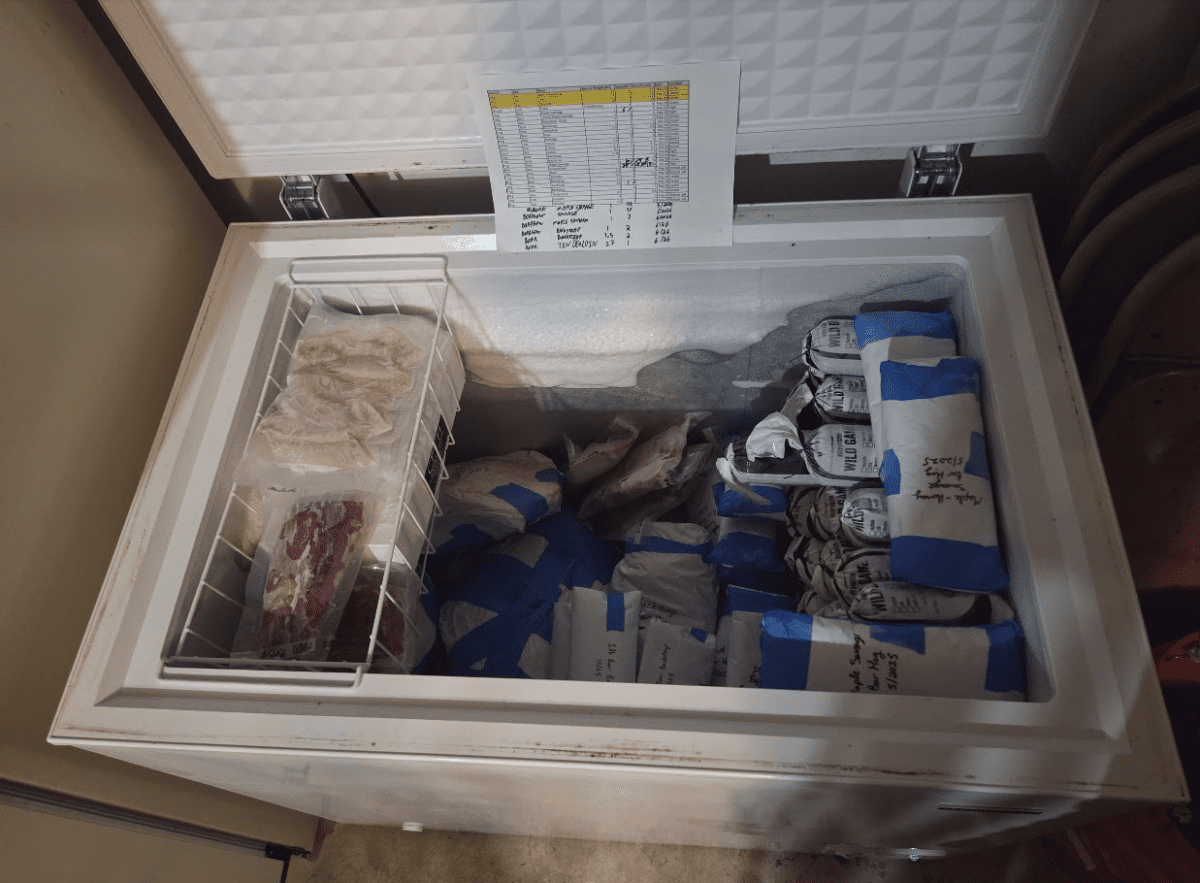
You worked hard for that meat. Early mornings, long sits, miles of pack-out, lottery tag wins, and then what? Too often, wild game gets buried at the bottom of a chest freezer, forgotten until it’s freezer-burned and past its prime. A disorganized freezer wastes more than just high quality protein: it wastes money, effort, and the entire point of hunting.
The good news is that with a simple system, you can make it easy to cook wild game regularly, eat healthier, save at the grocery store, and walk into every season with room to fill that freezer back up.
Here’s the complete Roam and Refine guide to organizing your game freezer.
Quick Wins: Game Freezer Organization in 60 Seconds
- Track every package on a freezer inventory sheet
- Label everything with species, cut, weight, and date
- Store oldest meat on top (FIFO)
- Package meat in meal-sized portions
- Review inventory quarterly
- Keep a generator plan for power outages
Why Freezer Organization Matters for Outdoorsmen
Most hunters don’t have a storage problem; they have a friction problem. When you don’t know what’s in your freezer, how old it is, or can’t easily find the right cut for tonight’s dinner or meal prep, you default to the same old chicken thighs and ground beef. The wild game sits, then gets freezer burnt, then you feel guilty throwing it out.
The goal of this system is simple: reduce friction so that eating wild game becomes the path of least resistance. When your freezer is organized, labeled, and inventoried, reaching for venison backstrap for steak night or maple wild hog sausage for breakfast feels just as easy as anything else in your kitchen.
Step 1: Track Everything with a Freezer Inventory Spreadsheet
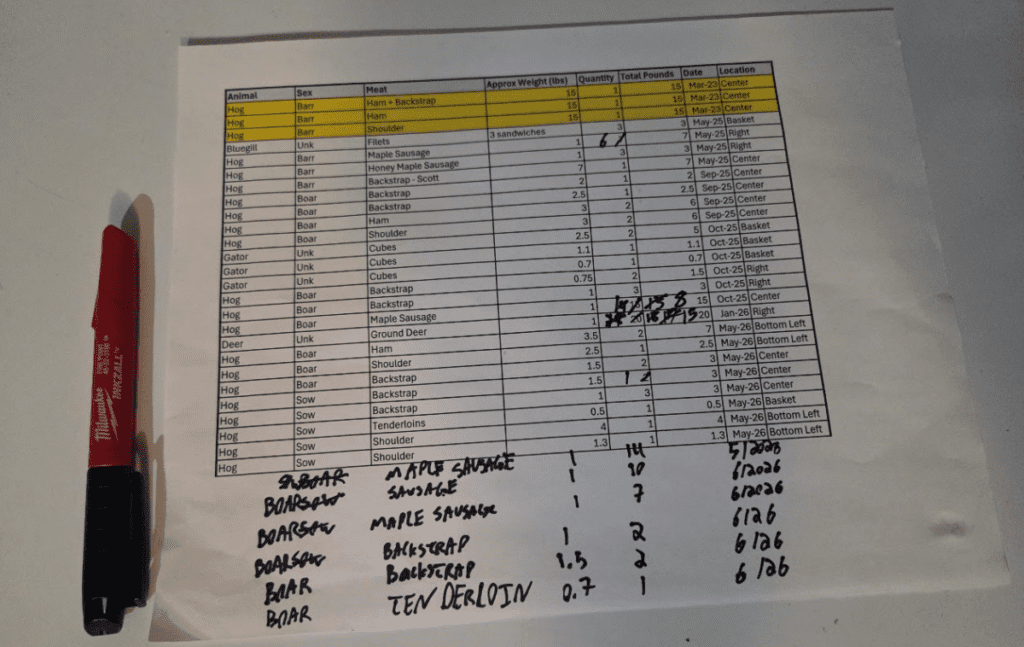
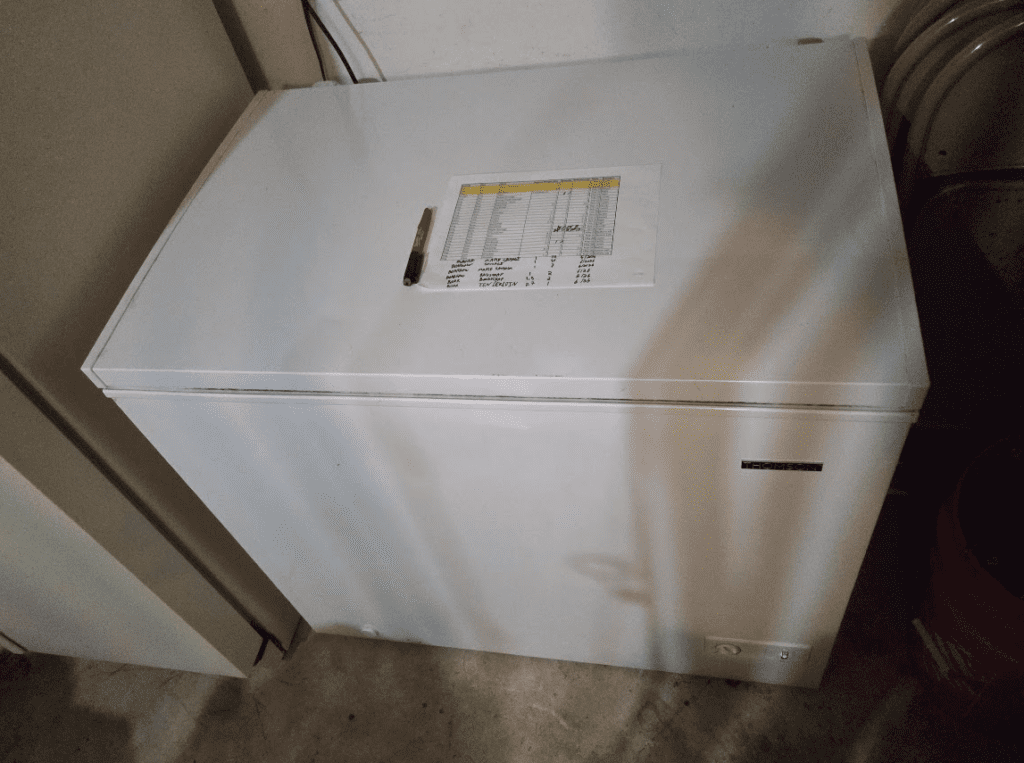
The foundation of effective freezer organization is tracking, accomplished by maintaining a simple spreadsheet. For each freezer you own, maintain a log with these columns:
- Animal (whitetail, hog, bluegill, gator, etc.)
- Cut (backstrap, ground, sirloin tip, sausage, whole shoulder, etc.)
- Approximate Weight per package (use your food scale from meal prep)
- Quantity of packages
- Total Pounds (Weight per package * Quantity of packages)
- Date Harvested
- Location Harvested (optional, but helpful if you hunt multiple areas or states)
Sort the spreadsheet by date, with oldest at the top and newest at the bottom. Highlight the cuts that need to be eaten next (usually the oldest) so that they jump out at you when you are planning meals for the week.
You will print this spreadsheet out and tape or magnet it to the outside of your freezer. Keep a sharpie nearby. As you consume packages, cross them off or modify the quantity. Write new packages in at the bottom. Reprint the sheet quarterly, or whenever it gets messy enough that it’s hard to read.
This low-tech approach is more reliable than any app, because it lives right where you need it on the freezer door.
This simple spreadsheet is the backbone of our entire system. It takes less than five minutes to update after processing game and saves hours of digging through the freezer later.
Step 2: Know Your Freshness Windows
Not all game keeps at the same rate. As a general rule:
- Vacuum sealed large game (deer, elk, hogs): 2-3 years
- Freezer-paper wrapped large game: 12-18 months
- Small game and birds: 6-12 months
- Fish and seafood: 3-6 months for optimal taste and texture
- Ground meat: 1 year
Wild game does not go bad in the freezer the way it does in the fridge, but quality degrades over time. This accelerates if the packaging is not airtight. Your inventory helps you stay ahead of these windows by keeping track and encouraging you to eat the oldest stuff first while it is still in the best condition.
Highlight the lines for packages that are starting to get old and prioritize eating these.

Step 3: Package Meat the Right Way
How you wrap and portion your meat before it goes into the freezer has a huge impact on how likely you are to actually use it. We recommend packing meat into usable, meal-ready portions.
Here’s what we do for each cut type:
Freezer Paper is ideal for large cuts like hog shoulders, hams, and big bone-in quarters. Wrap tightly, tape securely, and label clearly. You might need to double wrap for full coverage on huge slabs. Freezer paper provides better protection against moisture loss and freezer burn than plastic wrap alone, making it a good choice for large cuts intended for long-term storage. Use it for bulky pieces sized for your smoker. We secure freezer paper with painter’s tape.
Vacuum Sealing is the gold standard for backstraps, roasts, chops, and smaller bone-in cuts. The airtight seal dramatically extends quality and prevents freezer burn. If you hunt regularly, consider a quality vacuum sealer to be an investment right up there with your truck and meat grinder.
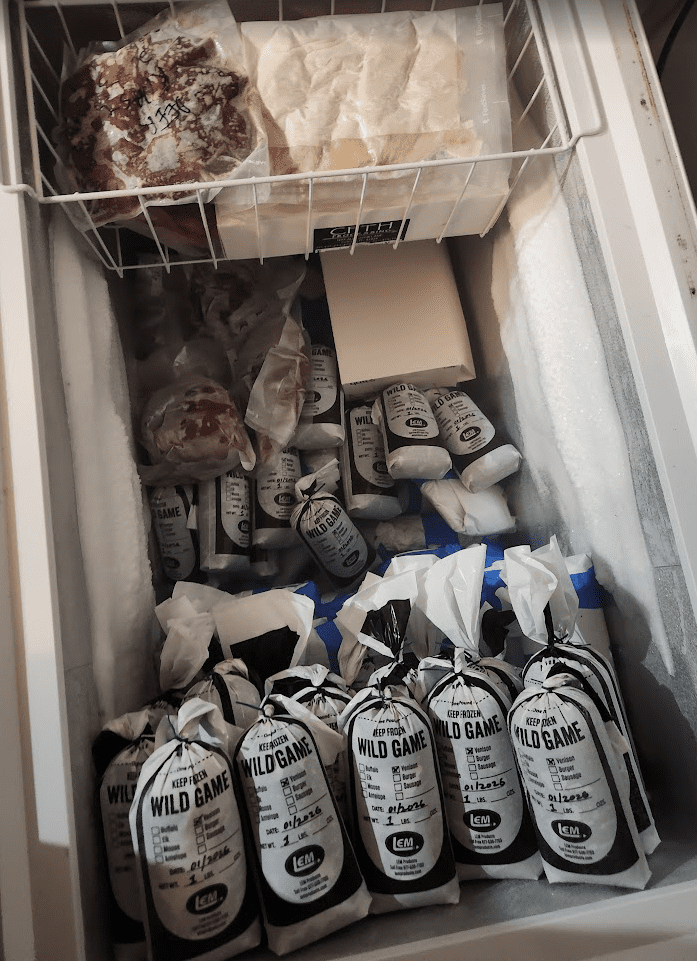
Game Bags work great for ground meat and sausage. Portion these into one-pound packages, which is the same size you’d buy at the grocery store. This makes it simple to swap wild game into any recipe that calls for a pound of ground beef. We wrap tightly and use twist ties – I bought a 100m roll of plant ties with a cutter for around $10, and it has lasted several seasons of hunting.
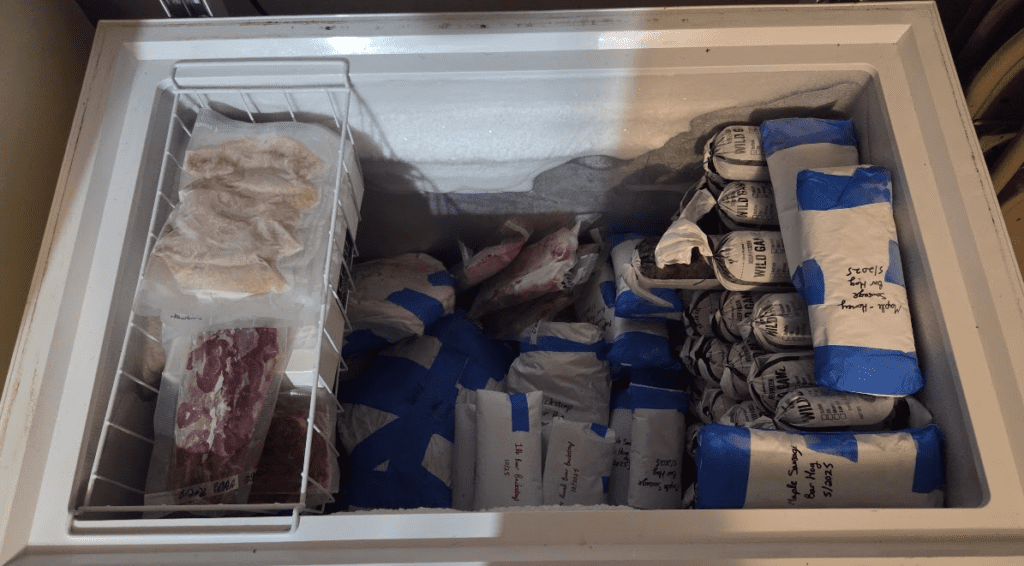
Labeling is non-negotiable. Every single package should indicate:
- Species
- Cut type
- Weight
- Date Packaged
Use a sharpie directly on freezer paper or vacuum bags. There is nothing more frustrating than a bag of mystery meat from a forgotten era.
Remove as much air as possible regardless of packaging method. Air exposure is the primary cause of freezer burn, which is why vacuum sealing is so effective.
Why Meal-Sized Portions Matter
A five-pound package of ground venison sits frozen because it requires planning. A one-pound pack is an easy substitute.
We package most ground meat, sausage, backstrap, roasts, and fish in meal-sized (or meal-prep-sized) portions to remove friction. If a recipe calls for one pound, grab one pack. The easier it is to use wild game, the more often you’ll eat it.
What Supplies Do You Need to Process Game Meat?
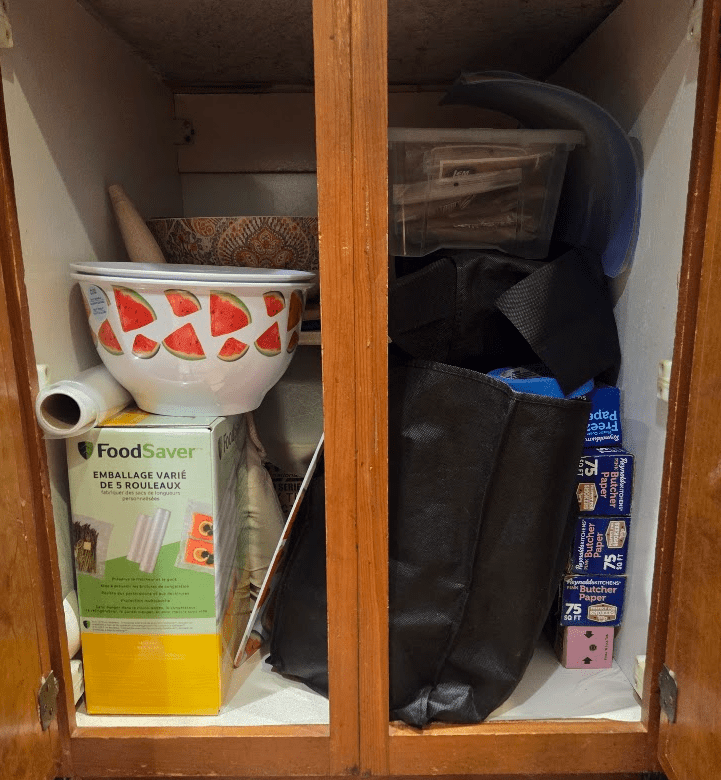
If you hunt and fish year-round like we do, keep spare supplies on-hand and ready to package meat the right way:
- Freezer paper
- Masking tape
- Game Bags
- Twist tie roll
- Vacuum sealer bags
- Sausage seasoning mix
- Maple, sage, or other ingredients for sausage
- Sharpie
Of course, you’ll need the following equipment (ask for the missing pieces for holiday gifts, or buy them on Black Friday deals):
- Meat grinder
- Vacuum Sealer
- Good boning knife
- Good butcher knife
- Cutting boards
You’ll also need sufficient freezer space. For serious hunters, I recommend at least one chest freezer and an upright freezer in the garage, just for game meat.
Step 4: Organize the Freezer Itself
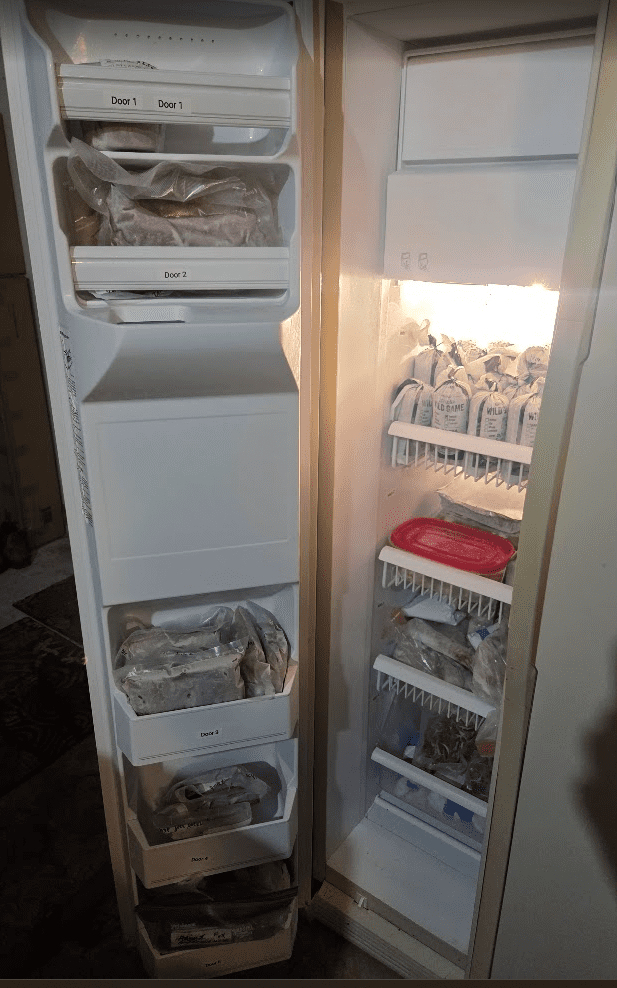
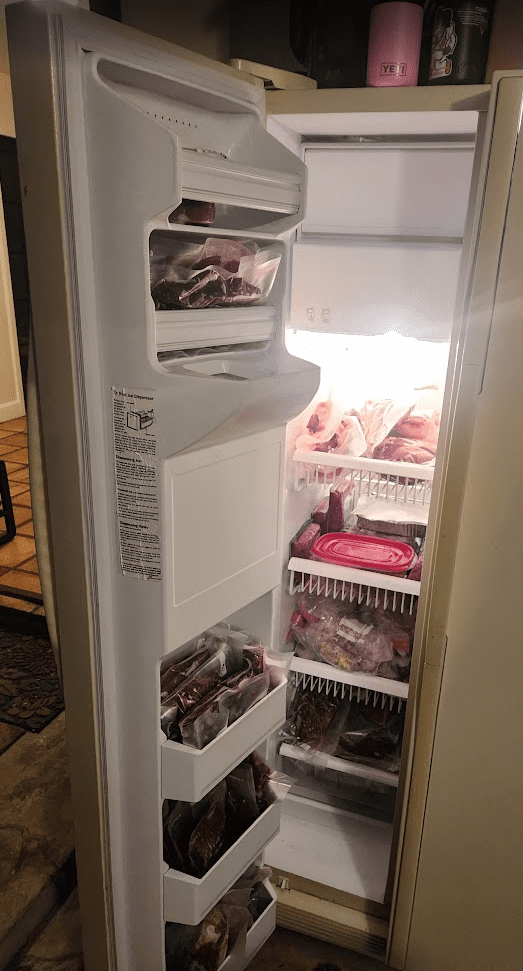
A well-organized freezer has a place for everything and everything in its place. Whether you’re working with a chest freezer or a standing freezer, or you are lucky enough to have both, apply these principles:
Organize by meat type in dedicated zones. Group all venison bottom rounds together, all fish together, all sausage together.
Newest meat goes on the bottom, oldest goes on the top. Use the first-in, first-out (FIFO) method that restaurants do. When you grab something, the oldest packages are on top and easiest to reach, which means that you will eat them first.
Label each shelf with a label maker. Personally, I label each shelf MAIN 1 or DOOR 2. You could also label by cut, for example VENISON – GROUND or HOG – SHOULDERS. This should correspond to a column in your spreadsheet. Add that before you print it.
Reserve one shelf for household groceries. This could save your marriage. It can also keep your game inventory from getting scrambled with store-bought food.
How Much Freezer Space Do You Need?
The rule of thumb is around 1 cubic foot per 35-40 pounds of packaged meat, assuming flat packs and a well-organized freezer. For bone-in cuts like big quarters, more space will be needed.
Here are typical yields by species:
| Species | Typical Processed Yield (lbs) | Freezer Space Needed (cu ft) |
| Whitetail doe | 30-50 | 1-1.5 |
| Whitetail buck (mature) | 50-75 | 1.5-2 |
| Mule deer | 40-75 | 1.5-2 |
| Elk (cow) | 110-150 | 3-4 |
| Elk (bull) | 150-270 | 4-7 |
| Wild hog (100 lbs live) | 30-35 | 1 |
| Wild hog (200 lbs live) | 60-70 | 2 |
| Wild turkey | 8-12 | <1 |
| Fish fillets (10 lbs fish) | 5-7 | <0.5 |
Note that processed meat yield is much less than live weight. Bones, hide, and guts are heavy, and shot placement is critical. Clean kills will have a higher-end meat yield.
A whitetail hunter taking 2-3 deer a season needs 3-5 cu feet dedicated to deer. An elk hunter coming home with a bull needs 5-7 cu feet cleared out before the season. Add your fish separately, a few good limits can add another 1-2 cu ft of fillets fast.
Step 5: Play the Long Game
The whole point of this system is to build a rhythm. Wake up, hunt, clean game, fill the freezer, eat through it, and have room to refill come next season.
A few habits that keep the system working smoothly are:
- Do a quarterly inventory check. When you reprint your spreadsheet, take a few minutes to verify what is actually in there. Move anything getting old to a prominent spot and plan a few meals around it that week.
- Meal prep with wild game as the default protein. Ground deer or elk are easy substitutes for ground beef in tacos, pasta, chili, and burgers. When portioned in one-pound bags and clearly labeled, swapping it in is effortless.
- Plan hunts around your freezer. If you’re running low on fish, go fishing. Before you head out for deer season, do a realistic assessment of how much meat and space you have left. This prevents complicated questions, like “where do we put the second chest freezer”.
Bonus: Protect Your Investment from Power Outages
If you live in an area with hurricanes or the potential for extended power outages, your freezer full of meat represents a serious investment at risk, with potentially thousands of dollars in wild game meat.
Keep a generator sized for your freezers. Make sure you have enough fuel to go with it, stored and ready to go. A mid-sized dual-fuel generator can run your chest freezers and keep everything frozen while they work to get the grid back up. Plan it out by checking your freezers’ wattage requirements so you’re not scrambling when the storm hits.
A full chest freezer can often keep food frozen for roughly 48 hours if unopened. A half-full freezer may only hold temperature for about 24 hours. During an outage, avoid opening the freezer unless absolutely necessary. Consider freezing several gallon jugs of water in unused freezer space if there’s a storm coming. They act as thermal mass, helping the freezer stay cold longer during outages.
Store your fuel with stabilizer and rotate it regularly.
Quick Tips/The System at a Glance
To summarize, here is what we do:
| Task | How |
| Track inventory | Spreadsheet printed and attached to freezer |
| Update inventory | Sharpie cross-outs, reprint quarterly |
| Package ground/sausage | 1 lb game bags |
| Package large quarters | Freezer paper |
| Package backstraps/roasts | Vacuum sealed |
| Label everything | Animal + cut + weight + date |
| Organize freezer | By type, oldest on top |
| Navigate the freezer | Label maker on each shelf |
| Eat oldest first | Sort spreadsheet by harvest date |
| Protect from outages | Generator + fuel on hand |
Common Game Freezer Mistakes
- Keeping meat too long for a special occasion
- Not labeling packages
- Freezing giant portions
- Mixing store-bought meat with wild game
- Ignoring older packages
- Losing track of the packs in the bottom of a chest freezer
- Processing more game than they have freezer space
Frequently Asked Questions
These are some of the most common questions hunters and anglers have about storing wild game long-term. I have searched most of them myself over the years:
How long does venison last in a freezer?
Properly vacuum-sealed venison typically maintains best quality for 2-3 years, though it remains safe indefinitely when continuously frozen.
What is the best way to organize a chest freezer for wild game?
Use dedicated zones, store oldest meat on top, maintain a written inventory, and label every package.
Should I vacuum seal deer meat?
Yes. Vacuum sealing significantly reduces freezer burn and extends quality compared to traditional wrapping methods.
How much freezer space do I need for a deer?
A typical whitetail deer requires 1-2 cubic feet of freezer space depending on size and processing methods.
How often should I inventory my game freezer?
Quarterly inventory checks work well for most hunters and anglers.
Should I use a chest freezer or an upright for game meat?
Both work, but they serve different purposes. Chest freezers hold more meat and are more energy-efficient, but since cuts are stacked, organizing can be tricky without bins or dividers. Upright freezers are easier to organize and access thanks to shelving. Many hunters use one of each: a chest for bulk storage of large-game quarters and a stand-up in the garage for everyday access and fish.
What temperature should my freezer be set to?
0°F (−18°C) is the standard. Maintaining the proper temperature ensures the quality and safety of the meat over an extended period. A cheap refrigerator thermometer on the shelf is worth having — freezers that run warmer than 0°F degrade meat quality much faster, especially fish.
When should I defrost and clean my freezer?
Some freezers create ice buildup throughout the year. When your freezer is almost empty, take the opportunity to defrost and clean it: remove remaining items, place them in a cooler, unplug the freezer, let it thaw, soak up excess water, and give it a good wipe down. If it’s empty, leave the door open until it’s ready to be replenished to prevent odors. This is best done right before hunting season so you start fresh.
Can I freeze meat that was already frozen at the processor?
Yes — as long as the meat was never thawed between the processor and your home, it can go straight into your freezer without any quality loss. If it thawed in transit, cook it within a day or two rather than refreezing.
What do I do with all the bones and trimmings?
Don’t throw them away. Venison and pork bones make exceptional stock. Freeze carcass bones and knuckles in a labeled bag and make a batch of bone broth when you accumulate enough. Fat trim from hog can be rendered into lard. These zero-waste habits stretch your harvest even further.
What if I have more meat than freezer space?
This is a good problem to have. Options: share with family or friends (and track it in your spreadsheet so you know what left), donate through your state’s “Hunters for the Hungry” or equivalent program, or invest in a second freezer before next season. A used chest freezer from Facebook Marketplace often runs $50–$150 and pays for itself quickly.
How do I know if frozen game meat has gone bad?
Discoloration (gray or brown patches), heavy frost crystals throughout the package, or a rancid smell when thawed are the main signs of freezer burn or spoilage. Freezer burn isn’t dangerous but kills flavor and texture. Properly vacuum-sealed or tightly freezer-paper-wrapped meat stored at 0°F rarely develops these issues within the recommended time windows.
Should I age venison before freezing?
Ideally, yes. Hanging a deer at 34–40°F for 5–10 days before butchering allows enzymes to break down muscle fibers, resulting in noticeably more tender meat. This step is especially impactful on mature bucks. If weather or facilities don’t allow for hanging, processing the same day is fine — just know the meat may benefit from longer braising times on tougher cuts.
How much wild game can a 7 cubic foot chest freezer hold?
A well-organized 7 cubic foot chest freezer can typically hold 250-300 pounds of packaged wild game, depending on how efficiently it is packaged and whether bone-in cuts are included.
Final Thoughts
Hunting is one of the most direct connections you can have with your food. You know where it came from, how it was raised, and the work that went into harvesting it and getting it to your table. A disorganized freezer can turn all that effort into waste.
With a solid system, smart packaging, and an organized freezer, wild game becomes the easiest protein to reach to. You’ll eat healthier, spend less on groceries, and sleep well knowing that nothing went to waste.
We’ve refined this system over years of hunting, fishing, processing, and eating wild game. It isn’t complicated, but it works. It has enabled us to eat wild game for 2 meals a day, reduce grocery spending, and make sure we have room for each season’s harvest.
Leave a Reply