
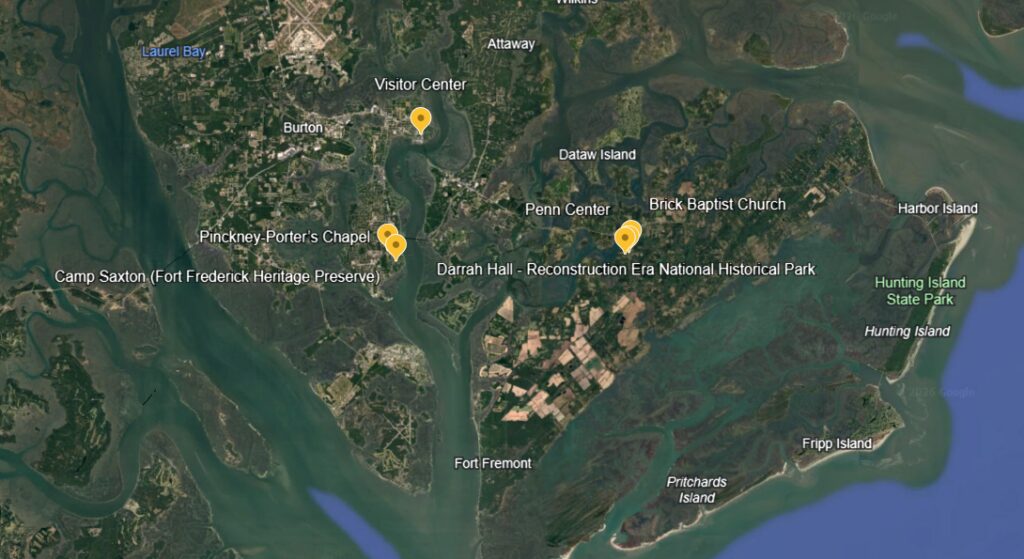
My wife and I made a day trip to Beaufort, South Carolina, on our February trip and paired Reconstruction Era National Historical Park with Hunting Island State Park. We started at the visitor center in the old firehouse, then drove to Pinckney-Porter’s Chapel, Camp Saxton, Brick Baptist Church and the Penn Center. Several sites were closed on the day we went, which taught us the most important lesson about this park: plan your visit around the day of the week. This guide covers what each site is, when it’s open, the best route, and why this corner of the Lowcountry is where Reconstruction began.
Is Reconstruction Era National Historical Park Worth Visiting?
Yes, especially on a Saturday. Reconstruction is one of the most important and least-taught periods in American history, and it started here. Months into the Civil War, after Union forces took the Beaufort area in November 1861, thousands of formerly enslaved people on the Sea Islands began building schools, churches, farms and political lives. The park tells that story at a handful of real places, and the people telling it, from park rangers to Penn Center staff, are knowledgeable and welcoming. It’s free.
Who should skip it: if you want one big museum in one building, this isn’t that. It’s a driving tour of small sites, and some have only outdoor signs on most days.
Quick Facts
- Location: Visitor center at 706 Craven Street, Beaufort, SC 29902, with sites in Port Royal and on St. Helena Island about 15 minutes away
- Time Needed: Half a day for all the sites, including driving
- Best For: History lovers, NPS passport collectors, anyone interested in African American and Gullah Geechee history
- Don’t Miss: The Penn Center campus and museum on St. Helena Island
- Best Time to Visit: A Saturday, the only day every NPS site is open; October through April for weather
- Hours: Varies by site. See the table below
- Admission: Free for the NPS sites. The Penn Center’s museum charges admission
- Official Website: https://www.nps.gov/reer/
| Site | Where | Indoor hours | What you can see |
|---|---|---|---|
| Visitor Center (Old Beaufort Firehouse) | 706 Craven St, Beaufort | Daily, 9 a.m.–5 p.m. (NPS) | Exhibits, a ranger, the passport stamp |
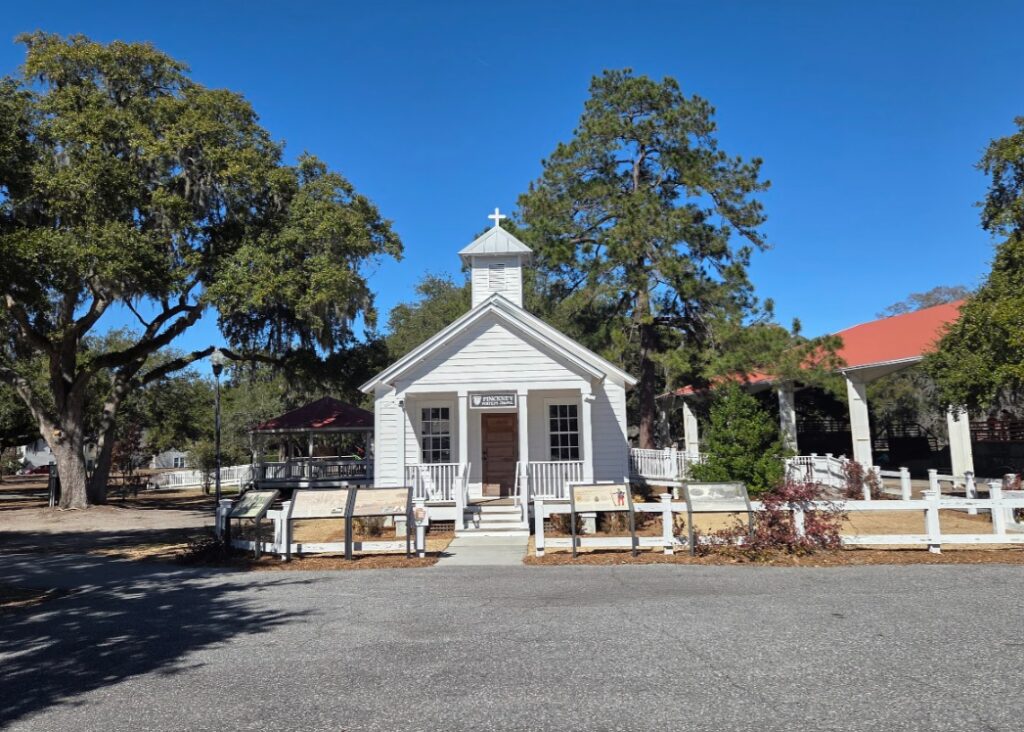
| Pinckney-Porter’s Chapel | 27 Pinckney Blvd, Port Royal | Saturdays only, 9 a.m.–5 p.m. (NPS) | Freedman’s chapel with an exhibit on Black military service and Camp Saxton |
| Camp Saxton (Fort Frederick Heritage Preserve) | 601 Old Fort Rd, Port Royal | Outdoor site, sunrise to sunset (county) | Signs and the tabby ruins of Fort Frederick |
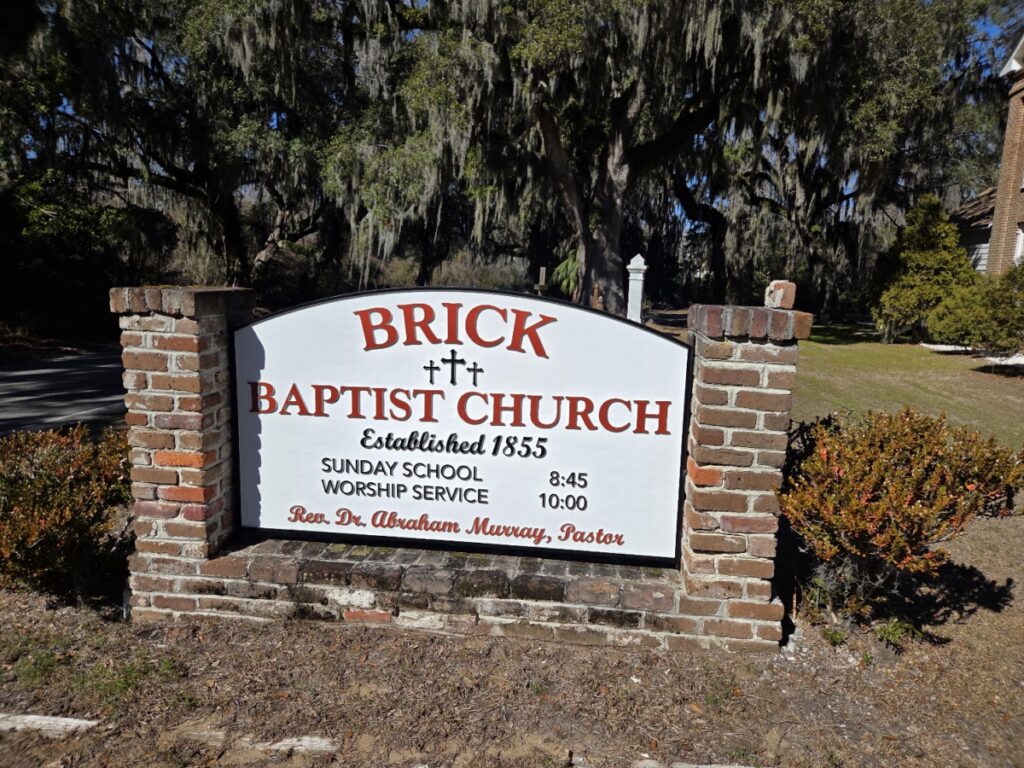
| Brick Baptist Church | 85 Martin Luther King Dr, St. Helena Island | Interior not usually open (active congregation) | Exterior, grounds and cemetery |
| Darrah Hall (NPS, on the Penn Center campus) | 24 Penn Center Circle W, St. Helena Island | Tuesday–Saturday, 9 a.m.–5 p.m. (NPS) | Exhibits on Reconstruction and education |
| Penn Center (York W. Bailey Museum and Welcome Center) | 16 Penn Center Circle W, St. Helena Island | Tuesday–Saturday; museum 10 a.m.–4 p.m. (Penn Center) | Museum, film, campus and historic buildings |
Know Before You Go
- Go on a Saturday. It’s the only day the visitor center, the chapel, Darrah Hall and the Penn Center museum are all open. On Sunday and Monday, only the downtown visitor center is open.
- You’ll drive. The sites are spread across Beaufort, Port Royal and St. Helena Island, about 15 minutes apart.
- The Penn Center is a separate nonprofit. It sets its own hours and charges its own admission ($10 self-guided, $15 docent tour with film). Call (843) 838-7105.
- Brick Baptist Church is an active church. Visit respectfully, and don’t expect the inside to be open.
- Downtown parking is paid. It cost us a few dollars. Park once for breakfast and the visitor center.
Overview of Reconstruction Era National Historical Park
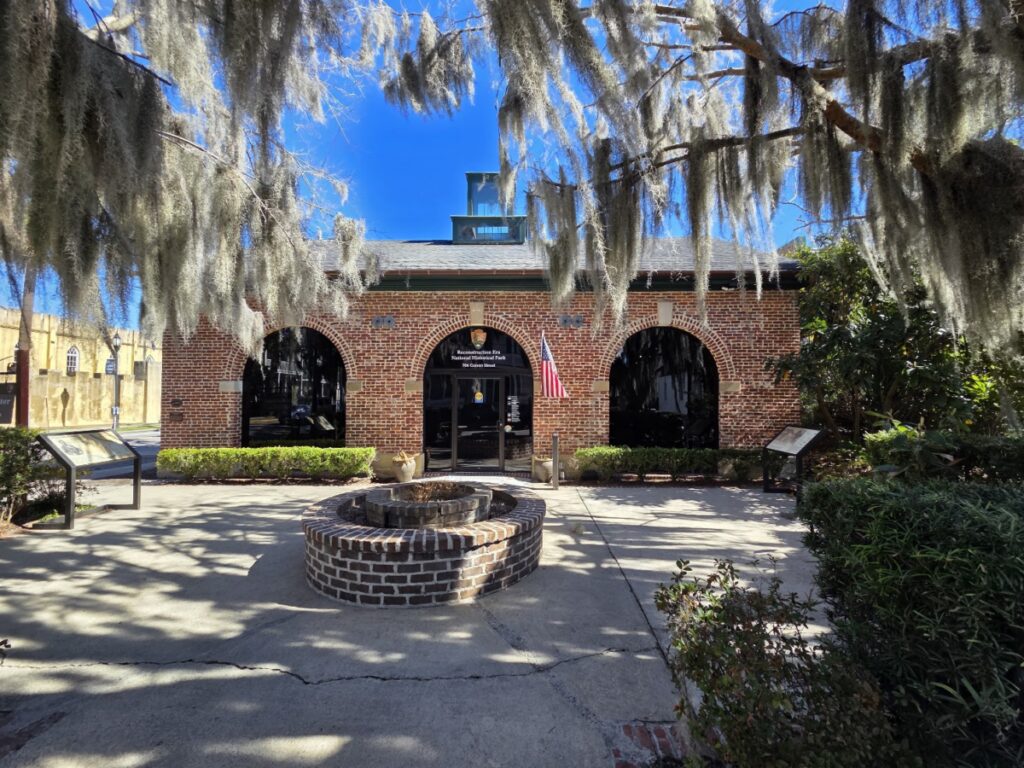
Reconstruction Era National Historical Park is a geographically distributed NPS site in and around Beaufort, South Carolina. It focuses on the Reconstruction of the South after the Civil War, which began on these Sea Islands. President Obama established it as a national monument in January 2017, and Congress made it a national historical park in March 2019. The park preserves four core places: the Old Beaufort Firehouse (built around 1912, now the visitor center), Camp Saxton, Brick Baptist Church, and Darrah Hall on the Penn Center campus. The Park Service runs Darrah Hall, the visitor center and Pinckney-Porter’s Chapel. The Penn Center, an independent nonprofit, runs its own campus and museum as a close partner.
Historical Context
Where it began: In November 1861, the Union Navy captured Port Royal Sound, and white planters fled the Sea Islands. About 10,000 enslaved people stayed behind. With Lincoln’s support, the federal government launched the “Port Royal Experiment.” Northern teachers and missionaries came south, and formerly enslaved people began farming for wages, buying land, and going to school. It was a test run for questions the whole country would face after the war: land, labor, education and voting.
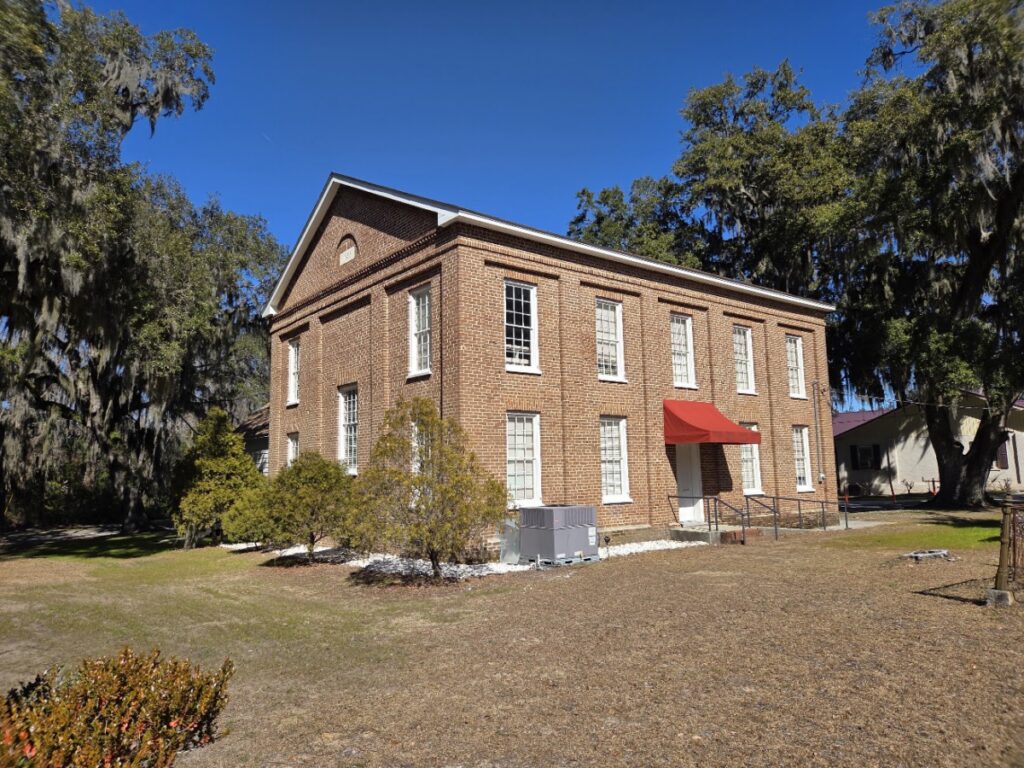
Penn School and Brick Church: In 1862, Laura Towne and Ellen Murray, later joined by Charlotte Forten, began teaching freed people at Brick Baptist Church. Enslaved people had built that church in 1855 for the white planters who held them, and after the planters fled, the Black community made it their own. The school soon moved to its own building and became Penn School, one of the first schools in the South for formerly enslaved people. It taught students until 1948, then became a community agency. In the 1960s, as the Penn Center, it was one of the few places in the South where interracial groups could safely meet. Dr. Martin Luther King Jr. and the SCLC held retreats here, including while planning the March on Washington.
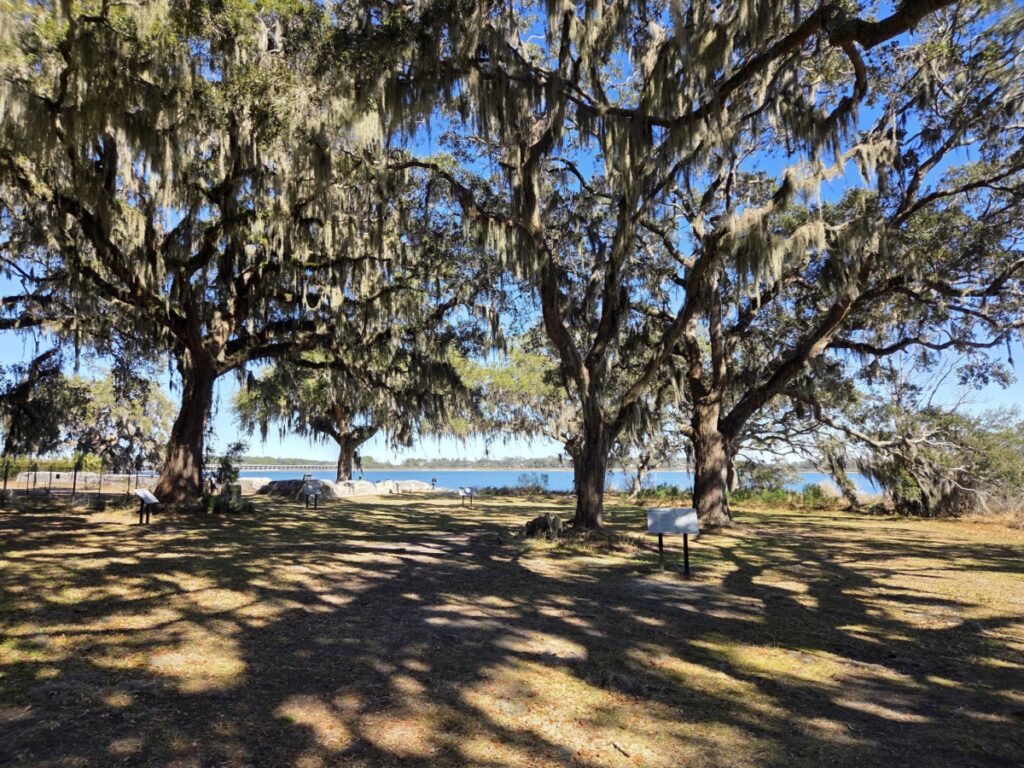
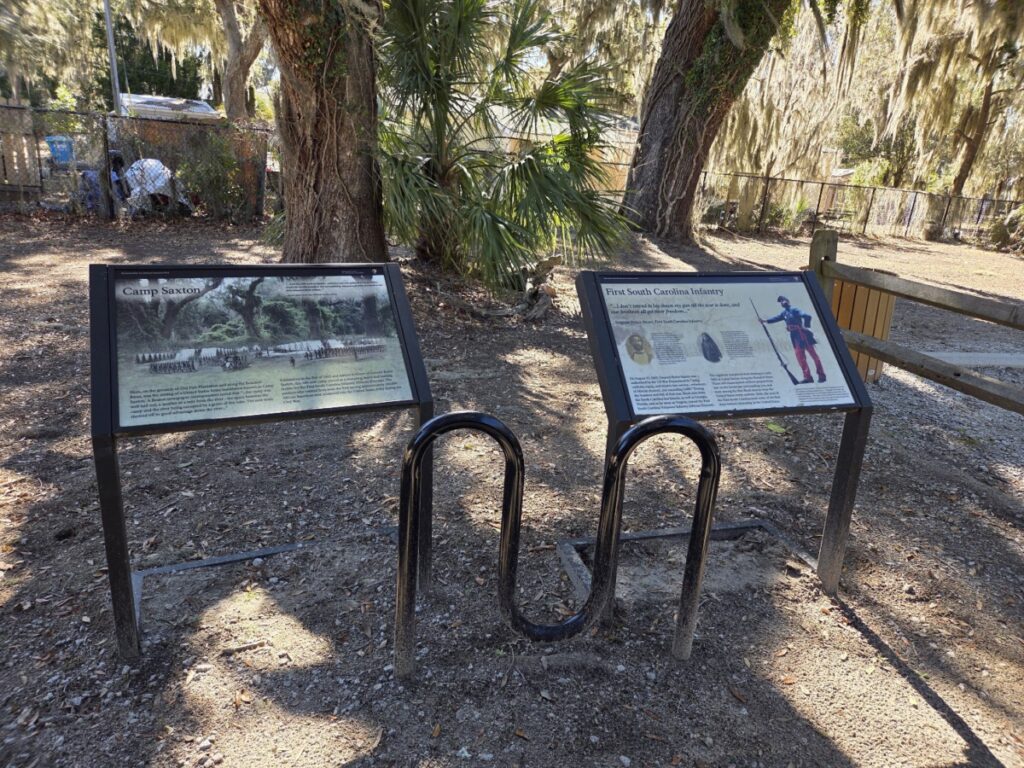
Camp Saxton: The 1st South Carolina Volunteers, among the first Union regiments made up of formerly enslaved men, trained here. On January 1, 1863, the day the Emancipation Proclamation took effect, it was read aloud to the regiment and more than 5,000 people in a grove of live oaks. The park calls it the first reading of the Proclamation. When the flag was presented, the crowd spontaneously sang “My Country, ’Tis of Thee.” Harriet Tubman served as a nurse at the camp.
Robert Smalls: Born enslaved in Beaufort, Smalls escaped in 1862 by steering a Confederate ship, the Planter, out of Charleston Harbor to the Union fleet. He later served five terms in Congress and championed public education. His Beaufort home at 511 Prince Street isn’t open for tours, but you can see it from the street.
Best Things to Do at Reconstruction Era National Historical Park
- Talk to a ranger at the visitor center. Get a map and the best route for the day. Ours planned our whole loop.
- Tour the Penn Center campus and museum. This is the largest site, with the York W. Bailey Museum, a film, historic buildings, a praise house and Darrah Hall.
- See Brick Baptist Church. It’s across the street from the Penn Center. Look for the fingerprints of the enslaved brickmakers in the walls.
- Visit Pinckney-Porter’s Chapel on a Saturday. This freedman’s chapel has an exhibit on Black soldiers and Camp Saxton, and it hosts a Saturday farmers market.
- Stand at Camp Saxton. Read the signs at Fort Frederick Heritage Preserve, where 1730s tabby fort ruins sit on the river. The actual Emancipation Oak is on Naval Hospital grounds and isn’t open to the public.
- Join a ranger program. Rangers lead walks at several sites; check the park calendar.
Best Hikes at Reconstruction Era National Historical Park
This isn’t a hiking park. The walking is short: around the Penn Center campus (it has a nature trail with an overlook), and the short path at Fort Frederick. For real trails, pair it with Hunting Island State Park, about 20 minutes past the Penn Center.
Key Areas in Reconstruction Era National Historical Park
- Downtown Beaufort: The visitor center, the 304-acre Beaufort National Historic Landmark District, Robert Smalls’ house, and the Beaufort History Museum in the old Arsenal.
- Port Royal: Pinckney-Porter’s Chapel and Camp Saxton at Fort Frederick.
- St. Helena Island: Brick Baptist Church, Darrah Hall, and the 50-acre Penn Center National Historic Landmark District, in the heart of the Gullah Geechee community around Frogmore.
Our Experience at Reconstruction Era National Historical Park
Breakfast and the firehouse. My wife and I drove up to Beaufort for the day from Tybee Island, where we were staying. We parked in downtown Beaufort, which cost a few dollars, and headed to breakfast before the visitor center. The visitor center is in an old fire station. It’s small, but it was run by a knowledgeable park ranger who gave us the best route to visit all of the sites.
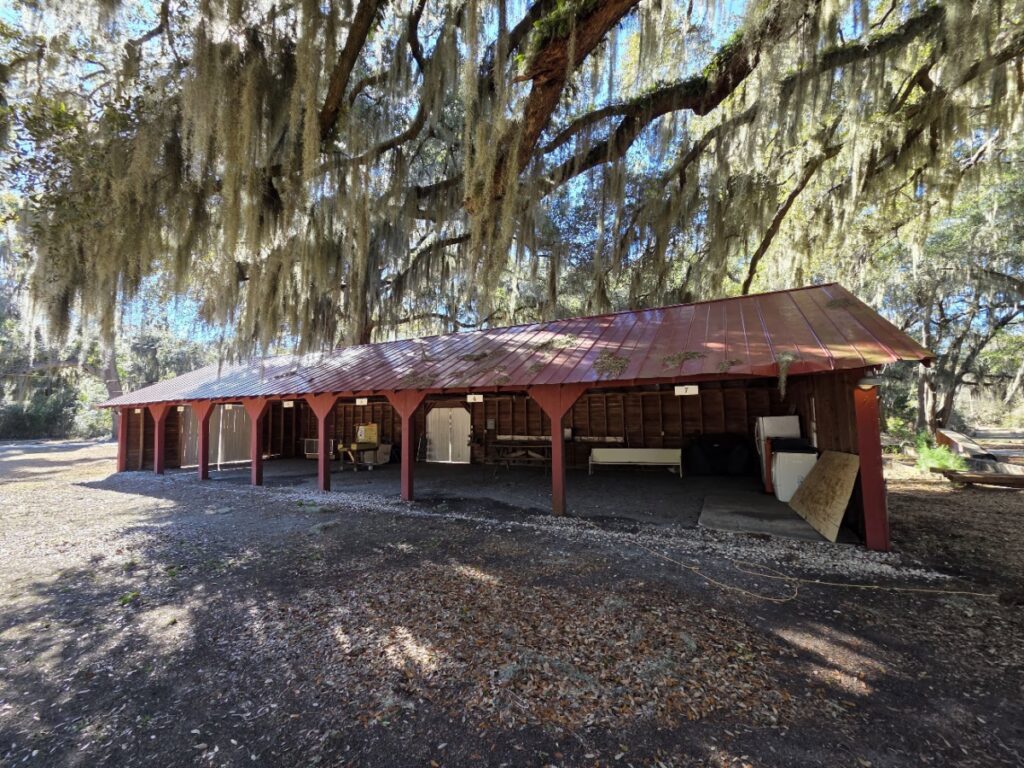
The chapel and Camp Saxton. We then went to Pinckney-Porter’s Chapel, which is next to a skatepark. It was closed, since it only opens on Saturdays, but there were some placards and a picnic area outside. We went to Camp Saxton, where the Emancipation Proclamation was first read. This was pretty neat, but there was nothing to see other than a placard.
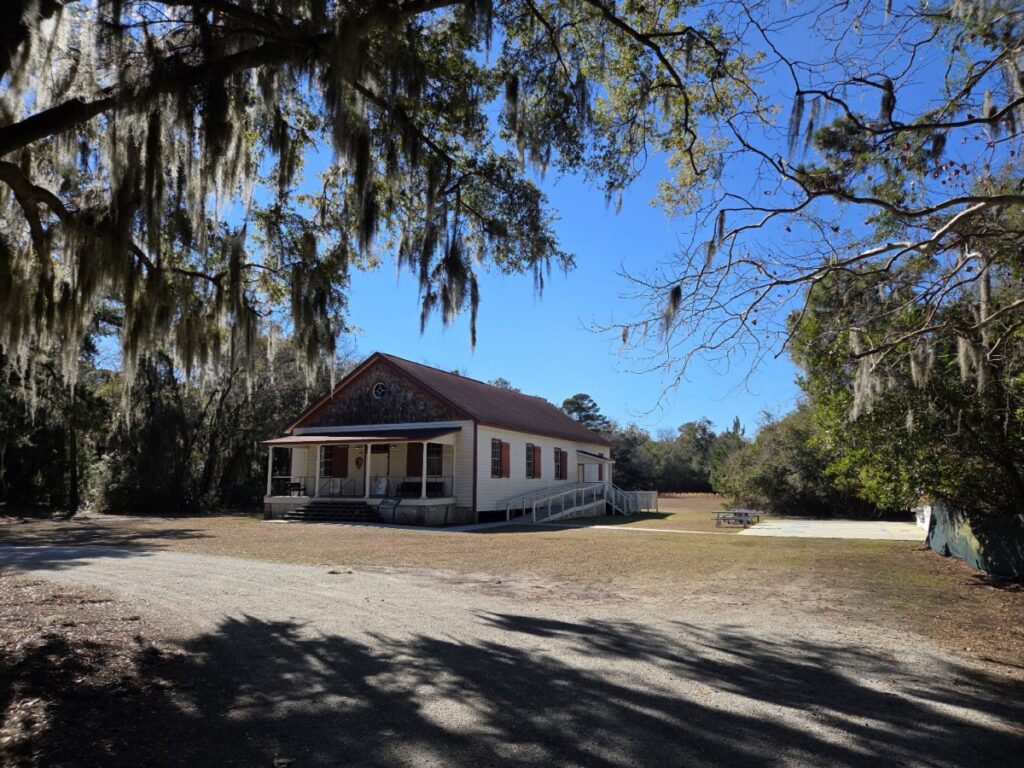
Brick Church. We headed to Brick Baptist Church. Its interior isn’t usually open to visitors, and the congregation is still active to this day. It’s across the street from the Penn Center.
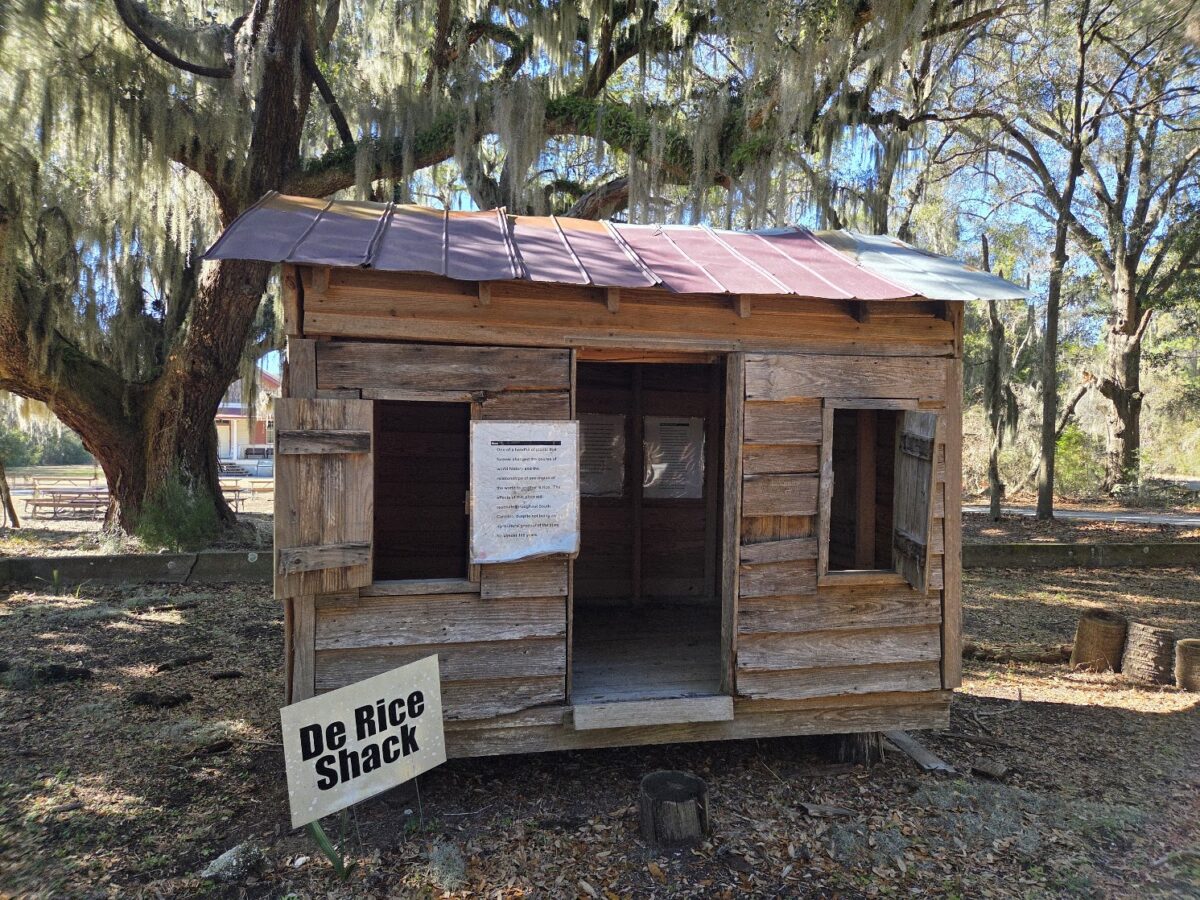
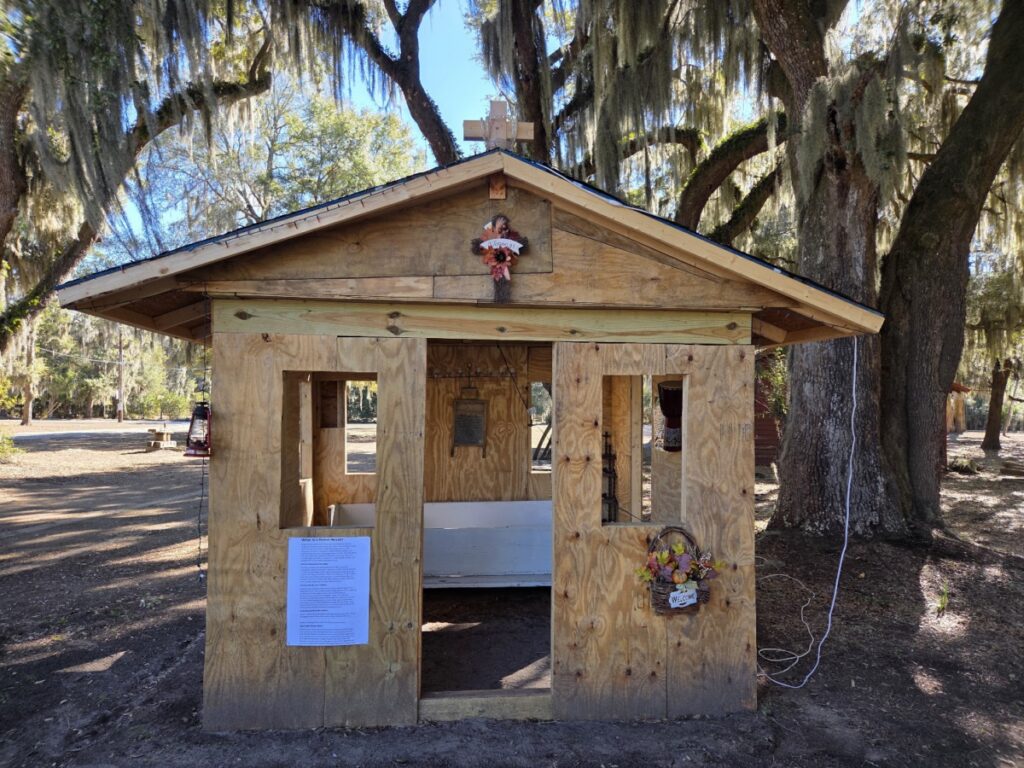
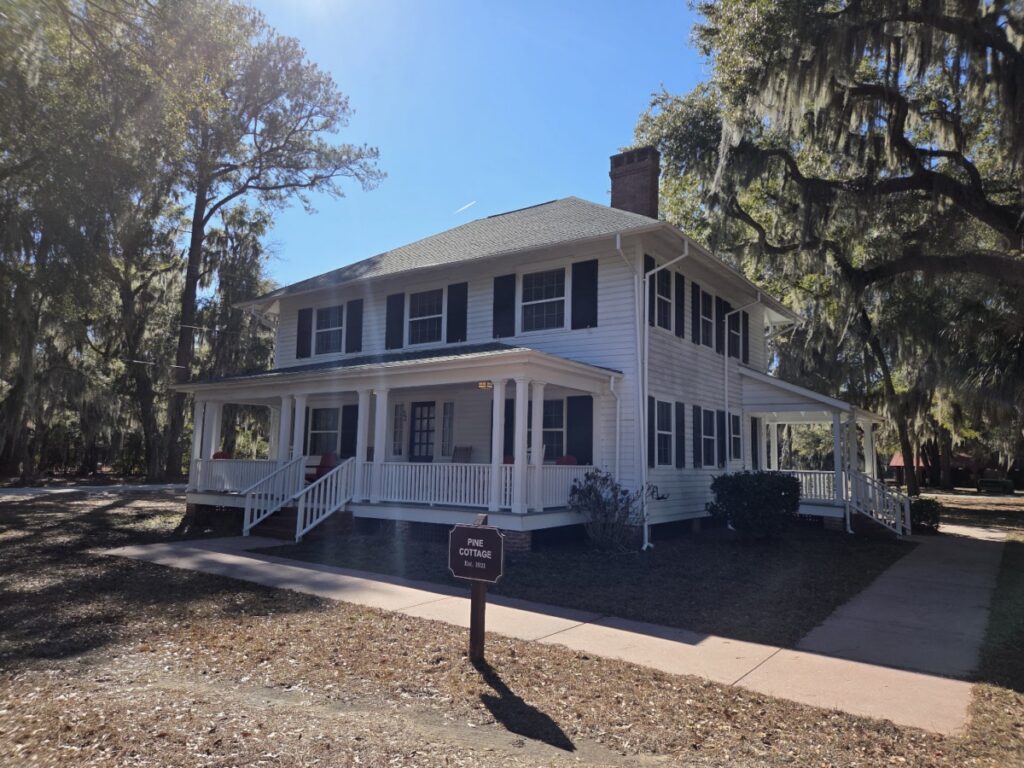
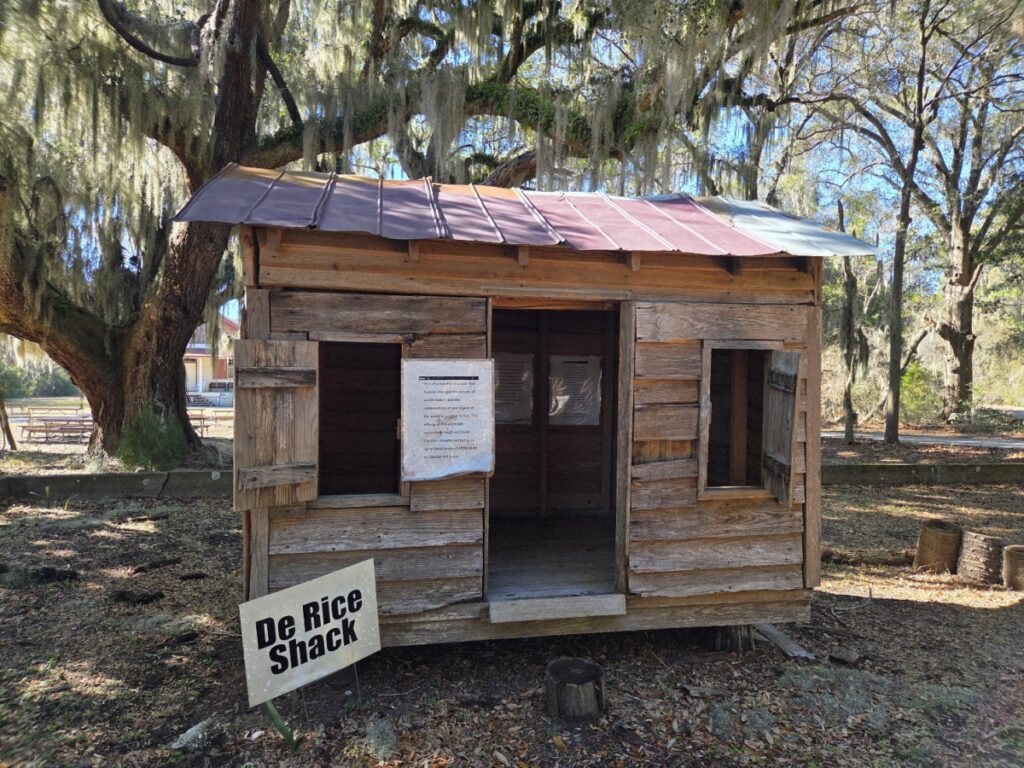
The Penn Center. Last, we headed to the Penn Center, which is a pretty large site compared to the others. The NPS-run Darrah Hall was closed, but Penn Center staff were kind enough to open up their museum for us and some other visitors on a day it’s normally closed. We watched the movie and saw the exhibits, then walked the lawn. We saw a rice shack and a praise house, which was super cool. Praise houses were small meeting houses where enslaved and freed Gullah people gathered to worship.
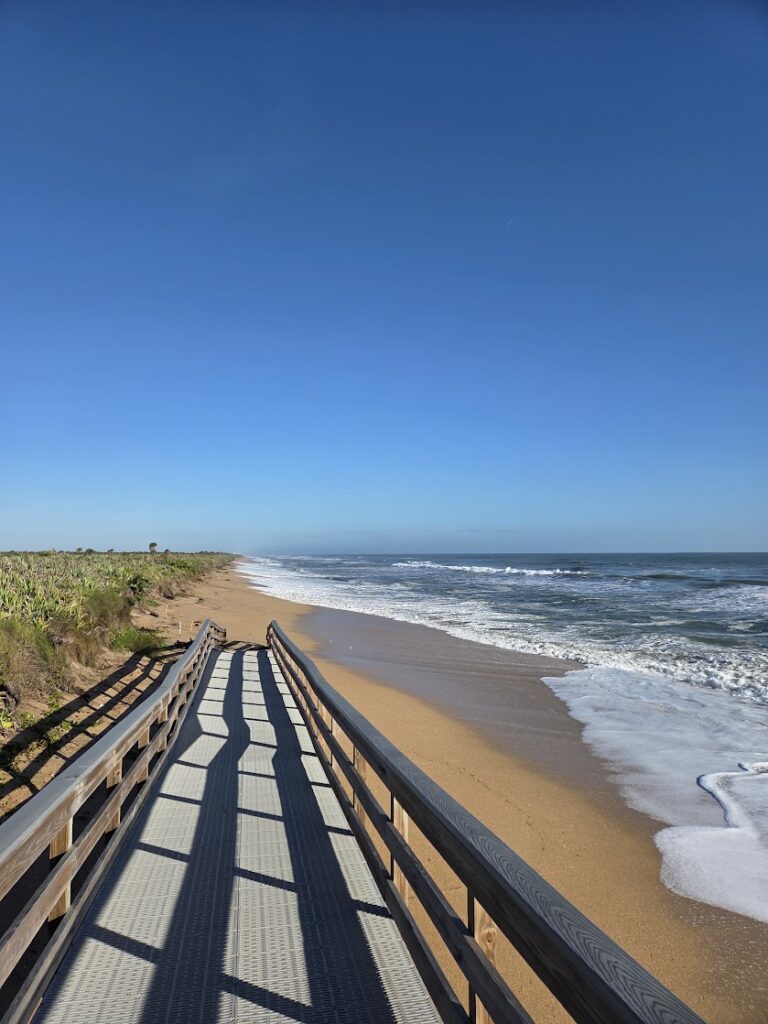
Hunting Island. From the Penn Center, we continued east on U.S. 21 to Hunting Island State Park, which made a great pairing for the day. At the end of the day, we stopped for Gullah food on Hilton Head Island at A Lowcountry Backyard Restaurant. Ideally, we would have had Gullah food near the Penn Center, but all local restaurants were closed on the day we visited.
Don’t Make Our Mistake
We went on Presidents’ Day, a Monday, and almost everything outside the visitor center was closed. Darrah Hall and the Penn Center are closed Sunday and Monday, and the chapel opens only on Saturdays. Check the hours table before you pick your day.
What We Would Do Differently
We would go on a day when all facilities are open and staffed, so we could learn more about the history of Reconstruction. Now we know that’s a Saturday.
How to Visit Reconstruction Era National Historical Park in 4 Hours
This is the route our ranger gave us, and it works best on a Saturday:
- Breakfast and the visitor center in downtown Beaufort, without moving your car (1 hour).
- Pinckney-Porter’s Chapel in Port Royal (20 to 30 minutes).
- Camp Saxton at Fort Frederick (15 to 20 minutes).
- Drive to St. Helena Island and see Brick Baptist Church (15 minutes).
- Penn Center: Darrah Hall, then the museum, film and campus (1.5 hours).
If You Only Do One Thing
Go to the Penn Center, Tuesday through Saturday. It has the most to see, and with Brick Church across the street, it tells the whole arc from slavery to freedom to civil rights in one place.
Full-Day Itinerary
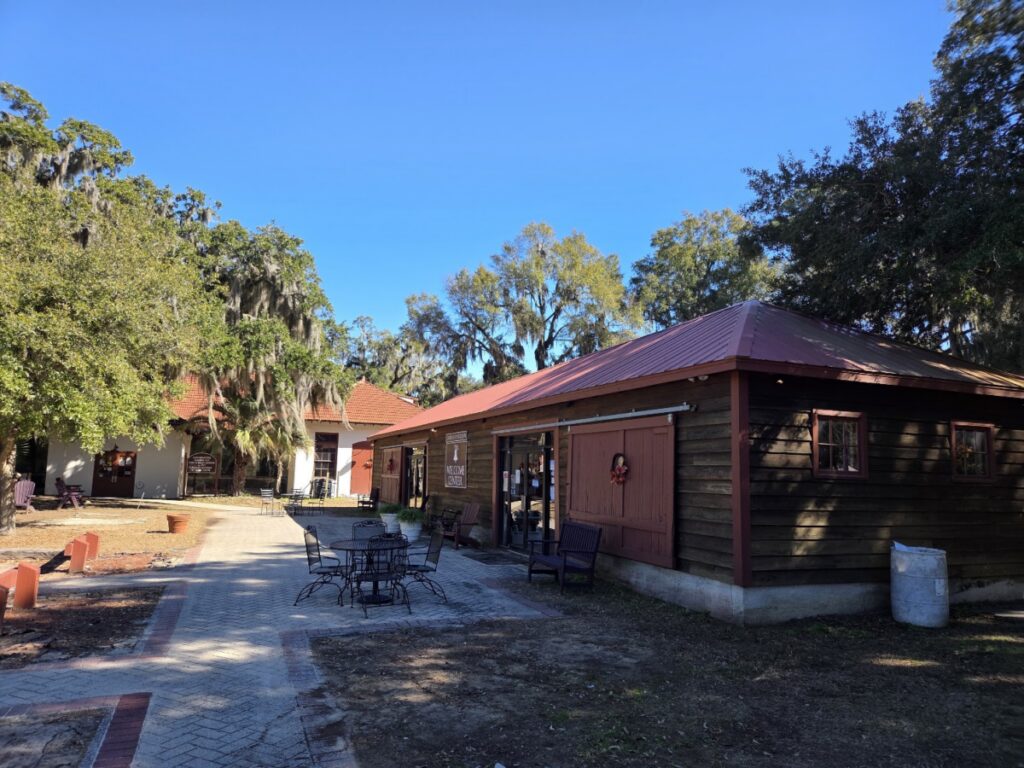
Do the 4-hour route above in the morning, have a Gullah lunch on St. Helena Island if you can find a place open, and spend the afternoon at Hunting Island State Park for the lighthouse, the beach and the trails. That’s what we did. You don’t need more than one day.
Where to Eat Near Reconstruction Era National Historical Park
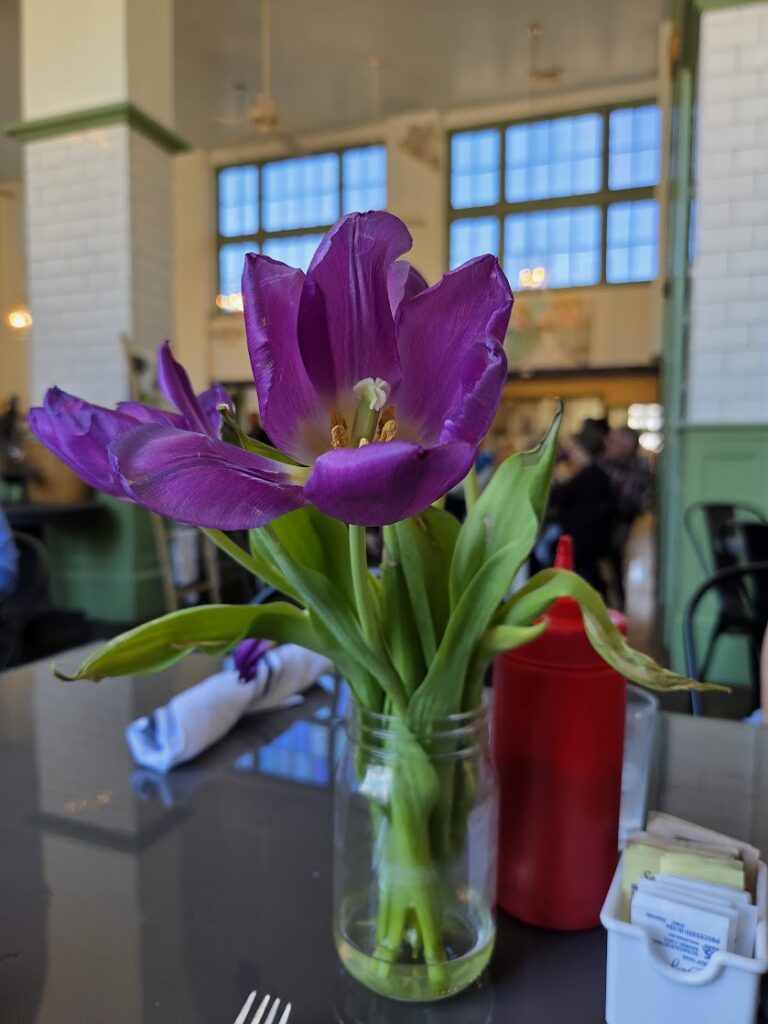
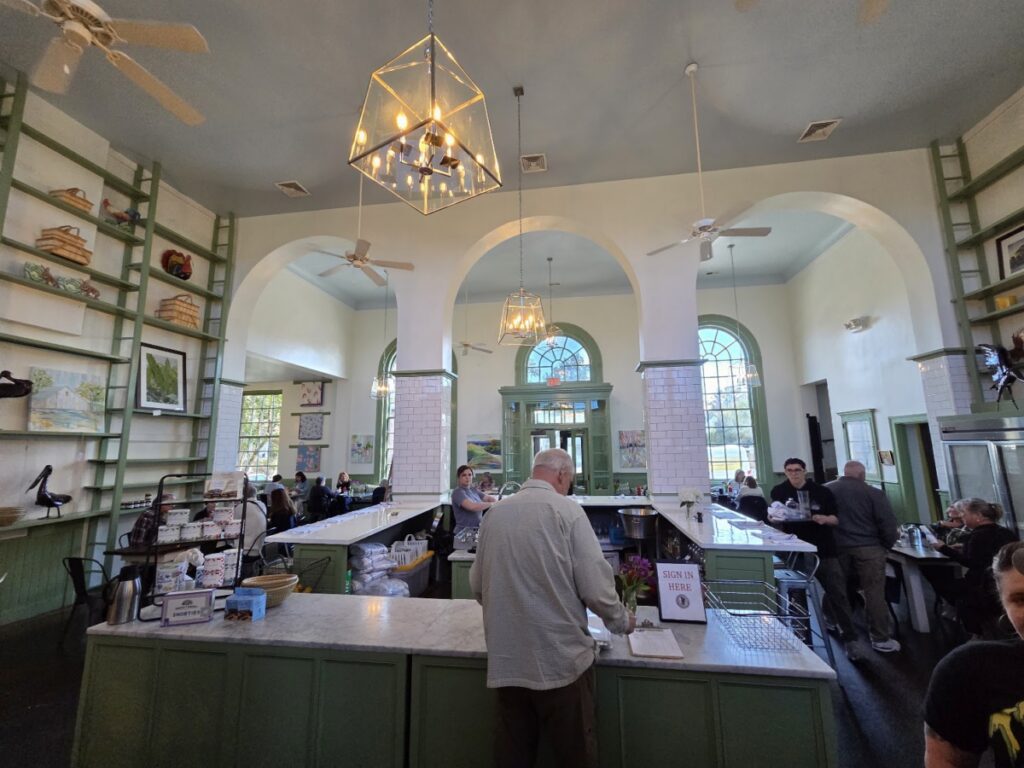
We strongly recommend eating at Lowcountry Produce Market & Café (302 Carteret Street), which is right around the corner from the firehouse visitor center, your first stop. You can go to breakfast and the visitor center without moving your car! They serve breakfast from 8 a.m. daily.
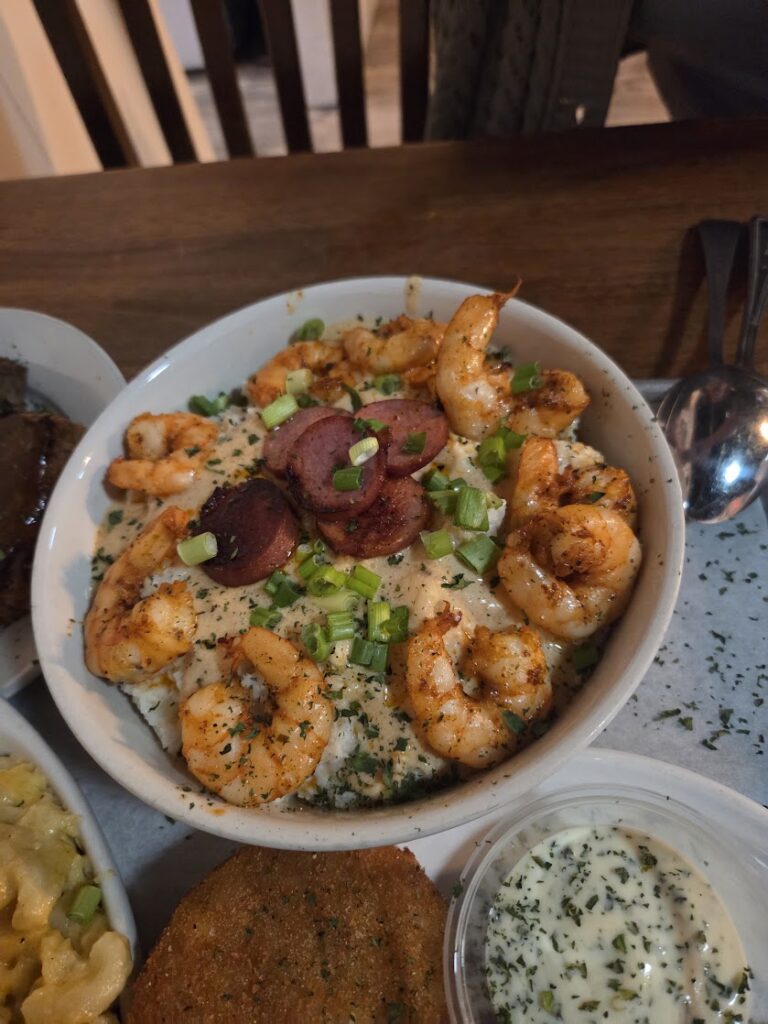
Try Gullah food while you’re here; it’s the cooking of the community this park is about. We went on Presidents’ Day, and the only place we found open was A Lowcountry Backyard Restaurant, located an hour away on Hilton Head Island. There is other Gullah food in the area, especially near Frogmore on St. Helena Island, but hours can be irregular, so call ahead.
Where to Stay Near Reconstruction Era National Historical Park
Stay in Beaufort, or even Charleston (about 1.5 hours) or Savannah (about 1 hour). We did it as a day trip. If you want to camp, Hunting Island State Park has a campground.
Tips for Visiting Reconstruction Era National Historical Park
- Plan around the schedule. The park is geographically distributed across several sites, and you’ll drive between them. It’s somewhat difficult to go when they’re all open. Saturday is the only day all the NPS sites are.
- The Penn Center runs on its own schedule. The Penn Center and its museum are run independently from the Park Service. The organization was nice enough to open the museum for us and some other visitors on a day it’s normally closed, but don’t count on that.
- Be respectful. Brick Baptist Church is a working church, and St. Helena Island is a living Gullah Geechee community, not a museum set.
- Get the stamp downtown. The visitor center is open every day.
When to Visit Reconstruction Era National Historical Park
Reconstruction Era National Historical Park is open from sunrise to sunset for its outdoor sites. The downtown visitor center is open daily, 9 a.m. to 5 p.m., and indoor hours at the other sites vary (see the table).
We recommend visiting in the fall, winter or spring, on a Saturday. Summer in the Lowcountry is hot and humid. January 1 (Emancipation Day) and Juneteenth often bring special programs; check the calendar.
Always check the park website or call (843) 962-0039 for the most up-to-date information.
What to Bring to Reconstruction Era National Historical Park
Your NPS passport book, a card for downtown parking and Penn Center admission, water, bug spray for the outdoor sites, and a beach bag if you’re adding Hunting Island.
Fees & Reservations
The NPS sites are free, with no reservations. The Penn Center charges $10 for a self-guided visit or $15 for a docent-led tour with the documentary (5 and under free). Docent-led tours run at 10 a.m., noon and 3 p.m.; call (843) 838-7105 to confirm. When we were let in on the off day, no fee was charged.
Frequently Asked Questions
What is the best day to visit?
Saturday. It’s the only day the visitor center, Pinckney-Porter’s Chapel, Darrah Hall and the Penn Center museum are all open.
Is the park worth visiting if some sites are closed?
Yes, but set your expectations. The downtown visitor center is a good starting point for exhibits, a park map, and advice from a ranger. Camp Saxton is primarily an outdoor historic site, and you can view the exterior of Brick Baptist Church even when its interior is unavailable. If the Penn Center museum and Darrah Hall are priorities, check their hours before building your itinerary around them.
Is Reconstruction Era National Historical Park free?
The NPS sites are free. The Penn Center, a separate nonprofit, charges $10 to $15 for its museum and tours.
What is the Penn Center?
It’s the former Penn School, founded in 1862 as one of the first schools in the South for formerly enslaved people. Today it’s a Gullah Geechee cultural center and a park partner. The NPS manages Darrah Hall on its campus.
Can you see the Emancipation Oak at Camp Saxton?
No. It’s on Naval Hospital Beaufort grounds, which are closed to the public. Visitors learn about the site at Fort Frederick Heritage Preserve and Pinckney-Porter’s Chapel.
Can you go inside Brick Baptist Church?
Usually not. It’s an active congregation, and the interior isn’t typically open to visitors. Call the park about special access.
How long does it take?
About 4 hours for all the sites, including driving. Add an afternoon for Hunting Island State Park.
Do you need a car to visit Reconstruction Era National Historical Park?
A car is the easiest way to visit all the sites. The visitor center is downtown Beaufort, while other locations are spread across Port Royal and St. Helena Island. Plan time for driving between stops.
Is the Penn Center part of the National Park Service?
No. The Penn Center is an independent nonprofit and historic campus. The NPS operates Darrah Hall on the campus, while the Penn Center operates its own museum and visitor facilities.
Can you visit Camp Saxton without a guided tour?
The Camp Saxton site is accessible through Fort Frederick Heritage Preserve, which is open daily from sunrise to sunset. It is primarily an outdoor historic site, so check the park calendar if you want a ranger-led program or more interpretation. National Park Service+1
What else should you visit near Reconstruction Era National Historical Park?
Hunting Island State Park is a natural pairing for the day, with beaches, a lighthouse and hiking trails. You could also spend more time exploring historic downtown Beaufort or visit Mitchelville Freedom Park on Hilton Head Island.
Conclusion
Reconstruction Era National Historical Park tells a story most of us never learned in school, in the places where it happened: a church built by enslaved people and claimed by freed ones, a school that lasted from 1862 into the civil rights era, and the grove where thousands heard they were free. It takes some planning to catch every site open, so go on a Saturday, start downtown, and finish at the Penn Center and Hunting Island.
Our February Lowcountry and Coastal Georgia Trip
My wife and I visited these parks on one February trip for a friend’s wedding in Savannah. Here’s every post from the trip:
- Charleston area, SC: Charles Pinckney National Historic Site: a free, one-hour founding father stop in Mount Pleasant; May Forest State Park: harbor views and dolphins on James Island (weekdays only)
- Savannah area, GA: Fort Pulaski National Monument: the brick fort rifled cannons broke in 1862; Old Fort Jackson: Georgia’s oldest standing brick fort, with live firings; Wormsloe State Historic Site: the 1.5-mile avenue of live oaks
- Beaufort area, SC: Reconstruction Era National Historical Park (you’re here); Hunting Island State Park: lighthouse, lagoon and connected trails
- Golden Isles, GA: Fort Frederica National Monument: the tabby ruins of Oglethorpe’s 1736 town; Jekyll Island State Park: Driftwood Beach and the Horton House
Other Sights Near Reconstruction Era National Historical Park
- Hunting Island State Park: A lighthouse, beaches, maritime forest and camping, about 20 minutes east of the Penn Center.
- Beaufort History Museum: In the 1852 Arsenal on Craven Street, a park partner that served as a Freedmen’s Bureau site.
- Mitchelville Freedom Park: On Hilton Head Island, the site of the first freedmen’s town established during the Civil War.
- Fort Pulaski: After the Union captured this fort in 1862, enslaved people on Cockspur Island were declared free. It’s about 1 hour 15 minutes south, near Savannah.
- Fort Sumter and Fort Moultrie and Charles Pinckney NHS: About 1.5 hours north in Charleston.
Leave a Reply