

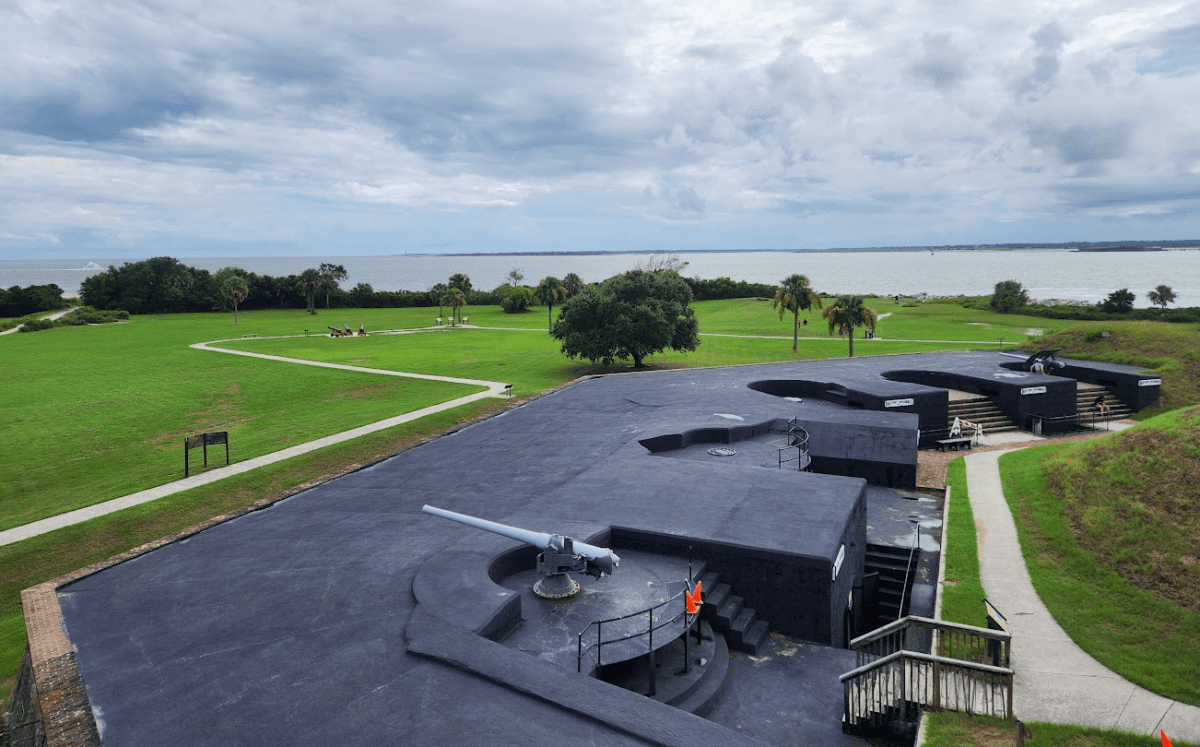
Fort Sumter is one of the most historically significant sites in the United States and one of the most popular National Park Service destinations in South Carolina. Few National Park Sites are as jampacked with history as this one is, with the backdrop of a beautiful east coast harbor.
We did both forts at Fort Sumter and Fort Moultrie National Historic Park in one day. We started with a morning ferry to Fort Sumter then spent the afternoon at Fort Moultrie on Sullivan’s Island. Here’s everything you need to plan the same itinerary.
Is Fort Sumter and Fort Moultrie National Historical Park Worth Visiting?
Yes, for very different reasons than most national parks. This is not a park you visit for mountains and trails, it is one you visit to connect to history. Stand inside the brick walls that absorbed the opening fire of the Civil War at Fort Sumter. Fort Moultrie’s well-preserved site has history spanning from the Revolutionary War until World War 2. Together, they make for a full and memorable day, and the ferry ride across Charleston Harbor is an experience by itself.

Quick Facts
Fort Sumter Location: Fort Sumter Visitor Center: 340 Concord Street, Liberty Square, Charleston, SC 29401
Fort Moultrie Location: 1214 Middle Street, Sullivan’s Island, SC 29482
Time Needed: Full Day (6-8 hours for both forts)
Best For: History lovers, Civil War enthusiasts, families, Charleston visitors
Don’t Miss: Dolphins on the ferry ride to Fort Sumter
Best Time to Visit: Spring or Fall
Visitor Center Hours: Daily 9 AM – 4:30 PM(closed on major holidays)
Admission: $10/person (Fort Moultrie), $43/person (ferry ride to Fort Sumter)
Official Website: nps.gov/fosu
Things to Know Before You Go
- Fort Sumter is only accessible by ferry.
- Ferry tickets frequently sell out.
- The island visit lasts about one hour.
- Fort Moultrie requires a separate admission fee.
- The America the Beautiful Pass covers Fort Moultrie.
- Plan for at least half a day for Fort Sumter and a full day for both sites.
- Summer afternoons often bring thunderstorms.
Overview Of Fort Sumter and Fort Moultrie National Historical Park
This park protects two of the most historically significant military installations in American history, both positioned at the entrance to Charleston Harbor in South Carolina.
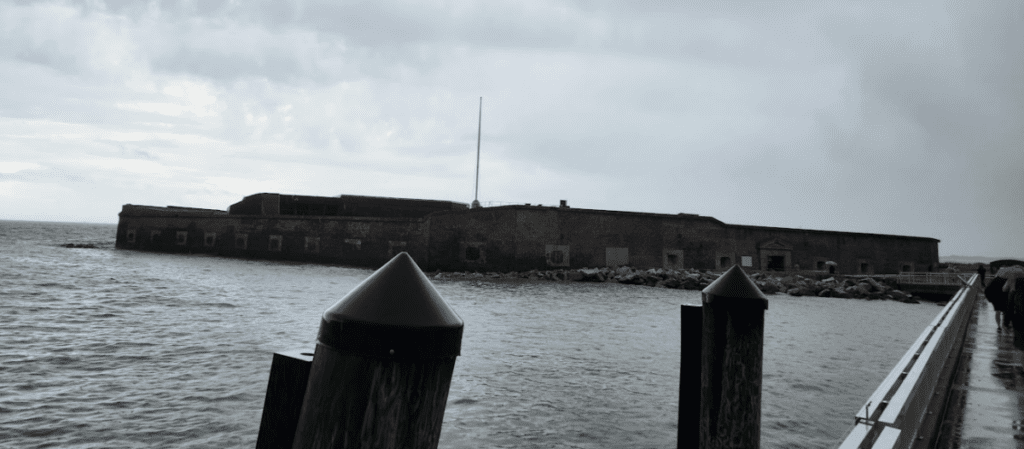
Fort Sumter is the most popular. It was built on a man-made island in the middle of the harbor in the 1820s and 30s and was where the Civil War officially began. Confederate forces opened fire on the Union garrison inside, triggering the start of the conflict that would kill more Americans than any war before or since. The fort is accessible only by ferry, which departs from Liberty Square in downtown Charleston and from Patriots Point in Mount Pleasant.
Fort Moultrie sits on the western tip of Sullivan’s Island, just across the harbor from Fort Sumter. In 1776, this fort was hastily constructed using palmetto logs and sand to repel a British naval assault, saving Charleston from occupation and helping sustain the early American Revolution. The fort was continuously reconfigured through World War 2, and today it preserves five eras in one fascinating site.
Together, the two forts tell the story of American coastal defense and freedom across more than two centuries.
Best Things to Do at Fort Sumter and Fort Moultrie National Historical Park
- Ride the Ferry to Fort Sumter. The only way to reach this fort is by boat, and the ferry ride is part of the experience. You’ll cruise past historic houses, the giant Arthur Ravenal Jr. Bridge, the Battery & White Point Gardens, Patriots Point (and the USS Yorktown), and Castle Pinckney. You’re likely to see dolphins in the harbor.
- Explore the Fort Sumter Visitor Center. The visitor center at Liberty Square provides exhibits about the events that led to the Civil War, including displays on slavery, secession, and the political breakdown of the 1850s. This will provide context before heading to the island.
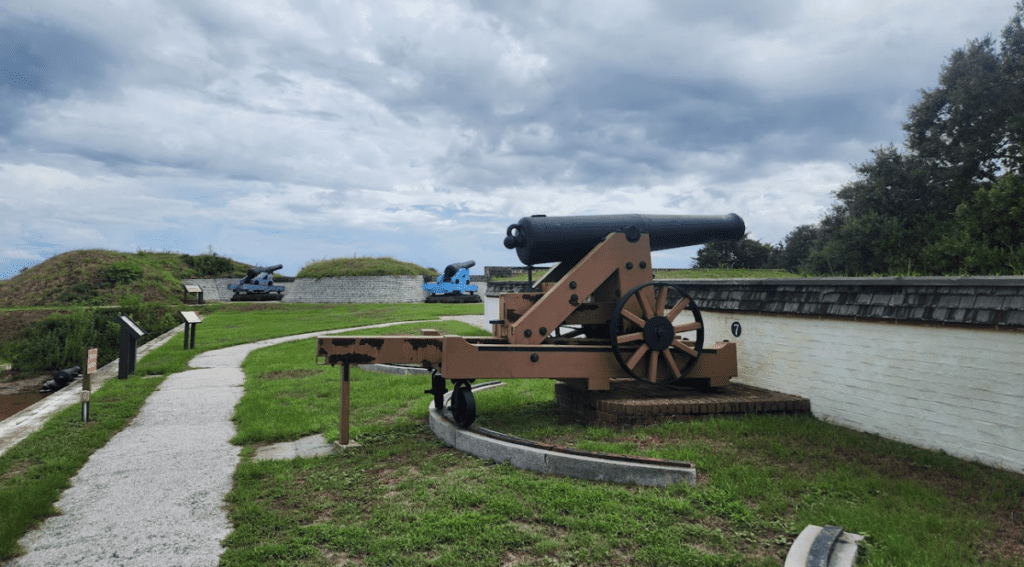
- Walk All Five Eras at Fort Moultrie. This is what makes Fort Moultrie special. The fort has been restored to look as it did across five distinct historical periods: Revolutionary War palmetto log fort, early American Republic brick fort, Civil War-era Confederate fortifications, World War 1 gun emplacements, and World War 2 coastal defense installations.
- Attend a Ranger-Led Talk or Tour. Both forts offer ranger programs. At Fort Sumter, this will be during your one-hour visit to the island. At Fort Moultrie, these tours are typically at 11am and 2pm, but call ahead to confirm.
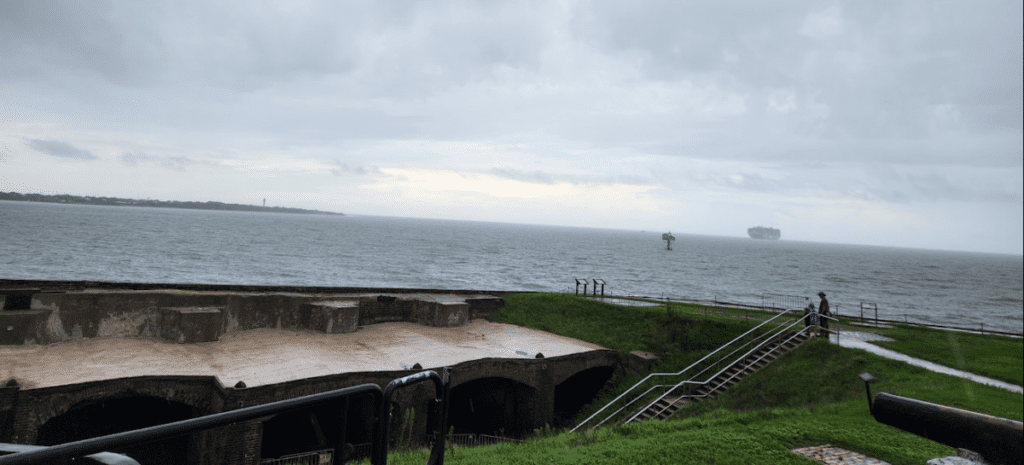
- Enjoy the Harbor Views at Fort Moultrie. This fort offers great views of Fort Sumter and the harbor.
- Walk Sullivan’s Island After Fort Moultrie. The Edgar Allen Poe Library, triangular Sullivan’s Island Lighthouse, pristine beaches, and excellent restaurants are all within an easy walk.
Best Hikes
This park is centered on historic sites rather than natural trails. That said, the grounds at Fort Moultrie are more expansive than they might appear, and you can expect ½-1 mile of walking through the exhibits and the Battery Jasper.
Key Areas in Fort Sumter and Fort Moultrie National Historical Park
Liberty Square – Fort Sumter Visitor Education Center – Located in downtown Charleston, this is what we would recommend as your starting point. The visitor center is adjacent to the South Carolina Aquarium and is where you’ll park, pick up your ferry tickets, and board the boat.
Fort Sumter Island – This island in Charleston Harbor is accessible only by ferry. A five-sided brick fort sits roughly 3.5 miles from the Liberty Square dock. The island contains the partially destroyed fort walls, a small museum, a gift shop, and sweeping views of the harbor. Your total time on the island is around one hour.
Patriots Point Departure – This alternate ferry departure point in Mount Pleasant is convenient if you’re staying north of the city.
Fort Moultrie – Located on Sullivan’s Island, the visitor center is across the street from the fort. The grounds are open daily, and the Visitor Center has a short film and exhibits.
Our Experience at Fort Sumter and Fort Moultrie National Historical Park
We visited both forts in one day while we were in Charleston.
Taking the Ferry to Fort Sumter
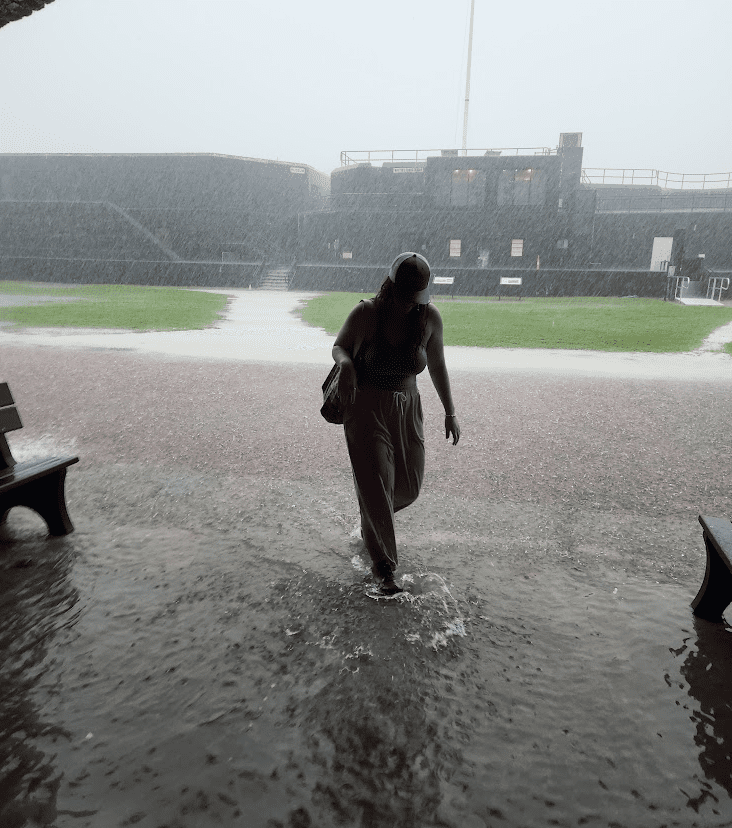
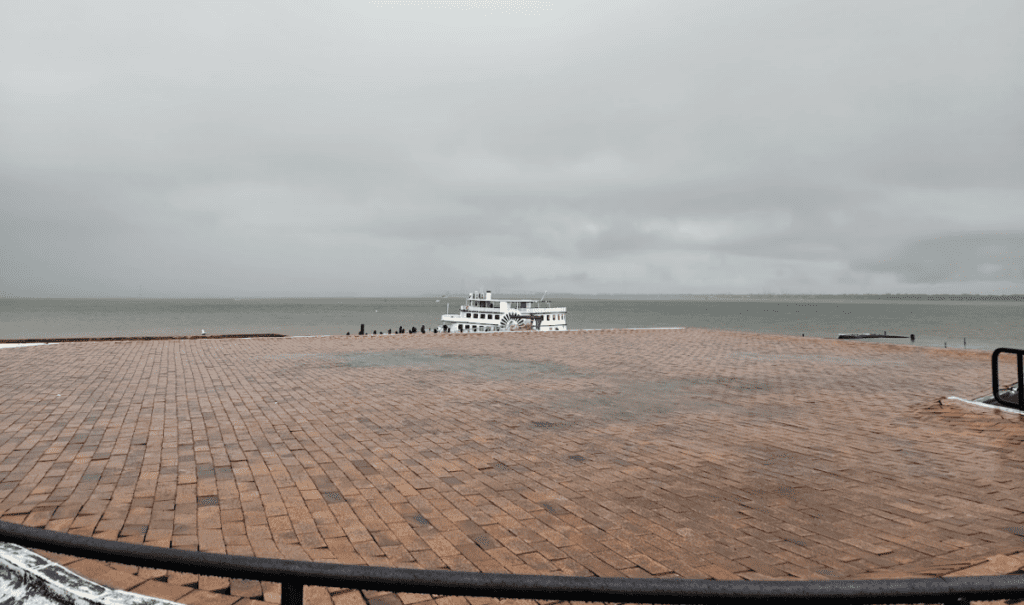
My wife and I started at Liberty Square around 9am on an August morning, and the weather looked like rain. We explored the visitor center while waiting for the ferry, and we made sure to quickly board and get a good seat. The rain started to come down while we rode the ferry, but we did see a couple pods of dolphins on our journey.

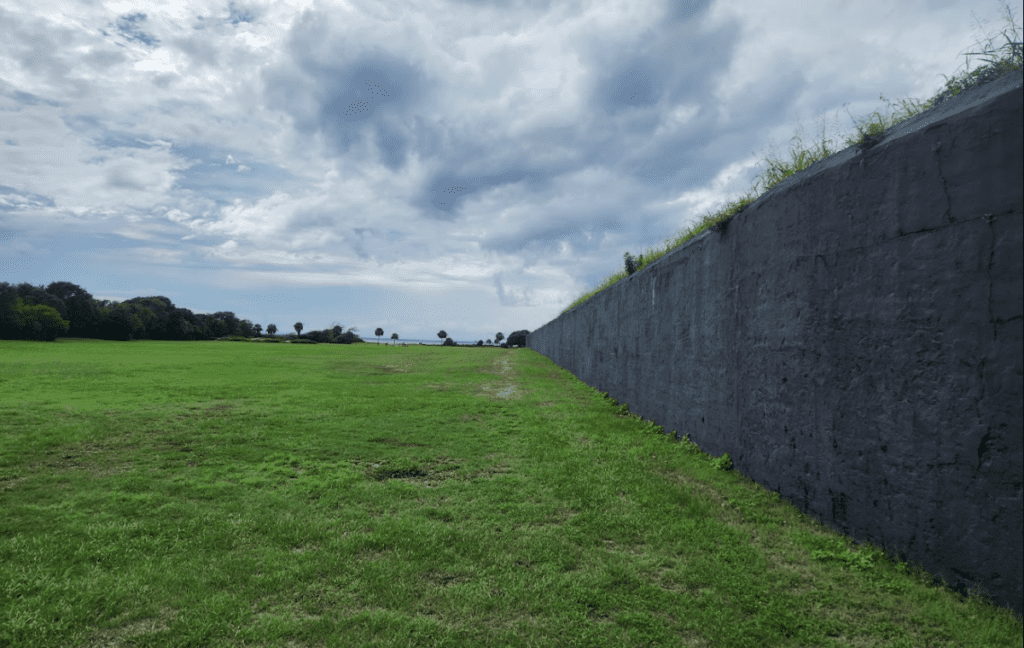
By the time we arrived at the fort, we had around 2 minutes of light rain to see the fort before a full-on monsoon. We ran to the museum and checked out the exhibits while the wind slammed the doors and the island flooded. The part of the fort we saw was neat, with big cannons and the bricks inside were painted black.
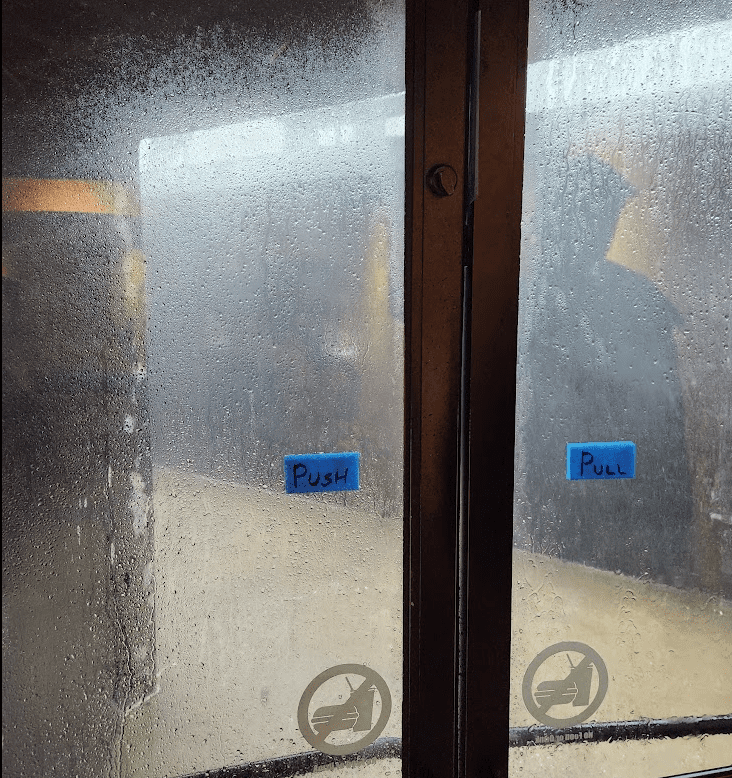
When our remaining time on the island had elapsed, we had to run back to the ferry. The water by this point was probably 4-6 inches deep. The ferry served local beer and hot dogs, and both were welcome and helped to warm us up.
We had lunch at a local diner as we tried to dry off. It was not in our plans to get soaked at Fort Sumter, but we were able to shake most of it off.
Fort Moultrie
Back at Fort Moultrie, we checked out the visitor center before exploring the grounds. I liked seeing the gun encampments from different wars. Another highlight was the World War era radio and strategy room.
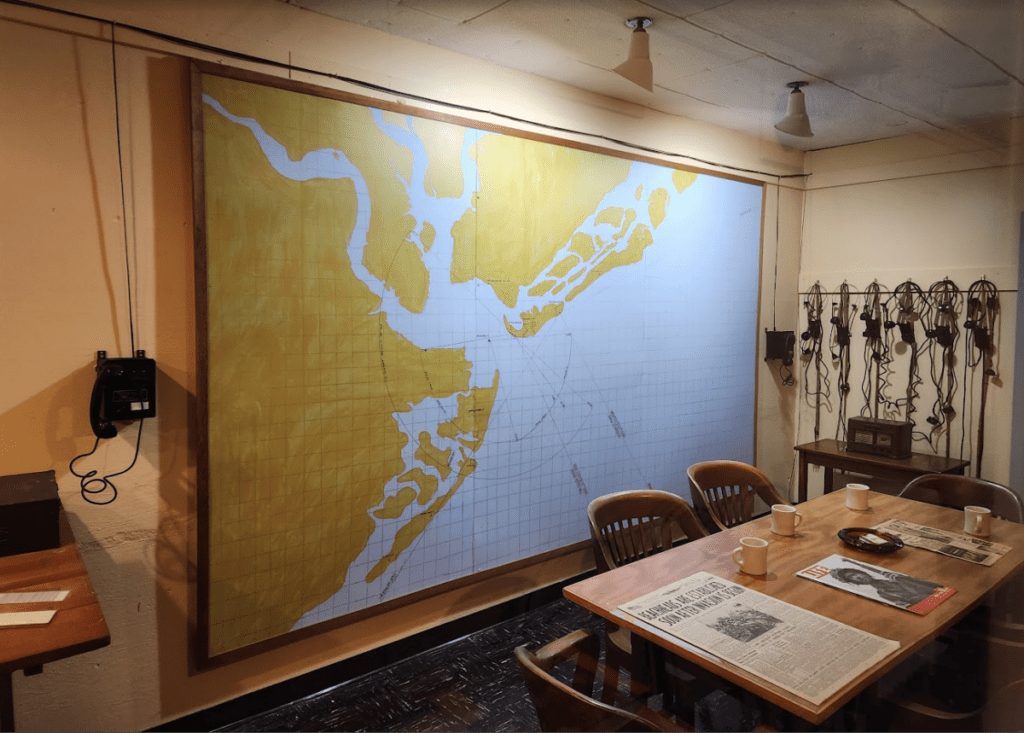
There were a lot of cannons overlooking the harbor, reminding us of a time when these were necessary to protect the American way of life. Nowadays, I am happy that we do not have to rely on cannons.
Our visit was enjoyable, but really illustrated to us how nice we have it in the modern days. Back when Fort Sumter was in use, on days it flooded the soldiers just had to tough it out and keep doing their duty.
Don’t Make Our Mistake
We were only in Charleston for a day trip on this visit, so we had no flexibility to visit Fort Sumter when it was dryer. As a result, we got soaked. I would recommend making a weekend out of a trip to Charleston and seeing sights like Charles Pinckney NHS in addition to this one.
What We Would Do Differently
We would visit in the Spring or Fall, when we are less likely to encounter crazy storms. Also, we would spend more time on Sullivan’s Island.
We visited for a second time in February of 2026 and spent more time on Sullivan’s Island, which I would recommend you to do as well.
How To Visit Fort Sumter and Fort Moultrie in One Day
- 9:00am – Arrive and park, check out the exhibits in the visitor center as you wait to board the ferry
- 9:30am – Board the ferry to Fort Sumter. Watch for dolphins in the harbor and enjoy the ride
- 10-11am – Explore Fort Sumter, get oriented by the ranger. Tour the gun decks, visit the museum, and look across the harbor
- 11:00am – Return to Liberty Square
- 12:00pm – Drive to Sullivan’s Island and eat lunch
- 1:00pm – Tour Fort Moultrie. Walk through the 5 historical eras and look across the harbor at Fort Sumter
- 3:00pm – Explore Sullivan’s Island. Walk to the beach, check out the lighthouse and the quiet streets
If You Only Do One Thing
Take the ferry to Fort Sumter. The boat ride, ranger orientation, and hour spent on the island where the Civil War began is a complete experience that has to be lived to understand. You should try to visit the better preserved Fort Moultrie as well.
Where to Eat Near Fort Sumter and Fort Moultrie National Historical Park
Our favorite restaurant on Sullivan’s Island is The Obstinate Daughter. This Michelin-recognized restaurant serves wood-fired dishes using locally sourced ingredients.

Other options near Fort Moultrie include:
- Poe’s Tavern – burger menu organized by Edgar Allen Poe story titles
- High Thyme Cuisine – cozy dinner option
- Sullivan’s Fish Camp – casual, waterfront-adjacent seafood option
Dining options near Liberty Square in Downtown Charleston include:
- Fleet Landing Restaurant & Raw Bar – fresh seafood and Lowcountry classics
- Ted’s Butcherblock – a local favorite for deli sandwiches, charcuterie, and more
- Magnolias – acclaimed Lowcountry fine dining
- Poogan’s Porch – one of Charleston’s most beloved southern restaurants
Where to Stay Near Fort Sumter and Fort Moultrie National Historical Park
Sullivan’s Island has limited accommodations, so downtown Charleston may be the most convenient.
There are a lot of high-end options, like the Charleston Place and the French Quarter Inn. For more affordable options, we would recommend:
- Hilton Garden Inn Charleston Waterfront
- Courtyard by Marriott Charleston Waterfront
- Hampton Inn Charleston Historic District
Tips For Visiting Fort Sumter and Fort Moultrie National Historical Park
- Book your ferry tickets in advance, as popular time slots sell out.
- Bring a credit card for food or drinks on the ferry.
- Arrive at Liberty Square 30-45 minutes before your ferry.
- If you need wheelchair or scooter access, you should use the ferry at Liberty Square instead of the one at Patriots Point.
- No food is allowed on Fort Sumter grounds. Eat before you board or purchase snacks on the ferry.
- Bring a water bottle.
- Wear comfortable, closed-toe shoes.
- Call ahead to confirm tour time slots for Fort Moultrie.
- Pets are not permitted on Fort Sumter tour ferry boats.
- Watch the orientation films.
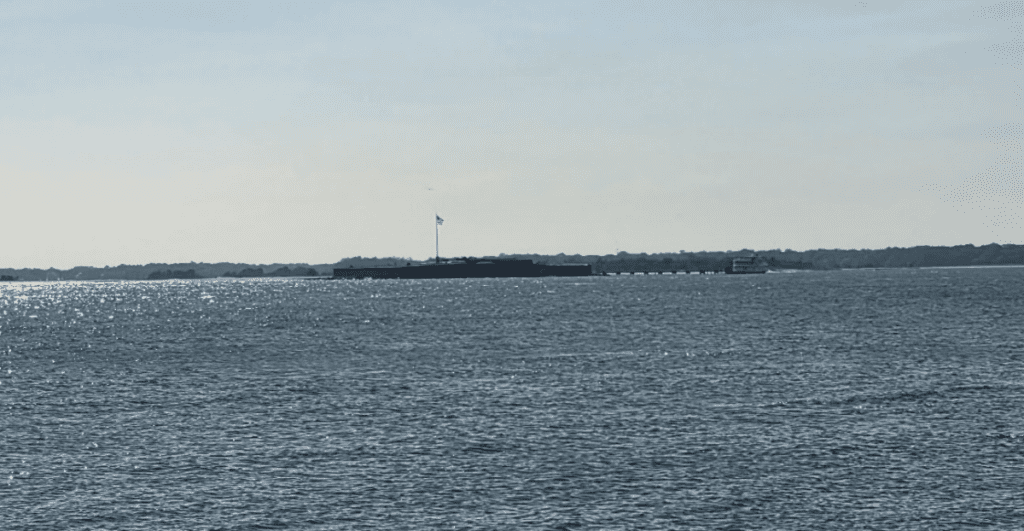
- Try to spot each fort from the other.
When to Visit Fort Sumter and Fort Moultrie National Historical Park
Both facilities are open daily year-round outside of major holidays. Visitor centers are open 9 AM to 4:30 PM daily. Fort Sumter is accessible only during ferry operating hours, which vary by season — always check fortsumtertours.com for the current schedule.
We recommend visiting in the Spring from March – April or Fall from September – November. The sun can be bad in the summer. The winter can be another good time to visit, with shorter lines.
Always check the Fort Sumter and Fort Moultrie National Historical Park website or call for the most up-to-date information.
What To Bring to Fort Sumter and Fort Moultrie National Historical Park
You should bring the following:
- Ferry tickets (booked in advance online)
- Comfortable, closed-toe walking shoes
- Water bottles
- Sunscreen
- A hat and/or lightweight long-sleeve shirt
- Camera or charged phone
- Credit or debit card
- Snacks for the ferry
- Light jacket for ferry in the winter
- Small day bag or backpack for your NPS passport and water bottle

Fees & Reservations
At the time of this writing, the Fort Sumter Ferry costs $43/ person. Senior/Military get a slightly discounted rate, and children from 4-11 are discounted as well.
The Fort Sumter Visitor Education Center is free to enter.
Fort Moultrie costs $10/adult visitor, though the America the Beautiful pass is accepted.
Frequently Asked Questions
Is Fort Sumter the same as Fort Moultrie?
No — they are two separate forts and two distinct sites within the same national historical park. Fort Sumter is on a man-made island in the middle of Charleston Harbor, accessible only by ferry. Fort Moultrie is on Sullivan’s Island, accessible by car. They are historically connected but require separate visits.
Can I walk to Fort Sumter?
No. Fort Sumter is located on an island and is only accessible by the official ferry operated by Fort Sumter Tours, or by private boat (private vessels may dock but passengers are subject to NPS rules). There is no bridge or causeway.
How long is the Fort Sumter ferry tour?
The total tour is approximately 2 hours and 15 minutes. The ferry crossing takes 30–45 minutes each way, and you have one hour on the island.
Do I need to book in advance?
Yes — strongly recommended for Fort Sumter. Popular departure times sell out, especially in spring and summer and on weekends. Book at fortsumtertours.com. No advance booking is required for Fort Moultrie.
Is Fort Moultrie or Fort Sumter better?
They’re different experiences. Fort Sumter has the more famous history and the emotional weight of standing where the Civil War began. Fort Moultrie is more physically intact, more historically layered (spanning 1776–WWII), and genuinely underrated. Many visitors who go to both say Fort Moultrie surprised them. Do both if you can.
Is there parking at the Liberty Square ferry terminal?
There is no free parking at Liberty Square. The Aquarium Wharf parking garage directly adjacent is the recommended option. Street parking in the area is very limited.
Can I bring food onto Fort Sumter?
No food items are allowed on the fort grounds. Drinks and snacks are available for purchase on the ferry.
Are both forts wheelchair accessible?
Fort Moultrie’s visitor center and restrooms are wheelchair accessible, but some historic structures and staircases within the fort are not. The Liberty Square boarding ramp for Fort Sumter can accommodate electric and manual wheelchairs and scooters, except in extreme tide situations. The elevator at Fort Sumter is currently out of service — contact Fort Sumter Tours directly for the most current accessibility information. The Patriots Point departure cannot accommodate wheelchairs or scooters.
Is there an America the Beautiful pass benefit here?
The America the Beautiful pass covers the Fort Moultrie entrance fee ($10). It does not cover the Fort Sumter ferry ticket, which is a concession-operated fee rather than a standard NPS entrance fee.
Why is Fort Sumter famous?
Fort Sumter is famous as the site where the first shots of the American Civil War were fired on April 12, 1861. Confederate forces bombarded the Union-held fort in Charleston Harbor, beginning a conflict that would last four years and reshape the United States.
How much time do you need at Fort Sumter?
Most visitors spend approximately 2 to 2.5 hours visiting Fort Sumter, including the ferry ride and one hour on the island. To visit both Fort Sumter and Fort Moultrie, plan on spending a full day.
Is the Fort Sumter ferry worth it?
Yes. The ferry ride is part of the experience and offers views of Charleston Harbor, dolphins, historic landmarks, and the USS Yorktown. Since the fort is located on an island, the ferry is also the only practical way for most visitors to access the site.
Can you visit Fort Sumter and Fort Moultrie in one day?
Yes. Most visitors can comfortably tour Fort Sumter in the morning and Fort Moultrie in the afternoon. This itinerary provides a much more complete understanding of Charleston Harbor’s military history than visiting either site alone.
What happened at Fort Moultrie?
Fort Moultrie is best known for defeating a British naval attack during the Battle of Sullivan’s Island in 1776. The victory helped protect Charleston and became one of the first major American successes of the Revolutionary War.
Conclusion
Fort Sumter and Fort Moultrie National Historic Park is a good place for thoughtful reflection and to learn about the Civil War and American Military History. Fort Sumter is where the Civil War began, and Fort Moultrie has been preserved with care in a beautiful coastal setting.
What to Do Near Fort Sumter and Fort Moultrie National Historical Park
Charleston Historic District – One of the best-preserved and most beautiful historic cities in America with the Battery, Rainbow Row, and the City Market.
Patriots Point Naval and Maritime Museum – Home to the USS Yorktown aircraft carrier, a submarine, and a destroyer.
South Carolina Aquarium – This is right next to the Liberty Square ferry terminal.
Charles Pinckney National Historic Site – A small but excellent NPS site honoring one of the primary authors of the US Constitution.
May Forest State Park – Small, quiet state park with a great view of the Charleston Harbor.
Reconstruction Era National Historical Park (Beaufort, SC) – 90 minutes south of Charleston, this NPS site tells the story of the Reconstruction period through the lens of the Sea Islands.
Congaree National Park – 3 hours away in Columbia, this park preserves the largest tract of old growth bottomland hardwood forest left in the United States. Click here for our complete guide to experiencing the park in one day.
Leave a Reply