
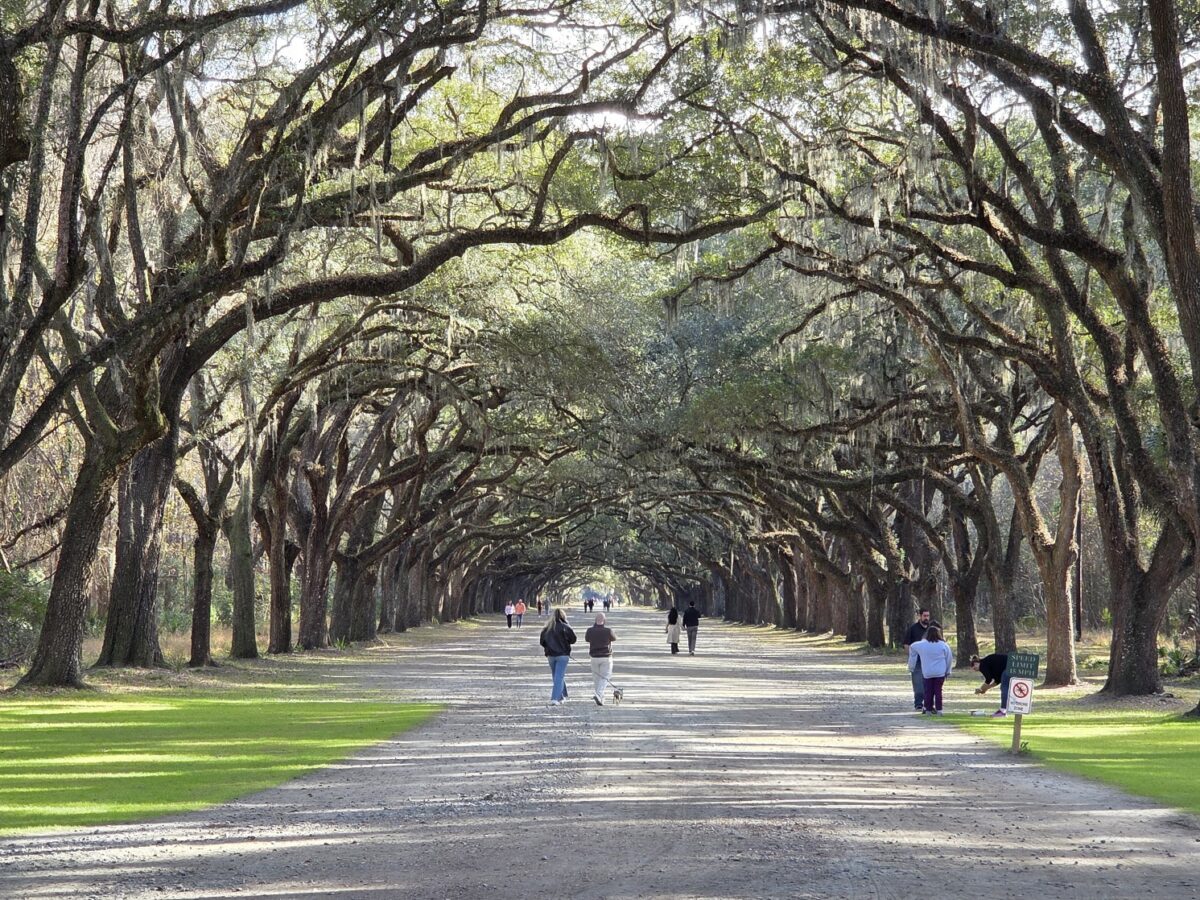
My wife and I visited Wormsloe State Historic Site on our Savannah trip, in the afternoon after a morning of sightseeing downtown. We walked the full avenue of oaks to the museum, talked with the rangers about Wormsloe’s history, and started the nature trail before running out of time. It’s a short, scenic visit, and the oak avenue really is as stunning as the photos.
Is Wormsloe Worth Visiting?
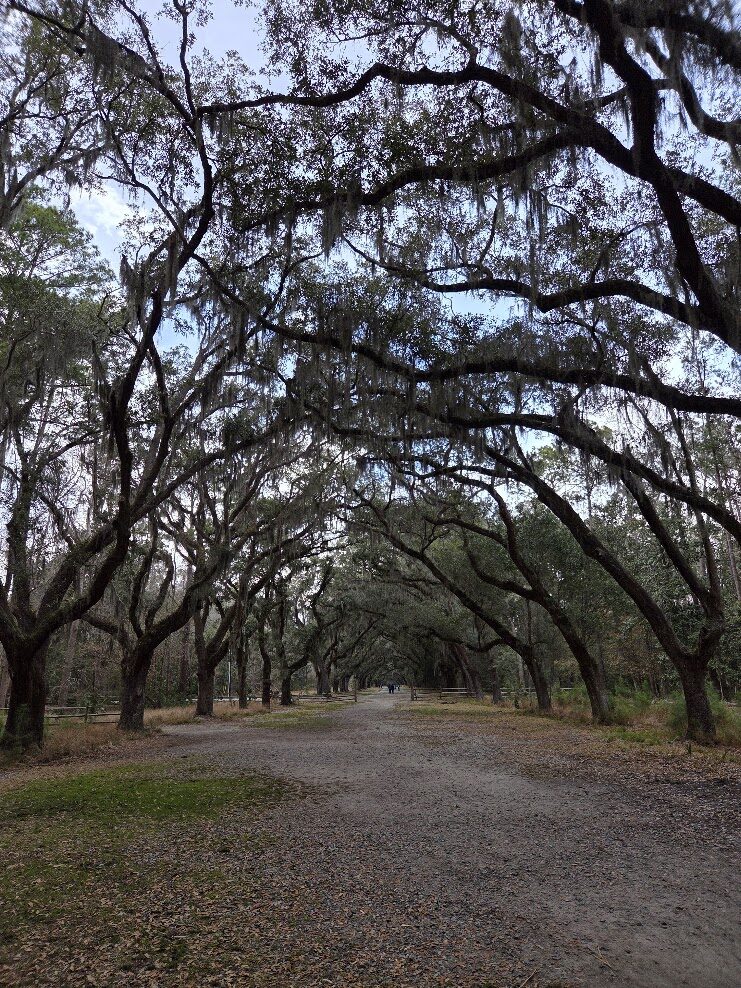
Yes. The 1.5-mile avenue lined with more than 400 live oaks is one of the most photographed drives in the South, and since cars are no longer allowed on it, you get to walk it. Add a small museum, the tabby ruins of Savannah’s founding era, and a few miles of marsh-side trails, and it’s an easy 2-hour trip from downtown Savannah.
Wormsloe is a former plantation, built and run with the labor of enslaved people. The beautiful avenue sits on that history, and the museum and rangers address it.
Quick Facts
- Location: 7601 Skidaway Road, Savannah, GA 31406, about 10 miles (20 minutes) from the Historic District
- Time Needed: 1.5 to 2 hours; longer if you hike all the trails
- Best For: Photographers, couples, runners, history fans
- Don’t Miss: Walking the full avenue of oaks
- Best Time to Visit: Right at 9 a.m. opening, or mid-afternoon, from fall through spring
- Hours: Daily, 9 a.m.–4:45 p.m.; closed Thanksgiving and Christmas
- Admission: Adults $12, seniors $9, ages 6–17 $5.75, under 6 $3.25 (plus tax)
- Official Website: https://gastateparks.org/Wormsloe
Overview of Wormsloe State Historic Site
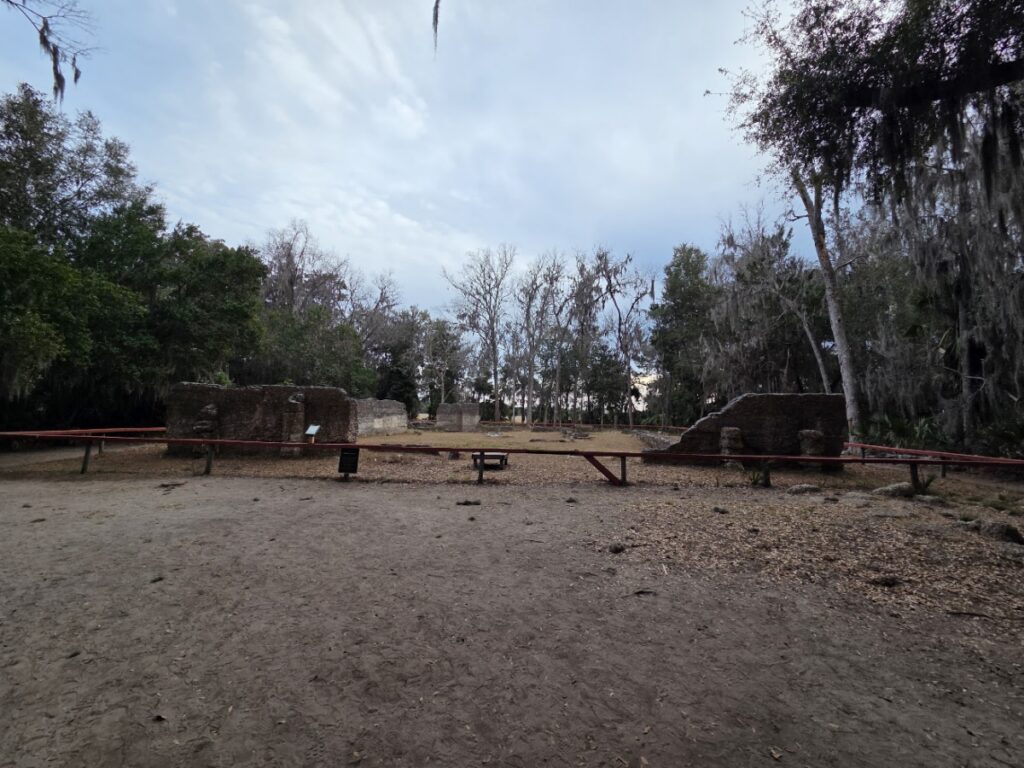
Wormsloe State Historic Site is a former plantation near Savannah, Georgia. In 1736, colonist Noble Jones, one of Georgia’s first settlers, claimed the land and built a fortified tabby house here around 1740. Those ruins are among the oldest standing structures in the Savannah area. His descendants ran Wormsloe as a plantation using enslaved labor until the Civil War. In the early 1890s, Wymberley Jones De Renne planted the famous avenue of oaks to celebrate the birth of his son, and the stone entrance arch followed in 1913. Georgia acquired most of the property in 1973, and the site opened to the public in 1979. The 1828 Wormsloe House is still owned and lived in by the Jones family descendants, on private land next to the park.
Best Things to Do at Wormsloe State Historic Site
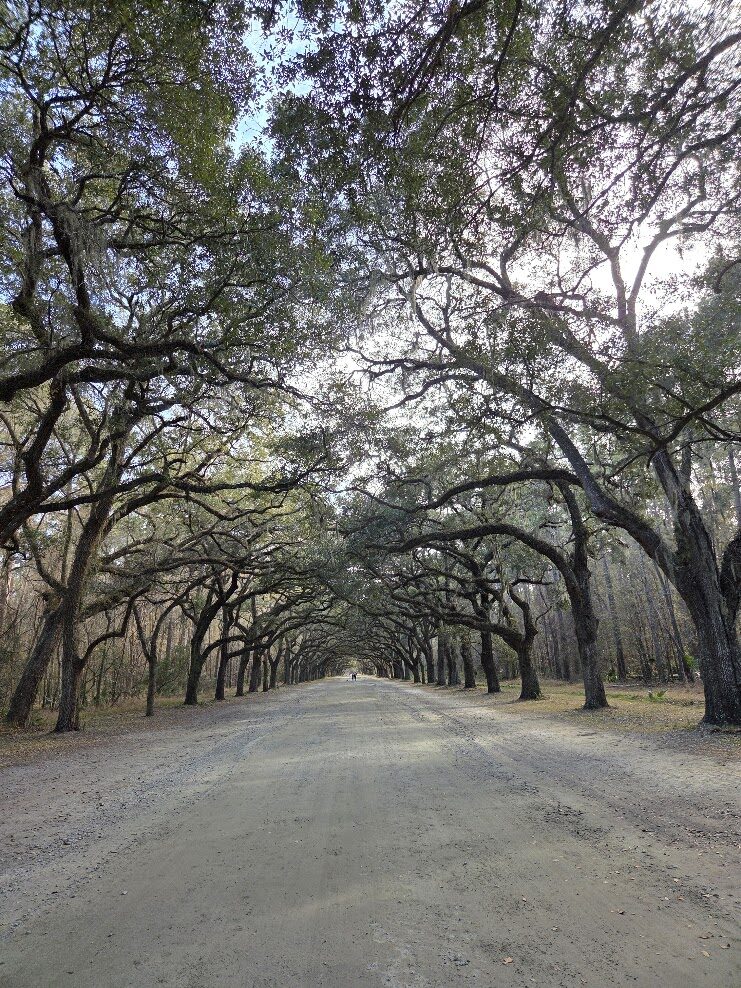
- Walk, bike or ride the avenue of oaks: it’s 1.5 miles each way from the visitor center. You can walk it, rent a bike, or take the trolley that runs from the visitor center about every 30 minutes.
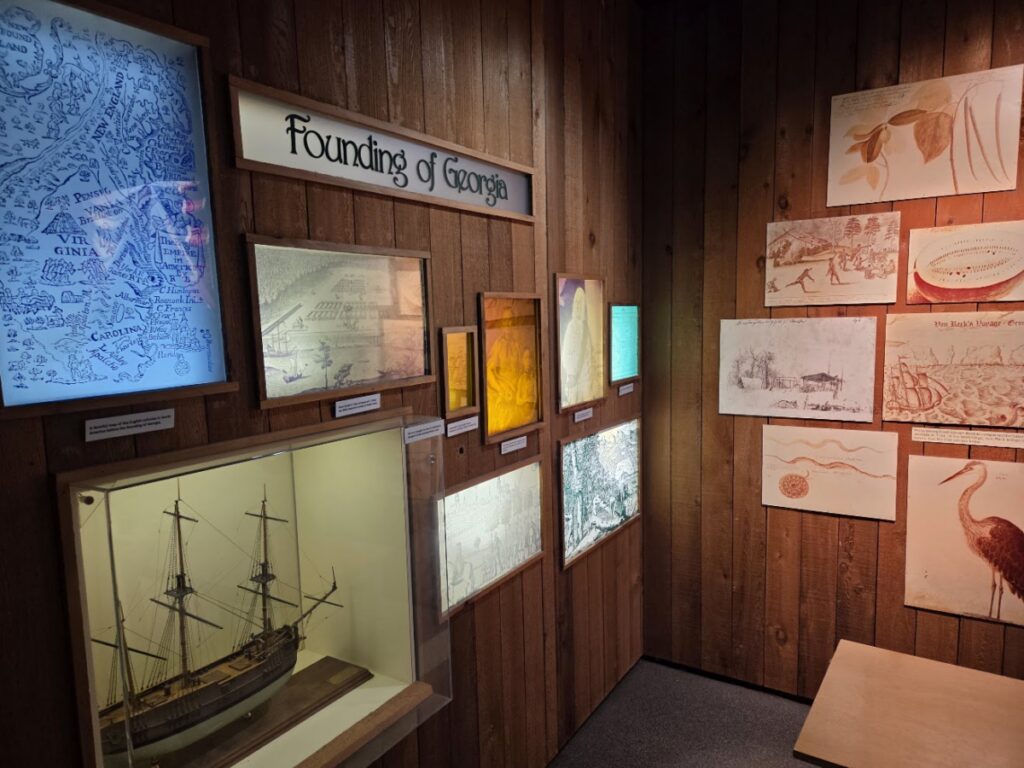
- Visit the museum at the end of the avenue, with artifacts from the site and rangers to answer questions.
- See the tabby ruins of Noble Jones’s fortified house on the marsh.
- Stop at the Colonial Life Area, where costumed interpreters sometimes demonstrate 1700s skills.
- Hike the Battery Trail to Civil War–era earthworks.
Best Hikes at Wormsloe State Historic Site
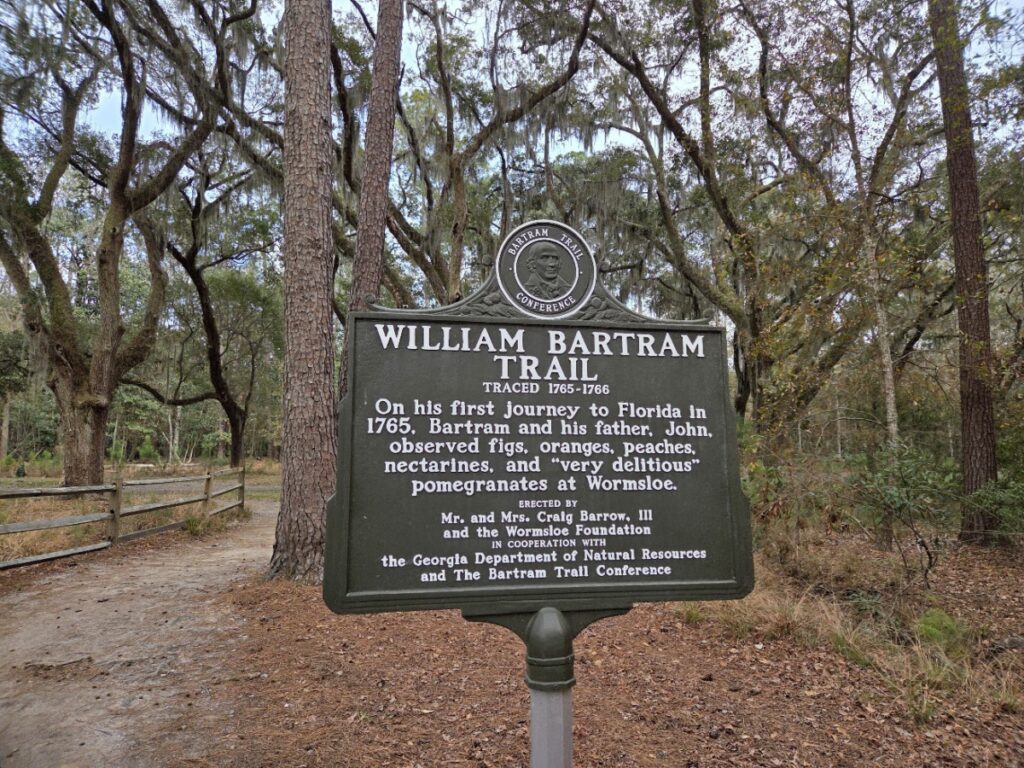
Beyond the avenue, Wormsloe has more than 3 miles of flat trails through maritime forest and along the marsh. The main loop from the museum passes the tabby ruins and the Colonial Life Area, and the Battery Trail branches off to the earthworks. Walking the avenue both ways plus the trails adds up to about 7 miles, which makes it a great spot for a long run. There are no restrooms on the trails, so use the ones at the visitor center or museum.
Key Areas in Wormsloe State Historic Site
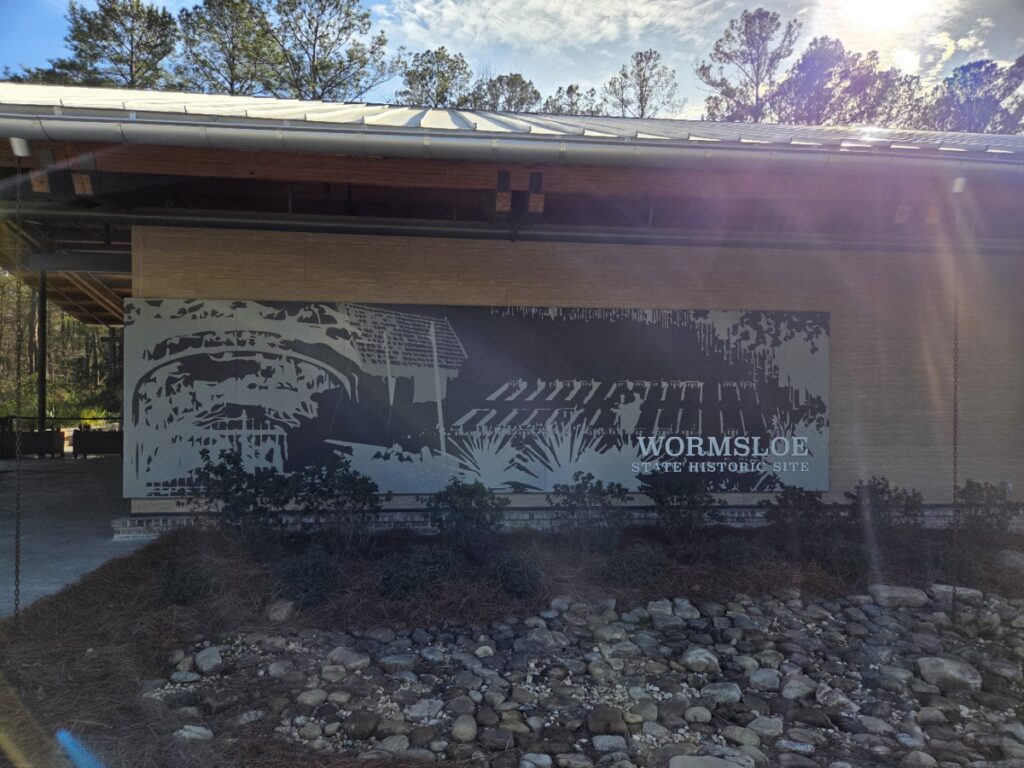
- Visitor center: Near the entrance, with parking, tickets, restrooms and the trolley stop.
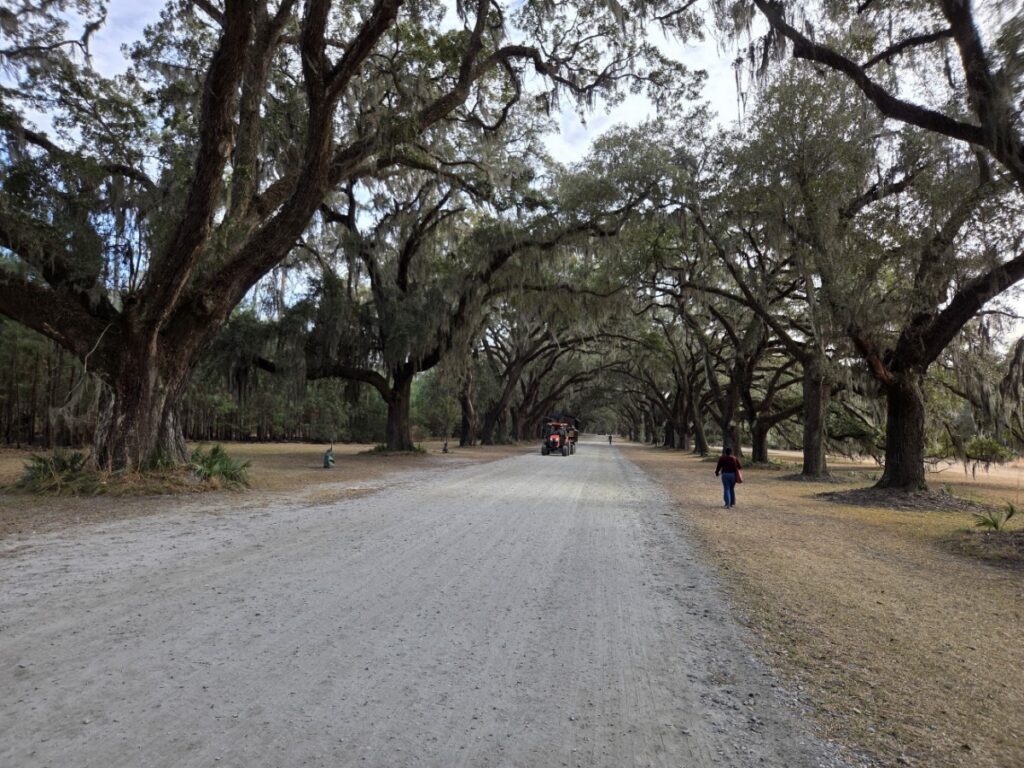
- Avenue of oaks: 1.5 miles of live oaks and Spanish moss, now closed to cars.
- Museum: In the former visitor center at the end of the avenue.
- Tabby ruins, Colonial Life Area and trails: On the marsh beyond the museum.
Our Experience at Wormsloe State Historic Site
Downtown first. My wife and I came out to Wormsloe on our Savannah trip, after spending the morning downtown seeing the sights. It made for a great date-night walk.
The oaks. We checked in at the visitor center and began our walk down the avenue of more than 400 live oaks. They kept going and going with no end in sight. It took us over 20 minutes to reach the museum at the end. It was hard to believe someone had planted so many live oaks in such precise rows. The avenue dates to the 1890s, long after Wormsloe’s colonial period. There are a lot of squirrels, and they are loud!
The rangers. At the museum, we were met by friendly park rangers who told us all about the history of Georgia and Wormsloe. We learned that the site was once a plantation where the Jones family enslaved people (the rangers told us around 80), and that the avenue was planted afterwards. Wymberley Jones De Renne, one of the owners, had the trees planted to celebrate the birth of his son. The rangers also told us that the original house is still owned by the same family, on private property next to the park.
The trail. We started the trail at the end of the avenue, but we didn’t have time to finish it before closing.
Laps and date nights. This is a scenic walk. It would be great for laps on a run, or for a late-afternoon date like ours.
Don’t Make Our Mistake
Don’t arrive late in the day if you want to see everything. The site closes at 4:45 p.m., and walking the avenue takes up a good chunk of your time before you even reach the museum and trails.
What We Would Do Differently
We would show up early and finish the trail at the end of the avenue. We started it, but didn’t have time to do the whole thing.
How to Visit Wormsloe in 2 Hours
- Check in at the visitor center (10 minutes).
- Walk the avenue to the museum (30 minutes), or take the trolley.
- See the museum and talk with a ranger (20 minutes).
- Walk the trail loop to the tabby ruins and the Colonial Life Area (30 minutes).
- Ride the trolley or walk back (10 to 30 minutes).
If You Only Do One Thing
Walk the avenue of oaks, at least one way.
Full-Day Itinerary
You don’t need a full day here. Do what we did: spend the morning in Savannah’s Historic District, then come to Wormsloe after lunch. Or start at Wormsloe when it opens and continue to Fort Pulaski and Tybee Island for the afternoon.
Where to Eat Near Wormsloe
There’s no restaurant on site. Eat in Savannah’s Historic District before or after, or along Skidaway Road on the way in. For breakfast, it is hard to beat The Collins Quarter in the historic district.
Where to Stay Near Wormsloe
Stay in Savannah’s Historic District, about 20 minutes away, so you can walk to the city sights. If you want to camp, Skidaway Island State Park is about 15 minutes farther down the road.
Tips for Visiting Wormsloe State Historic Site
- Arrive at opening for the best avenue photos with the fewest people and trolleys.
- Wear real walking shoes. It’s 3 miles round trip on the dirt avenue alone.
- Take the trolley one way if you want time for the trails.
- Bring the dog: leashed pets are allowed on the trails, though not in buildings.
- Commercial photo shoots need a permit and may cost extra.
When to Visit Wormsloe State Historic Site
Wormsloe State Historic Site is open from 9 a.m. to 4:45 p.m. daily, except Thanksgiving and Christmas.
We recommend visiting in the fall, winter or spring, at opening or in the early afternoon so you have time for the trails. Summer is hot and buggy. Cloudy days, or right after rain, make for moody photos of the moss.
Always check the park website or call 912-353-3023 for the most up-to-date information.
What to Bring to Wormsloe State Historic Site
Walking or running shoes, water, bug spray, a camera, and a leash if you bring your dog.
Fees & Reservations
Admission is $12 for adults, $9 for seniors 62 and older, $5.75 for ages 6–17, and $3.25 for kids under 6, plus tax. Georgia’s $50 annual historic site pass covers it. No reservations are needed for a regular visit.
Frequently Asked Questions
Can you drive down the oak avenue at Wormsloe?
No. To protect the trees, the avenue is now closed to cars. Park at the visitor center near the entrance, then walk, bike, or take the trolley.
How long is the avenue of oaks?
About 1.5 miles one way, lined with more than 400 live oaks.
Who planted the Wormsloe oaks?
Wymberley Jones De Renne, in the early 1890s, to celebrate the birth of his son.
Can you tour Wormsloe House?
No. The 1828 house is privately owned by Noble Jones’s descendants and isn’t open to the public.
Is Wormsloe State Historic Site worth visiting if I only have one day in Savannah?
Yes, if you enjoy historic sites, photography, or scenic walks. You can visit Wormsloe in a couple of hours, but you’ll need to budget more time if you want to explore the trails. If your priority is maximizing time in downtown Savannah, weigh that travel time against your other plans.
How long does it take to walk the Avenue of Oaks?
The walk takes longer than you might expect because the avenue stretches from the entrance toward the museum and historic grounds. Make sure to allow time for photos! You can also take the site’s shuttle. It took us around 30 minutes each way, stopping for lots of pictures.
Does Wormsloe have hiking trails?
Yes. The interpretive nature trail passes the tabby ruins and continues toward the Colonial Life Area. The official site lists a seven-mile nature-trail network, so check the trail map to choose a route that fits your available time.
Can you bring a dog to Wormsloe?
Leashed dogs are permitted on the historic-site trails but not inside buildings. Bring water and plan accordingly if you intend to walk the avenue and explore the grounds.
Conclusion
Wormsloe is a short, beautiful stop that pairs perfectly with a day in Savannah. Walk the oaks, talk to the rangers, and come early enough to finish the trails, which is the one thing we’d do differently.
Our February Lowcountry and Coastal Georgia Trip
My wife and I visited these parks on one February trip for a friend’s wedding in Savannah. Here’s every post from the trip:
- Charleston area, SC: Charles Pinckney National Historic Site: a free, one-hour founding father stop in Mount Pleasant; May Forest State Park: harbor views and dolphins on James Island (weekdays only)
- Savannah area, GA: Fort Pulaski National Monument: the brick fort rifled cannons broke in 1862; Old Fort Jackson: Georgia’s oldest standing brick fort, with live firings; Wormsloe State Historic Site (you’re here)
- Beaufort area, SC: Reconstruction Era National Historical Park: where Reconstruction began; Hunting Island State Park: lighthouse, lagoon and connected trails
- Golden Isles, GA: Fort Frederica National Monument: the tabby ruins of Oglethorpe’s 1736 town; Jekyll Island State Park: Driftwood Beach and the Horton House
Other Sights Near Wormsloe State Historic Site
- Savannah Historic District: Squares, architecture and restaurants, about 20 minutes away.
- Skidaway Island State Park: Marsh trails and camping, about 15 minutes south.
- Bonaventure Cemetery: Another moss-draped Savannah landmark, about 15 minutes away.
- Old Fort Jackson: A small brick fort with daily cannon firings, about 20 minutes away.
- Fort Pulaski: A Civil War fort with shells still in its walls, about 30 minutes east on the way to Tybee Island.
Leave a Reply