
Visit one of Florida’s most historic springs with a legendary canoe run, resident American eels, and a CCC mill house that’s been here since 1935. This guide will cover everything you need to know before you go.
Quick Facts
- Location: 26701 E Highway 40 (SR 40), Silver Springs, FL 34488 (Ocala National Forest)
- Water Temp: 72°F year-round
- Entrance Fee: $14.50 per person + tax; children 5 and under free; Annual Pass $80 + tax
- Hours: Usually 8AM-6PM, but call ahead to check as hours vary seasonally
- Activities: Swimming, snorkeling, canoeing, kayaking, hiking, camping
- Wildlife: American eels, albino squirrels, turtles, otters, alligators, wading birds, black bears, deer
- Best For: Kayakers, wildlife watchers, campers, hikers, spring hoppers
Overview
Juniper Springs is one of the oldest and most talked about recreation areas in Florida, built by the Civilian Conservation Corps in the 1930s and home to one of the top-ranked canoe runs in the country. This is arguably the best Florida spring to reliably spot American eels winding through the eelgrass near the vents. It has a storied history, beautiful setting, and a notable wildlife list.
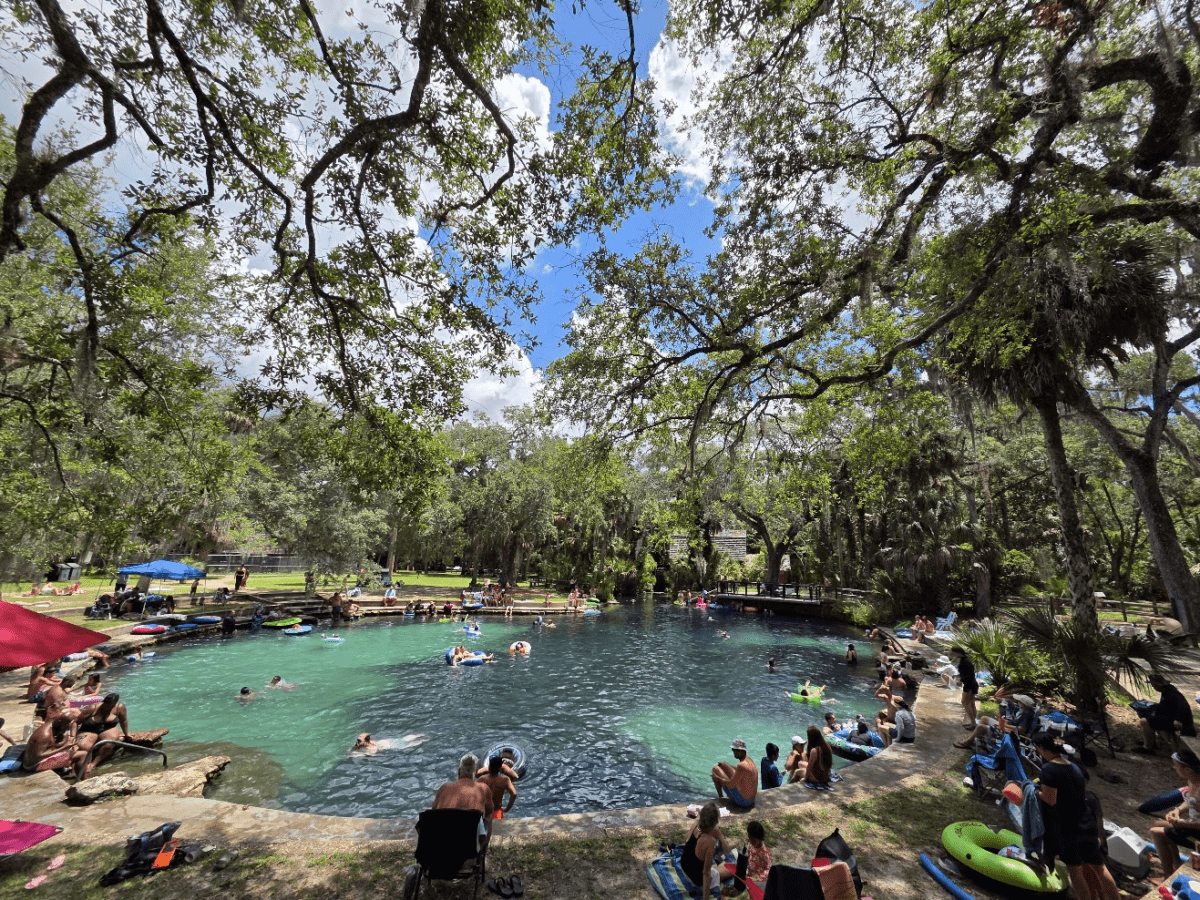
It also has a $14.50 per-person entrance fee and a spring pool that can feel relatively small for a lot of money depending on crowd levels. The pool is a concrete and rock basin built by the CCC which measures only around 135 feet by 80 feet, making it one of the more compact swimming areas among Ocala National Forest Springs. The water is darker and slightly murkier than at nearby springs, and when it’s crowded, it’s crowded.
In our experience, Juniper Springs is best viewed as a complementary spring rather than a pure swimming destination. While Silver Glen, Alexander, and Salt Springs offer larger or more striking swimming experiences for a similar price, Juniper stands out for its historic character, legendary canoe run, and reliable American eel sightings. If you are a Springsmaxxer building out a multi-spring day and want to experience a wide variety of springs in the Ocala National Forest, Juniper earns its keep. The highlights are the kayak run, the history, and the chance to watch eels swim through the vents and grass.
The wildlife that you see here represents a unique mix – albino gray squirrels live near the mill house, otters hang out along the edges of the run, and American eels migrate to the Sargasso Sea to spawn before returning to Juniper Springs to live. Visitors focused exclusively on swimming may prefer Silver Glen or Alexander Springs, while those interested in wildlife, paddling, and history will find Juniper especially rewarding.
Is Juniper Springs Worth Visiting?
You are probably wondering “is this worth $14.50 per person when Silver Glen and Alexander springs are right up the road?”
If swimming is your primary goal, Silver Glen Springs and Alexander Springs generally provide a larger and more visually impressive swimming experience. Juniper’s strengths are its wildlife, paddling opportunities, and historic atmosphere. The pool at Juniper is relatively small and the water is less brilliant than Silver Glen Springs and less clear than Alexander Springs. People play loud music at most springs, but it seems particularly loud at Juniper. On a summer Saturday, you might struggle for elbow room in the pool.
Here’s where Juniper wins:
The American eels. No other spring this close to Orlando puts you this close to American eels with such regularity. If you snorkel here for an hour, you are bound to watch several eels winding out of the spring vent and through the vegetation. This is not a common sight at springs.
The canoe run. Juniper Run is a challenging, noteworthy paddling experience. It is a 7-mile waterway through the Juniper Prairie Wilderness and is recognized as one of the top 25 canoe runs in America. It is not for beginners, and there are massive alligators. For enthusiasts, it is unbeatable.
The history. The CCC mill house and water wheel from 1935 give Juniper Springs a sense of place.

In my opinion, Juniper Springs works particularly well as part of a multi-spring itinerary and pairs naturally with other nearby springs along the SR 19 corridor, or as the paddling anchor of a spring-hopping day. It fits perfectly as a second or third spring in the Ocala circuit. We normally visit it in the afternoon after visiting other nearby springs. It’s a natural add-on if you are already visiting Salt Springs, Silver Glen Springs, or Alexander Springs on SR 19.
Things to Do at Juniper Springs
Swimming and Snorkeling – The spring pool is the main day-use attraction. It is shallow at one end and deep at the other, with eelgrass covering most of the bottom. Snorkeling is the move, to spot cormorants and turtles in the pool and eels near the vents.
Canoeing and Kayaking – This is the best part of Juniper Springs in my opinion. The 7-mile Juniper Run is what most serious visitors come for. It is known as one of the finest wilderness canoe runs in Florida and among the best in the country. This true backcountry paddle winds through the Juniper Prairie Wilderness under a dense old-growth canopy, and no mechanical assistance is allowed.
Camping – The Juniper Springs campground is named one of the top 100 family campgrounds in the United States. There are 79 campsites available.
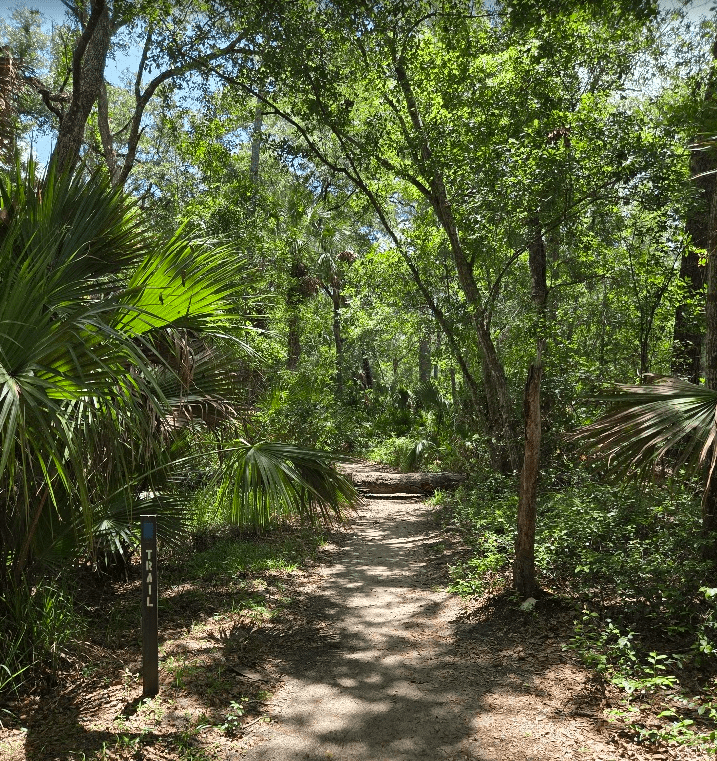
Hiking – Two segments of the Florida Trail are accessible from the recreation area, along with the short Juniper Springs Nature Trail to Fern Hammock Springs. See the hiking section below for current conditions.
Wildlife Watching and Birdwatching – The habitat here is remote and exceptional. On the Juniper Run, you are likely to see birds, otters, and even black bears. You will almost definitely see alligators on the kayak run.
The Historic Mill House – This CCC-built mill house and waterwheel help to give the area a sense of identity.
Swimming at Juniper Springs
The swimming pool at Juniper Springs is a concrete-lined basin built by the CCC. It is more structured than a natural spring bowl, but it is fed entirely by the natural flow. The pool is around 135 feet by 80 feet, and reaches up to 16 feet deep at the vents. There are steps down into the water.
The bottom is mostly covered with eelgrass, which creates an interesting environment for snorkeling. It also gives the water a darker, more vegetated appearance than the open limestone bottoms you are used to seeing at Silver Glen or Salt Springs. Visibility is good, but there is more silt clouding the water when compared to nearby springs. This is also a function of how crowded Juniper tends to be in the summer.
This is more of a jungle pool than a crystalline blue basin. Since tapegrass grows along the bottom, you can expect to see eels if you snorkel around the vents long enough. These are a known resident population, and no other spring in the Ocala National Forest grants such reliable sightings.
The pool can get crowded on the weekends, which amplifies the compact-size issue. Arrive early if you want elbow room, and don’t expect to be able to swim laps here in the summer.
Kayaking and Paddling – The Real Reason to Come to Juniper Springs
If you are serious about kayaking or canoeing and have never paddled Juniper Run, it needs to move up on your list. This is not a lazy river, it’s a narrow, winding waterway under a dense canopy, with few places to get out of your canoe. You’ll see 7 miles of genuine backcountry, most of which is through the Juniper Prairie Wilderness.
Canoe and Kayak rentals are available through the park operator. At the time of this writing, a single kayak rents for $65 and a tandem for $75. The optional shuttle back is $15 per person. If you are bringing your own boat, only the park entry and shuttle fees apply. Vessels must enter the water by 1pm.
This run is not recommended for beginners. There are limited exit points and there are sections that require maneuvering through tight, overgrown channels. This run is also not recommended if you are squeamish about alligators. You are likely to see many, with several over 10 feet. Maintain awareness, as this run has been closed in the past due to aggressive gator behavior. For experienced paddlers, it’s a bucket-list run.
Best Time to Visit
Juniper Springs follows the same seasonal logic as the other Ocala National Forest Springs, with a few specific nuances.
Winter is the best overall window, with minimal crowds, comfortable weather, and active wildlife. The 72°F water feels warm against the cool air.
Spring is a good middle ground, with lush forest and moderate crowds. Be cautious paddling the run, as April-June is gator mating season in Central Florida. Check current conditions and make sure the run is open.
Summer is peak season, and the spring pool can reach capacity on the weekends. Arrive early, or after lunch as the early crowd wanes.
Fall is an underrated window, with a drop in crowds. The forest is great in October, and eel sightings are consistent year-round.
Entrance Fees, Hours, and Reservations
Day Use Fee: $14.50 per person (plus tax). Children 5 and under are free. The Florida State Parks Annual Pass is not accepted — this is a USDA National Forest recreation area, not a state park.
Annual Pass: An $80 annual day-use pass is available for purchase on-site, covering access to multiple springs in the national forest managed by Adventure Ocala. If you’re planning multiple visits across the season, this pays for itself quickly.
Paddlecraft Rentals: Single kayak $65 / Double kayak or canoe $75 / Optional shuttle $15 per person. A separate launch fee applies for privately owned vessels.
Hours: Usually 8AM-6PM but can vary seasonally — confirm at fs.usda.gov/florida or by calling the recreation area directly. Day-use visitors do not need reservations, but the site gets busy on weekends.
Camping Reservations: The campground has 79 sites in three loops (Fern, Sand, and Trop), averaging around $36/night. No full hookup sites — tent and basic RV only. Reservations via Recreation.gov or by calling 1-877-444-6777, up to six months in advance. Book early. This campground is genuinely popular and fills fast for holiday weekends and winter months.
Dogs: Not allowed in the day-use swimming area. Check with staff about specific trail access policies.
How to Get There
Address: 26701 E Highway 40 (SR 40), Silver Springs, FL 34488
Juniper Springs is located on SR 40 in the Ocala National Forest, roughly 30 miles east of Ocala. Approximate drive times:
- 40 minutes from Ocala
- 60 minutes from Daytona Beach
- 75 minutes from Orlando
- 75 minutes from Gainesville
Cell service is limited throughout the Ocala National Forest, so download maps ahead of time.
What to Bring
You will want the usual basics for a springs day:
- Camera or phone
- Polarized sunglasses
- Dry bag for camera and phone for underwater pictures
- Hiking shoes/socks
- Mineral sunscreen
- Bug spray if it’s that time of the year
- Money for entry
- Water
- Snacks or picnic lunch
- Mask and snorkel
- Towel
- Swimming clothes
- Change of clothes if you are not sticking around to dry off
- Layers in the winter
- Florida Springs Passport or journal
- Camping reservations if you’re staying the night
- Maps downloaded ahead of time if you plan to hike
Tips to Avoid Crowds at Juniper Springs
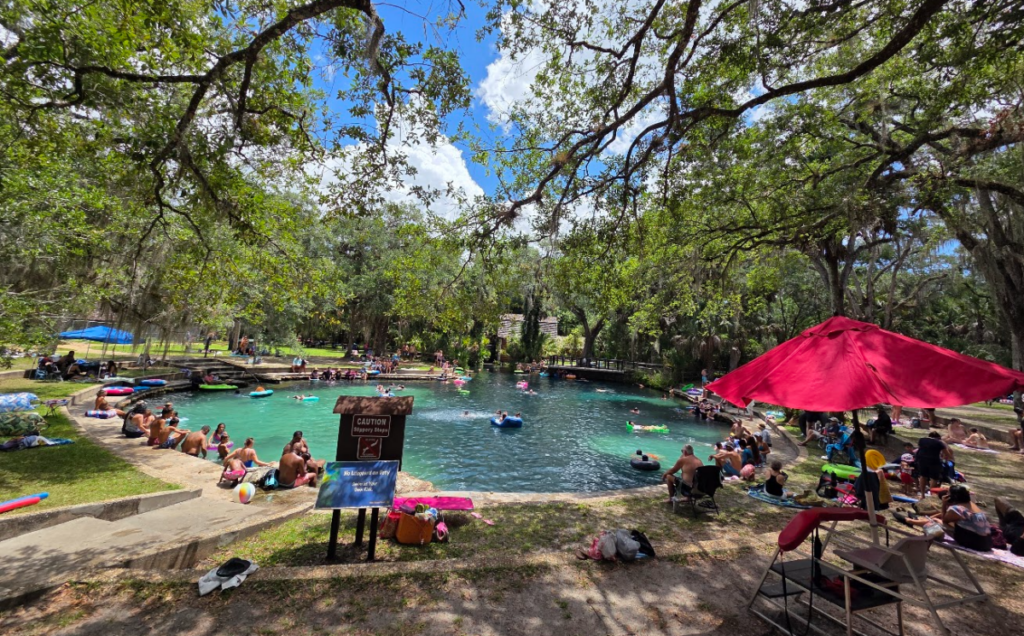
The spring pool’s compact size means that crowds feel concentrated quickly. To avoid crowds:
Arrive at opening. This contradicts my advice to visit this spring in the afternoon after visiting others in the area. Alternatively, you could visit Juniper right at opening, then go to Alexander or Silver Glen (where you have reservations) later in the afternoon.
Lean on the canoe run. On packed summer weekends, the spring pool can feel overwhelmed. The run is limited in the amount of people per day.
Weekdays are much better. A Tuesday or Wednesday will be a different world than Saturday.
Come in fall or winter. September through February offer the most consistent low-crowd experience. October is one of the best months in the Ocala National Forest for atmosphere and wildlife activity.
Have a backup identified. Silver Glen Springs and Alexander Springs (with reservations made in advance) are good alternatives for a better spring experience after the canoe run or if Juniper is at capacity.
Where to Stay Nearby
Juniper Springs Campground is the most obvious choice if you want to stay on-site. The sites are shaded and you can walk to the spring. Booking is on recreation.gov.
Lake in the Forest Black Bear Resort. This site is located 15 minutes away off of SR 40 and is our choice for cabin lodging in the Ocala National Forest. RV accommodations are available as well, with more amenities than primitive camping.
Ocala is the nearest option for full hotel amenities. This is a good option if you’re splitting time between springs and other Ocala attractions.
Salt Springs Campground would be ideal for a multi-spring trip as it has the largest campground in the Ocala National Forest and full RV hookups. It is a better base camp than Juniper Springs.
Nearby Things to Do

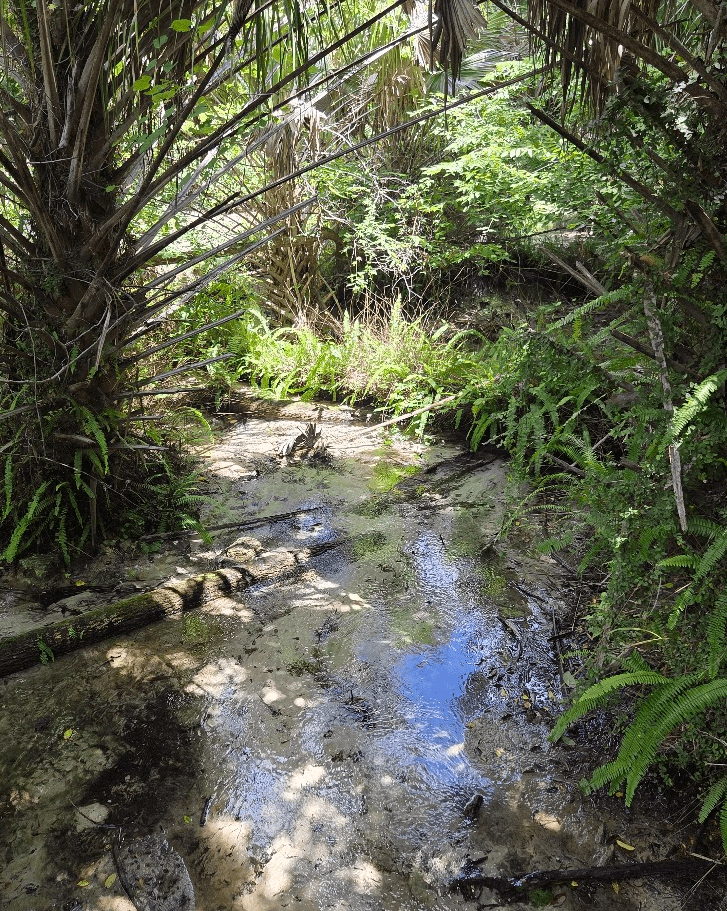
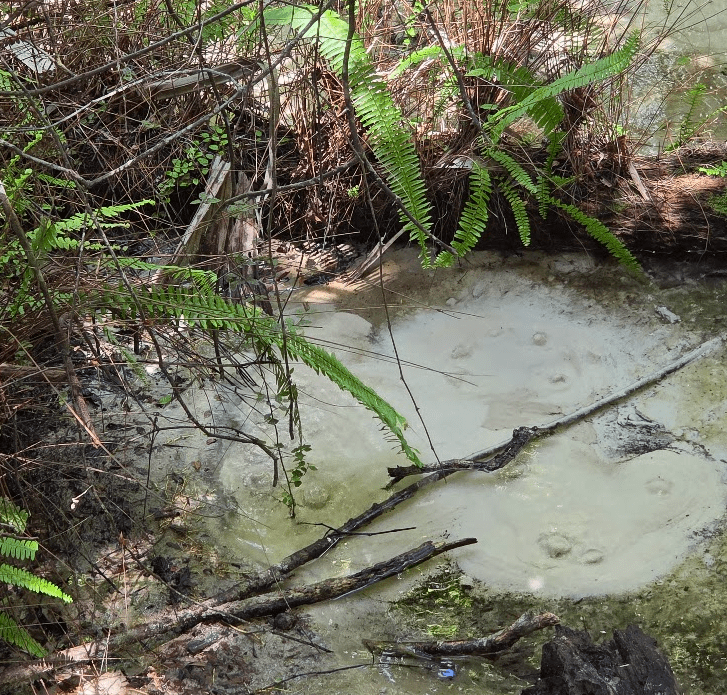
Fern Hammock Springs – This is accessible on-site via the short Juniper Springs Nature Trail. It is a secondary spring just down the boardwalk. In good conditions, it’s a quick, beautiful side trip. The spring boil is surrounded by ferns in a hammock forest.
Juniper Prairie Wilderness – The 14,000 acre wilderness area that the canoe run passes through is also accessible on foot via the Florida National Scenic Trail. It is a dramatic wild landscape in the Ocala National Forest, with open prairie interspersed with scrub oak and pine.
Ocala National Forest Scenic Drives – Check out the 60-mile Florida Black Bear Scenic Byway, a peaceful escape through hardwood swamp and pine scrub. There are a lot of options for offroad exploration in the national forest as well.
Silver Springs State Park – Less than 30 minutes away along SR 40, Silver Springs offers glass-bottom boat tours over one of the largest springs in the world. This is a different experience than swimming springs, but it is worth it for the history and boat tour visibility.
Florida National Scenic Trail – Juniper Springs is a stopping point for backpackers working through a 72-mile segment of the Florida Trail. To the north is the Juniper Prairie Wilderness and to the South is Big Scrub.
Other Springs Near Juniper Springs
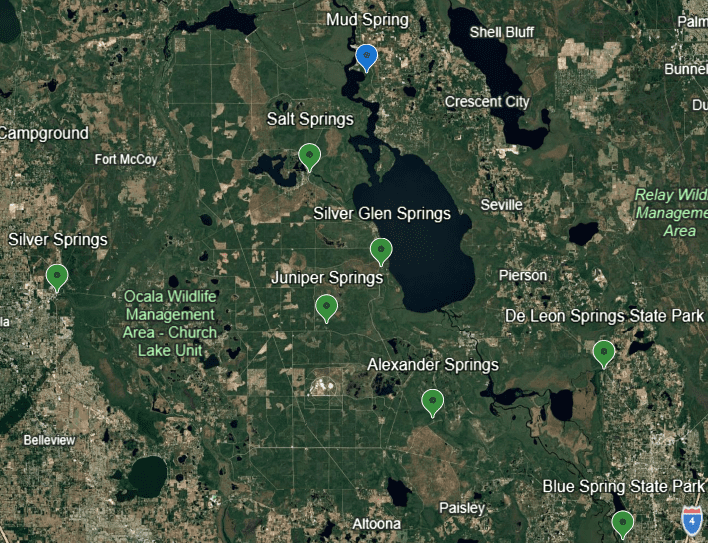
Juniper’s position on SR 40 near the SR 19 intersection makes it a natural stop for Springsmaxxers on a multi-spring day in the eastern Ocala National Forest. Here’s what’s in the neighborhood:
- Silver Glen Springs (11 miles northwest) – A stunning spring with a short run flowing into Lake George. It is known for excellent snorkeling and massive striped bass congregations at the spring head.
- Alexander Springs (16 miles southwest) – A spacious and peaceful spring in the Ocala National Forest with camping and a long, scenic spring run for kayaking.
- Salt Springs (18 miles north) – One of Florida’s most unique springs with mineral-rich water housing blue crabs.
All four springs are on a natural loop that makes spring-hopping easy. Most visitors can hit two springs comfortably in a single day, or 3 with early starts and efficient timing. An efficient route is to start at Salt Springs, use a reservation at Alexander or Silver Glen, then finish at Juniper mid-late afternoon for a quick snorkel and the mill house.
For additional options for pairings, start at one of these springs first-thing then make your way over to Juniper:
Silver Springs State Park is only 22 miles away and has glass bottom boat tours over one of the largest springs in the world. You can’t swim here, but it is a don’t miss paddle destination with wild monkeys.
De Leon Springs State Park is 24 miles away and has a large swimming area and historic pancake house.
Blue Spring State Park is 41 miles away and is also worth mentioning since it is among Florida’s finest springs, with a mass congregation of manatees every winter and a tube run.
Hiking Trails Near Juniper Springs
Juniper Springs Nature Trail to Fern Hammock Springs — Current Conditions Notice
The most accessible trail from the day-use area, this short 0.8-mile boardwalk trail leads from the spring area to Fern Hammock Springs – a secondary boil vent. The fern-covered setting, in good conditions, is one of the quieter gems in the recreation area.
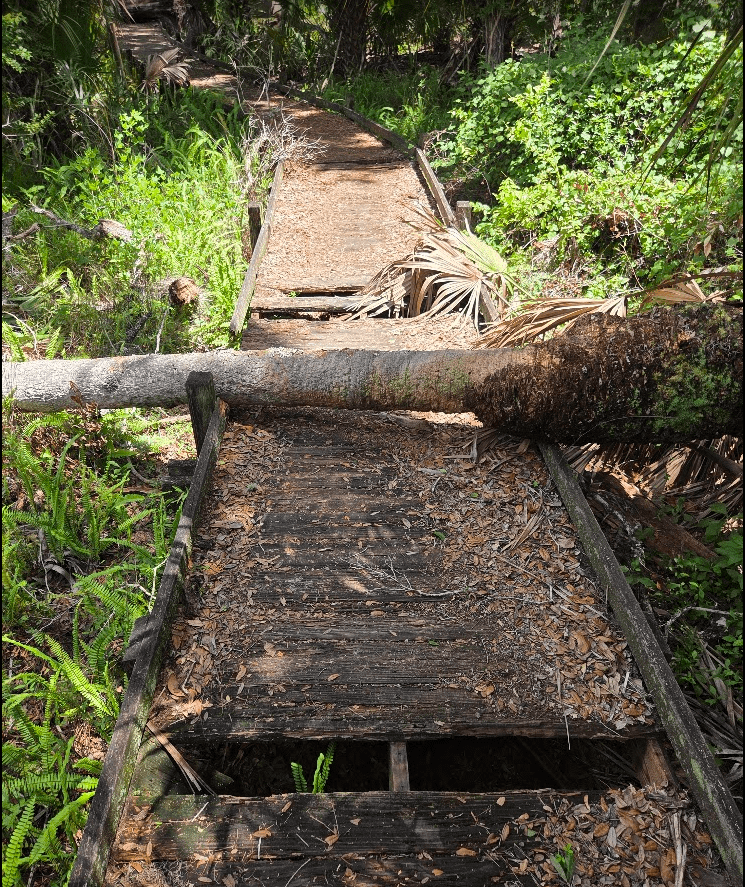
As of 2026, portions of the boardwalk remain damaged from fallen trees and deferred maintenance. Conditions can change, so check with staff before hiking. Use caution on any open sections, as surfaces may be slippery.
Florida National Scenic Trail – Two Segments
Two sections of the Florida Trail are directly accessible from Juniper Springs:
Juniper Prairie Wilderness to Hopkins Prairie (north): Heads into the Juniper Prairie Wilderness and is around 10 miles one-way. This is legit backcountry, so bring a lot of water, navigation tools, and tell someone where you’re going. The prairie sections are hot and exposed in the summer.
Juniper Springs to Farles Prairie (south): Crosses SR 40 and heads south into Big Scrub before tracing the east side of Farles Prairie. It is also around 10 miles. Backpackers often use Juniper Springs as a staging point for multi-day segments of the trail.
Both segments require preparation and are not suitable for a casual stroll. Make sure you download trail maps before you arrive.
If you hike one of these extended Florida Trail sections before jumping in, the cool water will feel magnificent.
Restaurants Near Juniper Springs
Dining options near Juniper are sparse, as you’re deep in a national forest on a two-lane highway.
On-site concessions are an option for basic camping supplies, drinks, and snacks. These aren’t meals but they exist for a quick bite.
There is a Domino’s Pizza around 4 miles away if you need something fast on the way in or out.
Lena’s Seafood is 8 miles east, and it is our local choice for casual seafood. Confirm hours before you go.
For more meal options, consider Ocala for a full range of restaurants. Altoona and Umatilla have more too if you’re headed south.
Our recommendation is to pack your own food and drinks for the day and eat a picnic lunch by the springs. We also recommend eating at Odd Todd’s outside of Salt Springs if you are spring-hopping in Ocala.
Pros and Cons
This spring can be crowded, but the pros outweigh the cons for serious springs enjoyers and multi-spring circuits.
Pros:
- Best Florida spring for American eel sightings – a rare wildlife encounter that is reliable here
- Legendary paddle run – Juniper run is one of the greatest in America, with 7 miles through rugged backcountry
- Historic character – the 1935 CCC mill house and waterwheel are unmistakable
- Excellent campground – deeply shaded and well-loved
- Exceptional wildlife diversity – eels, otters, albino squirrels, wading birds, black bears, alligators, and more share the corridor
- Good spring-hopping location – the SR 40/SR19 intersection puts Salt, Silver Glen, and Alexander all within easy reach. Silver, De Leon, and Blue are also close enough to pair
- Florida Trail access – Two wilderness segments directly accessible from the recreation area
- Year-round swimming – the water is always 72°F
Cons:
- Small pool for the price – at $14.50/person, the compact pool can feel like a lot relative to the swimming experience at larger springs like Silver Glen or Alexander
- Water appearance – the eelgrass and vegetation make the water look darker than the bright turquoise basins at nearby springs, and there is more silt in the swimming area
- Boardwalk trail currently damaged – the Fern Hammock Springs Boardwalk is legitimately hazardous and it has not seen maintenance in years
- Canoe run is not beginner-friendly – The 7-mile wilderness run requires experience and wits, with no bail-out options
- Limited dining – plan food in advance
- Florida State Parks Pass not accepted – national forest fee area, budget accordingly
- No full hookups at campground – not ideal for larger RVs
- Seasonal alligator closures – Juniper Run has been closed during mating season due to aggressive gators, check current conditions before planning a paddle
Sample Itineraries
Two Springsmaxxing options stick out to me, one for snorkelers and one for paddlers:
For snorkelers, I would do a multi-spring circuit through the Ocala National Forest, starting with Salt, then Silver Glen, then Juniper:
- 7:30AM – Hike the Salt Springs Observation Loop
- 8:00AM – Arrive at Salt Springs around opening. Swim, snorkel, and watch the wildlife
- 10:00AM – Early lunch at Odd Todd’s
- 10:30AM – Drive the short distance to Silver Glen Springs (get a reservation ahead of time)
- 10:45AM – Hike the Silver Glen Springs to Lake George Trail, then the Spring Boils Trail
- 12:15PM – Swim, snorkel, and have a blast in the water
- 2:00PM – Drive to Juniper Springs (the early crowd has likely left by now and the park reopened)
- 2:15PM – Swim, snorkel, and have a good time at Juniper Springs. Check out the historic mill
- 4:00PM – Head home or back to your lodging
Theoretically, you could substitute the hiking for a 4th spring, Alexander, but that would compress your timelines and make for a more rushed experience.
For paddlers, I would start with Juniper Run, then head to Silver Glen Springs:
- 8:00AM: Launch on Juniper Run
- 1:00PM: Finish Juniper Run, take the shuttle back. Eat a picnic lunch
- 1:30PM: Swim and snorkel Juniper Springs
- 2:30PM: Head to Silver Glen Springs (have an advance reservation)
- 3:00PM: Hike the Silver Glen Springs to Lake George Trail, then the Spring Boils Trail
- 4:30PM: Swim and snorkel at Silver Glen Springs
- 5:45-6PM: Head home and eat a huge meal on the way
Our Experience at Juniper Springs
My wife and I have been to Juniper Springs a few times, most recently in June of 2026. We visited Salt Springs in the morning, watched the crabs, had lunch at Odd Todd’s, then headed to Juniper Springs.
We parked and headed to the pool in the early afternoon, and it was crowded, but manageable. By the time we arrived, it looked like the majority of the people had exited the water and were relaxing on the bank. That is perfect, the spring would be more open for snorkeling without running into crowds.
We walked inside the old Mill House, where interpretive signs tell the story of the CCC building out the site in the 1930s. It seems that every park we visit, from Lincoln State Park in Indiana to the fire tower at the top of the Black Hills National Forest from Custer State Park in South Dakota, all the way down to Juniper Springs Recreation Area in Florida, the CCC had a hand in constructing the site. If it was an option, I would for sure buy and live in the Mill House at Juniper Springs.
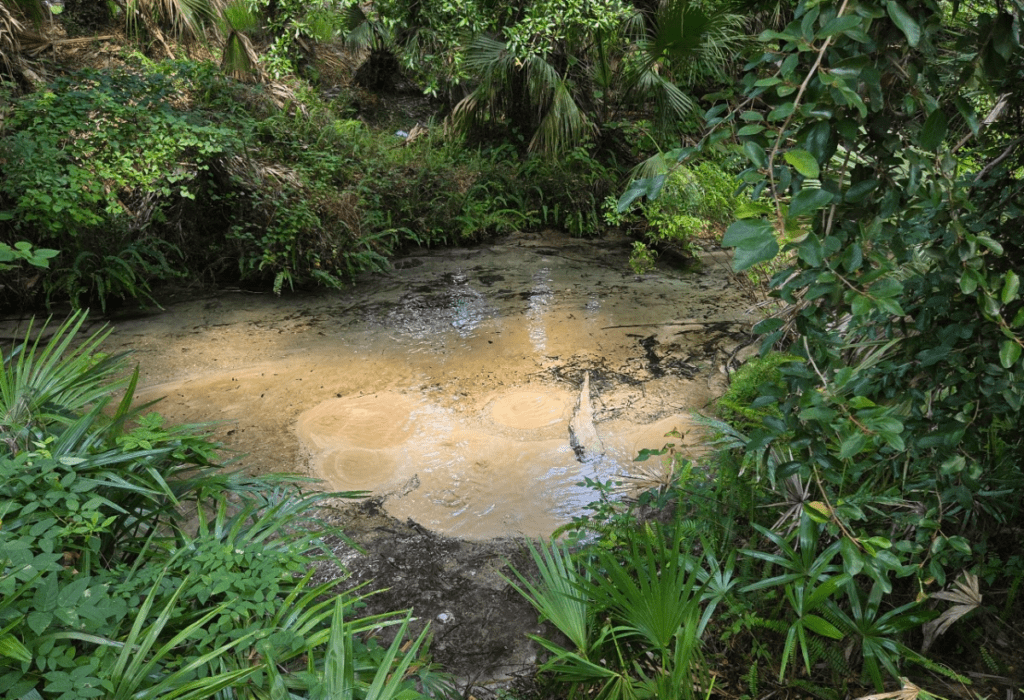
We stepped outside to the boardwalk, hoping that it had been repaired since our last visit. It wasn’t, so we were still not able to see Fern Hammock Springs. The beginning of Juniper Run was visible from the accessible portion, along with additional spring boils. This made it worth the effort.
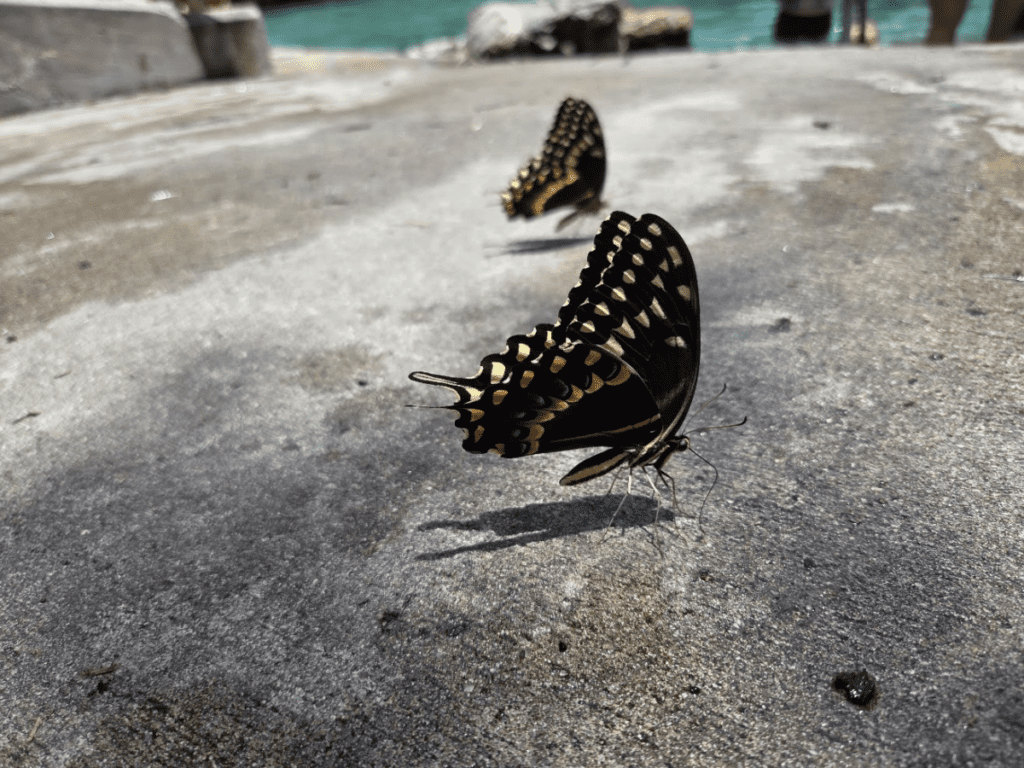
Back at the spring pool, we saw a pair of butterflies hanging out by the steps.
We jumped in the water and made a beeline to the vents. It took a couple minutes, but eventually a small, foot-long eel emerged before quickly disappearing into the grass. We snorkeled around and saw an anhinga catch and eat a fish. I saw a turtle too, but the water is a little bit less clear here and I lost him.
We swam between the two vents for around 10 minutes before seeing a second, larger eel emerge. He was probably two and a half feet long and was easier to spot in the grass. After he continued through the grass, we watched the other vent for a while but did not see any additional eels. On a past trip, we saw a huge 3-4 foot eel, but no massive ones this time. We saw three total in around 35 minutes of swimming at Juniper Springs.
While the snorkeling at Alexander and Silver Glen Springs is clearer and more impressive, the snorkeling at Juniper Springs has eels.
Frequently Asked Questions
Is Juniper Springs worth visiting?
It depends on what you’re optimizing for. If swimming is the priority and you have no reservation constraints, Alexander Springs or Silver Glen Springs offer a more dramatic swim experience for a similar price. But if you want to see American eels (genuinely the best spring in the Ocala National Forest for this), paddle one of the finest canoe runs in the country, and experience one of Florida’s most historic recreation areas, then yes — absolutely. It also makes excellent sense as a second or third spring on a multi-spring day along the SR 19/40 corridor.
Juniper is best appreciated for its combination of wildlife, paddling, history, and camping. While some nearby springs offer larger swimming areas, few provide such a well-rounded experience.
Can you swim year-round?
Yes. The water holds at 72°F in every season, and the recreation area is open year-round. Winter visits are particularly atmospheric — the forest canopy, the cool air against the spring water, and the dramatic reduction in crowds make for a genuinely special experience.
How cold is Juniper Springs?
Juniper Springs stays around 72°F year-round, making it comfortable for swimming in every season.
Can you snorkel at Juniper Springs?
Yes. Snorkeling is one of the best activities at Juniper Springs. Visitors frequently observe American eels, turtles, fish, and aquatic birds near the spring vents.
Is Juniper Springs good for kids?
Yes, especially for families interested in wildlife and nature. However, the swimming area is smaller than Alexander Springs and can become crowded during summer weekends.
What is the best time of year to visit Juniper Springs?
Fall and winter generally offer the best combination of comfortable temperatures, active wildlife, and smaller crowds.
Are there manatees at Juniper Springs?
Manatees very occasionally enter portions of the spring system during cooler weather, but sightings are uncommon compared to places like Blue Spring State Park. Juniper Run gets too shallow for manatees to make it to the swimming area.
Are there alligators?
Yes. Alligators are present throughout the Ocala National Forest, including in and around Juniper Run. The swim pool is managed and considered safe for swimming. The canoe run passes through legitimate wild habitat — stay in your boat, maintain distance, and use the same common sense you’d apply anywhere in Florida’s waterways. Juniper Run has been temporarily closed in previous years during alligator mating season (typically spring); check current conditions before a paddle trip.
Can you bring your own kayak to Juniper Run?
Yes. Private vessels are allowed, though launch limits apply and paddlers must still arrange transportation from the take-out point.
Do you need reservations for day use?
No reservations are required for day-use swimming. However, the recreation area can get busy on weekends and may close to new arrivals when at capacity. Arrive early on summer weekends. For the canoe run, private vessel launches are capped at 30 per day and must be in the water before 1 PM — arrive early or book a rental in advance through Adventure Ocala. Campsite reservations are made through Recreation.gov or 1-877-444-6777.
Can you camp at Juniper Springs?
Yes. Juniper Springs Campground has 79 campsites and is one of the most popular campgrounds in the Ocala National Forest.
Are there bathrooms available?
Yes. A bathhouse with restrooms and changing facilities is available at the concession area.
Are there showers at Juniper Springs?
Yes. Bathhouses with restrooms and shower facilities are available for campground guests and day visitors.
Can non-swimmers enjoy Juniper Springs?
Absolutely. Many visitors come primarily for wildlife viewing, hiking, camping, photography, the historic mill house, or paddling Juniper Run.
Does the Florida State Park Annual Pass work here?
No. Juniper Springs is managed by the USDA Forest Service (operated by Adventure Ocala under a concession permit) and is not part of the Florida state park system. The Florida State Parks Annual Pass is not accepted. The Annual Springs Pass ($80 + tax) available on-site covers multiple national forest springs in the area managed by Adventure Ocala and is worth considering for frequent visitors.
Can you bring dogs?
Dogs are generally not allowed in the day-use swimming area. Check with staff about trail and campground policies.
What are American eels and why are there eels at Juniper Springs?
American eels (Anguilla rostrata) are fascinating, catadromous fish — meaning they live in freshwater but spawn in the ocean. The eels at Juniper Springs migrate out to the Sargasso Sea to spawn, then return to Juniper Springs to live. They’re listed among the more uncommon residents of the recreation area, but snorkelers regularly encounter them weaving through the tapegrass in the spring pool. They’re typically dark, sinuous, and range from a foot to several feet long. They won’t bother you. Juniper is the most reliably mentioned spring in the Ocala National Forest for eel encounters — a genuine wildlife highlight that separates it from every other spring in the area.

How long does it take to paddle Juniper Run?
Most paddlers complete Juniper Run in 4 to 5 hours, depending on water levels, obstacles, wildlife viewing, and experience level.
Is Juniper Run suitable for beginners?
No. Juniper Run is generally considered an intermediate to advanced paddle. Tight turns, fallen trees, limited exit points, and frequent alligator sightings make it challenging for inexperienced paddlers. A more beginner and intermediate friendly route in central Florida is Emerald Cut to Wekiva Island.
What is the Juniper Run canoe take-out situation?
The take-out is along SR 19, approximately 9 miles north of SR 40. If you rent from the concession, the optional shuttle ($15/person) returns you to the spring. If you’re using a private vessel, you’ll need to arrange your own shuttle logistics — either spot a car at the take-out or arrange pickup. Plan this before you get on the water.
How Deep Is Juniper Springs?
The swimming area at Juniper Springs reaches approximately 16 feet deep near the spring vents. The shallow end gradually transitions into deeper water near the main boils.
Most visitors spend their time snorkeling around the spring vents, where visibility is often best and wildlife activity is highest. The deeper sections are also where American eels are most frequently observed moving through the eelgrass.
Final Thoughts
While not the most impressive spring pool in the Ocala National Forest, Juniper Springs occupies a valuable niche as the one with the most character, history, and distinctive wildlife encounters.
Come here because you want to paddle Juniper Run, snorkel for eels, camp under the oaks, or round out a big spring-hopping day.
Leave a Reply