

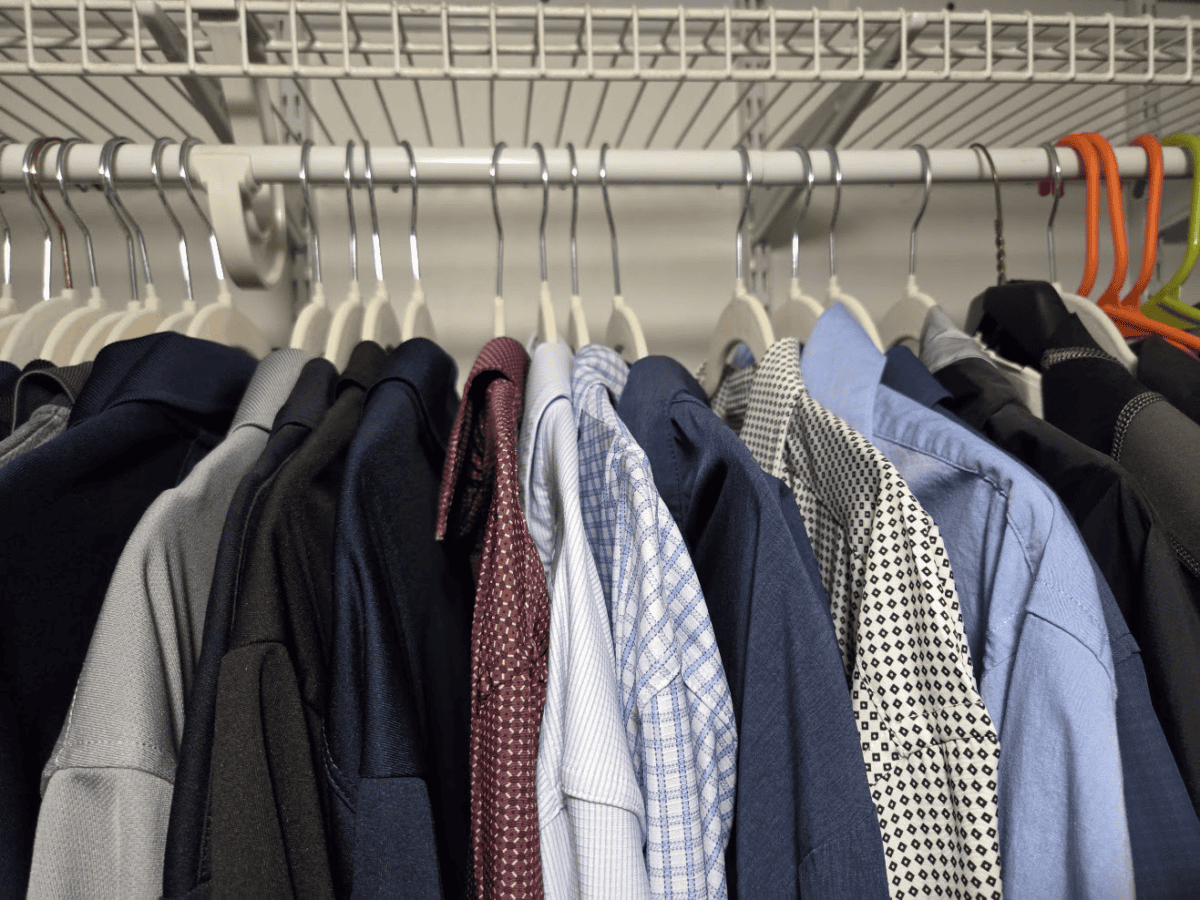
Most men build their wardrobe reactively, incrementally, and without a plan. A shirt for a wedding, gym shorts on sale, and a suit bought in a hurry for an interview. Ten years later you have a closet full of clothes and nothing to wear: a collection, not a system.
A capsule wardrobe is a system. It’s a deliberately chosen set of pieces that cover every context in your life, that work together and evolve with you over time. It requires investing in the right things, and knowing what to do with them as your life changes.
This guide will walk you through building that system from scratch and maintaining it as you grow. Whether you’re an intern trying to figure out your first professional wardrobe, a manager with a closet full of clothes that no longer fit you or your life, or a senior professional looking to tighten and elevate what you already own, the framework is the same.
My wardrobe has evolved from college T-shirts and one interview suit into clothing that now covers professional meetings, remote work, travel, church, hiking, running, fishing, and hunting. The system in this guide wasn’t built from fashion magazine, it developed from trying to own fewer clothes that worked in more situations.
Quick Start: Build Your Capsule in Four Steps
If you are looking to implement the Men’s Style Guide for Every Occasion, here’s the quickest way to get started with your wardrobe:
- Buy versatile essentials first (OCBDs, chinos, dark jeans, navy blazer).
- Fill gaps before adding variety.
- Upgrade quality as items wear out.
- Cascade older pieces into more casual roles instead of replacing everything.
If you only remember one thing, remember this:
Buy better and buy less. Let your wardrobe evolve instead of constantly starting over.
The Central Idea: One Degree Down
Before we get into specific pieces, here’s the principle that ties this series together.
Every piece of clothing occupies a position on the formality spectrum. When you get promoted, your work clothes shift one level up, and the clothes you used to wear to the office become your new WFH clothes. The clothes you used to wear to WFH become your elevated casual clothes. Last year’s dress shirt is this year’s date night shirt. The blazer that felt right for presentations now lives on the back of your home office chair for spontaneous video calls.
This is the entire architecture of a functional wardrobe. Every time you buy up, you cascade down. The result is a wardrobe where nothing is wasted, everything has a purpose, and the pieces at every level are good, because they were once your best.
Part One: Starting From Zero (The New Professional)
Intern and Entry-Level Wardrobe
For interns and entry level employees, you have just entered professional life, and your wardrobe is probably a mix of college clothes, a few interview-specific pieces bought in a hurry, and athletic wear. The challenge is building a professional foundation without spending money on things you’re not sure that you need.
The answer is to buy less, buy better, and buy for where you’re going, not just where you are.
Most entry-level professional environments are business casual at most. You do not need a full suit wardrobe on day one. You need to look like someone who belongs in a professional environment and is headed somewhere.
Entry-Level Foundation (10 pieces):
Start here with these ten pieces to cover every professional and casual context for a business or smart casual work environment. All of these pieces of clothing work together, and they all improve with quality.
- 2 Oxford cloth button-downs (OCBD): One white and one light blue. This is the most versatile garment in men’s professional dressing. They work tucked in for the office, untucked for dinner, under a blazer for a job interview, and with the sleeves rolled for casual Friday. Buy the best you can afford.
- 1 pair of dress trousers: Navy or charcoal wool blend. Wear them to any professional event, with either OCBD, under a blazer.
- 2 pairs of chinos: One khaki or tan and one navy. These are workhorses for business casual offices, around town, appointments, and casual dinner. Stretch fabric would be best for all-day wear.
- 1 blazer: Navy and unstructured. This is the most important purchase, and it can be worn to job interviews, client meetings, fancy dates, church, and dinner. Unstructured navy works with everything. Buy the best you can afford.
- 1 suit: Navy or charcoal, two-button in a classic cut. You won’t wear it every day, but this is essential for weddings, funerals, formal interviews, and business formal events. Buy it from a tailor or a store that does alterations. Fit is more important than price but avoid polyester if you can.
- 1 pair of dark jeans: Slim or straight fit in indigo or a dark wash with no distressing. These are perfect for casual social and weekend events. They pair with every shirt on this list.
- 2 quality tee shirts: One white and one grey or navy. Solid colors are recommended as they can go under blazers, alone around town, and under flannels in cold weather.
- 1 merino crewneck sweater or nice quarter-zip: mid-grey or navy. This is can be layered over the OCBDs, worn alone with chinos, and under a shell on a hike. Merino is worth the cost as it doesn’t smell, regulates temperature, and looks better than fleece.
- 1 pair of leather dress shoes: I would recommend brown derby as they are more adaptable than oxfords. Brown is more versatile than black for business casual, but oxblood can be another good choice.
- 1 pair of leather sneakers or clean loafers: White leather sneakers or leather loafers in tan or navy. These go with everything casual and work with chinos in smart casual contexts. One quality pair will outlast four cheap ones.
Total investment at mid-tier brands: $800-$1,400. At budget brands like Uniqlo and H&M, you could compile this wardrobe for $600. Shopping at thrift stores can get the cost even lower.
Recommendation: If you are starting from scratch, go out this weekend and get a pair of chinos and an OCBD that fits. Every paycheck, put $50 aside and buy quality clothes over time to build the rest of the wardrobe over the course of 6-8 months.
What you don’t need yet: Multiple suits, dress shirts in a variety of colors, ties, athletic wear beyond what you already own, or anything trendy.
Your First Promotion to Senior Professional
After you’ve been in the workforce for two to four years, your income has grown, and your professional context is probably more demanding. You may be more client-facing of be moving toward a management role. The entry-level wardrobe is starting to show its limits, and some of it is starting to show its age.
This is the first wardrobe evolution, here’s what changes:
- Your office dress standard probably went up a degree
- You have more social and professional events on your calendar
- You can afford to buy better
- Your body composition may have changed (hopefully it got better!)
At this stage, I would recommend the following upgrades:
Add a second suit in a complementary color. If your first was charcoal, add navy, or vice versa. This doubles your formal options.
Add 2-3 dress shirts. A subtle pattern like thin stripe or micro-check, a light green, or a poplin white for formal occasions. You should have enough shirts at this stage to rotate through a work week without repeating.
Buy your first quality leather belt if you haven’t yet.
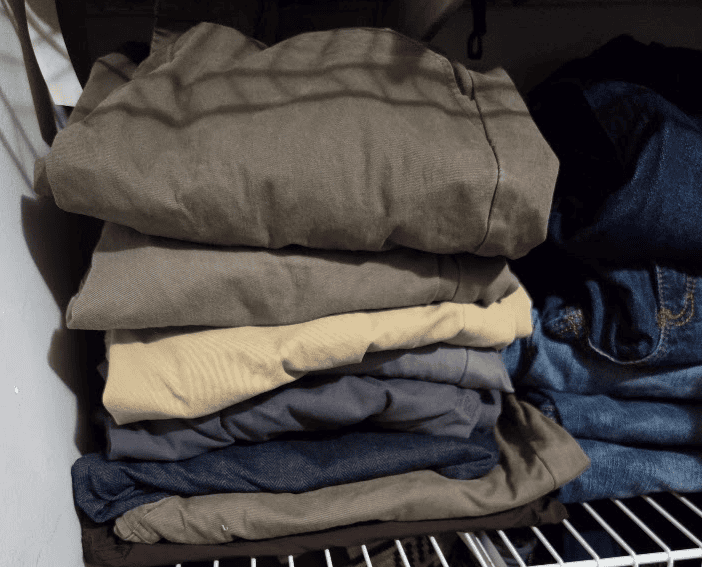
Replace whatever has worn out first, usually the most-worn chinos. When you replace them, buy one level up from what you bought the first time, and prioritize fit and material. Add more colors of chinos, like brown and olive. These will be daily drivers.
The cascade begins, and the navy blazer you started with is now a better fit for your elevated casual. You buy a slightly more structured, better quality replacement for formal use. The old, faded OCBDs step down to WFH or get retired.
The system is working, and you didn’t waste anything. Your clothes moved down, not out.
The Management Jump (Dressing for Authority)
When you move into management in a team lead, manager, or director position, you spark a wardrobe shift that is more significant than other career transitions.
Before, you were dressing to belong, but now, you are dressing to lead.
People in leadership positions are read differently by others: direct reports, peers, senior leaders, and clients. As the subtext shifts from “serious and capable” to “in charge”, you need to be more intentional.
Here’s what changes at the management level:
The suit that used to be for special occasions is now a regular part of your rotation in a business professional environment. The blazer becomes the daily workhorse. Shoes matter more at this level, and people will notice them.
The detail work becomes more important in signaling authority, and your clothes should be ironed and shoes and belt maintained.
The additions at this stage:
- A second nice blazer, in grey herringbone or brown tweed.
- An overcoat if you are in a cold climate.
- 3-4 conservative ties: a solid tie in navy, grey, or burgundy, a subtle stripe of rep tie, and one with more personality.
- A second pair of dress shoes: black now if your first good pair was brown. You can rotate and extend the life of both.
- Quality dress socks: solid colors in navy, grey, charcoal, and black. Wool is the best but cotton works too.
The full cascade: The blazer from your individual contributor days steps down to weekend and date night. Your older suit becomes your travel suit or standby. Your older dress shoes get resoled and turn to smart casual. The old OCBDs become dedicated WFH shirts.
Part Two: The Full Capsule at Career Maturity
By the time you reach senior professional, executive, or principal level, the wardrobe should have accumulated well and settled into a mature collection where most things are quality and earn their spot.
If you have continually reinvested $100 per month into your wardrobe, you have likely built the following:
Professional (office, client, formal)
- 2-3 suits in rotation (navy, charcoal, and a lighter grey or glen plaid)
- 5-7 dress shirts (white, light blue, subtle pattern, solid color)
- 4-6 ties if relevant
- 2 blazers (navy unstructured, one textured or patterned)
- 3-4 pairs of dress trousers
- 2 pairs of quality leather shoes (black and brown oxford or derby, soled as needed)
- 1 overcoat if climate-appropriate
Business casual/work from home
- 3-4 pairs of chinos (navy, khaki, grey, olive)
- 3-4 OCBDs
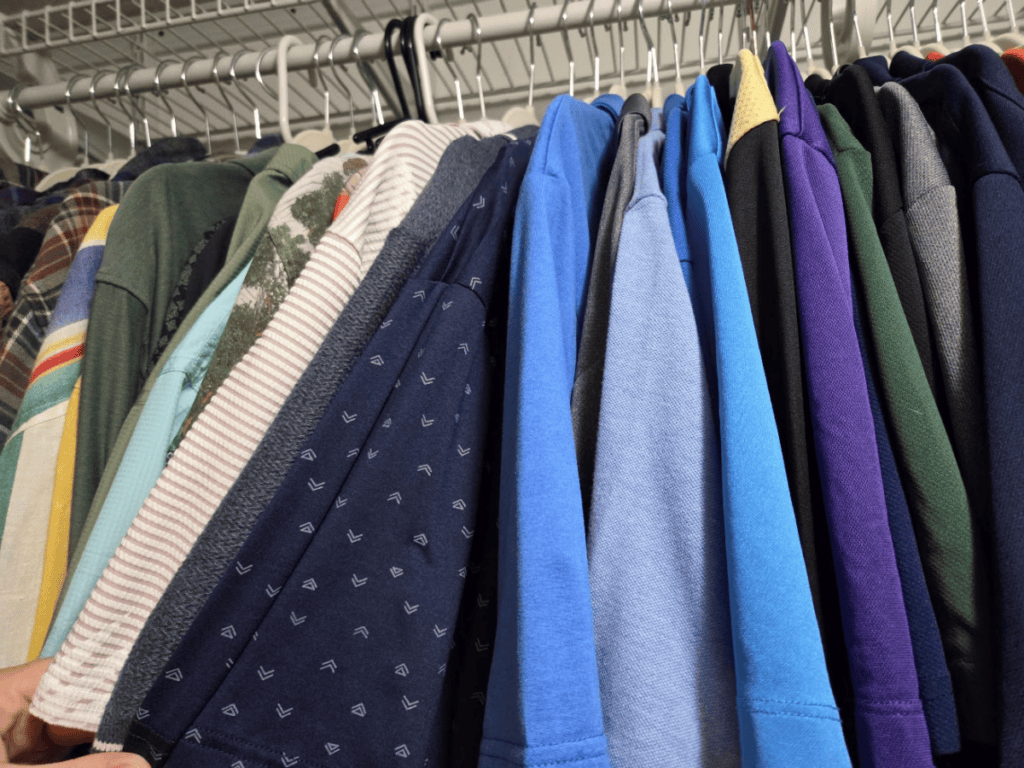
- 2 polos (solid neutral colors)
- 1-2 merino sweaters
- 1 quarter-zip pullover
- Loafers and leather sneakers
Casual and social
- 2 pairs of dark jeans
- 4-6 quality tees
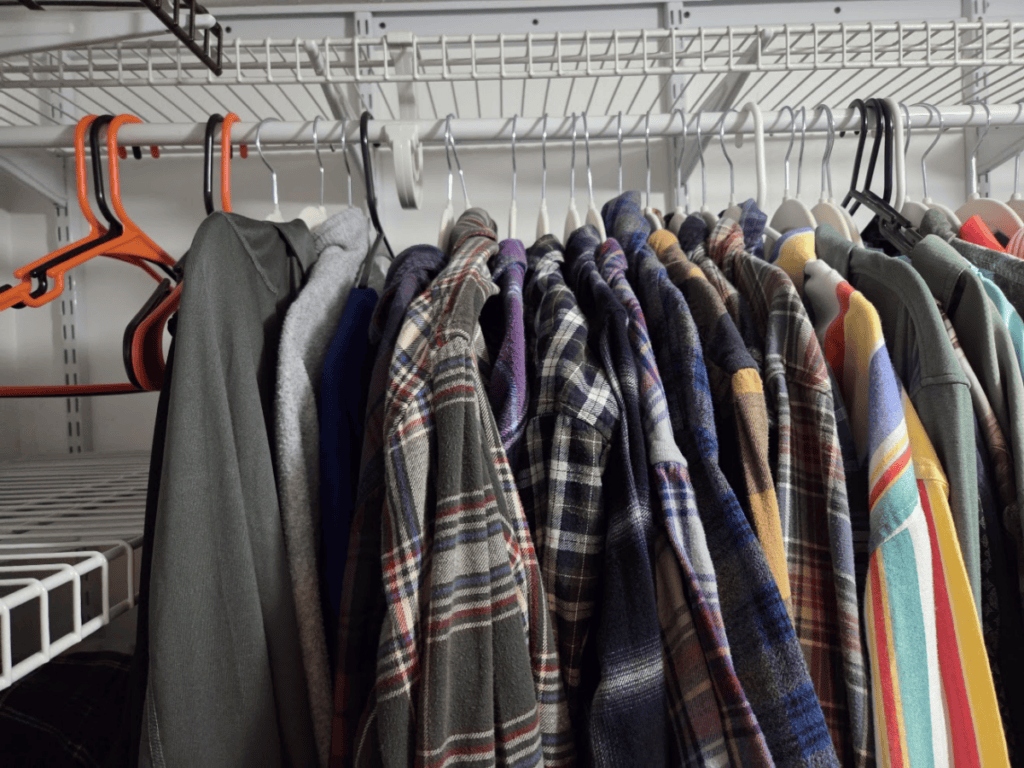
- 2 casual button-downs (flannel or chambray)
- 1 bomber or field jacket
Outdoor and functional
- Context specific outdoor pieces that don’t fit other categories, like waders, camo, rain shell, and boots
Total active pieces: 50-70. If you have significantly more than this, you have a collection, not a capsule. The audit section below will help.
Part Three: The Cascade Schema
The one-degree-down principle can apply to every context in your life.
Formal to Elevated Casual
Last year’s wedding suit is this year’s interview or client meeting suit. Formal dress shirts from past years are great choices for elevated date nights, and can even be paired with dark jeans and loafers for a sharp casual dinner outfit.
The Outdoor Cascade
The performance fishing shirt that you bought for offshore operations is now your yard work, river, and getting filthy shirt. It still performs well for sun protection. Hiking shoes with a few hundred miles become camp shoes or hunting shoes.
Athletic Wear
Your old running shorts that now chafe become lifting shorts. Your old tee shirts are now lifting and running shirts. When they start to wear, they are perfect for outdoor projects, and are replaced at the top when they get holes.
Church and Social
Your blazer from a cycle behind is perfect for church. It’s more relaxed than your current professional standard, but it shows effort and intentionality. The dress shoes that still look good, but are no longer your sharpest pair go to date nights and casual weddings where you want to look nice without putting your best leather at risk.
Part Four: The Wardrobe Audit
If you’re reading this with a full closet, the audit is a good place to start. Once a year, figure out exactly what you have, what you need, and what needs to go.
Step 1: Empty and Categorize
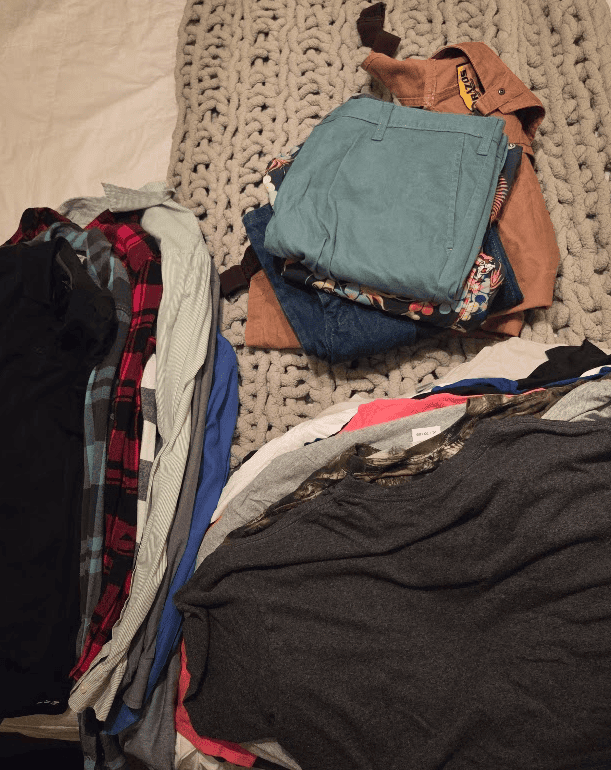
Sort into four categories:
- Fits and I wear it: in rotation and earns its spot
- Fits and I don’t wear it: figure out why you don’t wear it
- Doesn’t fit: if it doesn’t fit today, get rid of it
- Worn out: if faded, pilled, broken, or stained, retire it
The “fits and I don’t wear it” category is worth a second look. Does it fit any of your contexts? Does it go with anything else you own? If the answer to either is no, donate it.
Step 2: Map Against Your Contexts
Take what remains and apply it to your actual life. Use the framework from The Ultimate Men’s Style Guide for Every Occasion, and for each context that regularly applies to your life, ask: do I have at least two reliable outfits? If not, that’s a gap.
Here are common gaps in coverage:
- Early career: Not enough business casual options, over-reliance on a couple of shirts
- Mid-career: Too many casual pieces, not enough of the right professional pieces, shoes probably need upgrading
- Senior level: Too many pieces, many of which don’t work together. This needs curation
Step 3: Identify What to Retire, What to Cascade, What to Buy
For everything removed from active rotation, make one of three decisions:
Retire (donate or discard): Worn out, poor fit with no alterations possible, clothes that don’t serve any context.
Cascade (step down to a lower context): Still functional and presentable, but replaced at the top level. Give it a specific new home “these are my new around-town chinos” or “this is now my WFH shirt” rather than leaving it in general circulation where it dilutes your other clothes.
Keep and promote: Occasionally you realize something is better than you remembered. Keep it and be specific about where it goes.
Follow this priority order:
- Fill gaps in your wardrobe
- Replace worn-out anchors (OCBDs, chinos, daily shoes)
- Upgrade one level when replacing everything
- Add variety only when you have a solid foundation
Step 4: The Fit Check
Everything that stays must fit your body as it is today, not like it was five years ago, and you hope it might in six months. Try on any clothes that you haven’t recently worn and know still fit.
Fit is the most important variable in how clothes look. A $60 chino that fits right looks better than a $300 one that does not. Take poorly fitting clothes to a tailor, alterations are cheap compared to replacement.
A tailor can fix trouser length and waist, shirt waist (taking in), jacket sleeve length, jacket waist suspension. A tailor can’t fix jacket shoulders without a lot of expensive work, and anything where the proportions are fundamentally wrong for your build.
Part Five: Buying Well – The Investment Framework
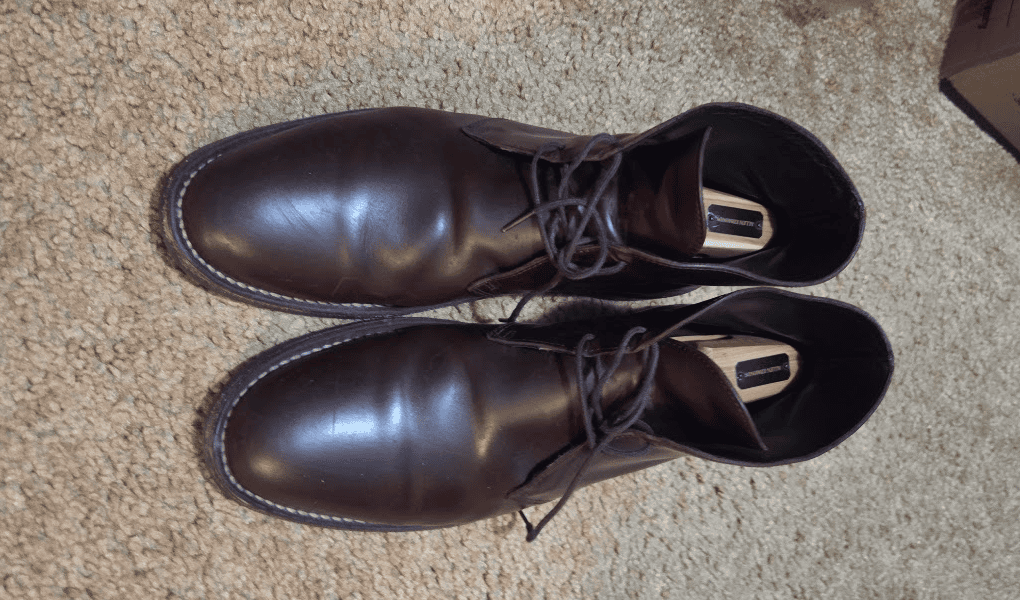
The capsule model only works if you’re buying things that last long enough to cascade. A cheap shirt that dies in a year doesn’t make it to your casual rotation, it makes it to the trash, and you have to spend twice the money.
Where to Spend
Spend more on: Suits, blazers, dress shoes, leather shoes and belt. These are the pieces where quality shows, and good pieces last a decade or more.
Spend moderately on: OCBDs, chinos, merino sweaters, jeans. Mid-tier brands hit a good quality-to-cost ratio.
Spend less on: Tees, casual socks, anything that gets used up.
Spend functionally on: Outdoor and technical gear. I like to splurge on running socks, and a $200 rain shell and $200 muck boots are worth it. A $200 flannel shirt is not.
Cost Per Wear Calculation
Before buying anything, estimate cost per wear by dividing price by the number of times you’ll wear it before it wears out.
A $400 navy blazer worn 100 times per year for 8 years is $0.50 per wear. A $60 blazer worn 40 times per year for 2 years is $0.75 per wear, and it looked worse the whole time.
The capsule model is not about spending less per purchase, it’s about spending on pieces that earn their cost by lasting, cascading, and working with everything else you own.
The One-In-One-Out Rule
Once you have a functioning capsule, maintain it with a simple discipline: when something new is added, remove something old. This prevents the junk drawer problem. If you buy a new pair of chinos, the old one finds a specific cascade role (date night, casual) or it gets donated.
Part Six: Climate, Body, and Life Change
Adapting for Climate
The capsule framework assumes a four-season temperature shift. If you’re in a different climate, you need a different composition.
Hot/humid climate (Florida, Gulf Coast, desert Southwest): Heavy wool suits get replaced or supplemented by a tropical wool or linen-blend suit. Linen and cotton-linen chinos replace heavy wool trousers. You don’t need an overcoat. Merino sweaters are less important. UPF performance fabrics may earn a place in your casual rotation. Light colors are more viable.
Cold climate (Midwest, mountain West, Northeast): Layering becomes more elaborate. A heavy overcoat, a quality mid-layer like a down vest or heavy fleece that fits under a jacket, and proper winter dress boots become more important. The performance down jacket has a more prominent role.
Body Changes
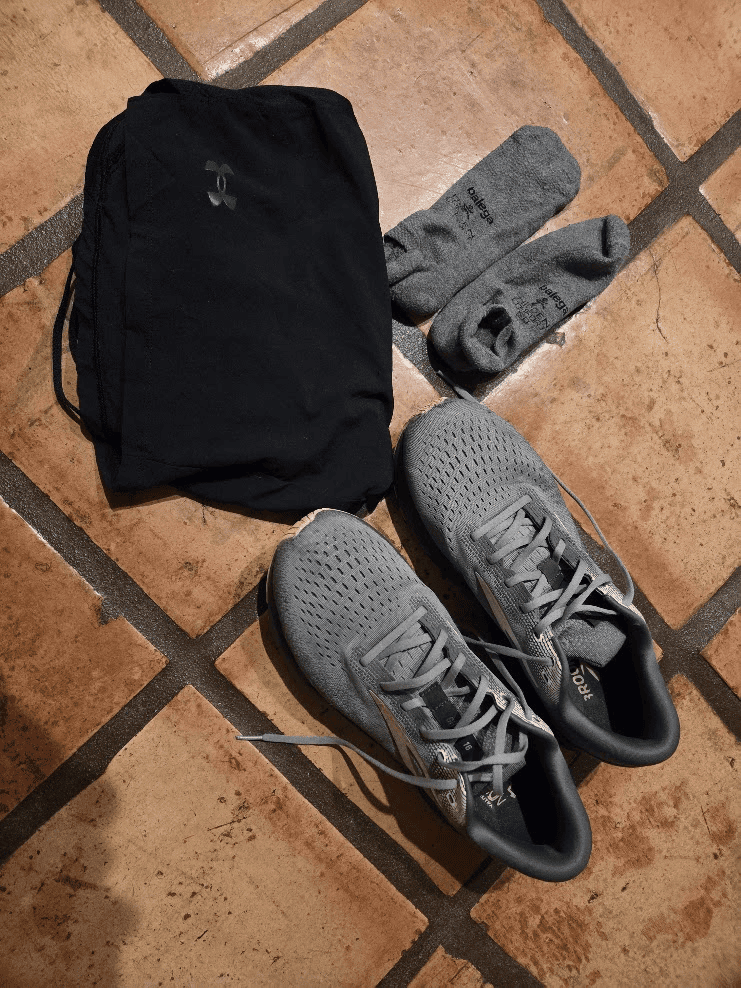
When your body changes due to age, lifestyle, or fitness changes, the capsule will need to be re-evaluated. Clothes that don’t fit your current body have no place in your closet. If you’ve significantly changed size, do a hard audit. Keep only what fits now. Rebuild from the foundation. If you have been buying quality, the pieces that survived may be worth the alterations to bring them back.
This can be due to good or bad changes. Maybe you gained weight, but maybe you started running and meal prepping and followed our guide to lose weight permanently. Maybe you started lifting and even stayed fit on your travels in the hotel gym.
Life Changes
The capsule also changes when your life does. As you mature and have career changes, relocation, new relationship, kids, or shift from white-collar to hybrid work, your life contexts shift, changing your wardrobe needs.
If you move to remote-first work, the professional tier thins and the home office and casual tiers gain attention. If you retire, the same shift happens even more dramatically.
Audit when your life changes, and don’t let your wardrobe lag years behind your actual life.
The Master Piece List
Here is the capsule wardrobe for an established active professional. This list represents the full optimized system at maturity, for a man who operates between professional, casual, social, and outdoor contexts. This is for a man at his peak, moving between church on Sunday, a client pitch on Monday, work from home on Wednesday, a nice date night on Friday, and hunting Saturday. Use this as your target state, not your starting point.
Professional Tier
- Two suits (navy, charcoal)
- 5-6 dress shirts (2 white, 2 light blue, 1-2 subtle patterns)
- 2-3 ties
- 2 blazers (navy unstructured, one textured)
- 3 dress trousers (navy, charcoal, grey)
- 2 pairs leather dress shoes (brown derby, black oxford)
- 1 leather belt per shoe color
- 1 overcoat (if you live somewhere cold)
Business Casual/WFH Tier
- 3-4 pairs chinos (navy, khaki, grey, olive)
- 3-4 OCBDs (white, blue, stripe, casual)
- 2 polos
- 2 sweaters
- 1 quarter-zip
- Loafers and/or leather sneakers
Casual/Social Tier
- 2 pairs dark jeans
- 4-6 solid tees
- 1-2 casual shirts (chambray, flannel)
- 1 casual outer layer (bomber jacket)
- Clean casual shoes (white leather sneakers or casual loafers)
Functional/Outdoor Tier (context-specific)
- 1 set of athletic gear for each day of the week you train
- Technical pieces for your specific activities (hunting, fishing, hiking)
- Rain shell
Total: around 50-65 pieces. Everything earns its spot and works with something else.
Annual Wardrobe Maintenance Calendar
These quick maintenance tasks can keep your wardrobe working for you instead of against you.
Spring
- Donate unused clothing
- Replace worn athletic gear
- Clean leather shoes
Summer
- Evaluate travel clothing
- Replace sandals or boat shoes
- Wash technical gear
Fall
- Inspect sweaters
- Polish dress shoes
- Rotate jackets
Winter
- Review suits
- Dry clean outerwear
- Plan next year’s purchases
Common Men’s Capsule Wardrobe Mistakes
Most wardrobe problems aren’t caused by owning too few clothes, they’re caused by buying the wrong ones.
Avoid these common mistakes:
- Buying trendy pieces before building a foundation.
- Owning five mediocre shirts, shoes, or jackets instead of one excellent version.
- Keeping clothes that no longer fit.
- Buying clothes for your fantasy life instead of your real one.
- Ignoring shoes while upgrading everything else.
- Purchasing duplicates without filling wardrobe gaps.
- Never tailoring clothing.
- Buying cheap pieces that wear out before they can “cascade” into lower-use roles.
Key Principle: Build your wardrobe intentionally. Every purchase should solve a problem or replace a heavily used staple.
Frequently Asked Questions
What is a capsule wardrobe?
A capsule wardrobe is a curated collection of versatile clothing that mixes and matches easily, allowing you to dress for nearly every occasion with fewer, higher-quality pieces.
How many clothes should be in a men’s capsule wardrobe?
Most active professionals can cover every context with around 50–70 carefully chosen pieces, including workwear, casual clothing, shoes, outerwear, and activity-specific gear.
How often should I replace clothes?
Replace heavily worn basics like T-shirts, athletic gear, and chinos as needed. Higher-quality items such as suits, blazers, and leather shoes can last many years with proper care.
Should I buy expensive clothes?
Spend more on items that are worn frequently or can be repaired, such as shoes, blazers, and suits. Save money on basics that naturally wear out more quickly.
What colors belong in a capsule wardrobe?
Start with versatile neutrals like navy, gray, white, black, olive, khaki, and brown. These maximize outfit combinations.
Can a capsule wardrobe work in Florida?
Yes. Replace heavy fabrics with breathable materials like tropical wool, linen blends, cotton, and lightweight performance fabrics while keeping the same overall structure.
Should I own more than one suit?
Yes. Once your budget allows, owning navy and charcoal suits covers nearly every professional, formal, and social occasion.
Is tailoring worth it?
Absolutely. Proper fit usually makes a bigger difference than buying more expensive clothing. Simple alterations often cost far less than replacing garments.
How long does it take to build a capsule wardrobe?
Most men can build a solid foundation in six to twelve months by purchasing one high-quality piece at a time instead of replacing their entire closet at once.
Can I still follow fashion trends?
Yes, but trends should make up a small percentage of your wardrobe. Build your capsule around timeless basics, then add seasonal pieces if they fit your personal style.
What if I work remotely?
Remote workers generally need fewer formal pieces and can shift more of their budget toward business casual, comfortable work-from-home clothing, and casual wear.
The Bottom Line
A capsule wardrobe is more of a systems problem than a fashion project. Like a well-organized game freezer or well-maintained tackle bag, it works because everything has a purpose, place, and a clear chain of custody from new to donated or discarded.
Start with the foundation, buy better than you think you need to, and let the cascade happen naturally as you grow and mature. Audit annually and replace rather than accumulating odd pieces.
The best wardrobe you own can be the one you’ve been building for 10 years, if you do it right.
This post is part of our series on practical style for men who live full lives. For context-specific guidance, see The Ultimate Men’s Style Guide for Every Occasion and The Professional Man’s Work From Home Wardrobe. Remember that grooming just as important as how you dress. Check out the Men’s Grooming Guide: How to Look Sharp in Every Situation.
Leave a Reply