

Look, I get it. It happened to me too – I blew up to over 300 lbs eating pizza and drinking beer. I lost the weight and got in shape following the same framework I am sharing with you in this guide.
The American diet has a lot of room for improvement, and our society has an accountability problem. Keep reading to learn how I lost weight permanently and you can too.
Quick Start: 5 Essentials for Weight Loss
- Weigh yourself daily
- Track your calories honestly
- Meal prep weekly
- Walk every day
- Reduce alcohol
Why Previous Advice Has Failed
The weight loss industry exists to sell you products: subscriptions, pills, shakes, etc. These exist to get you hooked and buying, not to actually work.
Here’s what does work: consistent effort over the long haul.
No fad diet or 30-day exercise program will get you the results you are looking for. Only good habits, thoughtfully incorporated to your life in a way you can stick to, will get you to lose weight and keep it off.
This guide will help you to identify and build habits in your life:
- Calorie tracking and meal prep to take control of your food in a low-effort way
- Incorporating fitness in a sustainable, automatic way that you can stick to
That’s it. You don’t need anything complicated to lose weight, you need willpower to start and discipline to continue. The more frictionless you can make your habits, the longer you can stick to them.
Why Does Weight Gain Happen
Weight gain happens when you stop paying attention. It is not because of some moral or disciplinary failure, it is the result of a modern environment designed to keep you sedentary and consuming.
Processed food is literally engineered to override your body’s signals. The fat, sugar, and salt is perfectly calibrated to get you to eat past when you are full.
Sedentary lifestyle, especially office and work from home (WFH) means that you can complete your day with less than 2,000 steps. TV, video games, office chairs, and cars allow you to get things done without moving at all. This is all a new development in human history. Your body is designed to move.
Alcohol is calorie-dense and nutritionally empty. It lowers your inhibitions (around food too!) and disrupts your sleep, directly affecting hunger signals. Alcohol kills your motivation to exercise the following day, even if you do not have a rough hangover. Going out on Friday night can result in 600-1000 calories or more in alcohol alone.
Eating out puts you at the mercy of chefs optimizing for flavor, not health. A restaurant lives on reviews, and they get better reviews for tasty food than healthy food. Restaurant meals can contain 2-3 times more calories than the equivalent made at home. Restaurants include large portions, oil, and butter to get the taste delicious, but it comes at a cost you see on the scale.
Stress and sleep deprivation elevate cortisol. As a professional, these can be constant. Your cortisol is elevated, increasing appetite and cravings for high-calorie foods.
It is important for us to understand these drivers so that we can frame the problem. The issue is not motivation. Your goal in weight loss is to build systems to optimize the variables in your life, making healthy behavior more likely than unhealthy behavior.
Why Habits Beat Willpower
I know, you came here for actionable insights. They are coming, as soon as we finish building the foundation in this section. Willpower is a finite resource, which depletes throughout the day and especially due to decision fatigue. You need to make weight loss and maintenance a function of habits, not willpower.
Habits require almost no willpower once established. As somebody who used to be morbidly obese, I can say with 100% honesty that it is easier for me to go for a run in the morning than it is to skip. Why? I have the habit built and ingrained in me, and I know what will happen if I skip my run.
When a behavior is habitual, it just happens. No willpower required. You do not deliberate whether to brush your teeth, you just do it. The framework I am proposing will make your health behaviors the same way.
Building habits takes time. It can take 2-3 full months for a new behavior to truly feel automatic. If the new habits you build still take willpower at day 14 or even 21, don’t fret. That’s normal. Week 2 is the hardest part, you have to continue momentum until the habits are formed.
Practically, how do you do this? Habits are better than willpower, but it takes willpower to build habits. Willpower is finite, so the practical approach is to add behaviors one at a time. Overhauling your diet, adding daily exercise, quitting drinking, and fixing your sleep at the same time is a recipe for disaster. Pick the behavior with the highest leverage (calorie tracking for most people) and do only that for the first few weeks. Once it becomes easy, shift your willpower to the next behavior.
Practical Steps to Weight Loss
As discussed, we will add one behavior at a time. To minimize reliance on willpower, additional variables will only be tweaked once the previous habit is ingrained and automatic.
With that said:
Step 1: Weigh Yourself Daily
This is the habit that ties everything together, and lets you monitor results. It needs to come first.
Buy a digital scale and put it somewhere you will step on it every morning without a second thought. Some will say to put it next to your bed or in your doorway, but what I found is best is right next to my toilet.
Every morning I wake up, open my phone to the app for my scale, walk to the bathroom, pee, then step on the scale. This creates a sense of urgency as I must both pee and measure my weight before my phone screen locks. Next, I return to check my phone, look at the number from the scale, and the chart leading up to it.
Most people only weigh themselves sometimes and react emotionally. You need to weigh yourself daily and monitor the trend line (weekly/monthly average). Daily weight fluctuates by 2-5 lbs based on water retention, salt intake, and digestive contents – not just fat/muscle loss and gain.
The trend line is what is important, not the daily number.
Use an app that takes your daily weight and plots a moving average. I use renpho, and it has worked for many years and dozens of lbs lost. As you continue to build habits, the trend line will move downwards, evidence that it is working.
Daily weighing also creates something called an implementation intention, which is a moment of accountability that keeps the goal present in your mind. People that weight daily lost more weight than people who don’t, because they start their day by completing a habit that reminds them of their identity as a person losing weight.
Take a Progress Photo
Pair your daily weigh-ins with a weekly progress photo. I only took a progress photo at the beginning of my journey, and I regret that I do not have a catalogue over time of my results. It would make for an epic time-lapse, as yours will.
Even if the scale barely moves, your body composition can change. As you build healthy habits like running and lifting, you may put on muscle at the same time you lose fat. Your body weight stayed the same, but you lost fat. This is a win! The easy way to tell will be to look at progress photos over time.
The photo series you create is a record of your wins, caused by your consistency in sticking to habits in adherence to your goal.
Step 2: Track Your Calories
A common expression in business originated with Peter Drucker: “You can’t improve what you don’t measure.” This is especially true when talking about calories and weight loss. Your first habit is to measure the output – your body weight. It is now time to measure the input – your calories consumed.
Calorie tracking is not obsessive, it is the most evidence-based intervention for weight loss. Most people have no idea how much they are eating. You will, when you start tracking calories.
Most people underestimate caloric intake, and I believe this to be one of the root causes of the obesity epidemic. Portion sizes are hard to estimate, and hidden calories in oils and drinks are invisible. Nuts, granola, and oil require deceptively small portions to not throw exceed your daily calories.
How to Start Tracking Your Calories
There are a lot of apps. I started off by using MyFitnessPal, but nowadays I have switched to Cronometer. Use an app with an interface that makes sense to you. Mor most people aiming to reduce body fat in a steady, sustainable way, aim for a deficit of 300-500 calories/day from your maintenance level. This will produce meaningful weight loss without triggering aggressive hunger.
The first week, do not modify your diet, just track it. You need to understand just how many calories your default diet has you intaking. If you go to a restaurant in this time, you will be shocked to research how many calories are in the food. Track the things you are not proud of, the donut in the breakroom, the Coca-Cola. See just how dense those foods are in calories. Understanding your actual current intake is the baseline for everything else.
Calorie Tracking Rules That Work
Log your food before you eat, not after. Pre-logging meals takes a minute and completely changes your decisions. Once you log your planned lunch and see how many calories are remaining for dinner, you will make different choices than you would if left to your own devices. Tracking calories is an accounting game, and early datapoints are your ally.
Weigh your food for the first month. As it stands, you do not have a feel for portion size and calorie contents. We need to develop that, and the best way to build intuition is a $10 food scale. One serving of peanut butter will significantly vary when measured using a spoon vs. a scale. You do not have to weigh food forever, but you need to calibrate your eye to become an accurate estimator.
Log alcohol honestly. An IPA can contain as many as 250 calories depending on type. A glass of wine can contain 150 calories. Three extra drinks can add up to a whole meal’s worth of calories – without any of the nutrition.
Do not aim to minimize calories, aim for your goal. Further restriction will cause increased appetite, and you do not have the willpower to fight your cravings indefinitely. At least, not until you transform. Severe restriction will cause muscle loss and rebound eating.
Step 3: Meal Prep – Make Tracking Easy
Now that you have a baseline for calorie intake, let’s work on meal prep. This will put time back in your week and help you stick to calorie goals. You know exactly what went into these meals, the portions are controlled, and there are no surprises.
Meal prep makes calorie tracking sustainable for busy people. For each recipe you make, save it as a meal in your calorie tracking app. Now you only have to press one button to load your whole meal, putting time back into your day. Every meal is not a fresh decision on a bogged-down mind, it is now an automatic, nutritious step with predetermined calories and protein. Oh yeah, and it takes 3 minutes to microwave with minimal dishes.

What Effective Meal Prep Actually Looks Like
Meal prep is a way to reduce friction in your life and make health automatic. Here’s how I would recommend doing it, expect an upcoming detailed post with recipes I actually use:
On Sunday after church, head straight to the grocery store. Buy whatever ingredients you need for your recipe, as well as fruits, eggs, Greek yogurt, and whatever else you need in for breakfasts. Get what you need and head home. Change and get started cooking before you have a chance to sit down and resist.
As somebody just starting out, try to prep for one meal a day. Lunch is classic. After a few weeks of prepping lunches, try prepping dinners too. The time you get back will be incredible.
Batch prep two trays of chicken thighs with veggies and a pot of rice or one big pot of ground beef, rice, and peas or corn. Keep the recipes simple, measurable, and repeatable. Cook everything at once to minimize time input.
Portion your prepped food into daily containers before refrigerating. Your goal is to minimize friction. Make eating healthy easy, and require only a microwave and a fork. Cut the chicken before you put it in the container. Use boneless, skinless thighs instead of bone-in. Remember, easier is better. You will be more likely to stick with it.
Use glass containers. Please do not microwave plastic and spray it all over your food. The containers I use came with plastic lids. I take the plastic lid off of the container and set it aside, put a paper towel on top of the glass container, and microwave it.
What to Actually Eat
If you meal prepped on Sunday, you know what you will eat. Are you actually going to let the food that an animal died for, you paid money for, and you spent time preparing go to waste? Eat the meal prep in the fridge, not a pizza.
Eat real food. This is straightforward, but different than how most people eat.
Real food has a short ingredient list, usually one thing. Think organic chicken, organic bananas, grass-fed beef, fresh vegetables. I try to source at least half of my protein by hunting. If this isn’t an option for you, try to imagine what somebody would eat 100 years ago. Pick that.

The more a food is processed, the more likely it is to override your satiety signals, and the less nutritious each calorie is. You do not need to be perfect about this, but whole foods will fill you up. If you turn away from processed food, you will even begin to crave whole foods. Fruit will taste delicious if you stop eating candy bars.
Get the bad food out of the house. This is essential. There needs to not be any processed sugar in your house. As you keep a caloric deficit, you may crave sweets. Don’t have sweets available. Don’t fall into temptation, get rid of it entirely by not having bad food in your pantry. Prevent yourself from having a bag of chips to grab when you are starving at 10pm after travel or a big meeting. You need to design a system for you to be successful in.
Step 4: Stop Drinking or Significantly Cut Back
This section might be uncomfortable to read, but it is critical.
Alcohol does not complement efficient fat loss. This is not just about accounting for calories, this is a multi-layered problem:
The calories in alcohol are empty calories. There is no protein, fiber, micronutrients, or satiety signal. Alcohol is empty calories.
Metabolic disruption. If your body is processing alcohol, a poison, it will prioritize clearing the ethanol above all else. Fat oxidation will reduce, and muscle will not be effectively built until the alcohol is worked out.
Sleep disruption. Alcohol destroys your sleep architecture even though it helps you fall asleep. The hunger hormone is elevated due to poor sleep, leading to significant effects.
Decision erosion. You make bad decisions when drinking, like eating more calories and drinking more alcohol. You may forget to log these in your calorie tracking app.
It’s not that you can’t drink, it’s that you need to fully understand the effects of alcohol. If you have a fitness watch, you know what I’m talking about. Resting heart rate spikes, heart rate variability plummets, sleep score in the single digits, and you feel like crap. It isn’t worth it.
If this section struck a nerve, alcohol may be the one change that unlocks progress in your journey.
Step 5: Start Moving – Slowly and Consistently
Exercise is not an efficient weight loss tool. Running burns calories, but not the amount you would expect. As an obese person turned runner myself, I found that running did not significantly drive weight loss until I hit the 30 miles/week mark. Not exactly a beginner.
This does not mean that you should avoid exercise, you should absolutely do it. Just understand that exercise is a health and body composition tool more than a calorie-burning strategy. Fitness and muscle gain and retention come from movement. The caloric deficit is built in the kitchen, and you can never outrun a bad diet.

Start by Walking
Walking is underrated to an embarrassing degree. A consistent daily walking habit of 20-60 minutes can burn meaningful calories, improve cardiovascular health, reduce stress, improve sleep, and create a habit of daily movement for you to build on.
If you miss a day due to circumstances out of your control, get back in the saddle. Click here for more information on how to resume training after missing.
My own personal weight loss story involved walking 5 miles every day. Not running. Not HIIT. Walking. It is not glamorous and it take a lot of time. Walking is easy, sustainable, low impact, and effective.
How to Make Walking A Daily Habit
Take your dog with you. Be careful though if your dog is obese too, you do not want it to overheat too badly. If you bring your dog, I recommend mornings and evenings or even night to prevent the midday sun from hitting too hard. Dogs don’t care if your are tired, and they do not accept excuses. If you have ever considered getting a dog, let this be the tipping point.
Walk with your partner. If you are unmarried, call your partner. If you are not in a relationship, call your parents, siblings, cousins, or grandparents. They will be happy to hear from you. A nightly walk after dinner is the perfect context to unpack your day and build a deeper bond. Furthermore, it isa digestive aid and burns calories. Couples who walk together are more likely to continue their shared habit.
Walk by yourself. Put on a podcast, audiobook, or music. Walk through your neighborhood or a local park. Walking alone is meditative and will clear your mind, allowing you to be more effective in business. If I am looking for something to write about, I go for a walk. Halfway through, I found inspiration.
Learn to Run
Once walking is habitual, after at least a month of consistency, introduce running. I recommend the Couch to 5K program, which gradually builds running capacity through walk-run intervals.
Run slower than you think, at a conversational pace. For an in-depth guide, check out my post on How to Start Running.
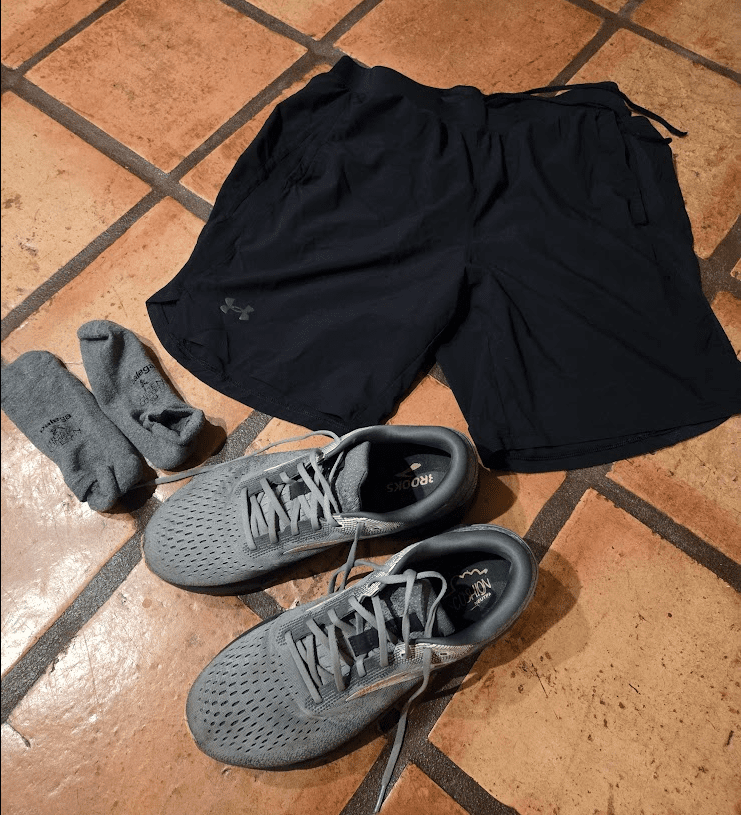
Running is one of the most powerful tools you have, burning calories, improving your cardio system, regulating appetite, and reinforcing your identity as somebody who it physically capable.
Start Lifting Weights
Strength training is an underutilized weight loss and maintenance tool.
Remember, building and maintaining your muscle takes energy (calories). The more muscle you can pack on, the higher your base metabolic rate (BMR) will be.
When you are in a coloric deficit, your body will lose muscle along with the fat. You need to give muscle a reason to stay, through resistance training. By incorporating weightlifting with your calorie restriction, you will burn a higher percent of fat instead of muscle. This result in a better body composition and physique when you hit your goal weight, along with a higher BMR (this means you can eat more food).
While you do not need to become a powerlifter, I would recommend it. Read Starting Strength and go down the rabbit hole. Do your squats, bench, and deadlifts. Get strong. Just watch your form and do not get injured. Start with a beginner-friendly program, and stick to it.
Starting out, prioritize learning the movements over moving a lot of weight. Buy some home gym equipment. Reinforce your new identity as an active person.
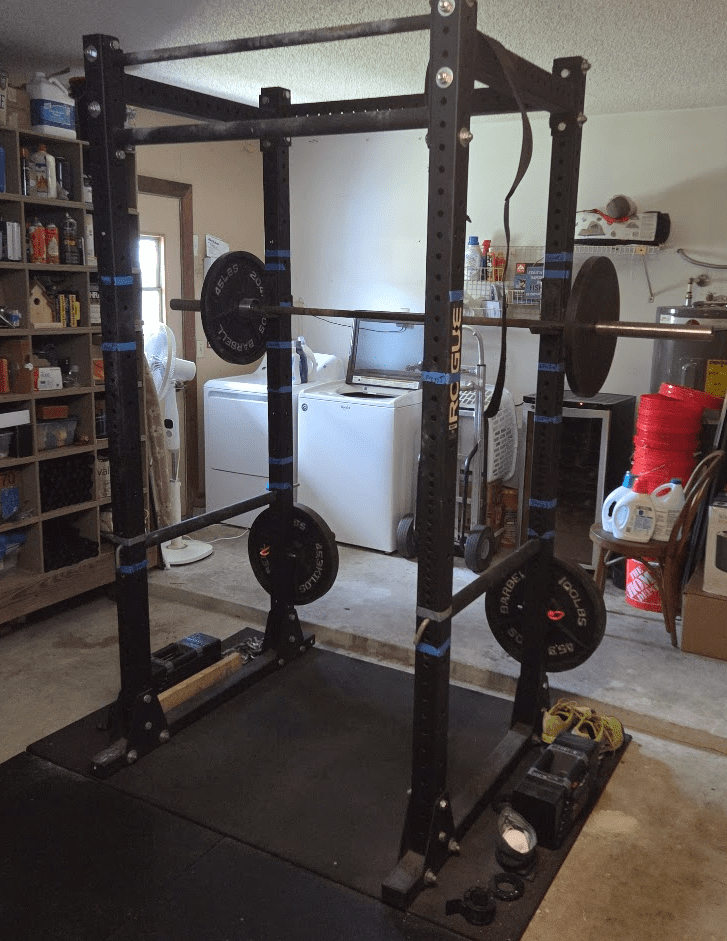
Building muscle is a lot harder than you would think, and takes a lot of effort. For now, just worry about maintaining the muscle you already have until you hit your goal weight.
Pursue Fitness Goals In Addition To Weight Goals
This is an essential mindset shift that becomes possible once you have been moving consistently.
Weight loss is an outcome, not an input. Fitness goals are something you pursue, achieve, and build on. Signing up for your first 5K will give your running a destination. Working on your first pull-up takes a huge amount of discipline and back strength. Hitting 225 on the squat for the first time is just plain cool. Training for a hiking trip at a National Park gives your walking a purpose.
When you shift your goal from “lose weight” to “complete a half marathon” or “deadlift my bodyweight”, your relationship to training changes entirely. You light up your dopamine circuits in a different way as you progress towards your goal. Instead of avoiding weight, you are pursuing capability. This changes how you approach training and is very reinforcing.
Start Active Hobbies
As you progress on your fitness journey, fitness will become a hobby. What about on the weekends? Fill your leisure time with even more active hobbies. Swim in Florida Springs. Go hunting. Hike at State Parks. Paddle a river. Fish a local lake. Go mountain biking. Add movement to your weekend in a fun way and burn even more calories – without feeling like you did a workout.
Active hobbies beat sitting, playing video games, drinking beer, and boredom eating. They help you to build community and will likely cause you to make friends who will support you in your journey.
Pulling the Framework Together
Here is the full system, in the sequence we discussed:
Week 1-2: Tracking and Weighing. Buy a scale and a food scale. Download a calorie tracking app. Weigh yourself every morning and chart it. Track everything you eat, even weighing it. Establish your baseline without modifying behaviors yet.
Week 3-4: Adjust your Diet. Begin meal prepping on Sunday. Purge your house of bad food. Start pre-logging your meals. Continue weighing daily. Set a modest calorie target of 300-500 below maintenance, and hit it most days.
Week 5-10: Walking. Walk every day. Start with 20-30 minutes and build to 45-60 minutes. Find a form that works, with your dog, spouse, calling loved ones, or alone with an earbud in. You must move to make this work, and walking is the best way to start. Continue weighing yourself daily, logging food, and meal-prepping. You will start to see results.
Week 10-12: Reduce alcohol. Move it to weekends only, then one day a week, then zero if you’re able. If you’ve been drinking, this is your sign to cut back. This will accelerate weight loss and improve your mood. Your energy, sleep, and scale will thank you.
Week 13-16: Begin Structured Exercise. Add 3 days a week of either a beginner running program like Couch to 5K or basic strength training. Keep it simple.
Month 5 and Beyond: Pursue a Fitness Goal. Retain your other habits. Keep tracking, weighing, meal prepping, walking, and training. Sign up for a fitness event and pick a metric to improve. Shift your identity from somebody trying to lose weight to an athlete who trains and eats well.
How This Actually Works in Practice
This weight-loss framework is built around five simple things, done consistently:
- Weighing every single morning and graphing the trend
- Restricting food, tracking your intake in a sustainable way
- Eliminating alcohol, or coming close to it
- Walking, as much as possible, and every day
- Working out regularly
This system is not complex, quick, or particularly easy or hard. Applied over months, focused on building habits rather than results, you can transform your life. Remember, a pound of fat is 3500 calories. If you maintain a deficit of 500 calories a day, you will lose a pound a week. This is guaranteed by thermodynamics.
The difficulty is not the system; it is the consistency. Consistency is what this habit formation guide is intended to produce. Use your willpower to form habits, one at a time. Let the habits force the results automatically.
After you lose the weight, throw out your old clothes that are too big and rebuild your capsule wardrobe.
What to Expect: A Realistic Timeline
If you build the habits in this guide, and are honest about your inputs and use a food scale, you might expect the following:
Weeks 1-2: No change. The scale didn’t move. Don’t react, trust the system and keep logging.
Weeks 3-6: The scale will start to move, slowly at first. If you are consistently at your calorie target, the trend line will shift downward. You may lose your first five pounds in this time. Nice work, keep at it.
Months 2-3: The habits start to feel automatic. Meal prep is less of a chore. You look forward to your daily walk. Clothes fit better.
Months 4-6: If you keep at it, there will be consistent, visible change. People at work might notice. You might need new clothes. Your sleep quality will be better. The early discomfort was worth it.
Month 6 and beyond: You hit your initial goals, it’s time to recast. Focus on maintenance. Keep the same habits. You are a transformed person now, someone with discipline who chases fitness goals.

The Simple Truth
Losing weight is a math problem regarding calories in and calories out, but you have to have control over the variables. Losing weight is hard, but it is not complicated. A caloric deficit over time results in weight loss. Movement accelerates it and preserves muscle. Whole foods make the deficit easier. Stopping alcohol makes everything faster. Daily weighting keeps you honest. Mealt prep removes decision fatigue.
Do all of these things, consistently, for 6 months. See if you don’t make significant progress towards your goals. What do you have to lose?
Become a capable person. Grow into your potential. You only have one life, it’s time to take control.
When I first lost weight from morbidly obese to in shape, I would have killed for a framework like this, and a friend to keep me accountable. I am leaving this post here for free, in hopes that it helps at least one person to be successful in their weight-loss journey. If you have any questions, please reach out via the contact form or leave a comment. I believe in you.
For more information on weight loss, review the guides from the Mayo Clinic and CDC:
https://www.mayoclinic.org/healthy-lifestyle/weight-loss/in-depth/weight-loss/art-20047752
https://www.cdc.gov/healthy-weight-growth/losing-weight/index.html
The information on this blog, Roam and Refine, is for educational and informational purposes only. It is not intended as medical advice. Always consult with a doctor or qualified health professional before beginning any new exercise or nutrition program. By using this site, you acknowledge that you are voluntarily participating in these activities and assume all risks of injury. Roam and Refine and its authors are not responsible for any liability, loss, or damage caused directly or indirectly from the use of this information.
Leave a Reply