
Visit one of Florida’s most historic springs, with a legendary canoe run, resident American eels, and a CCC mill house that has stood here since the 1930s. We have been several times, most recently in June 2026.
Quick Facts
- Location: 26701 E Highway 40 (SR 40), Silver Springs, FL 34488 (Ocala National Forest)
- Water Temp: 72°F year-round
- Entrance Fee: $14.50 per person plus tax; kids 5 and under free; $80 + tax annual pass (as of October 2026). The Florida State Parks pass is not accepted
- Hours: Opens 8 a.m.; gate closes 8 p.m. (March–October) or 6 p.m. (November–February)
- Reservations: None for day use; campsites through Recreation.gov
- Juniper Run: Open; 7 miles, 3–5 hours. Kayak rentals $65 single, $75 tandem or canoe
- Activities: Swimming, snorkeling, canoeing, kayaking, hiking, camping
- Wildlife: American eels, albino squirrels, turtles, otters, alligators, wading birds, black bears, deer
- Not Allowed in Day Use: Pets and alcohol
- Phone: 352-625-3147
- Best For: Kayakers, wildlife watchers, campers, hikers, spring hoppers
Know Before You Go
- It isn’t cheap. Day use is $14.50 per person plus tax, so two of us pay about $30. The pool is small for the price.
- Your state park pass won’t work. Juniper is a national forest site run by Naventure, not a Florida state park.
- Closing time changes with the season. The gate closes at 6 p.m. from November through February and 8 p.m. from March through October.
- No reservations, but it can fill. Entry is first-come, and on summer weekends the recreation area can close at capacity.
- Juniper Run is not for beginners. It’s 7 miles of tight, overgrown creek with big alligators and no easy way out. Rentals launch on a schedule, first-come.
- The Fern Hammock boardwalk is closed due to age and hurricane damage, so you can only walk the first stretch of the nature trail.
- No dogs in the day-use area, on the boardwalk, or on Juniper Run. Leashed dogs are fine in the campground.
- Swim over the eelgrass. It’s being restored, and standing on it kills it.
Is Juniper Springs Worth Visiting?
Yes, if you want eels, paddling, or history; no, if you only want the best swim for $14.50. If swimming is your primary goal, Silver Glen Springs and Alexander Springs give you a larger and more striking swim for the same price. The pool at Juniper is small, the water is less brilliant than Silver Glen and less clear than Alexander, and on a summer Saturday you might struggle for elbow room. People play loud music at most springs, but it seems particularly loud at Juniper.
Here’s where Juniper wins:
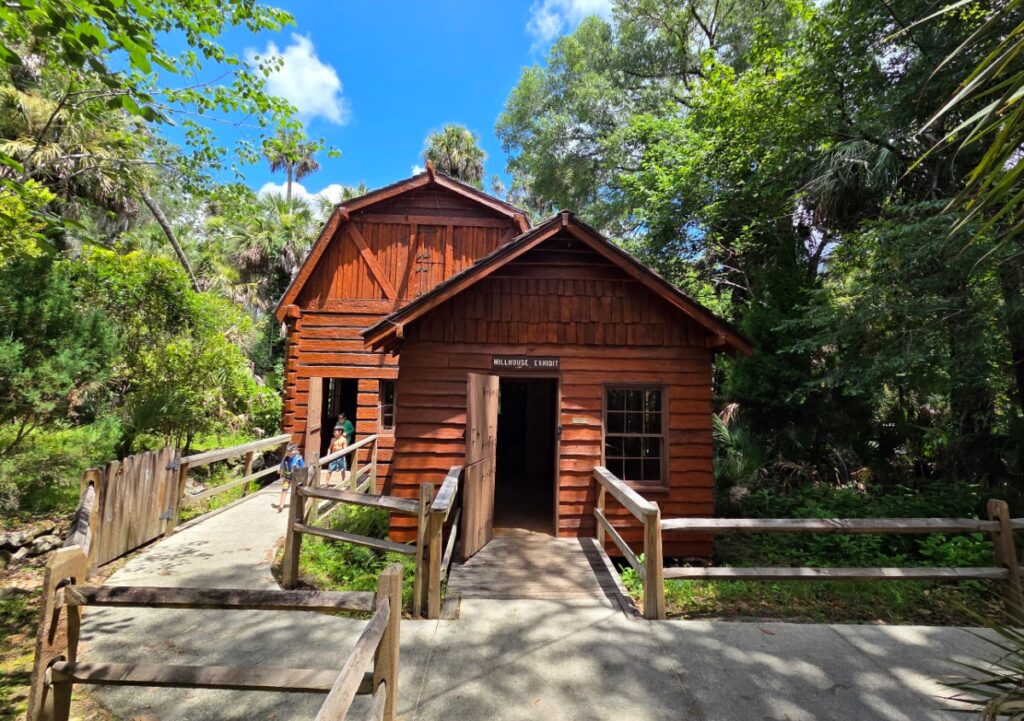
The history. The CCC mill house and water wheel give Juniper Springs a sense of place no other Ocala spring has.
The American eels. No other spring this close to Orlando puts you this close to American eels with such regularity.
The canoe run. Juniper Run is a 7-mile paddle through the Juniper Prairie Wilderness and one of the best-known canoe runs in the country.
In my opinion, Juniper works best as part of a multi-spring day. We normally visit in the afternoon after Salt Springs, Silver Glen, or Alexander on SR 19.
Who Should Visit Juniper Springs?
Experienced paddlers who want a bucket-list run, snorkelers who want to see eels, history fans, campers who want a shaded site within walking distance of the spring, and Springsmaxxers working through the Ocala National Forest.
Who Should Skip It?
Skip it if you only care about the swim (Silver Glen and Alexander are bigger and clearer for the same price), if you are a beginner paddler, if you are bringing a dog, or if you are on a tight budget. Also skip a summer Saturday at midday unless you like crowds.
Things to Do at Juniper Springs
Swimming and Snorkeling
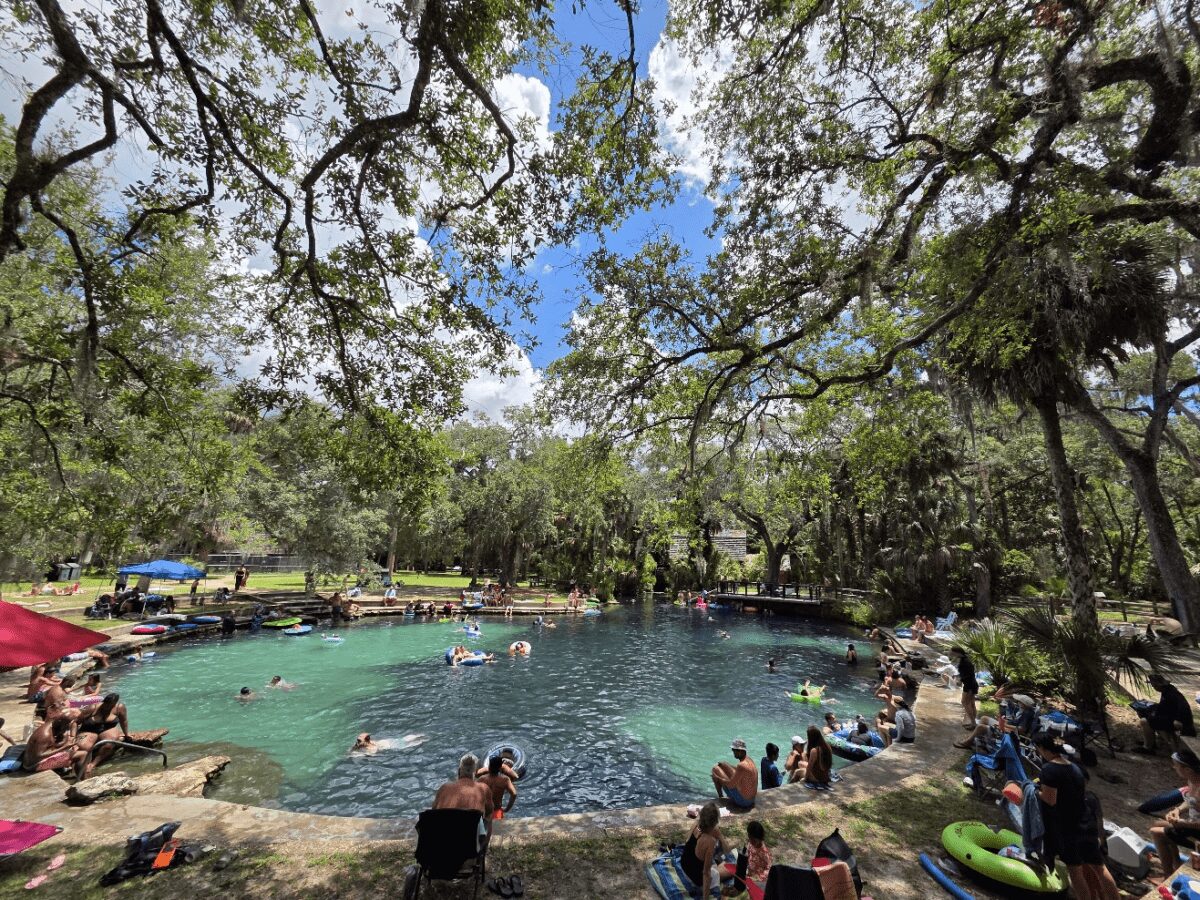
You can swim and snorkel at Juniper Springs year-round in a CCC-built spring pool. The concrete and rock basin is about 135 feet by 80 feet, shallow at one end and about 16 feet deep at the vents, with steps down into the water. Floats must be under 60 inches across.
The bottom is mostly eelgrass, which gives the water a darker, more vegetated look than the open limestone at Silver Glen or Salt Springs. Visibility is good, but there is more silt, especially when it’s crowded. This is more of a jungle pool than a crystalline blue basin. Snorkel the vents to spot cormorants, turtles, and eels.
Juniper Springs Water Temperature and Depth
The water at Juniper Springs stays 72°F year-round. That feels cool in July and warm on a winter morning. The pool reaches about 16 feet at the vents, and Juniper is a second-magnitude spring.
American Eels at Juniper Springs
American eels are the reason to bring a mask. They are catadromous: they live in freshwater, migrate to the Sargasso Sea to spawn, and the young return to rivers and springs like Juniper. They hide in the eelgrass near the vents, so watch the vents patiently. They range from a foot to several feet long and won’t bother you. On our June 2026 visit we saw three in about 35 minutes.
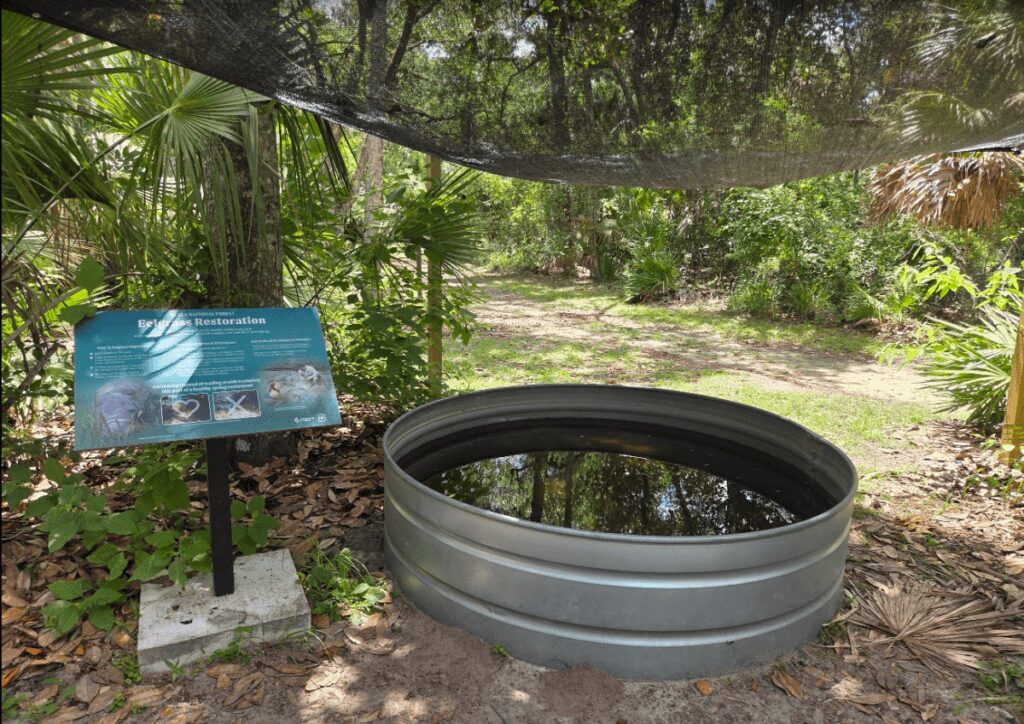
Naventure keeps eelgrass restoration tanks and displays on site. Swim over the grass instead of standing on it.
Kayaking Juniper Run
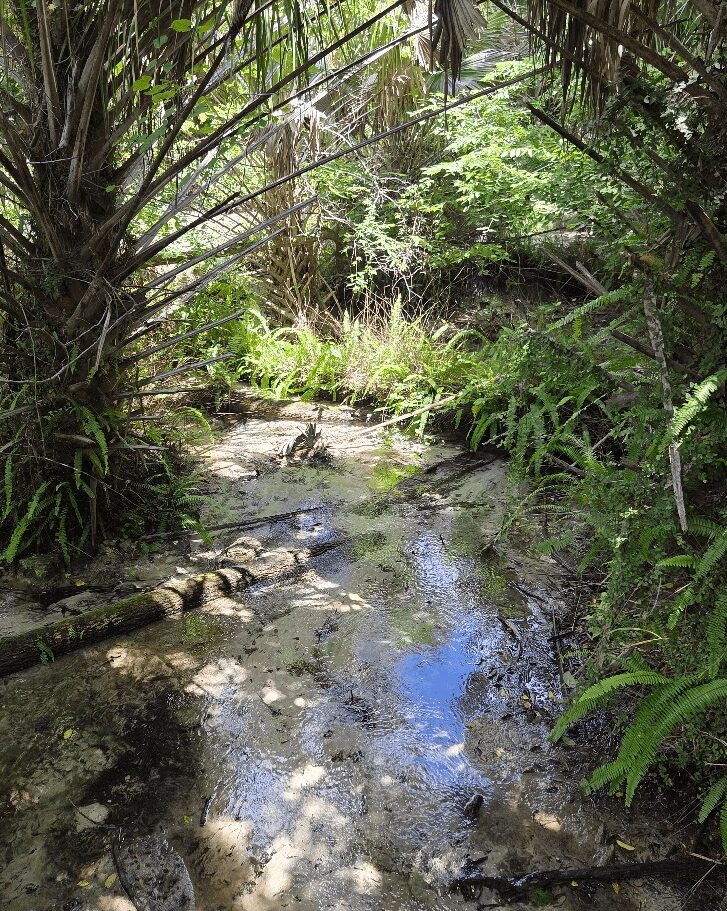
Juniper Run is the best part of Juniper Springs, in my opinion. It is a narrow, winding creek under a dense canopy that runs 7 miles, most of it through the Juniper Prairie Wilderness. Because it’s wilderness, fallen trees can only be cleared with hand tools, so expect to duck branches and squeeze through tight spots.
| Juniper Run | Details (as of October 2026) |
|---|---|
| Status | Open year-round (Recreation.gov). It has closed before: in May 2025 the Forest Service closed it after a 13- to 14-foot alligator made contact with boats during mating season |
| Length and time | 7 miles; most trips take 3–5 hours |
| Rentals | $65 single kayak; $75 tandem kayak or canoe. Shuttle: [VERIFY: Naventure’s Juniper Run page says it’s included with rentals; its Juniper Springs page lists an optional $15 per vessel] |
| Rental launch times | 8:30, 9:30, 10:30, and 11:30 a.m., and 12:30 p.m. Arrive 30 minutes early; 10 boats per launch; no reservations |
| Your own boat | No launch fee beyond admission. Launch windows 8–8:30, 9–9:30, 10–10:30, 11–11:30 a.m. and 12–12:30 p.m., up to 10 boats each. Shuttle $15 per person if space allows |
| Shuttle pickups | 1, 2, 3, 4, and 5 p.m., about four hours after launch |
| Take-out | Juniper Wayside on SR 19 [VERIFY: distance north of SR 40] |
| Who can go | Not recommended for beginners or kids under 12. Renters must be 18+; kids under 8 can’t ride the rental shuttle |
| Not allowed | Disposable containers, pets, alcohol, fishing, tubes and inflatables |
This run is not recommended for beginners. There are limited exit points and tight, overgrown channels. It’s also not for you if you are squeamish about alligators: you are likely to see many, some over 10 feet. For experienced paddlers, it’s a bucket-list run. If you want something easier, try the Emerald Cut to Wekiva Island.
Hiking and the Historic Mill House
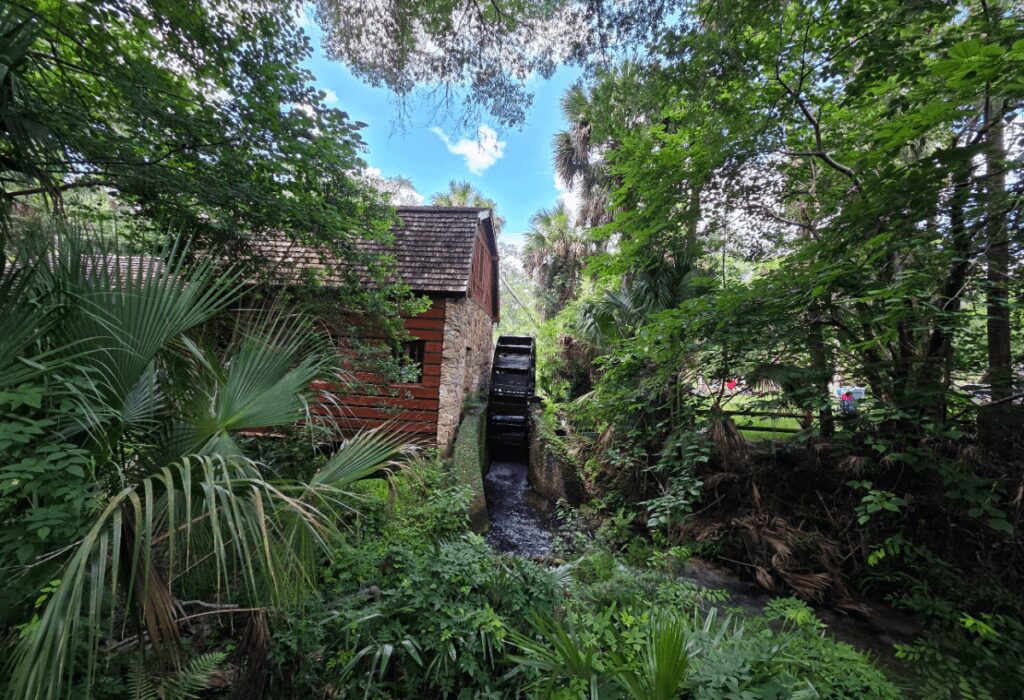
Two segments of the Florida Trail start here, along with the short nature trail toward Fern Hammock Springs (see Hiking Trails Near Juniper Springs). The CCC mill house has interpretive signs inside, and the water wheel sits out back.
Best Time to Visit
| Season | What to expect |
|---|---|
| Winter (Nov–Feb) | Our pick. Minimal crowds, comfortable weather, and active wildlife; the 72°F water feels warm against the cool air. The gate closes at 6 p.m. |
| Spring (Mar–May) | Lush forest and moderate crowds. April through June is alligator mating season, so check that Juniper Run is open before you go. |
| Summer (Jun–Aug) | Peak season. The pool can reach capacity on weekends; arrive at opening or after lunch as the early crowd leaves. |
| Fall (Sep–Oct) | Underrated. Crowds drop, the forest is great in October, and eel sightings are consistent year-round. |
Juniper Springs Entrance Fee, Hours & Reservations
The Juniper Springs entrance fee is $14.50 per person plus tax as of October 2026, kids 5 and under are free, and you don’t need a reservation for day use.
| Item | Details (as of October 2026) |
|---|---|
| Day use | $14.50 per person plus tax; kids 5 and under free |
| Annual day-use pass | $80 plus tax, sold on site; covers Juniper, Silver Glen, Alexander, and Salt Springs |
| Passes not accepted | Florida State Parks annual pass |
| Gate opens | 8 a.m. |
| Gate closes | 8 p.m. March–October; 6 p.m. November–February |
| Day-use reservations | None; first-come until the area reaches capacity |
| Juniper Run rentals | $65 single kayak; $75 tandem or canoe |
| Campsites | $38/night as of October 2026 |
| Phone | 352-625-3147 |
Ocala National Forest Springs: What Each One Costs
All four Naventure-run springs in the Ocala National Forest charge the same per-person fee, but only two need a summer vehicle reservation. Prices as of October 2026:
| Spring | Day-use fee | Summer vehicle reservation | Gate hours | Drive from Orlando |
|---|---|---|---|---|
| Silver Glen Springs | $14.50 per person + tax; 5 and under free | $20, Sat/Sun/holidays, Memorial Day–Labor Day | Opens 8 a.m.; closes based on daylight | 1 hr 17 min |
| Alexander Springs | $14.50 per person + tax; 5 and under free | $20, Sat/Sun/holidays, Memorial Day–Labor Day | Gate closes 8 p.m. March–October, 6 p.m. November–March | 1 hr 7 min |
| Juniper Springs | $14.50 per person + tax; 5 and under free | None; first-come | Gate closes 8 p.m. March–October, 6 p.m. November–February | 1 hr 16 min |
| Salt Springs | $14.50 per person + tax; 5 and under free | None; first-come | Gate closes 8 p.m. March–October, 6 p.m. November–February | 1 hr 30 min |
The $80 + tax annual day-use pass is sold at the gate and covers all four. Check Naventure’s Juniper Springs page before you go for any changes.
Camping at Juniper Springs
The campground has about 76 shaded sites in three loops (Fern, which is tent-only, Sand, and Trop), with no hookups. Each site allows 2 tents, 2 vehicles, and 5 people; check-in is 2 p.m. and check-out is 11 a.m. There are hot showers, flush toilets, and a dump station. Reserve on Recreation.gov or at 1-877-444-6777, and book early for winter and holiday weekends. Bears are active, so food must go in the bear-resistant lockers.
How to Get There
Address: 26701 E Highway 40 (SR 40), Silver Springs, FL 34488
Juniper Springs is on SR 40 in the Ocala National Forest, a few miles west of the SR 19 intersection.
| From | Drive time |
|---|---|
| Ocala | About 40 minutes |
| Daytona Beach | About 1 hour |
| Orlando | 1 hr 16 min |
| Gainesville | About 1 hr 15 min |
Cell service is limited throughout the Ocala National Forest, so download maps ahead of time.
What to Bring
You will want the usual basics for a springs day:
- Camera or phone
- Polarized sunglasses
- Dry bag for camera and phone for underwater pictures
- Hiking shoes/socks
- Mineral sunscreen
- Bug spray if it’s that time of the year
- Cash or card for entry
- Water
- Snacks or picnic lunch
- Mask and snorkel
- Towel
- Swimming clothes
- Change of clothes if you are not sticking around to dry off
- Layers in the winter
- Florida Springs Passport or journal
- Camping reservations if you’re staying the night
- Maps downloaded ahead of time if you plan to hike
Tips to Avoid Crowds at Juniper Springs
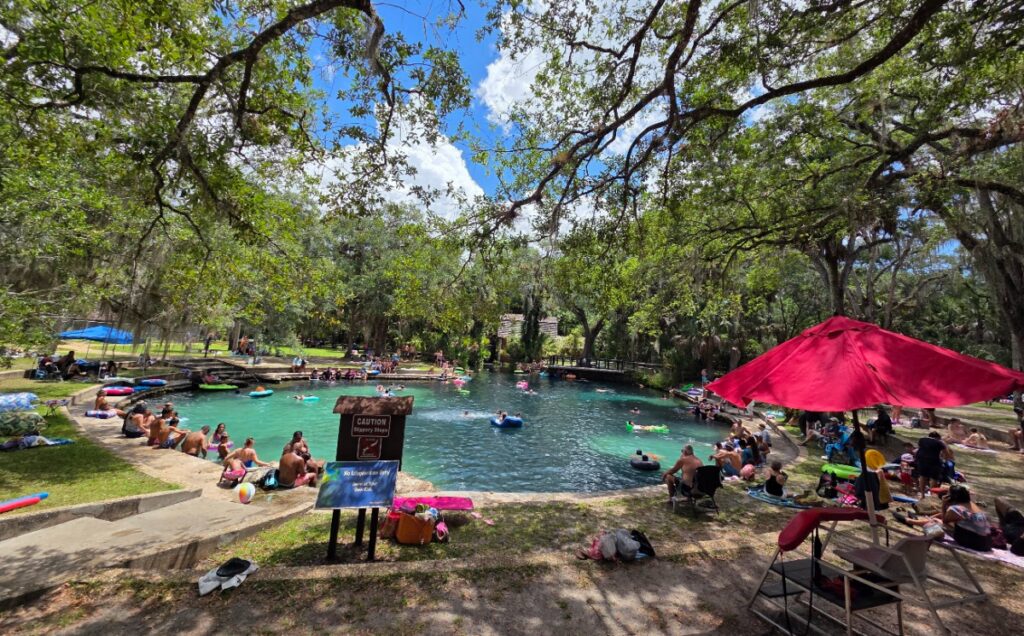
The spring pool’s compact size means that crowds feel concentrated quickly. To avoid crowds:
- Arrive at opening, or after 2 p.m. We usually come mid-afternoon after other springs, when the morning crowd is heading out. If you’d rather be first, do Juniper at opening and save Silver Glen or Alexander (with a reservation) for later.
- Lean on the canoe run. Rental launches are capped at 10 boats each, so the run stays quiet even when the pool is packed.
- Go on a weekday. A Tuesday or Wednesday is a different world than Saturday.
- Come in fall or winter. September through February is the most consistent low-crowd window.
- Have a backup. Salt Springs needs no reservation; Silver Glen and Alexander do on summer weekends and holidays.
Where to Stay Nearby
Juniper Springs Campground is the obvious choice if you want to stay on site. The sites are shaded and you can walk to the spring.
Lake in the Forest Black Bear Resort, about 15 minutes away off SR 40, is our choice for cabins in the Ocala National Forest, with RV sites that have more amenities than the campground.
Salt Springs Campground is a better base for a multi-spring trip: it’s the largest campground in the forest and the only one with full RV hookups. Ocala is the closest option for full hotel amenities.
Nearby Things to Do
- Juniper Prairie Wilderness: the 14,000-acre wilderness the canoe run passes through, also reachable on foot via the Florida Trail. Open prairie mixed with scrub oak and pine.
- Florida Black Bear Scenic Byway: a 60-mile drive through hardwood swamp and pine scrub.
- Silver Springs State Park: 22 miles west on SR 40, with glass-bottom boat tours over one of the largest springs in the world. You can’t swim, but you can paddle with wild monkeys.
Other Springs Near Juniper Springs
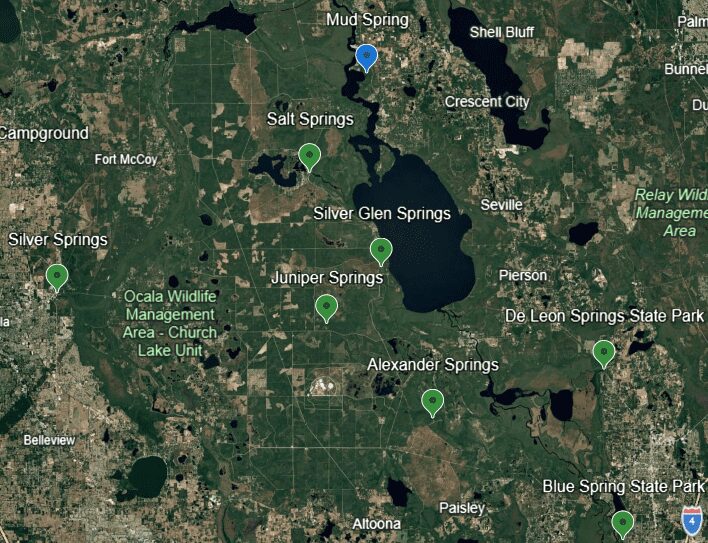
Juniper’s spot on SR 40 near the SR 19 intersection makes it a natural stop for Springsmaxxers. Most visitors can hit two springs comfortably in a day, or three with an early start.
| Spring | Distance from Juniper | Choose it over Juniper if… | Reservations |
|---|---|---|---|
| Silver Glen Springs | 11 miles northeast | You want the clearest swim in the forest and schools of striped bass | Vehicle reservation on summer weekends and holidays |
| Alexander Springs | 16 miles southeast | You have young kids who need a big, shallow, sandy swim area | Vehicle reservation on summer weekends and holidays |
| Salt Springs | 18 miles north | You want blue crabs in mineral-rich water | None for day use |
| Silver Springs State Park | 22 miles west | You want a glass-bottom boat tour or an easy paddle | Not required for general entry |
| De Leon Springs State Park | 24 miles | You want a big swim area and the historic pancake house | Not required for general entry |
| Blue Spring State Park | 41 miles | You want hundreds of manatees in winter, or a tube run in summer | Required for all day use since July 15, 2026 |
Hiking Trails Near Juniper Springs
| Trail | Length | What to expect |
|---|---|---|
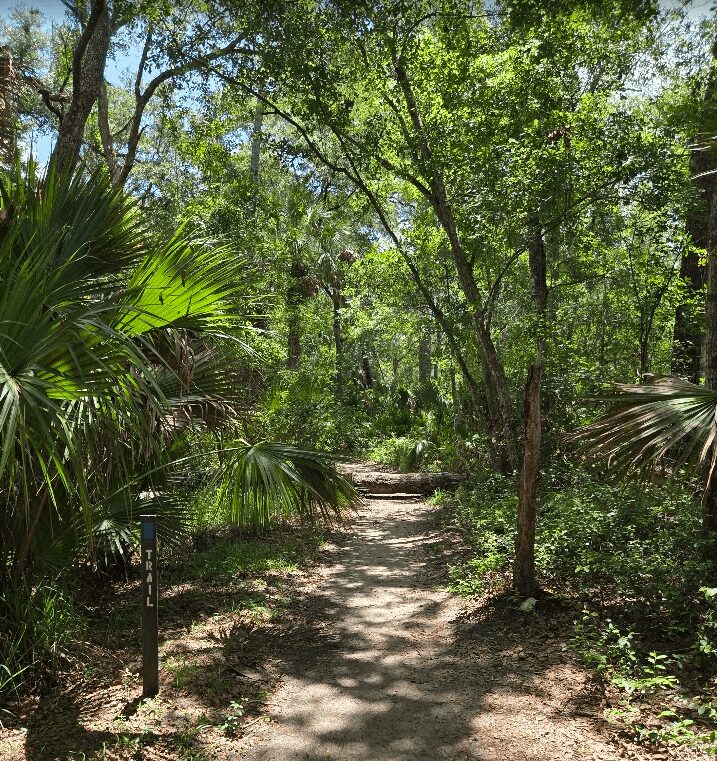
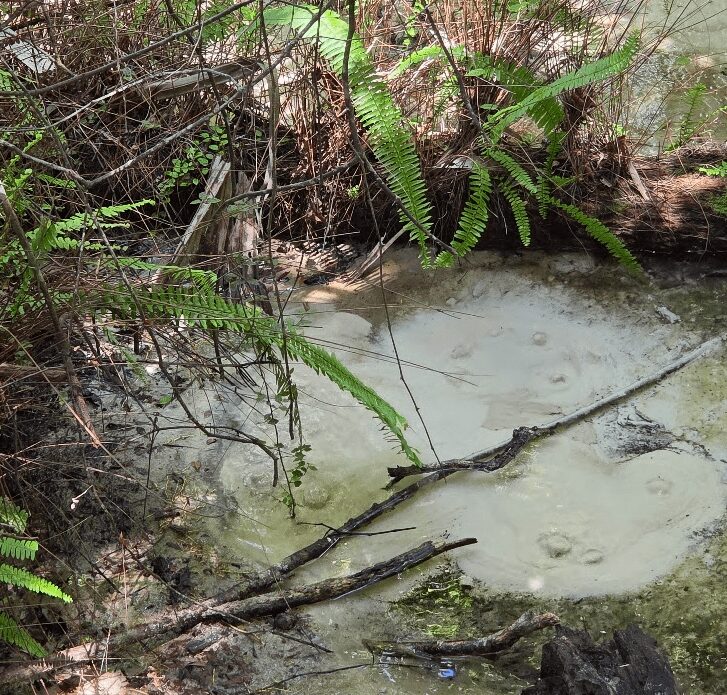
| Juniper Springs Nature Trail to Fern Hammock Springs | 0.8 miles | Boardwalk closed due to age and hurricane damage (Recreation.gov). You can still walk the first stretch to see spring boils and the start of Juniper Run |
| Florida Trail north: Juniper Prairie Wilderness to Hopkins Prairie | About 10 miles one way | Real backcountry. Hot, exposed prairie in summer; bring plenty of water and navigation |
| Florida Trail south: Juniper Springs to Farles Prairie | About 10 miles one way | Crosses SR 40 into the Big Scrub, then traces the east side of Farles Prairie. Backpackers use Juniper as a staging point |
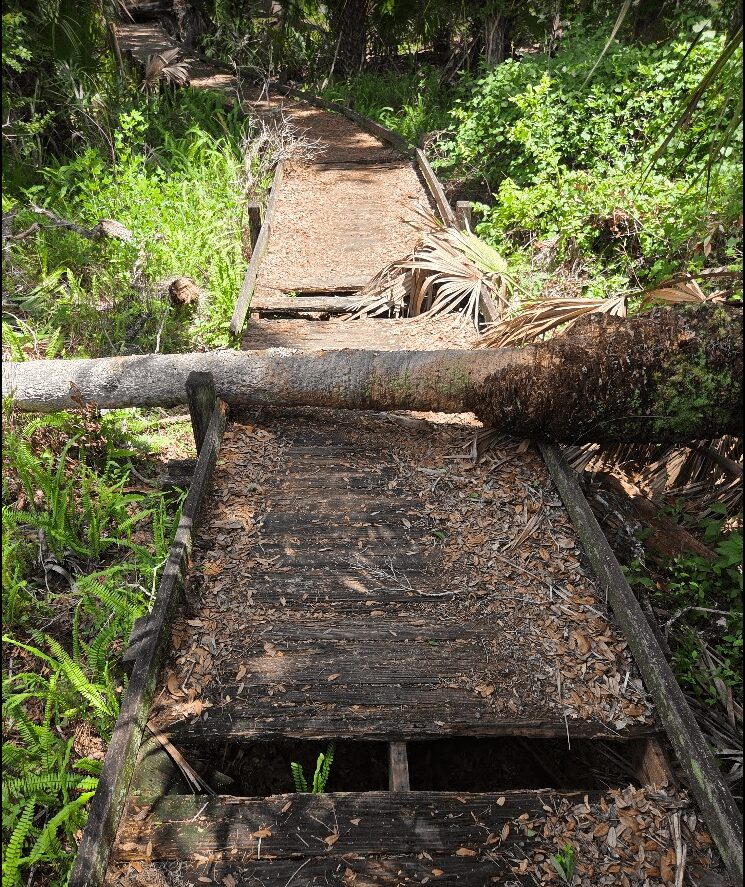
The boardwalk is broken in places from fallen trees, and it has been closed since at least May 2025. Don’t try to get around the barriers.
Restaurants Near Juniper Springs
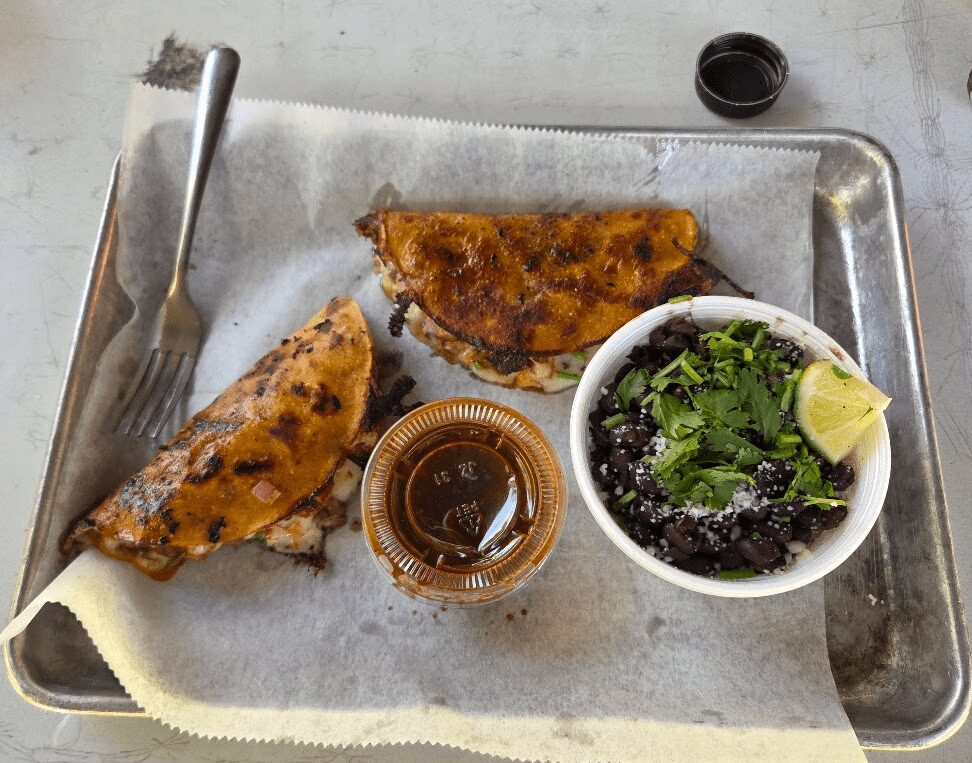
Dining is sparse out here. The on-site store has drinks and snacks, there’s a Domino’s about 4 miles away, and Lena’s Seafood, 8 miles east, is our local choice for casual seafood (confirm hours before you go). We recommend packing a picnic, or eating at Odd Todd’s outside of Salt Springs if you are spring-hopping. Ocala, Altoona, and Umatilla have more options.
Pros and Cons
This spring can be crowded, but the pros outweigh the cons for serious springs enjoyers.
| Pros | Cons |
|---|---|
| Best Florida spring for American eels, a rare sighting that is reliable here | Small pool for the price: $14.50 per person plus tax for a compact, sometimes crowded pool |
| Legendary paddle: 7 miles of wilderness on Juniper Run | Darker water with more silt than nearby springs |
| Historic character: the CCC mill house and water wheel | Fern Hammock boardwalk closed |
| Shaded campground a short walk from the spring | Run isn’t beginner-friendly, with big gators and few exits |
| Wildlife: eels, otters, albino squirrels, wading birds, black bears, alligators | No hookups and limited dining nearby |
| Spring-hopping location near Salt, Silver Glen, and Alexander | Florida State Parks pass not accepted |
| Florida Trail access in two directions | Past alligator closures on the run; check before you go |
Sample Itineraries
Two Springsmaxxing options stick out to me, one for snorkelers and one for paddlers:
For snorkelers, I would do a multi-spring circuit through the Ocala National Forest, starting with Salt, then Silver Glen, then Juniper:
- 7:30AM – Hike the Salt Springs Observation Loop
- 8:00AM – Arrive at Salt Springs around opening. Swim, snorkel, and watch the wildlife
- 10:00AM – Early lunch at Odd Todd’s
- 10:30AM – Drive the short distance to Silver Glen Springs (get a reservation ahead of time)
- 10:45AM – Hike the Silver Glen Springs to Lake George Trail, then the Spring Boils Trail
- 12:15PM – Swim, snorkel, and have a blast in the water
- 2:00PM – Drive to Juniper Springs (the early crowd has likely left by now and the park reopened)
- 2:15PM – Swim, snorkel, and have a good time at Juniper Springs. Check out the historic mill
- 4:00PM – Head home or back to your lodging
Theoretically, you could substitute the hiking for a 4th spring, Alexander, but that would compress your timelines and make for a more rushed experience.
For paddlers, I would start with Juniper Run, then head to Silver Glen Springs:
- 8:00AM: Launch on Juniper Run
- 1:00PM: Finish Juniper Run, take the shuttle back. Eat a picnic lunch
- 1:30PM: Swim and snorkel Juniper Springs
- 2:30PM: Head to Silver Glen Springs (have an advance reservation)
- 3:00PM: Hike the Silver Glen Springs to Lake George Trail, then the Spring Boils Trail
- 4:30PM: Swim and snorkel at Silver Glen Springs
- 5:45-6PM: Head home and eat a huge meal on the way
Is it worth more than a day? Only if you camp or plan to backpack the Florida Trail. A night at the campground lets you swim at opening and paddle the run without rushing.
Our Experience at Juniper Springs
My wife and I have been to Juniper Springs a few times, most recently in June of 2026. We visited Salt Springs in the morning, watched the crabs, had lunch at Odd Todd’s, then headed to Juniper Springs.
We parked and headed to the pool in the early afternoon, and it was crowded, but manageable. By the time we arrived, it looked like the majority of the people had exited the water and were relaxing on the bank. That is perfect, the spring would be more open for snorkeling without running into crowds.
We walked inside the old Mill House, where interpretive signs tell the story of the CCC building out the site in the 1930s. It seems that every park we visit, from Lincoln State Park in Indiana to the fire tower at the top of the Black Hills National Forest from Custer State Park in South Dakota, all the way down to Juniper Springs Recreation Area in Florida, the CCC had a hand in constructing the site. If it was an option, I would for sure buy and live in the Mill House at Juniper Springs.
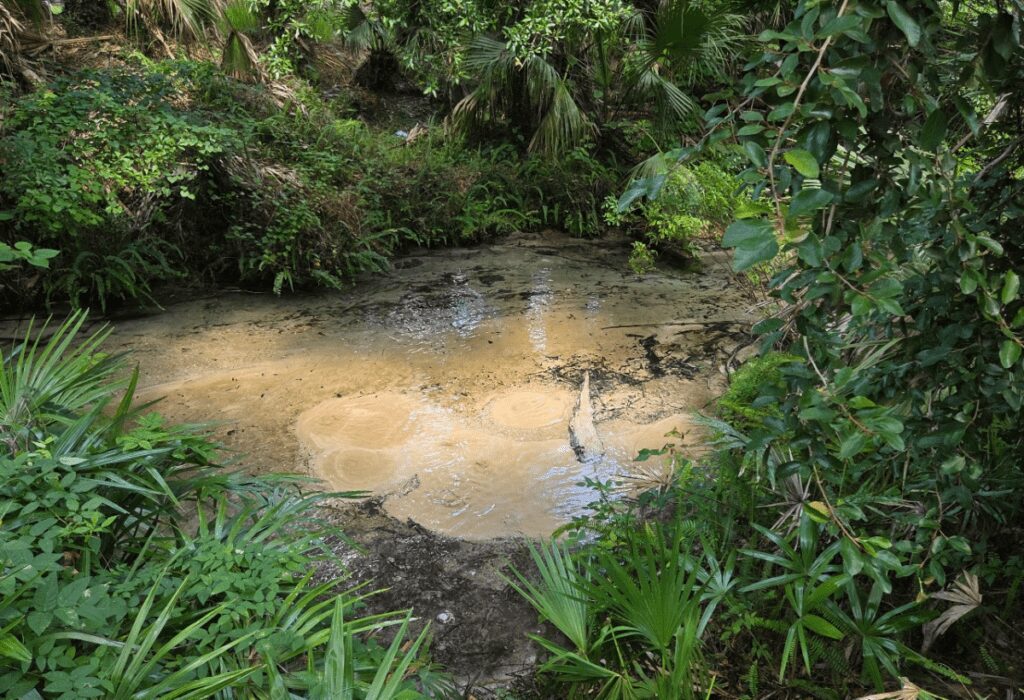
We stepped outside to the boardwalk, hoping that it had been repaired since our last visit. It wasn’t, so we were still not able to see Fern Hammock Springs. The beginning of Juniper Run was visible from the accessible portion, along with additional spring boils. This made it worth the effort.
Back at the spring pool, we saw a pair of butterflies hanging out by the steps.
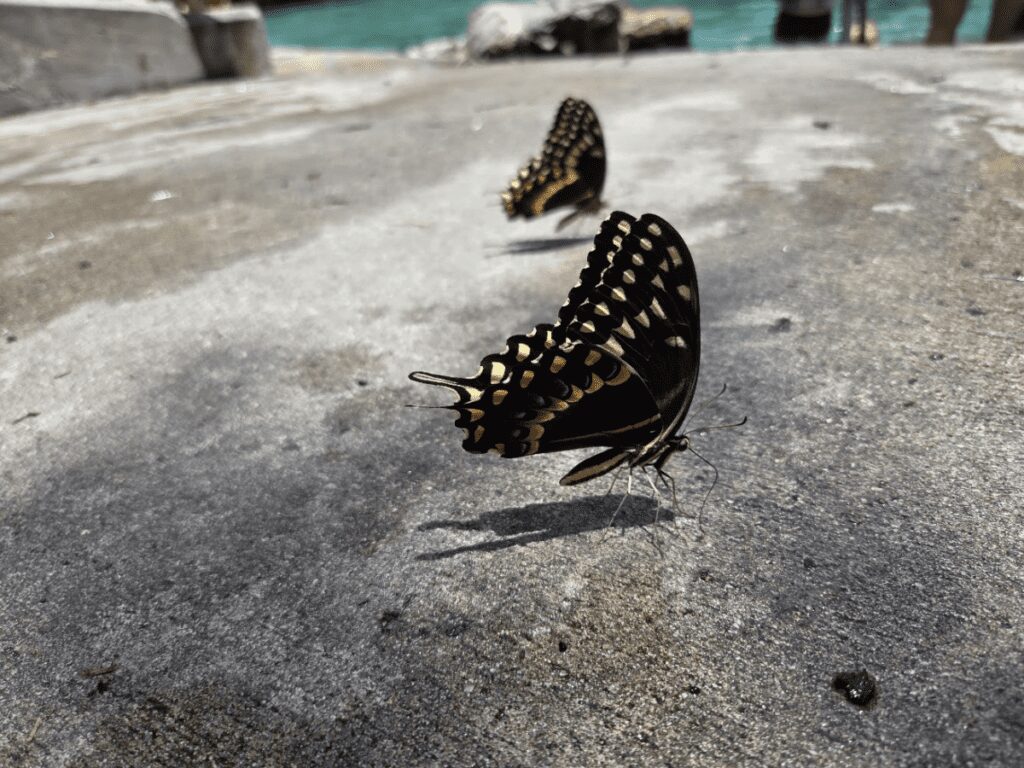
We jumped in the water and made a beeline to the vents. It took a couple minutes, but eventually a small, foot-long eel emerged before quickly disappearing into the grass. We snorkeled around and saw an anhinga catch and eat a fish. I saw a turtle too, but the water is a little bit less clear here and I lost him.
We swam between the two vents for around 10 minutes before seeing a second, larger eel emerge. He was probably two and a half feet long and was easier to spot in the grass. After he continued through the grass, we watched the other vent for a while but did not see any additional eels. On a past trip, we saw a huge 3-4 foot eel, but no massive ones this time. We saw three total in around 35 minutes of swimming at Juniper Springs.
While the snorkeling at Alexander and Silver Glen Springs is clearer and more impressive, the snorkeling at Juniper Springs has eels.
What We Would Do Differently
- Skip the Fern Hammock boardwalk until it’s rebuilt, and just walk the open first stretch.
- Paddle Juniper Run in the morning and swim after, instead of only swimming on a spring-hopping day.
- Bring a mask to Juniper even if you’ve snorkeled all day; the eels are the payoff.
Frequently Asked Questions
Is Juniper Springs worth visiting?
It depends on what you’re optimizing for. If swimming is the priority and you have no reservation constraints, Alexander Springs or Silver Glen Springs offer a more dramatic swim experience for a similar price. But if you want to see American eels (genuinely the best spring in the Ocala National Forest for this), paddle one of the finest canoe runs in the country, and experience one of Florida’s most historic recreation areas, then yes — absolutely. It also makes excellent sense as a second or third spring on a multi-spring day along the SR 19/40 corridor.
Juniper is best appreciated for its combination of wildlife, paddling, history, and camping. While some nearby springs offer larger swimming areas, few provide such a well-rounded experience.
Can you swim year-round?
Yes. The water holds at 72°F in every season, and the recreation area is open year-round. Winter visits are particularly atmospheric — the forest canopy, the cool air against the spring water, and the dramatic reduction in crowds make for a genuinely special experience.
What are Juniper Springs’ hours?
The gate closes at 8 p.m. from March through October and 6 p.m. from November through February. It opens at 8 a.m. Call 352-625-3147 to confirm.
How cold is Juniper Springs?
Juniper Springs stays around 72°F year-round, making it comfortable for swimming in every season.
Can you snorkel at Juniper Springs?
Yes. Snorkeling is one of the best activities at Juniper Springs. Visitors frequently observe American eels, turtles, fish, and aquatic birds near the spring vents.
Is Juniper Springs good for kids?
Yes, especially for families interested in wildlife and nature. However, the swimming area is smaller than Alexander Springs and can become crowded during summer weekends.
What is the best time of year to visit Juniper Springs?
Fall and winter generally offer the best combination of comfortable temperatures, active wildlife, and smaller crowds.
Are there manatees at Juniper Springs?
Rarely. Juniper Run gets too shallow for manatees to reach the swimming area. For manatees, go to Blue Spring State Park or Three Sisters Springs.
Are there alligators?
Yes. Alligators are present throughout the Ocala National Forest, including in and around Juniper Run. The swim pool is managed and considered safe for swimming. The canoe run passes through legitimate wild habitat — stay in your boat, maintain distance, and use the same common sense you’d apply anywhere in Florida’s waterways. Juniper Run has been temporarily closed in previous years during alligator mating season (typically spring); check current conditions before a paddle trip.
Can you bring your own kayak to Juniper Run?
Yes. Private vessels are allowed, though launch limits apply and paddlers must still arrange transportation from the take-out point.
How long does it take to paddle Juniper Run?
Three to five hours for the 7 miles, depending on water levels, obstacles, and how often you stop.
Do you need reservations for day use?
No reservations are required for day-use swimming. However, the recreation area can get busy on weekends and may close to new arrivals when at capacity. Arrive early on summer weekends. For the canoe run, private vessel launches are capped at 30 per day and must be in the water before 1 PM — arrive early or book a rental in advance through Adventure Ocala. Campsite reservations are made through Recreation.gov or 1-877-444-6777.
Can you camp at Juniper Springs?
Yes. Juniper Springs Campground has 79 campsites and is one of the most popular campgrounds in the Ocala National Forest.
Are there bathrooms available?
Yes. A bathhouse with restrooms and changing facilities is available at the concession area.
Are there showers at Juniper Springs?
Yes. Bathhouses with restrooms and shower facilities are available for campground guests and day visitors.
Can non-swimmers enjoy Juniper Springs?
Absolutely. Many visitors come primarily for wildlife viewing, hiking, camping, photography, the historic mill house, or paddling Juniper Run.
Does the Florida State Park Annual Pass work here?
No. Juniper Springs is managed by the USDA Forest Service (operated by Adventure Ocala under a concession permit) and is not part of the Florida state park system. The Florida State Parks Annual Pass is not accepted. The Annual Springs Pass ($80 + tax) available on-site covers multiple national forest springs in the area managed by Adventure Ocala and is worth considering for frequent visitors.
Can you bring dogs?
Dogs are generally not allowed in the day-use swimming area. Check with staff about trail and campground policies.
What are American eels and why are there eels at Juniper Springs?
American eels (Anguilla rostrata) are fascinating, catadromous fish — meaning they live in freshwater but spawn in the ocean. The eels at Juniper Springs migrate out to the Sargasso Sea to spawn, then return to Juniper Springs to live. They’re listed among the more uncommon residents of the recreation area, but snorkelers regularly encounter them weaving through the tapegrass in the spring pool. They’re typically dark, sinuous, and range from a foot to several feet long. They won’t bother you. Juniper is the most reliably mentioned spring in the Ocala National Forest for eel encounters — a genuine wildlife highlight that separates it from every other spring in the area.
Is Juniper Run suitable for beginners?
No. Juniper Run is generally considered an intermediate to advanced paddle. Tight turns, fallen trees, limited exit points, and frequent alligator sightings make it challenging for inexperienced paddlers. A more beginner and intermediate friendly route in central Florida is Emerald Cut to Wekiva Island.
What is the Juniper Run canoe take-out situation?
The take-out is along SR 19, approximately 9 miles north of SR 40. If you rent from the concession, the optional shuttle ($15/person) returns you to the spring. If you’re using a private vessel, you’ll need to arrange your own shuttle logistics — either spot a car at the take-out or arrange pickup. Plan this before you get on the water.
How deep Is Juniper Springs?
The swimming area at Juniper Springs reaches approximately 16 feet deep near the spring vents. The shallow end gradually transitions into deeper water near the main boils.
Most visitors spend their time snorkeling around the spring vents, where visibility is often best and wildlife activity is highest. The deeper sections are also where American eels are most frequently observed moving through the eelgrass.
Final Thoughts
Juniper Springs isn’t the most impressive spring pool in the Ocala National Forest, but it has the most character, history, and distinctive wildlife. Come here to paddle Juniper Run, snorkel for eels, camp under the oaks, or round out a big spring-hopping day.
And if you are working through the state’s springs one by one, The Floridian’s Guide to Springsmaxxing lays out where to go next.
Leave a Reply