The lawn isn’t doing anything for you. A native pollinator garden will.
If you’ve ever watched a stretch of St. Augustine grass bake in the July heat, sucking up irrigation water and fertilizer just to look mediocre, you’ve probably thought: there has to be a better way to use this space. There is. While a Florida native plant pollinator garden is lower maintenance, far more water-efficient, better for the local ecosystem, and more beautiful than a blank expanse of turf, it will also make your vegetable garden and fruit trees dramatically more productive.
This guide is written specifically for homeowners in Central Florida, where the sandy soils of Orange, Osceola, Lake, Seminole, Volusia, and neighboring counties create unique gardening challenges. If you’ve been curious but didn’t know where to start, here’s everything you need to know to get something in the ground this weekend.
Why Plant Native Plants in Florida?
Florida is home to more than 300 species of native wild bees, and the statewide ecosystem has evolved alongside these pollinators and native plants for thousands of years. The plants and the insects know each other. Native bees recognize native flowers with a kind of familiarity that non-native ornamentals simply can’t replicate, which means a native options like a firebush or a coneflower will draw four times the pollinator traffic that a comparable non-native would (Source).
This has real, practical implications for anyone growing food in Central Florida.
Major Florida crops that depend on bee pollination include cucumbers, watermelons, squash, strawberries, citrus, avocados, blueberries, and eggplant. At the backyard scale, the same is true: your tomatoes, peppers, and fruit trees produce better when healthy populations of native bees are working the neighborhood. Bees and other pollinators also help produce the seeds that help make up bird and mammal diets. The food web runs deep, and it can start in your yard.
Beyond food production, here’s what a native plant garden does for you:
Water savings. Central Florida’s sandy soils drain fast and our summers alternate between torrential rain and dry spells that would stress a conventional garden to death. Native plants evolved here. Once established after one full rainy season, most require little to no supplemental irrigation. Once established, you are pretty much free to turn off the sprinkler for that portion of your yard.
No fertilizer needed. Native plants are adapted to Florida’s notoriously infertile sandy soils. Fertilizing them encourages excessive leaf growth at the expense of flowers. Leave them alone and they thrive.
Reduced mowing area. Every 100 square feet of yard you convert to a native garden bed is 100 square feet you’re not mowing, edging, and blowing 45 times a year. If you’ve read the Cost to Mow, you know that this time adds up. For many Central Florida homeowners, that meaningfully shrinks the time and cost of weekly lawn maintenance, and a properly designed native bed eliminates lawn service visits to that area entirely.
Low to zero pesticide input. Native plants are adapted to local pests and rarely need intervention. Using systemic pesticides anywhere in the yard undermines the whole pollinator mission, so converting even a portion of your yard to native landscaping naturally moves you toward a healthier integrated pest management approach.
What Natives to Plant: A Central Florida Starter Lineup
A note before the plant list: not every native plant performs the same in every part of Florida. Black-eyed Susan (Rudbeckia hirta), for instance, doesn’t do well in the most southern area of the state. The plants below are specifically suited to Central Florida’s Zone 9b-10a conditions. When in doubt, call a local nursery (more on that below) and describe your sun exposure and drainage.
If you’re only planting a handful of species, prioritize ecological “keystone plants” like native oaks, firebush, milkweed, frogfruit, and passionflower. These plants support disproportionately large numbers of insects and wildlife compared to most ornamental species.
If you’re planting trees, native oaks are among the most valuable plants you can add to a Florida yard. They support hundreds of species of caterpillars and other insects, which in turn feed songbirds, reptiles, and other wildlife. Even if you only have room for one tree, a native oak provides far more ecological value than most ornamental alternatives. My second favorite native tree is the pawpaw, which makes an edible fruit.
The goal is to stagger bloom times across the year so there’s always something flowering and always food available for pollinators.
Groundcovers and Lawn Alternatives
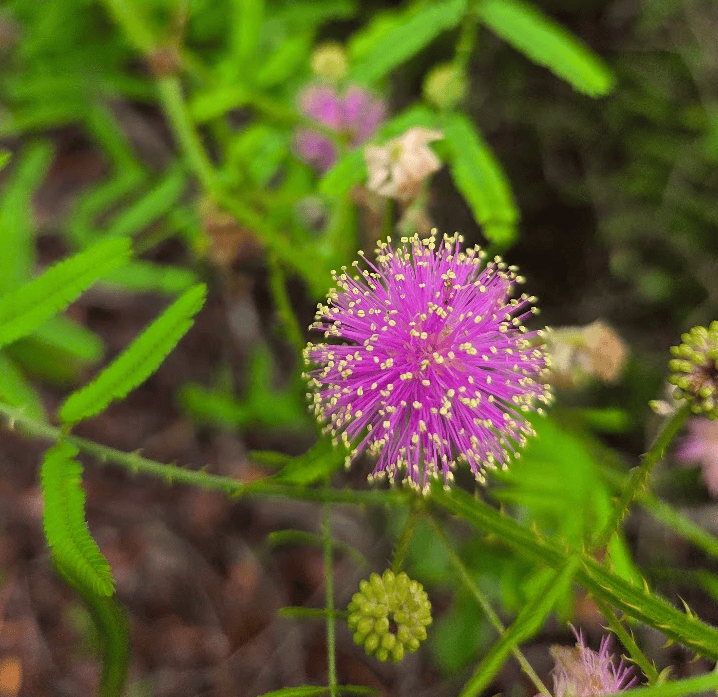
Sunshine Mimosa (Mimosa strigillosa) — We love this native groundcover. It grows 6–9 inches tall, spreads vigorously by runners to form a dense mat, and produces nonstop pink powder-puff flowers from spring through fall. It tolerates dry sandy soil and occasional foot traffic, which makes it useful as a mowable lawn alternative in low-traffic sections of your yard. Pollinators love it, and it serves as a host plant for the Little Sulphur butterfly. If you want to reclaim part of your turf without the maintenance overhead of a formal garden bed, sunshine mimosa is your starting point.
Beach Dune Sunflower (Helianthus debilis) — Bright yellow flowers that bloom virtually year-round, spreading in a low mat that fills hot, dry areas other plants avoid. Exceptional drought tolerance once established. A single plant can cover 4–6 feet in a season. Bees swarm it.
Frogfruit (Phyla nodiflora) — A flat, mat-forming groundcover that produces tiny white and pink flowers almost continuously. One of the best native lawn alternatives for areas with some moisture. It’s the host plant for white peacock, common buckeye, and Phaon crescent butterflies. It grows naturally in our yard and is relatively easy to source.
Wildflowers and Perennials
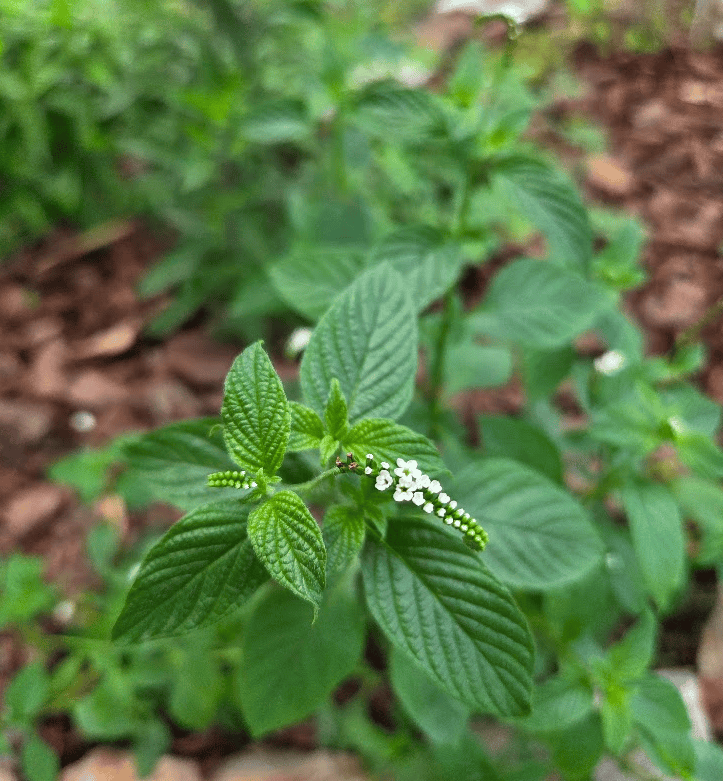
Purple Coneflower (Echinacea purpurea) — The classic pollinator magnet works well in Central Florida’s northern reaches and in raised or well-amended beds that drain quickly. The daisy-like purple blooms appear late spring through summer and attract native bees by the dozen. The seed heads feed goldfinches and other birds through fall and winter. Leave them standing, the dead heads are part of the value. Yellow and other varieties are available, but the purple is the most prized so make sure to snatch it up if you see it for sale.
Cutleaf Coneflower (Rudbeckia laciniata) — This is a tall, native Florida perennial that thrives in moist and sunny areas. It grows fast and big and can be a good centerpiece or backdrop. The numerous flowers are very attractive to pollinators, and the seeds feed local birds. Give it plenty of space, it grows fast and spreads.
Tickseed / Coreopsis (Coreopsis spp.) — Florida’s state wildflower and one of the most important native plants for local bees. It blooms spring through fall in bright yellow, thrives in full sun and sandy soil, and self-seeds readily — meaning once you establish it, it perpetuates itself. Several species are native to Central Florida; ask for Coreopsis leavenworthii or Coreopsis floridana at native nurseries for the best local-ecotype performance.
Scorpiontail (Heliotropium angiospermum) — This fast-growing native is part wildflower and part groundcover. It thrives in sandy and limestone soils and is drought tolerant. It blooms year-round, making it a great choice for feeding pollinators.
Blazing Star (Liatris spp.) — Tall spikes of brilliant purple-pink flowers in summer and early fall that draw monarch butterflies and native bees. It grows from a corm, tolerates drought, and prefers the dry, sandy soils that are often a challenge for conventional plants.
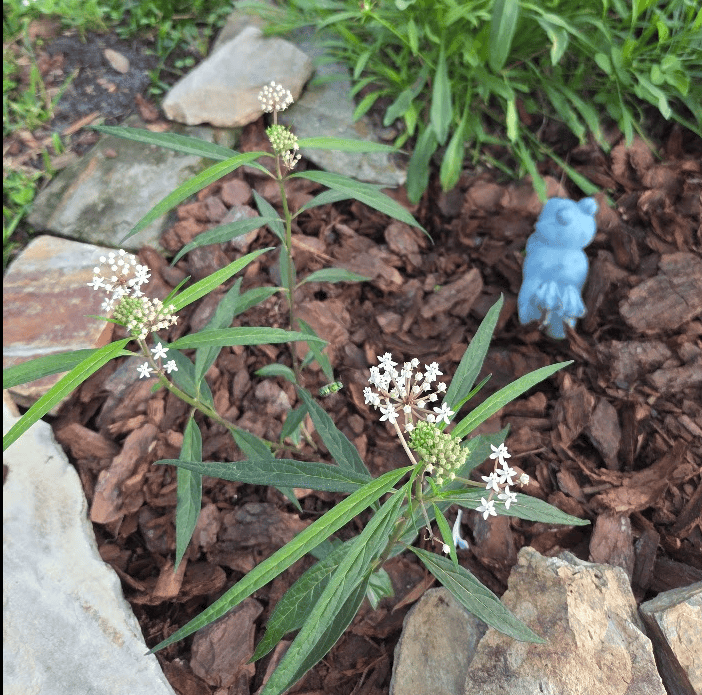
Swamp Milkweed (Asclepias incarnata) / Butterfly Weed (Asclepias tuberosa rolfsii) — Milkweed is non-negotiable if you want monarchs. Florida has more than 20 native milkweed species; for Central Florida, native ecotypes of butterfly weed and swamp milkweed are the right choices. Avoid the tropical milkweed (Asclepias curassavica) sold at big-box stores, which doesn’t die back seasonally, which disrupts monarch migration patterns and can harbor disease. Ask specifically for Florida-ecotype milkweed at a native nursery. Be careful when handling milkweed, they are fragile. My absolute favorite Central Florida native milkweed is the rare sandhill milkweed, but it is extraordinarily difficult to source and transplant.
Blue Porterweed (Stachytarpheta jamaicensis) — Low, sprawling native with striking blue-violet flower spikes that bloom heavily in summer when much of the garden is at its hottest. Hummingbirds and long-tongued bees are particularly drawn to it.
Shrubs

Firebush (Hamelia patens) — The single most recommended native shrub for Central Florida pollinator gardens. It produces tubular orange-red flowers continuously from spring through fall, attracting hummingbirds, butterflies, and native bees in numbers you have to see to believe. It grows vigorously — expect 5–8 feet in height — and takes full sun to part shade. The berries feed birds. It’s essentially a wildlife condo. In our yard, we see bees and hummingbirds eating from it, though we have to protect it from deer.
Beautyberry (Callicarpa americana) — Arching, understated shrub with clusters of brilliant purple berries in fall that serve as critical wildlife food. In summer it produces small pink flowers attractive to native bees. It does well in part shade, which makes it useful for filling spots under tree canopy where other plants struggle. Beautyberry has become one of our favorites because it grows naturally in our area and yard and provides spring through fall color. Berries can be used to make a jelly.
Walter’s Viburnum (Viburnum obovatum) — Dense native shrub that can be used as a hedge or screen. It produces white spring flowers beloved by native bees and then dark berries that fuel migrating birds. Extremely adaptable to a range of soil conditions.
Coontie (Zamia pumila) — This small, low-growing cycad is slow but worth every year of patience. It’s the host plant for the Atala butterfly, a rare species that was once thought extinct and is making a comeback almost entirely due to the popularity of coontie in Florida landscaping. Dark green and palm-like, it provides structure and texture in the garden while serving a genuinely conservation-significant function.
Vines
Coral Honeysuckle (Lonicera sempervirens) — Native twining vine with coral-red tubular flowers that hummingbirds are completely obsessed with. Blooms in spring and again in fall, attracts butterflies and sphinx moths, and is well-behaved (unlike invasive Japanese honeysuckle, which should never be planted). Train it on a fence or trellis near a window and it becomes a living bird and pollinator show.
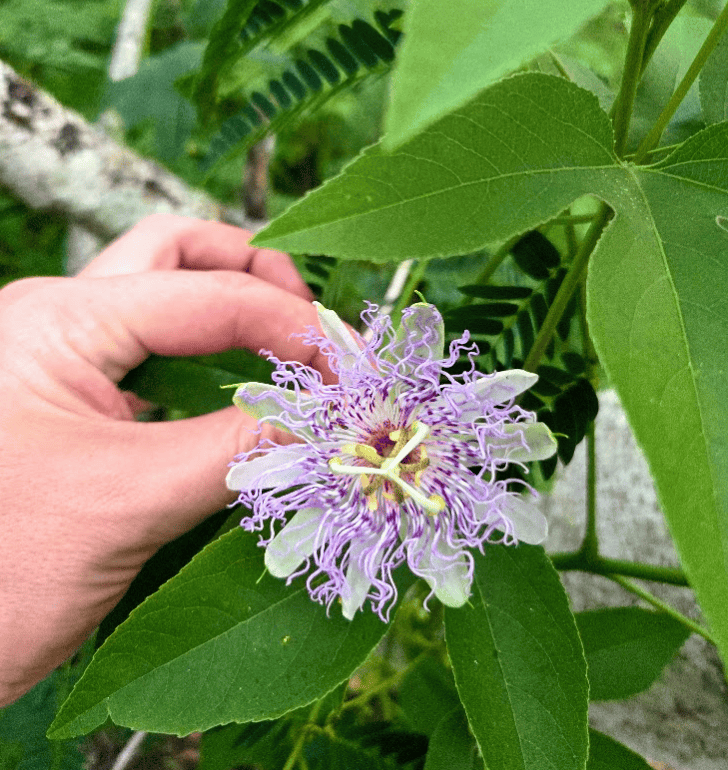
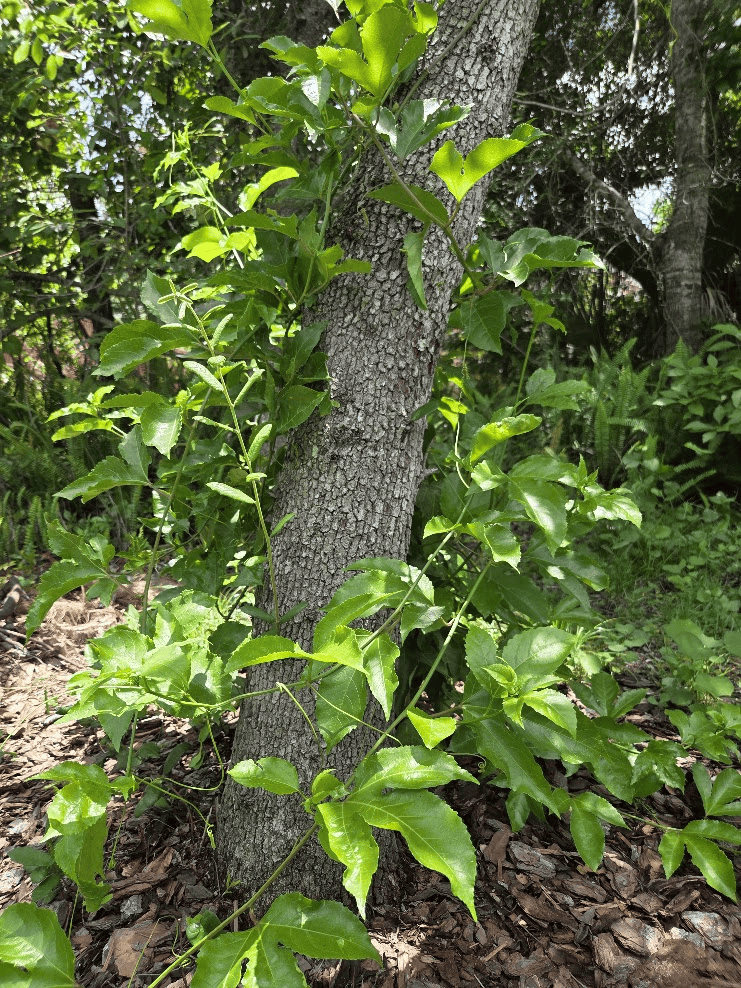
Passionflower (Passiflora incarnata or P. suberosa) — Dramatic, exotic-looking flowers that are also the sole larval host plant for the Gulf Fritillary butterfly, one of Central Florida’s most beautiful and common butterflies. Once you plant it, Gulf Fritillaries will find it and lay eggs. The caterpillars will eat it heavily, this is part of the desired outcome. The fruit is edible and makes a good ice cream topper.
Which Plants Are Best for Your Yard?

Which plants work best for your exact situation depend on your soil type, and can even differ from front to back yard. Here are my recommendations based on personal experience in my yard and what I’ve seen on hikes and trail runs:
Dry, Sandy Soils (sandhills)
- Sunshine mimosa
- Beach dune sunflower
- Blazing star
- Butterfly weed
- Sandhill milkweed (Asclepias humistrata)
- Gopher apple (Licania michauxii) as an excellent native groundcover
Average Residential Yards
- Firebush
- Coreopsis
- Purple coneflower
- Beautyberry
- Coral honeysuckle
- Coontie
- Blue porterweed
Moist Soils
- Frogfruit
- Swamp milkweed
- Scorpiontail (Heliotropium angiospermum)
- Walter’s viburnum
- Pickerelweed (if consistently wet)
- Blue flag iris
Designing for Year-Round Bloom
The goal is continuity: no month should be without flowers in your garden. A simple framework:
Early season (Feb–April): Coral honeysuckle, coontie, beautyberry, early coreopsis
Peak season (May–September): Firebush, blazing star, milkweed, sunshine mimosa, blue porterweed, beach sunflower
Fall (October–November): Beautyberry berries, coneflower seed heads, asters (Symphyotrichum spp.)
Winter (Dec–Jan): Coral honeysuckle reblooms; muhly grass (Muhlenbergia capillaris) provides stunning pink-cloud seed heads and structural interest
Larger patches are also easier for bees and butterflies to spot from a distance than isolated flowers scattered across the yard. Groups of five or seven are more natural than single examples.
What Does It Cost to Get Started?
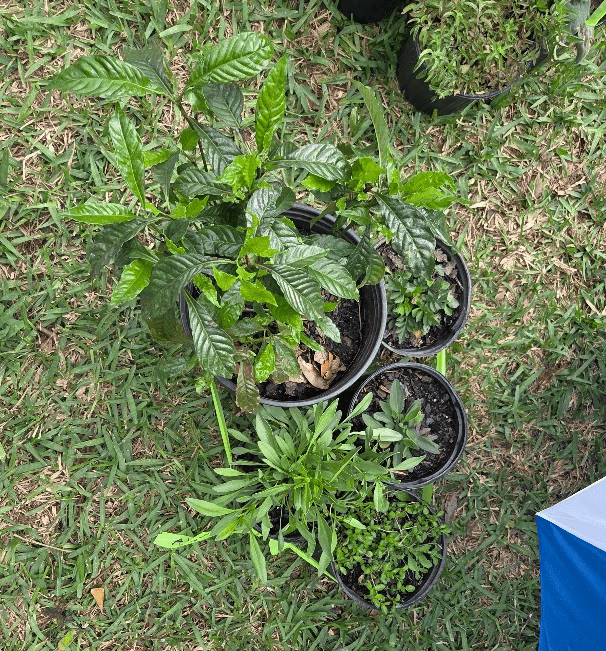
This is the question that makes people hesitate, and the answer is considerably more encouraging than people expect.
Small starter bed (100–150 sq ft): This is the right size for a first project — enough to make an impact without overwhelming a weekend. Plan on 8–15 plants, depending on species.
- Native plants at local specialty nurseries: $5–$15 per 1-gallon pot, occasionally more for larger shrubs
- Mulch (essential — 3″ layer to suppress weeds and retain moisture): $30–$60 for a pickup load or delivery of 2–3 cubic yards
- Cardboard for sheet mulching (suppress existing grass before planting): free from appliance or moving stores, or save boxes
- Soaker hose or adjustable drip emitters for the establishment period: $20–$40
- Flag stones: Free, check Facebook Marketplace. We have found flagstone a few times for free, we just had to act quickly when we saw the posting.
Realistic total for a 100–150 sq ft starter bed: $150–$350, including plants and mulch. If you use FNPS plant sales (see below) or propagate from divisions, you can cut this significantly.
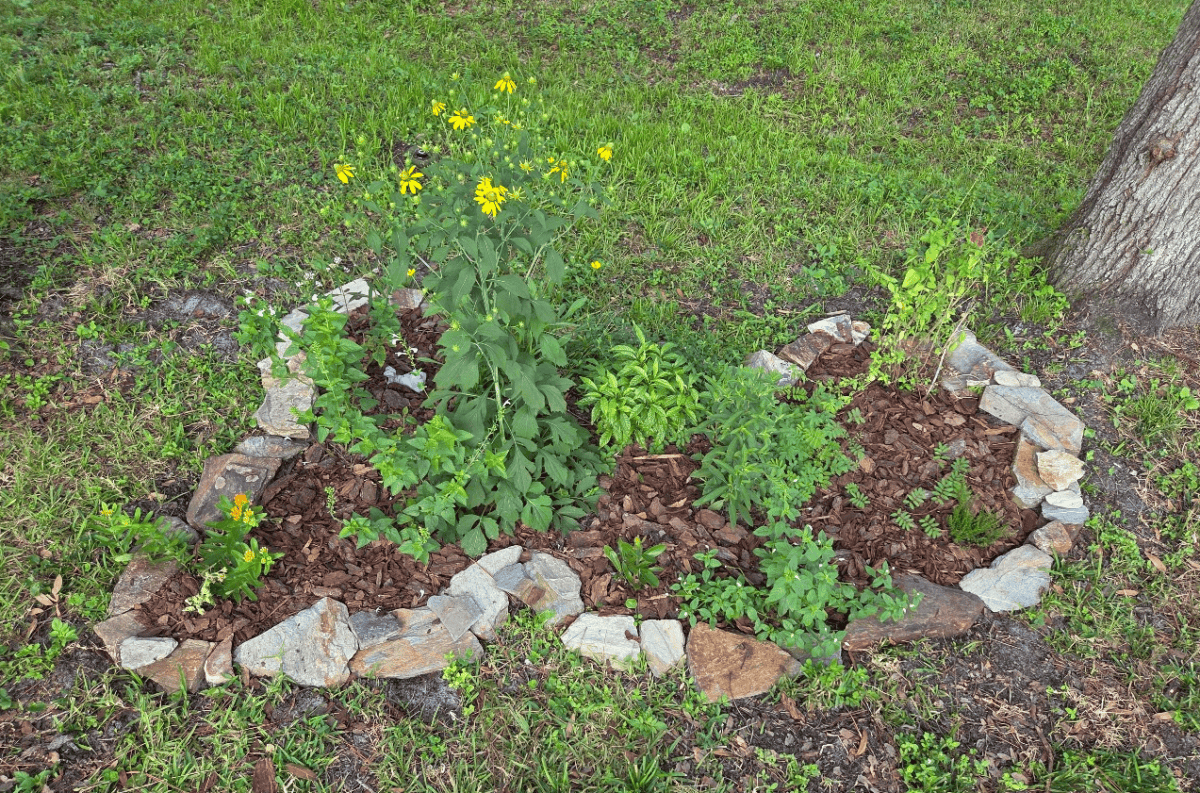
Medium-scale front yard conversion (400–600 sq ft): Expect $400–$900 in plants and mulch, plus a couple of weekends of work. Many homeowners spread this across two or three planting seasons to manage cost and time. We have gradually been converting a section of yard, a few plants, bags of mulch, and hours at a time.
Compare that to what you’re spending on irrigation, fertilizer, and lawn service for the same square footage over a few years, and the native garden wins easily after the second season.
The Establishment Period: What to Expect

“Low maintenance” means after establishment, not during it. The first summer is the critical period. Natives planted in fall (September–November is the ideal planting window in Central Florida) will have the dry season plus one rainy season to build root systems before facing their first summer stress.
During the first few months, water new plantings 2–3 times per week. By the second rainy season, most established natives will need zero supplemental water, since Florida’s summer afternoon storms handle it. One of the advantages of native plants is front-loading the care.
Where to Buy Native Plants in Central Florida
This is where a lot of well-intentioned gardeners go wrong. Big-box stores occasionally carry native-labeled plants, but they are frequently non-native cultivars, improperly labeled, or treated with systemic neonicotinoid insecticides that harm the very pollinators you’re trying to attract. For a real native pollinator garden, buy from specialists.
Green Isle Gardens in Groveland is the gold standard for Central Florida native plants. They grow over 150 native species on 18 pesticide-free acres, with an emphasis on sandhill and scrub habitat restoration plants — the exact conditions most Central Florida yards replicate. Open Monday–Friday 8am–4pm; call ahead at 407-948-8980 to check availability before making the drive. It’s worth it: reviewers consistently report spending less than they expected while getting plants they can’t find anywhere else.
The Florida Native Plant Society (FNPS) hosts regular plant sales through its local chapters at prices that undercut retail nurseries significantly. The Cuplet Fern chapter serves the Seminole/Volusia County area and hosts up to eight sales per year. The Pawpaw chapter covers the greater Orlando area. Check fnps.org/chapters to find your closest chapter and upcoming sale dates — these are genuinely the best deals in the region. They show up to the Lou Garden Plant Sale and initially sparked our interest in native plant gardening.
Lukas Nursery in Oviedo has a good variety of native plants. They also have a butterfly garden and significant fruit tree and rose options.
Florida Association of Native Nurseries (FANN) maintains a searchable directory at PlantRealFlorida.org where you can search by species and find which local nurseries currently carry it.
What about Home Depot and Lowe’s? Big box stores are useful for supplemental mulch or basic supplies. For plants, always verify the full Latin species name and check that the plant is a true native ecotype rather than a sterile cultivar. Cultivars (like many “firebush” selections bred for compact growth) can have reduced value for pollinators compared to straight species.
Do This Weekend: A Practical First Step
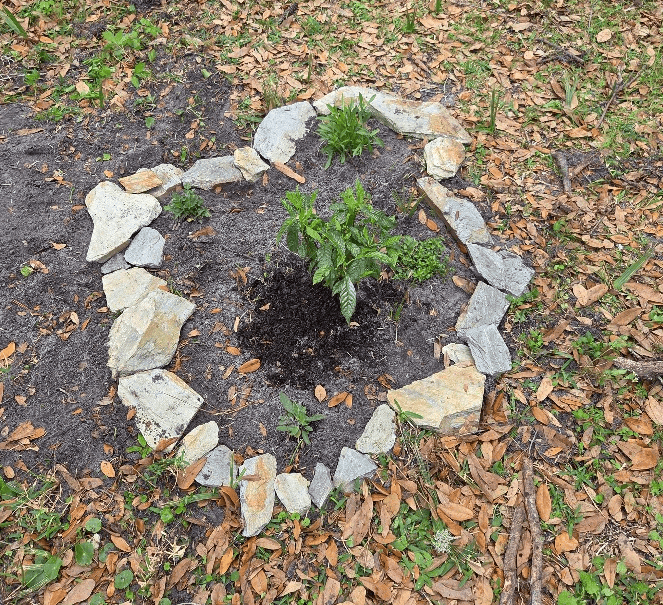
You don’t need to redesign your whole yard. You need to start somewhere that’s manageable and visible enough to motivate you to keep going. Here’s what to do:
Saturday morning: Pick a sunny bed, strip of lawn edge, or fence line that gets at least 5–6 hours of direct sun. Lay down overlapping sheets of cardboard to smother the existing grass. Weight the edges with mulch. This is your sheet mulch base.
Saturday afternoon: Drive to Green Isle Gardens or Lukas Nursery. Buy 4–6 plants: one firebush, some sunshine mimosa, two coreopsis, and one passionflower vine if you have a fence, tree, or trellis. Spend $60–$100.
Sunday: Cut holes through the cardboard, plant into native soil (no amendment required for most species in sandy Central Florida soil), pile 3 inches of mulch around the plants but not against the stems, and water everything in well. Set a reminder to water three times a week for the next six weeks.
That’s it. By next spring you’ll have something blooming. By next summer the Gulf Fritillary caterpillars will have found your passionflower and you’ll understand why people get hooked on this.
A few times a year, expand your garden by a couple feet and add a few more varieties of native plants. The pollinators will thank you.
A Note on Maintenance (or Lack Thereof)
Once established, the main tasks are:
Annual cutback: Perennials like coneflower and blazing star can be cut back in late winter (January–February). Firebush can be pruned hard if it outgrows its space (a frost will knock it back to the roots). Sunshine mimosa can be mowed or string-trimmed occasionally if it spreads beyond where you want it.
Leave the dead stuff standing until spring. The seed heads feed birds in winter. Dead plant stems harbor overwintering native bee larvae. Ground-level leaf litter provides shelter for beneficial insects. This isn’t laziness, it’s part of how a native garden works. The messy late-winter look is temporary and functional.
No fertilizer. Native plants fertilized in Florida’s sandy soils tend to grow too fast and flower less. Let them find their own equilibrium.
Avoid systemic pesticides. If a pest problem arises elsewhere in the yard, be conscious of systemic products that move through plant tissue, they reach the nectar and pollen and harm bees. Spot-treat with targeted approaches instead.
Best Time to Plant a Florida Native Pollinator Garden
Fall (September through November) is the ideal planting season in Central Florida. Cooler temperatures reduce transplant stress while still giving roots time to establish before summer heat arrives.
Spring is the second-best option but expect to water more frequently until the rainy season begins. Avoid planting during prolonged summer droughts unless you’re prepared to irrigate regularly during establishment.
Best Florida Native Plants by Goal
You might want a generic Florida native plant garden, but you may have a specific reason for planting. Many people love to see hummingbirds in their yard, while others want to attract bees. Here’s what I would do for each case:
For butterflies
- Milkweed
- Passionflower
- Frogfruit
- Firebush
For hummingbirds
- Firebush
- Coral honeysuckle
- Blue porterweed
For bees
- Coreopsis
- Blazing star
- Scorpiontail
- Sunshine mimosa
For birds
- Beautyberry
- Walter’s viburnum
- Firebush
One More Reason to Do This
Florida is growing fast. Its natural lands, like the flatwoods, scrub, and wetlands, are disappearing at a pace that puts real pressure on wildlife populations that evolved to depend on them. Every yard converted from monoculture turf to even a partial native landscape is a small piece of habitat restitution. It’s also, practically, a yard that requires less water, less fertilizer, less mowing, and less money to maintain over time.
The bees and butterflies don’t know you’re doing them a favor. But you’ll know, especially the first time a monarch lands on your milkweed, or a hummingbird parks itself in the firebush outside your office window, or you look at your tomato plants and realize the fruit set this year is noticeably better than last.
Start with one bed. Start this weekend.
Frequently Asked Questions
Do native Florida plants attract mosquitoes?
No. Flowering native plants primarily attract pollinators rather than mosquitoes. In fact, a diverse garden often supports dragonflies, birds, and other predators that help keep mosquito populations in check.
Can I mix native plants with ornamental plants?
Yes. Many homeowners gradually convert their landscape over time. Prioritize native species where possible and avoid invasive ornamentals or plants treated with systemic insecticides.
Are Florida native plants deer resistant?
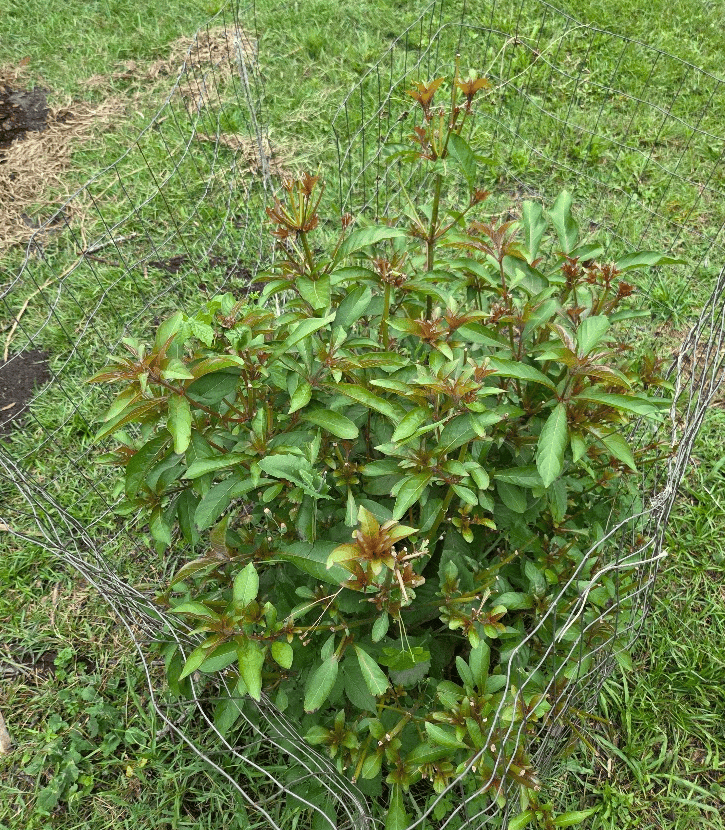
Many native plants tolerate browsing better than ornamental species, but few are completely deer-proof. Firebush, for example, is a favorite in our yard—but it’s also a favorite of the local deer. If deer pressure is heavy, consider temporary fencing while young plants become established.
Do native plant gardens help the springs?
Yes. Starting a native plant garden is a good choice to lower water use and reduce your use (and therefor runoff) of fertilizers and pesticides.
Interested in protecting Florida’s springs? See our Springsmaxxing guide to learn how native landscaping, reduced fertilizer use, and responsible recreation help keep Florida’s springs healthy.
Should I remove all my grass?
No. Starting by replacing even a portion of your lawn provides meaningful habitat while reducing mowing and irrigation. Many homeowners expand their native beds a little each year.
How long before pollinators find my garden?
Usually much sooner than people expect. Bees often begin visiting within days of flowers blooming, while butterflies and hummingbirds typically discover new gardens during their first flowering season.
Can native plants survive freezes?
Most native Central Florida species tolerate the occasional winter freeze. Some die back temporarily before returning in spring, while others remain evergreen. Our firebush got knocked back hard last year but came back stronger than ever.
Do native gardens increase home value?
Professionally designed native landscapes can improve curb appeal, reduce maintenance costs, and appeal to buyers interested in sustainable landscaping.
Further reading: The Florida Native Plant Society (fnps.org), UF/IFAS Gardening Solutions (gardeningsolutions.ifas.ufl.edu), the Xerces Society’s Florida native plant list (xerces.org), and the Florida Wildflower Foundation (flawildflowers.org) all offer free, research-backed resources for Central Florida native plant gardeners.
Leave a Reply