

Most men are spending money in exactly the wrong places. Here’s how to fix that.
I’ve bought cheap suits that embarrassed me within a year and expensive polos that performed identically to the $15 version. The pattern took a while to see clearly: some items in a man’s wardrobe are worth real money, and some aren’t.
It’s not about brand prestige or fabric snobbery. It’s about cost-per-wear math, cascade value, and an honest read of where quality actually changes the garment versus where you’re paying for a logo.
This guide goes item by item and gives you a clear verdict. It aligns with the wardrobe framework in How to Build a Men’s Capsule Wardrobe That Works Across Your Whole Life and the care guidance in How to Care for Your Clothes So They Last. The math only works if you’re taking care of what you buy.
Quick Verdict
Here’s how I would plan my wardrobe:
| Spend | Spend Moderately | Save |
| Navy blazer | OCBDs | T-shirts |
| Leather shoes | Chinos | Fishing shirts |
| Suits | Merino | Casual socks |
| Boots | Dark jeans | Pocket squares |
| Rain shell | Running shoes | Underwear |
The Framework: Cost-Per-Wear
Cost ÷ (Wears per year × Years of useful life) = Cost per wear
A $400 navy blazer worn 80 times a year for 8 years = $0.63 per wear. An $80 navy blazer worn 30 times a year for 2 years = $1.33 per wear, and it looked worse every day of it.
The cheap blazer costs twice as much per use and doesn’t cascade into anything when it wears out. The quality blazer moves from client meetings to WFH to church to casual over fifteen-plus years of useful life.
$150 running shoes worn 400 times is $0.38 cents per wear, much cheaper than $60 fashion sneakers worn 60 times at $1 per wear.
Three variables decide where the math goes in your favor:
Frequency of use. Something worn 100 times a year amortizes quickly even at a high purchase price. Something worn twice a year doesn’t.
Lifespan differential. This is where quality does most of its work. A quality piece often lasts 3–5× longer than a budget piece. When you divide a higher purchase price by a much longer lifespan, the math frequently closes or inverts.
Cascade value. Items that step down through multiple life stages multiply their effective wears without any additional spend. High cascade value is one of thestrongest arguments for buying quality, the piece keeps working even after it’s left the top tier.
A blazer may start as interview clothing, become office clothing, then church clothing, then date-night clothing. Cheap clothing rarely survives long enough to make that journey.
What matters more than price are fit, fabric, construction, care, and frequency of wear. A perfectly tailored $300 suit beats a poorly fitting $1,500 suit.
Spend
The Navy Blazer
The single highest-leverage clothing purchase a professional man can make. It covers the office, client dinners, date nights, church, job interviews, weddings, and video calls. As your career advances, it cascades from primary formal piece to WFH anchor to casual social layer — a journey of fifteen-plus years if the quality is there to support it.
A cheap blazer doesn’t survive this. The interlining bubbles, the lining frays, the shoulder collapses. Within two years it gets thrown out. A quality half-canvassed blazer holds its shape, responds to steaming, and can be maintained for a decade or more.
Spend: $200–$500. Suitsupply is the value benchmark. J.Crew Ludlow (on sale) punches above its price. Brooks Brothers 1818 is reliable at its tier. To identify fused construction before buying: pinch the lapel, if the two layers feel glued together rather than independently moveable, walk away.
Leather Dress Shoes
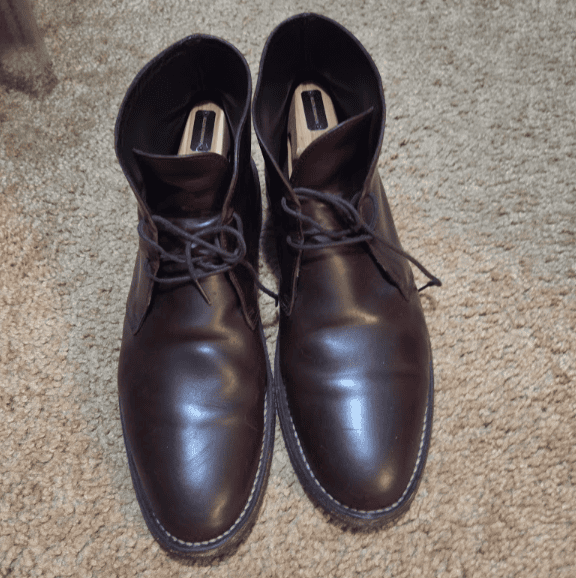
The math on leather shoes is the clearest case in the wardrobe. A $450 pair of Allen Edmonds resoled twice over 15 years costs roughly $650 total (about $43 per year). A $90 pair replaced every two years costs $675 over the same period. Same money, categorically different quality for every day of it.
Only Goodyear-welted or Blake-stitched shoes can be resoled. Cemented-sole shoes (most shoes under $150) cannot be. When the sole goes, so does the shoe. Shoes are also among the most-noticed details in a man’s appearance; a quality shoe on a modestly dressed man reads as polished, and a cheap shoe on an otherwise well-dressed man reads as someone who didn’t finish the job.
Spend: $200–$450 for resolable quality. Allen Edmonds (especially second-quality), Thursday Boot Company, Beckett Simonon, and Meermin are the value-tier benchmarks. One brown pair and one black pair cover every professional and formal context — buy both well and they’ll outlast multiple suit purchases.
Suits
Fit is the non-negotiable regardless of price. A cheap suit that fits is more effective than an expensive suit that doesn’t. Beyond fit, wool is worth it over polyester for every reason. Wool breathes, drapes, presses correctly, and lasts. Full-canvas construction is worth it over fused for longevity. A tailor’s $50–$100 fit alterations are worth it on even a modest suit.
How much you should spend depends on how often you’ll wear it. A daily-driver suit worn 100+ times a year supports investing $600–$1,000 in fabric and construction that will hold up. A suit worn to four client presentations annually doesn’t, but a solid mid-tier option at $300–$500 is defensible and the math supports it.
Spend: $400–$700 for most professional men. Suitsupply is the benchmark. Brooks Brothers, J.Crew Ludlow (on sale), and Charles Tyrwhitt are reliable at $300–$500. Below $300, the fabric and construction compromises become visible.
Dress Trousers
Dress trousers are worn more often than suits. They pair with blazers, shirts, and separates and multiply their context coverage. The quality differential is mostly about fabric. A wool or wool-blend trouser drapes correctly, holds a crease, and presses back after cleaning. A polyester trouser develops seat shine quickly, doesn’t breathe, and looks off even when new.
Spend moderately: $100–$250 for wool or wool-blend. Suitsupply trouser separates, Bonobos, and Club Monaco are reliable here. Off-the-rack trousers almost never break at the right length, and a $25 hem matters as much as anything else about how the trouser reads.
Rain Jacket
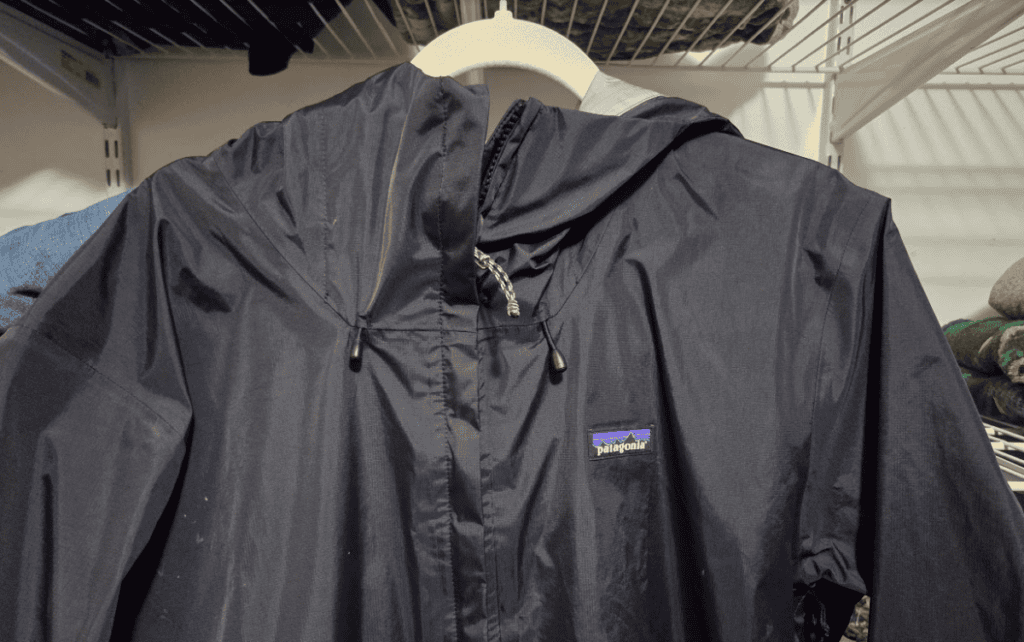
A quality rain shell is worth every dollar if you spend meaningful time outdoors. Cheap waterproof jackets often wet out quickly, trap sweat, and lose their water resistance after a season or two. A good shell keeps you dry while hiking, hunting, traveling, and during everyday storms.
Spend: $150–$350. Patagonia, Outdoor Research, Black Diamond, and Arc’teryx (if you’ll use it heavily) all make excellent options. If you only wear a rain jacket a few times each year, a budget Frogg Toggs jacket is still hard to beat for occasional use. For extra sets to keep in the truck or boat, Frogg Toggs are perfect.
Hunting and Hiking Boots
Good boots prevent blisters, provide better support under load, and can often be resoled rather than replaced. They’re one of the few outdoor purchases where spending more frequently saves money over time. For Floridians spending time in marshes and swamps, a good pair of Muck boots is indispensable and can last several seasons. Having destroyed a few pairs of cheap neoprene and rubber boots, the difference is noticeable.
Spend: $200–$400. Crispi, Kenetrek, Lowa, Hanwag, Danner’s premium lines, and Meindl all offer boots built for years of use. Fit matters more than brand. For wetter climates, expect to spend $120-150 for a decent pair of Muck or similar boots.
Spend Moderately
Oxford Cloth Button-Downs
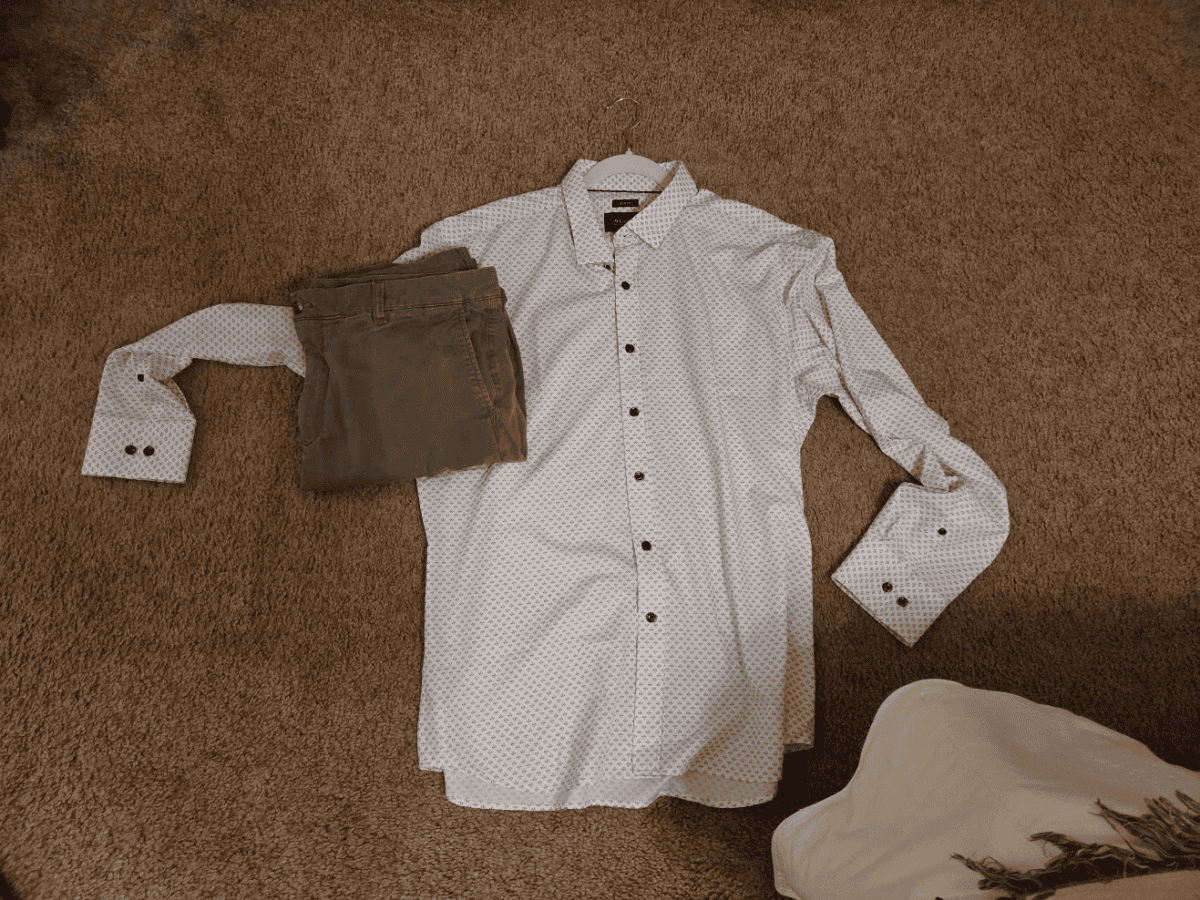
The most frequently worn item in most professional wardrobes. With proper care an OCBD lasts 5–7 years, so it is worth spending a little extra but not the top of the market. The quality differentials that matter: the weight and texture of the weave (heavier is better), the collar roll (a good collar rolls naturally rather than lying flat), and how it holds up to repeated laundering. Cheap OCBDs thin at the collar and lose their shape within a year of regular washing.
A good target is$40–$80. Brooks Brothers, Charles Tyrwhitt, and J.Crew Oxford shirts hit the right balance. The Uniqlo premium cotton OCBD at $30–$40 performs better than its price suggests and is a legitimate option when the budget calls for it. Under $20, you’re replacing it twice in the time a mid-tier shirt lasts once.
Running Shoes
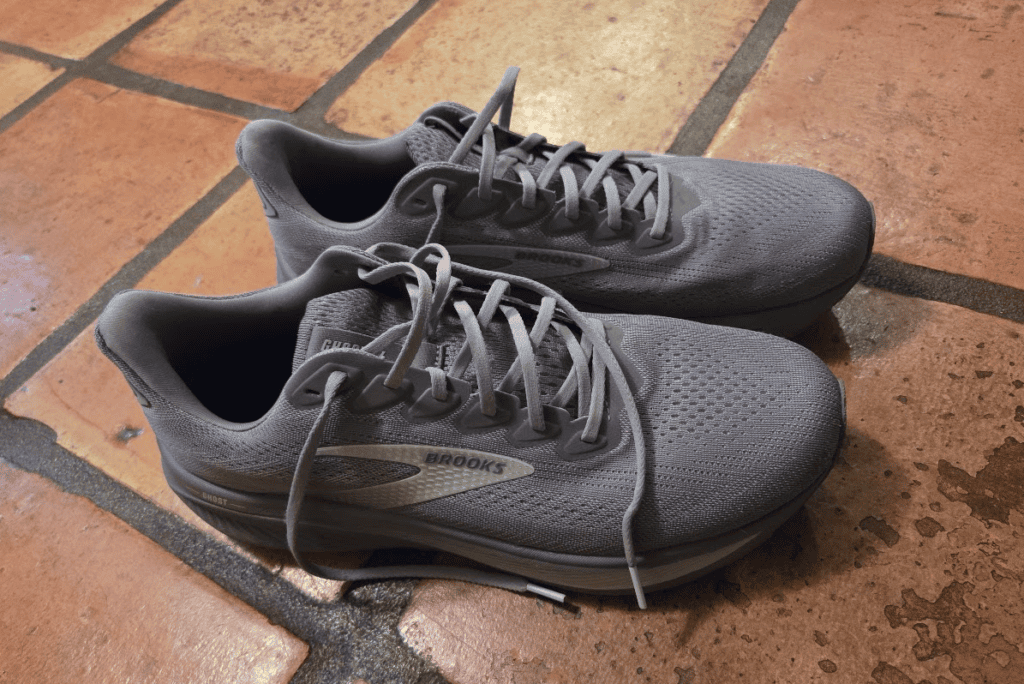
Running shoes are used daily and can prevent injuries. Mid-range shoes are comfortable and durable. Make sure to have different pairs for different activities. An interval run requires a different shoe than a recovery run or trail run.
Spend moderately: $120-160. Running shoes are consumable and you may go through multiple pairs per year, but they are worth splurging slightly on. The health benefits outwear the cost.
Chinos
Chinos are awesome. With their high frequency and broad context range, they are useful for WFH, around town, casual office, and social outings. The quality differential is real but doesn’t require top-of-market spending. What to pay for: 2–3% elastane (all-day seated comfort), a clean finish that doesn’t pill quickly, and a silhouette that doesn’t balloon. Cheap chinos wrinkle, fade, and lose their shape much faster.
I budget around$50–$90. Banana Republic (they’re always on sale), Bonobos, J.Crew, and the Uniqlo Smart Ankle Pant are all reliable here. If you travel frequently or want a crossover option that works in both professional and outdoor contexts, the Outlier or Bluffworks technical chino at $100–$150 is worth the premium.
Merino Wool Sweaters
Merino earns its cost through versatility and through practical advantages that synthetics and cotton don’t share: temperature regulation, odor resistance, and the ability to go 3–4 wears between washes. It is useful for WFH, office, travel, church, and light outdoor layering. You don’t need the most expensive option. Uniqlo’s merino at $40–$60 is genuinely excellent value. The middle band (Everlane, Banana Republic, J.Crew) at $70–$120 is reliable. Above $200 you’re in cashmere territory, worth it if you care for knitwear well, but merino outperforms cashmere in durability if you don’t.
The range: $60–$120 for merino; $150–$250 for cashmere from Quince or Uniqlo’s cashmere line if that’s where you want to go.
Merino Wool Base Layers
Merino earns its premium through versatility. One base layer works for hunting, hiking, travel, winter running, and everyday wear. It regulates temperature, resists odor, and often goes several wears between washes.
Spend moderately: $60–$120 per piece. Smartwool, Minus33, Ridge Merino, and REI’s house brand all offer excellent value.
Dark Jeans
Fabric weight, construction at the stress points, and fit matter more than brand. You don’t need $250 selvage denim. The $60–$120 range from AG, Levi’s 511/512, or Uniqlo slim denim delivers long useful life and fits the contexts correctly. Fashion-label jeans above $150 rarely outperform reliable mid-tier options in durability, and you’re paying for the label. The Patagonia Straight Fit Jean (~$90) is worth noting if you want technical-blend denim with outdoor crossover. Make sure the jeans you buy can be cascaded down to outdoor use when they start to wear.
Save

T-Shirts
A quality cotton tee is a commodity. The Uniqlo Supima cotton tee at $15–$20 performs identically to a $60 designer tee for every practical purpose and has same shape retention, same color longevity, same feel. Buy several, replace them when they fade or thin out. The one exception: a merino tee for travel or active base-layer use, where the odor resistance and temperature regulation are genuinely different.
Fishing Shirts and Sun Hoodies
This is an easy place to save. Most UPF fishing shirts and synthetic sun hoodies perform similarly regardless of price. Once they provide adequate sun protection, dry quickly, and fit well, paying double rarely buys meaningful improvements.
Save: $20–$50. Columbia, Magellan, Aftco, Huk (on sale), and Bass Pro’s house brands all perform well. Buy based on fit rather than logo.
Socks
Casual socks: A consumable. Kirkland (Costco) or Gold Toe at $2–$4 per pair is entirely adequate. No argument for spending more.
Dress socks: These are seen in professional settings and the quality differential is real. Mid-calf length, fine-gauge wool or wool-blend, solid colors. Pantherella or Boardroom Socks at $15–$25 per pair holds color and shape noticeably better than cheap dress socks. Worth it because they’re visible.
Athletic and hiking socks: Darn Tough, Balega, or Feetures at $18–$25 per pair are legitimately different. The cushioning, moisture management, and durability are materially better. The Darn Tough lifetime warranty is real; they actually replace worn-out socks. I use Darn Tough for hiking and hunting and Balega for running and have noticed a huge difference compared with cheaper brands.
Underwear
The men’s underwear market has overcomplicated this. The performance gap between a $12–$20 mid-tier pair and a $35 premium pair is marginal. The gap between a $5 budget brief and a $15 mid-tier pair is real. Land in the $12–$20 range (Uniqlo AIRism, Calvin Klein mid-tier, Tommy John mid-tier line) and move on.
Belts and Pocket Squares
Dress belts: One quality full-grain leather belt in brown and one in black, $40–$80 each. A cheap split-leather belt cracks at the fold point and looks wrong alongside quality shoes. Spend once, done.
Casual belts: $15–$25. Not closely examined and not worth more.
Pocket squares: A square of fabric. A 5-pack of white linen squares from Amazon runs $15 and does everything a $60 designer square does. Spend $10–$20 if you want a pattern or color, not $60.
Outdoor Gear Buying Rules
Outdoor clothing follows the same cost-per-wear framework as the rest of your wardrobe.
Spend when quality improves:
- Safety
- Comfort
- Weather protection
- Durability
- Repairability
Save when you’re mostly paying for:
- Logos
- Camouflage patterns
- Limited-edition colors
- Marketing
A quality pair of boots or a dependable rain shell may stay with you for a decade. A fishing shirt or camp T-shirt probably won’t. Allocate your money accordingly.
The Traps
The sale trap. A bad item at 60% off is still a bad item. Discounts only help when applied to something you would have bought at full price. The move: identify what you need, establish the quality floor, then wait for that quality level to go on sale. Don’t buy down because a price dropped.
The brand trap. Brand prestige and garment quality overlap but aren’t the same thing. Check the fabric content label before the brand tag. A 100% wool trouser from a mid-tier brand outperforms a wool-polyester blend from a premium brand. The fibers are the product; the brand is the story.
The sunk cost trap. A piece you’ve owned for five years and paid real money for isn’t worth keeping if it doesn’t fit or no longer serves a context you occupy. The money is spent. The only question is whether the piece still earns its spot going forward — and most men hold clothes too long because of what they paid rather than what the piece currently does. Check out our Closet Organization System recommendations to avoid this and other traps.
The over-investment trap. A $200 white cotton tee is not $185 better than a $15 Uniqlo tee. Quality has diminishing returns, and past a certain point you’re paying for provenance and brand identity, not a better garment. The framework directs heavy spend to blazers, shoes, and suits and confident saving to tees, casual socks, and pocket squares, where it doesn’t.
The trend trap. Buying clothes because they’re fashionable instead of because they’ll be worn. You want to invest in pieces that can be worn for multiple years and in multiple contexts. For more information on recommended pieces, check out our guide to an active professional’s capsule wardrobe.
Quick Reference
| Item | Verdict | Target Range |
| Navy blazer | Spend | $200–$500 |
| Leather dress shoes | Spend | $200–$450 |
| Suits | Spend | $400–$700 |
| Dress trousers | Moderate | $100–$250 |
| OCBDs | Moderate | $40–$80 |
| Chinos | Moderate | $50–$90 |
| Merino sweater | Moderate | $60–$120 |
| Dark jeans | Moderate | $60–$120 |
| Dress socks | Moderate | $15–$25/pair |
| Running shoes | Functional | $120–$160 |
| Training shorts/tops | Functional | $40–$80 |
| T-shirts | Save | $12–$20 |
| Casual socks | Save | $3–$5/pair |
| Underwear | Save | $12–$20/pair |
| Dress belts | Save/Moderate | $40–$80 each |
| Casual belts | Save | $15–$25 |
| Pocket squares | Save | $3–$5 each |
Frequently Asked Questions
Is expensive clothing always better?
No. Some clothing categories show dramatic improvements with higher quality, while others become more expensive without becoming meaningfully better. Focus on cost per wear rather than price alone.
What clothing items should every man invest in first?
Start with leather dress shoes, a navy blazer, and a well-fitting suit if your lifestyle requires one. These pieces are worn often, last for years, and improve the appearance of almost every outfit.
What clothes are okay to buy cheaply?
Basic cotton T-shirts, casual socks, pocket squares, and many accessories perform nearly as well at lower price points because they’re inexpensive to manufacture and wear out regardless of brand.
Is fast fashion ever worth buying?
It can be for trend-driven or short-term items, but it’s rarely the best value for wardrobe staples that you’ll wear for years. Focus your budget on timeless pieces instead.
How do you calculate cost per wear?
Divide the purchase price by the total number of times you expect to wear the item over its lifetime. A more expensive garment that lasts much longer can actually cost less per wear than a cheap replacement. This is the core framework of the guide.
Is it worth buying expensive jeans?
Usually not. Well-fitting jeans in the $60–120 range provide most of the durability and appearance benefits without luxury-brand pricing.
Should I buy clothes on sale?
Yes, but only if you already planned to buy the item and they fit an identified gap in your wardrobe. Buying poor-quality clothing simply because it’s discounted usually costs more over time.
How many pairs of dress shoes should a man own?
Most men only need one brown pair (slightly less formal, think derby, loafer, or chukka) and one black pair (more formal, think oxford). Those two pairs cover nearly every professional and formal occasion.
What is the best fabric for dress shirts?
For most men, 100% cotton offers the best balance of comfort, durability, and appearance. Higher thread counts matter less than fit and construction.
Should you buy expensive outdoor clothing?
Spend on gear where performance affects comfort, safety, or durability, such as boots and rain jackets. Save on items like fishing shirts where cheaper options perform similarly.
Is merino wool worth the money?
Yes. Merino regulates temperature, resists odor, and works across travel, outdoor recreation, and professional layering, giving it excellent cost per wear.
The Bottom Line
Spending more on clothes doesn’t automatically produce better value. Spending correctly does.
Spend on high-frequency, long-lifespan, high-cascade items, like the blazer, the shoes, and the suit. Spend moderately on the workhorses that serve multiple contexts, like the OCBD, the chino, and the merino. Save confidently on consumables and commodities where the quality differential is small and the item gets used up regardless.
Every dollar correctly allocated to a quality blazer is a dollar that doesn’t get spent replacing a cheap one in two years. Every dollar saved on a cotton tee is a dollar available for the dress shoe that will still be in your closet a decade from now.
The wardrobe gets better over time if you’re allocating well. It cycles at the same level if you’re not.
This post is part of our practical style series. For how to build the wardrobe these investments belong to, see How to Build a Men’s Capsule Wardrobe That Works Across Your Whole Life. On what to wear in every context of your life, check out The Ultimate Men’s Style Guide for Every Occasion. For how to care for what you buy, see How to Care for Your Clothes So They Last.
Leave a Reply