
Big Thicket National Preserve is a heavily forested, 113,000-acre National Park Site across nine land units and six water corridors. Scientists have called it “the biological crossroads of North America”. It covers where eastern hardwood forests, Gulf Coast wetlands, pine savannas, and prairie ecosystems converge, creating one of the most biologically diverse landscapes in North America. It’s wild, free to enter, and easy to visit, whether you have two hours or two days.
We visited in November of 2025: here’s everything we learned.
Is Big Thicket National Preserve Worth Visiting?
Yes, if you come curious. This park does not have a single iconic landmark, rather, it’s a living biodiversity lab. You can see pitcher plants by the boardwalk, hear woodpeckers drill for bugs, and visit a swamp that feels more like Louisiana than Texas. If you’re a hiker, birder, or paddler, Big Thicket is worth visiting. If you’re hoping for something flashy, this might not be the place to stop.
Quick Facts
Location: 6044 FM 420, Kountze, TX 77625 (about 75 miles northeast of Houston)
Time Needed: 1–2 hours for a quick stop up to overnight or longer for backpacking or paddle trips
Best For: Hikers, birders, paddlers, photographers, families
Don’t Miss: The Kirby Nature Trail and the Pitcher Plant Trail
Best Time to Visit: October through April
Hours: The Preserve is 24 hours a day, 7 days a week. The Visitor Center is open 9-5 outside of major holidays
Admission: Free
Official Website: nps.gov/bith
Overview Of Big Thicket National Preserve
Big Thicket protects over 113,000 acres across 7 counties in Southeast Texas, divided into nine land units and six water corridors. This park is big. Unlike a traditional National Park with a central hub, this preserve is a patchwork with units connected by public roads but separated by private land. The main visitor center sits on FM 420 near Kountze, and it provides a good starting point before driving to trailheads spread throughout the preserve.
The scale can feel overwhelming, but the most accessible and scenic spots have good signs and are easy to reach. Over 40 miles of hiking trails are in the preserve, and rivers, creeks, and dozens of bayous offer miles of paddling. Entry is completely free.
Historical Context
Before it was a National Preserve, the Big Thicket was a barrier, so hard to travel that the Spanish bypassed it. Settlers avoided it into the 1800s, and the Alabama and Coushatta tribes who settled in the region remained at the borders. The inaccessibility is part of the charm and why the biodiversity survived.
By the late 1800s, the oil and timber industries arrived and began devouring the original 2-3 million acres. Conservation began in 1933 with the founding of the East Texas Big Association, but it took decades before Congress protected the area. Big Thicket National Preserve was established in 1974 on the same day as Big Cypress, making it tied for the first National Preserve.
In 1981, UNESCO designated the site as a UNESCO Biosphere Reserve. In 2001, the American Bird Conservancy named it a Globally Important Bird Area. It is a convergence of ecosystems, with cactuses, ferns, orchids, and carnivorous plants all coexisting together.
Best Things to Do at Big Thicket National Preserve
Hike the trails. There are over 40 miles of hiking trails through nine ecosystems, ranging from half-mile loops to the 17-mile Turkey Creek Trail for serious backpackers. Most visitors stick to the Kirby Nature Trail and the Pitcher Plant Trail.
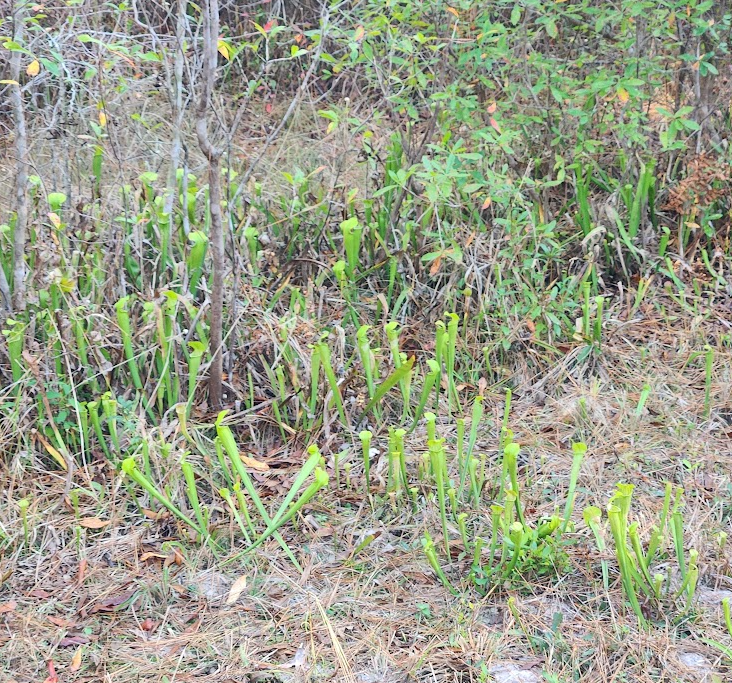
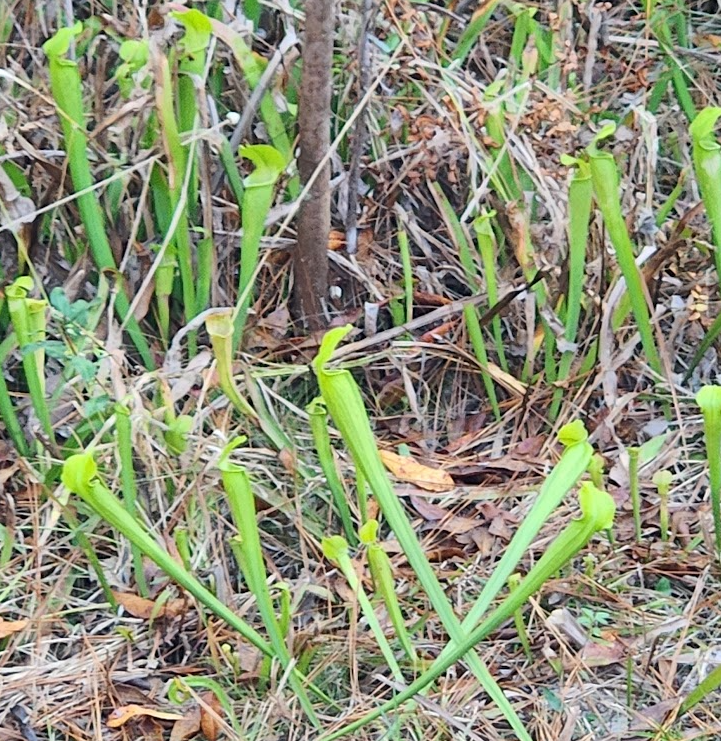
See the carnivorous plants. Pitcher plants, sundews, bladderworts, and butterworts all live in Big Thicket. The Pitcher Plant Trail and the Sundew Trail also offers easy viewing of carnivorous plants.
Go Birding. This preserve sits at the intersection of two major flyways, with over 300 bird species living or passing through. Spring and Fall migration are peak seasons.
Paddle the waterways. The Neches River and Village Creek offer peaceful flatwater paddling. There are free guided canoe programs with everything provided if you call and make a reservation. The Village Creek Texas State Paddling Trail stretches 21 miles.
Attend a ranger program. Night hikes, nature walks, guided canoe trips, and more are offered year-round.
Camp in the backcountry. There are no developed campgrounds, but primitive backcountry camping is allowed in several units with a free permit. The Turkey Creek Unit is a favorite.
Check out the Visitor Center. The 15-minute orientation, interactive exhibits, and giant plant replicas will reframe your experience.
Best Hikes in Big Thicket National Preserve
Here are some of our favorite hikes in Big Thicket:
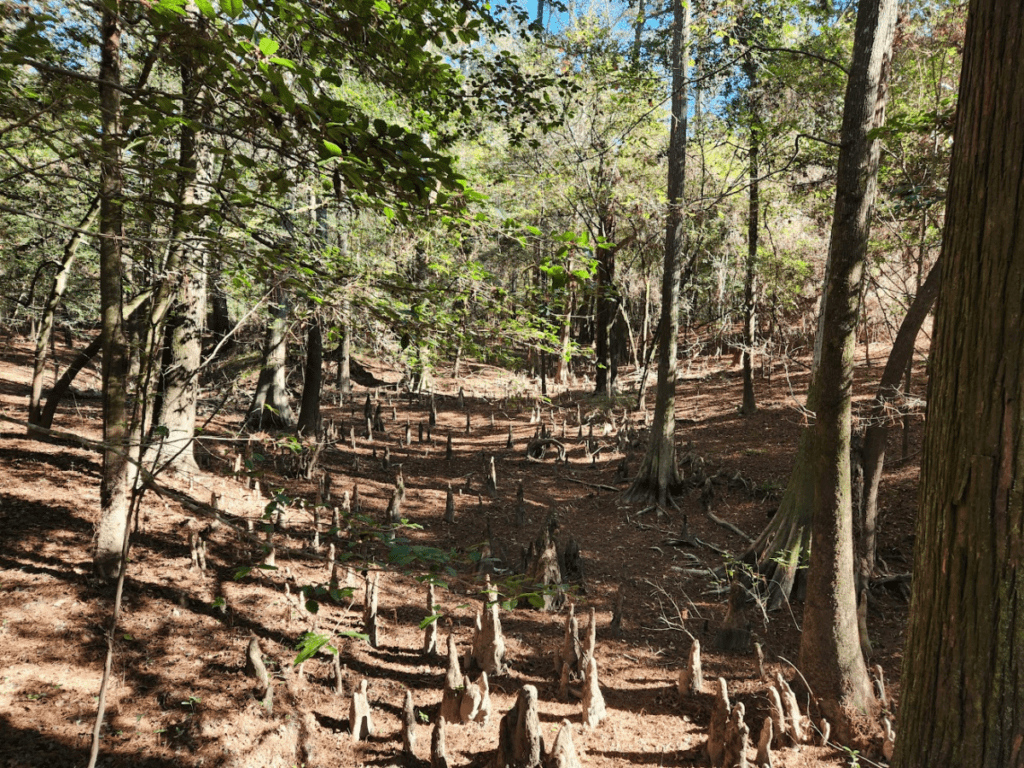
Kirby Nature Trail – Located in the Turkey Creek Unit, this trail offers multiple loops from 1.5 to 2.5 miles. The trail passes through different ecosystems – pine uplands, beech-magnolia forest, cypress-tupelo sloughs, and along Village Creek. It was our favorite, and it connects to the full Turkey Creek Trail.
Pitcher Plant Trail – A 0.25-mile paved boardwalk to a wetland bog in the Turkey Creek Unit, and the best place to see carnivorous plants up close.
Turkey Creek Trail – This is the 17-mile signature long-distance route for serious explorers. Backcountry camping is allowed with a free permit.
Sundew Trail – A short 1-mile loop in the Sundew Meadows loop through longleaf pine savannah. They are best seen winter through spring.
Big Sandy Trail – A 2.5-mile loop in the Big Sandy Creek Unit, with a sandhill ecosystem containing prickly pear cactuses and Big Sandy Creek. It can be muddy after rain.
Birdwatchers Trail – A half-mile path in the Menard Creek Corridor Unit designed specifically for birding.
Key Areas (Units) in Big Thicket National Preserve
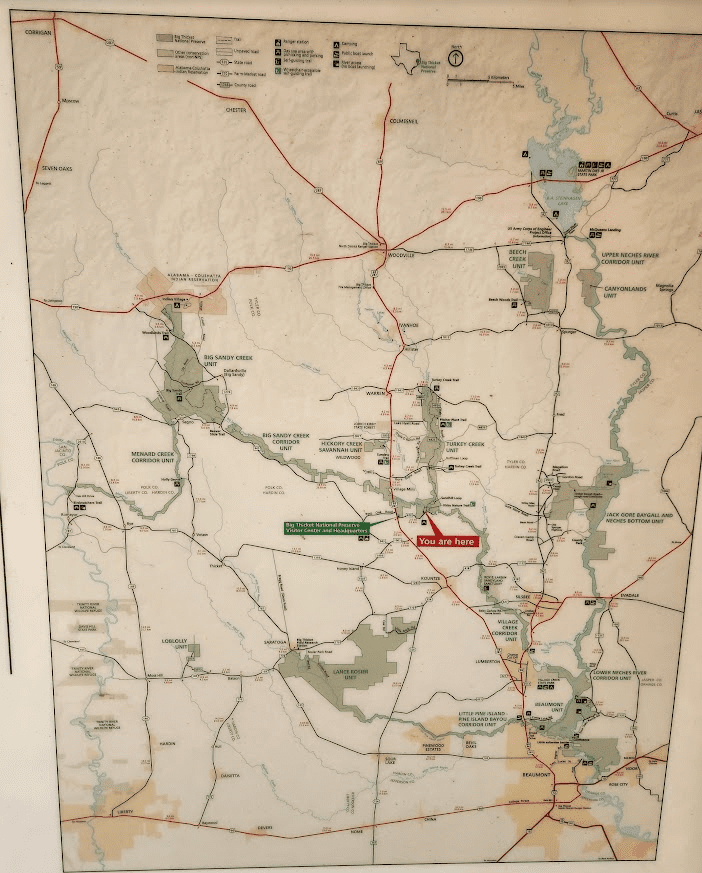
There are 9 land and 6 water units at Big Thicket. Our favorite is the Turkey Creek Trail, and the runner-up is the Hickory Creek Savannah Unit.
Turkey Creek Unit – The largest and most accessible unit, with the Kirby Nature Trail, Pitcher Plant Trail, and Turkey Creek Trail. If you only visit one unit, make it this. The Visitor Center is nearby too.
Hickory Creek Savannah Unit – This small but distinctive unit features longleaf pine ecosystem and open grasslands.
Big Sandy Creek Unit – This is the sandhill ecosystem unit, with contrasting cactus, pines, and creek bottomlands. It is reached by FM 1276, and can flood after heavy rains.
Lance Rosier Unit – Named after a legendary Big Thicket naturalist, this unit protects baygall swamp and hardwood bottomland. It is one of the more wild units.
Loblolly Unit – Huge loblolly pines near the Trinity River.
Beaumont Unit – Contains a water corridor and easy access to the surrounding river system. It offers public boat ramps.
Jack Gore Baygall Unit – Ancient and impressive cypress trees over black bayou water. This is a remote and uncrowded unit.
Canyonlands Unit – A small, secluded unit with quiet backcountry.
Beech Creek Unit – Home to the Beech Woods Trail through dense strands of American Beech Trees.
Upper Neches River Corridor Unit – Remote paddling through bottomland hardwood.
Lower Neches River Corridor Unit – Broad and winding section of river heading towards Beaumont and connecting to several bayous.
Village Creek Corridor Unit – This clear, free-flowing stream contains the famous paddle trail and is famous for scenic sandbars.
Little Pine Island & Pine Island Bayou Corridor Unit – This complex bayou system flows through swampy terrain and contains huge cypress trees and abundant wildlife.
Menard Creek Corridor Unit – This narrow stream flows through diverse wilderness.
Our Experience at Big Thicket National Preserve
My wife and I visited Big Thicket National Preserve on Thanksgiving. This was not optimal, but it was our only free afternoon while we were in the area, so we figured that a short visit was better than no visit.
There are not a lot of food options near Big Thicket, and certainly not on Thanksgiving Day, so we stopped at the welcoming Big Thicket Baptist Church for a delicious Thanksgiving lunch feast.
Our first point of interest was the Visitor Center, but it was closed due to the holiday.
The first trail we hiked was the Kirby Nature trail, and we were the only people on it. It took us through four distinct ecosystems in two miles, from a pine savannah to a beech grove to a cypress slough. This trail packs an incredible amount of habitat diversity into just two miles.
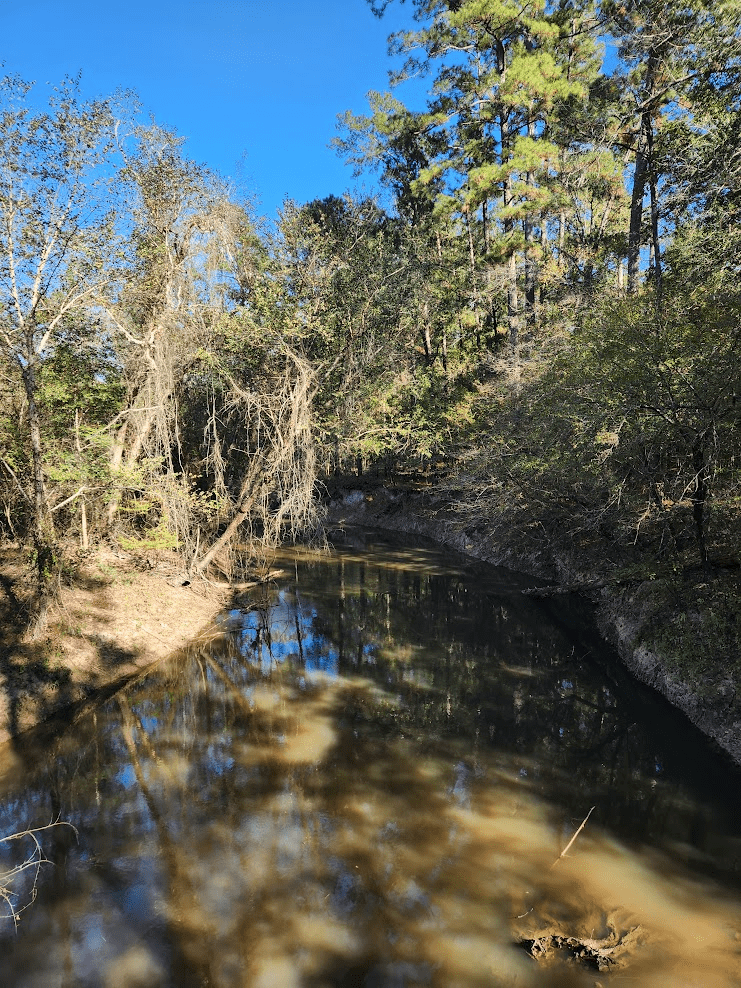
We got to a bridge over Village Creek and watched for a minute to see if there were any alligators. Unfortunately, we did not see any. The Cypress sloughs were very dry during our late November visit.
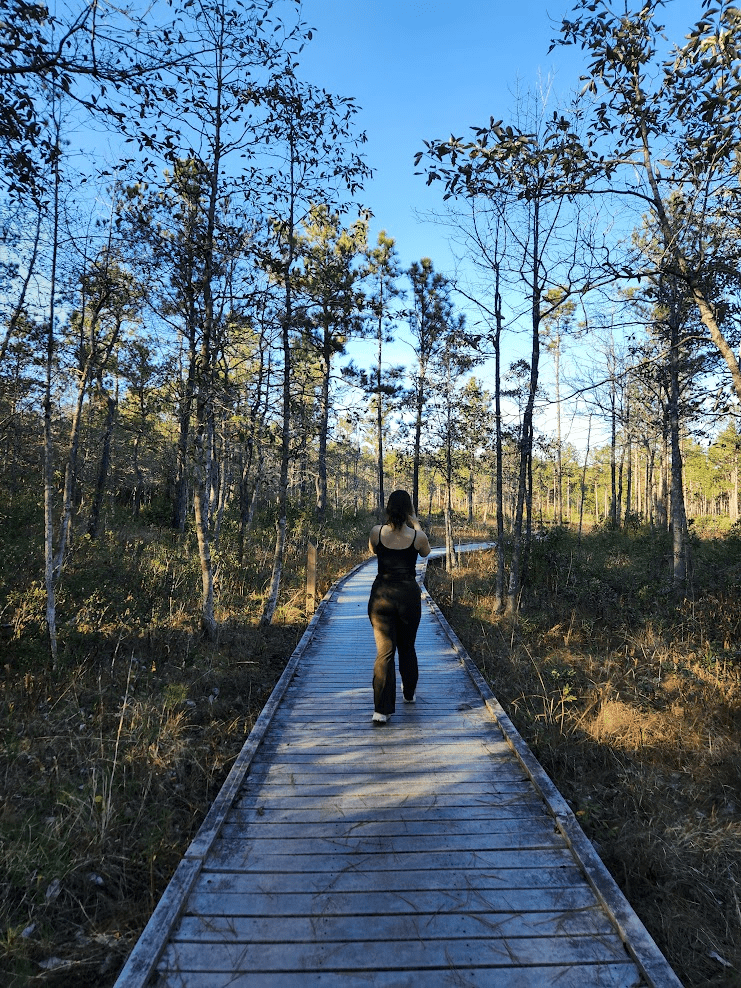
Back at the car, we drove up to the Sundew Trail. We looked long and hard on our November hike, but we did not spot any sundews. This was disappointing, but now we have something to look forward to next time. We did see some pitcher plants on this trail.
For our last stop, we drove down a gravel road to the Pitcher Plant Trail. Even in November, we saw a lot of pitcher plants. The boardwalk kept us out of the bog, which was dry this time of the year. It was a quick trail, and there were audio narrations throughout interpretive points of interest.
Our total visit was around three hours including the drive between units.
Don’t Make Our Mistake
We visited on Thanksgiving Day, so the Visitor Center was closed. We had to watch the park film back at the AirBnB for context on what we saw and send a letter to get the stamp.
Also, our visit to Big Thicket was a short and sweet 3 hours, as the park was not the primary purpose of our travel. We made the mistake of only seeing two units: Turkey Creek and Hickory Creek Savannah.
What We Would Do Differently
On a return trip, we would plan multiple days at Big Thicket, including a paddle trip. A Big Thicket camping trip with kids would be incredible.
We only scratched the surface of this preserve. I believe a 3–7-day trip is in order, which would allow us to visit each unit and compare them.
How Long Does Big Thicket Require?
Big Thicket National Preserve scales well to different time budgets. A quick trip is satisfying, but a full day is better. A two-day trip would be ideal for paddlers and backpackers. A longer trip is not necessary unless you would like to see all the units or do an extensive inter-unit paddle trip.
If You Only Do One Thing
Walk the Kirby Nature Trail inner loop for a compressed version of what makes Big Thicket special.
How To Visit in 1-3 Hours
- Stop 1: Visitor Center (20-30 minutes). Watch the orientation film, grab a map, and talk to a ranger about current conditions.
- Drive down the road to the Kirby Nature Trail in the Turkey Creek Unit.
- Stop 2: Kirby Nature Trail Hike (60-90 minutes) – Pick a loop based on your time allowance and see cypress sloughs, pine forest, and the diversity near Village Creek.
- Drive to Pitcher Plant Trail boardwalk on FM 2827.
- Stop 3: Pitcher Plant Trail Hike (20 minutes) – Walk the boardwalk trail and see carnivorous plants.
- If the ranger said it is a good season for it, drive to the Sundew Trail.
- Stop 4: Sundew Trail Hike (20 minutes) – See a second variety of carnivorous plants.
Full-Day Itinerary

A full day unlocks more of the preserve’s depth.
- 9:00AM – Arrive at the Visitor Center. Watch the orientation film, get your stamp, grab a map, and talk to a ranger for current conditions.
- 9:30AM – Drive to the Kirby Nature Trail. Walk the full 2.5-mile loop and see cypress sloughs, pine forest, and the diversity near Village Creek.
- 11:00AM – Drive to the Pitcher Plant Trail. Walk the boardwalk and spend time at the bog.
- 12:00PM – Drive to the Big Sandy Creek Unit trailhead off FM 1276. Walk the 2.5-mile Big Sandy Trail loop through the sandhill ecosystem with prickly pear cactuses and longleaf pines. Eat a picnic lunch at the tables near Collins Pond.
- 2:00PM – Head back towards Kountze and take FM 2827 toward the Sundew Trail. See a second kind of carnivorous plant on your quick hike.
- 3:00PM – Afternoon Paddle on Village Creek. Rent a kayak or canoe from local outfitters and do a short 2-4 miles paddle expedition. There are multiple segments appropriate for a quick trip: US 96 to Village Creek State Park (3.2 miles), SH 327 to Baby Galvez Road (3.4 miles), and Baby Galvez Road to US 96 (7.1 miles).
- 5-6:00 PM – Head toward Beaumont for dinner or set up a campsite if you have a permit.
Is an Overnight or Longer Trip Necessary?
Not for most visitors. With a full day, you can visit three units and do a short paddle trip. This would be enough to see the signature ecosystems and go home satisfied.
An overnight or longer trip makes sense if you want to:
- Paddle Village Creek on a multi-hour or overnight trip (the 21-mile paddling trail requires a very long day, or multiple days)
- Backpack the Turkey Creek Trail (the full 17-mile trail would be more enjoyable if split into multiple days with a backcountry camping permit)
For a casual trip, one day is plenty. For paddlers, backpackers, and parkmaxxers who want to see every unit, plan for multiple days.
Where to Eat Near Big Thicket National Preserve
Dining options around Big Thicket National Preserve in Kountze are limited to a couple of local spots. This is a rural area, and it would make sense to eat a picnic lunch.
For a real meal nearby, try:
- Mama Jack’s (Kountze): Scratch-made American comfort food and a Sunday lunch buffet.
- Caroline’s Quality & Quantity (Kountze): Local go-to spot for chopped beef and Texas BBQ.
- Sweet Cheeks Cafe & Catering (Silsbee): This restaurant is known for their homemade meatloaf and chicken and dumplings.
- Munchies Olé (Silsbee): This hole in the wall spot is perfect after hiking, with massive burritos and Tex-Mex.
For a unique option in Beaumont (roughly 30 mins from Big Thicket), try Tia Juanita’s Fish Camp. This local mini-chain blends Cajun and Mexican flavors. I would try a crawfish quesadilla or redfish tacos.
Where to Stay Near Big Thicket National Preserve
There are not many options to stay close to Big Thicket, so Beaumont makes sense as a practical base camp.
Nearby lodgings include:
- Ethridge Farm Bed and Breakfast (Kountze) – A small, well-reviewed retreat on the edge of the preserve. This would be our choice in the area.
- Super 8 Kountze – The closest full-service motel.
- The Stagecoach Inn of Woodville – A historic inn about 25 miles away and a good option if you’re combining Big Thicket with Martin Dies, Jr. State Park.
- Hilton Garden Inn Beaumont – Reliable full-service hotel with access to more amenities and restaurants.
Backcountry camping is available by free permit in the preserve, with Turkey Creek Unit as the most popular area. Indian Springs Camp is another nearby campground, and it is privately owned and conveniently located.
Tips For Visiting Big Thicket National Preserve
Your experience at this preserve will be what you make of it, and here are our recommendations for a fun and rewarding trip:
- Bring bug spray. Mosquitoes and ticks love it here, especially near water and in warm months.
- Cell service is unreliable in many units. Download offline maps before you leave and get paper maps from the visitor center.
- Check current conditions before visiting. The NPS website maintains an updated conditions page, and the trails can temporarily flood.
- The units are spread out. Driving between them takes time, so decide ahead of time or talk to the rangers about where to go.
- Wear closed-toe shoes and light, long pants. Thorny vegetation and wet ground are common.
- Dogs are welcome on leashes at the trails but are not allowed in the Visitor Center.
- The America the Beautiful park pass is not required, as entry is free.
- Reserve ranger programs in advance. These fill up, especially the canoe trips.
- Start early in summer, as temperatures get hot fast in the summer and there is intense humidity,
When to Visit Big Thicket National Preserve
The best overall season would be October through April. Temperatures are mild, insects are manageable, and the forest is beautiful in winter mode.
March through May is the best for birding to visit during the spring migration.
Summer is doable but demanding. Expect high heat and humidity and a lot of bugs. The tree canopy provides shade, but you will want to start your day early.
Fall is a fantastic time to visit, with lower temperatures and fall foliage.
Big Thicket National Preserve is open 365 days a year. The Visitor Center is open daily from 9:00 a.m. to 5:00 p.m., but is closed on the biggest holidays (Thanksgiving Day, Christmas Day, and New Year’s Day). Trailheads and the preserve grounds are accessible outside visitor center hours.
Always check the park website at nps.gov/bith or call (409) 951-6700 for the most up-to-date conditions, trail closures, and ranger program schedules before your visit.
What To Bring to Big Thicket National Preserve
Big Thicket National Preserve varies from boardwalks to real backcountry. What you need to bring depends on your activity, as day hikes will require less than an overnight paddle trip.
At a minimum, we would recommend:
- Water (a lot in the summer)
- Insect repellent
- Closed-toe shoes or hiking boots
- Light, long pants
- Sunscreen
- Hat
- Snacks or packed lunch
- Offline maps downloaded prior to your arrival
- Rain jacket in warmer months
- Camera
Fees & Reservations
Entry: Free. No entrance pass required.
Ranger programs (canoe trips, guided hikes, night hikes): Free, but reservations are required and spots fill up. Call (409) 951-6700 or check the NPS events calendar to reserve.
Backcountry camping permit: Free. Pick up at the visitor center before heading to your campsite.
Hunting and trapping permits: Free. Available at the visitor center. Over 750 hunting permits are issued per year, and make sure to follow Texas Parks and Wildlife regulations.
Fishing: No permit required from the preserve, but a Texas fishing license is required for anyone over 17.
Frequently Asked Questions
Is Big Thicket National Preserve worth visiting?
Yes. While Big Thicket lacks a single iconic viewpoint, it offers one of the most diverse ecosystems in the National Park System. Visitors come for hiking, paddling, birding, carnivorous plants, and the chance to experience habitats found nowhere else in one place.
Why is Big Thicket National Preserve a National Preserve instead of a National Park?
Congress designated Big Thicket as a National Preserve in 1974 to protect its unique ecosystems while allowing traditional activities like hunting and trapping in designated areas. Unlike most National Parks, National Preserves often balance conservation with certain recreational and cultural uses.
What is the best time of year to visit Big Thicket National Preserve?
October through April is generally the best time to visit thanks to cooler temperatures, fewer mosquitoes, and comfortable hiking conditions. Spring is especially rewarding for bird migration and wildflowers, while winter offers the best chance to explore the trails without the intense heat and humidity of summer.
Is Big Thicket National Preserve good for kids?
Yes. Families can enjoy short boardwalks, easy nature trails, wildlife viewing, and the Visitor Center’s exhibits. The Kirby Nature Trail and Pitcher Plant Trail are excellent options for children, while older kids may enjoy paddling Village Creek or participating in ranger-led programs.
Is Big Thicket National Preserve really free?
Yes. There is no entrance fee to visit, and the America the Beautiful pass is not needed. Some activities (backcountry camping, hunting, trapping) require a free permit from the visitor center.
Where should I start my visit?
The Big Thicket Visitor Center at 6044 FM 420 is the best starting point — the 15-minute orientation film and ranger conversations will significantly improve your experience, especially since the preserve’s units are spread across a large area.
How spread out are the trails?
Very. The nine land units are connected by public roads but are not adjacent. The Turkey Creek Unit (Kirby Nature Trail, Pitcher Plant Trail, Turkey Creek Trail) is where most visitors spend their time, but driving between units can take 20–40 minutes. Plan which units you want to visit before arriving, and download offline maps.
Can I bring my dog?
Yes. Dogs are welcome on all trails on a leash no longer than six feet. They are not allowed inside the visitor center.
Is there cell service in the preserve?
Mostly no. Cell coverage is unreliable inside most units. Download offline maps and PDFs of the trail guide before leaving home.
Are there alligators?
Yes, particularly in bayou and river areas. Maintain a safe distance from any water’s edge when wildlife is present, and never feed or approach wildlife.
Can I paddle the preserve without my own boat?
Rangers offer free guided canoe trips (canoes, paddles, and life jackets provided) on a reservation basis. Call (409) 951-6700 or check the NPS events calendar. For self-guided paddling, nearby outfitters like EASTEX Canoe Trails (409-385-4700) offer rentals and shuttles.
What are the carnivorous plants here?
Big Thicket is home to four species: pale pitcher plants (the most dramatic and visible), sundews, bladderworts, and butterworts. The Pitcher Plant Trail and Sundew Trail inner boardwalk are the two best spots to see them.

Why is Big Thicket called the biological crossroads of North America?
Big Thicket sits where eastern forests, Gulf Coast wetlands, western prairies, and southeastern pine ecosystems overlap. This unusual combination creates one of the most biologically diverse regions in the United States.
What animals live in Big Thicket National Preserve?
Visitors may see white-tailed deer, river otters, armadillos, alligators, bobcats, woodpeckers, turtles, snakes, and hundreds of bird species. Wildlife sightings vary by season and habitat.
What is the best hike in Big Thicket National Preserve?
For most visitors, the Kirby Nature Trail is the best hike because it showcases multiple ecosystems in a relatively short distance. The Pitcher Plant Trail is the best option for seeing carnivorous plants.
Can you camp in Big Thicket National Preserve?
Yes. Primitive backcountry camping is allowed in designated areas with a free permit available from the Visitor Center. There are no developed campgrounds inside the preserve.
How many days do you need for Big Thicket National Preserve?
Most visitors can see the highlights in one full day. However, two to three days allows time for hiking, paddling, wildlife watching, and exploring multiple units.
Are there bears or mountain lions in Big Thicket?
Black bears historically lived in the region but are no longer considered resident wildlife. Mountain lions are extremely rare and are not commonly encountered within the preserve.
Can you swim in Big Thicket National Preserve?
There are no designated swimming areas within the preserve. Some visitors wade or swim in nearby waterways such as Village Creek, but conditions vary and there are no lifeguards. Alligators may be present.
Conclusion
Big Thicket National Preserve breaks the National Park System mold. It isn’t a grand scenic park with peaks, waterfalls, and vistas. It is a living crossroads, where seemingly unrelated ecosystems intersect.
Big Thicket rewards curiosity and patience. A quick stop is worthwhile and a full day delivers a lot. For hikers, paddlers, and birders, this preserve has the depth to keep pulling you back.
Go early, bring bug spray, use offline maps, and talk to a ranger.
Other Sights Near Big Thicket National Preserve
Village Creek State Park – A Texas state park built around Village Creek and its oxbow lakes, adjacent to the preserve. It has a paddle trail, hiking and biking trails, swimming, and campsites.
Martin Dies Jr. State Park – Located about 40 miles northwest on B.A. Steinhagen Reservoir, where the Neches and Angelina Rivers meet. Good for camping fishing, birding, and paddling in wild East Texas.
Alabama-Coushatta Indian Reservation – 50 miles northwest, this tribal reservation has cultural tours, traditional dance performances, and a bus tour into Big Thicket forest. This would make for a meaningful cultural complement.
Neches River National Wildlife Refuge – A newer federal preserve protecting bottomland hardwood forest and wetlands along the Neches River
Sam Houston National Forest – Located around 90 minutes away, this is one of four national forests in Texas. You can hike the 129-mile Lone Star Hiking Trail, ride on multi-use trails, and swim or fish.
Waco Mammoth National Monument – While 200 miles away, we found this to be a unique and repeatable pairing for a multi-day trip. The landscape is very different the further west you travel in Texas. Click here for our complete guide.
Leave a Reply