
Waco Mammoth National Monument preserves the remains of a Columbian mammoth nursery herd that lived roughly 68,000 years ago. Visitors can see fossils still in the ground where they were discovered, making this one of the most unique National Park Service sites in Texas.
We visited in November of 2025. This guide covers tours, fees, trails, accessibility, and everything you need to know before visiting.
Is Waco Mammoth National Monument Worth Visiting?
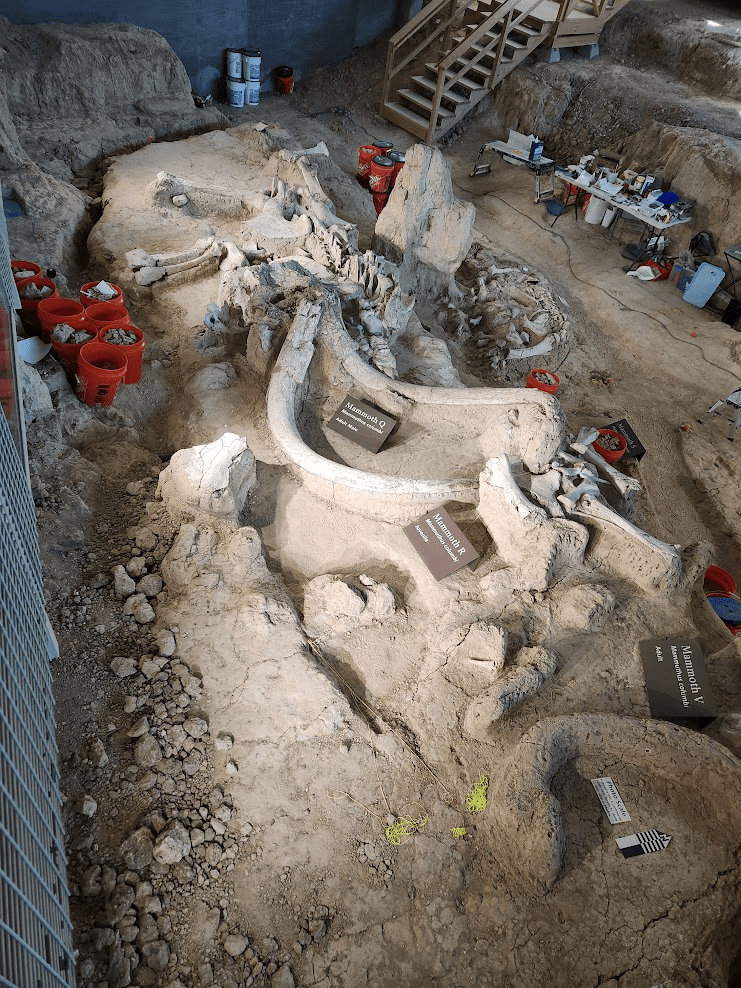
Yes, especially if you are in or within 2 hours of Waco. This is the only place in the United States where you can stand above a nursery herd of Columbian mammoth fossils, exactly where they fell thousands of years ago. This is not a replica or recreation, the bones are still in the ground, uncovered but not removed.
Quick Facts
Location: 6220 Steinbeck Bend Drive, Waco, TX 76708 (about 7 miles north of downtown)
Time Needed: 1-2 hours
Best For: Families, history buffs, paleontology fans, road trippers on I-35
Don’t Miss: The guided Dig Shelter tour
Best Time to Visit: Fall – Spring
Hours: 9AM-5PM, closed on major holidays
Admission: $6 for adults, $5 for seniors, military, and youth from 4-17. 3 and under are free
Official Website: nps.gov/waco
Overview Of Waco Mammoth National Monument
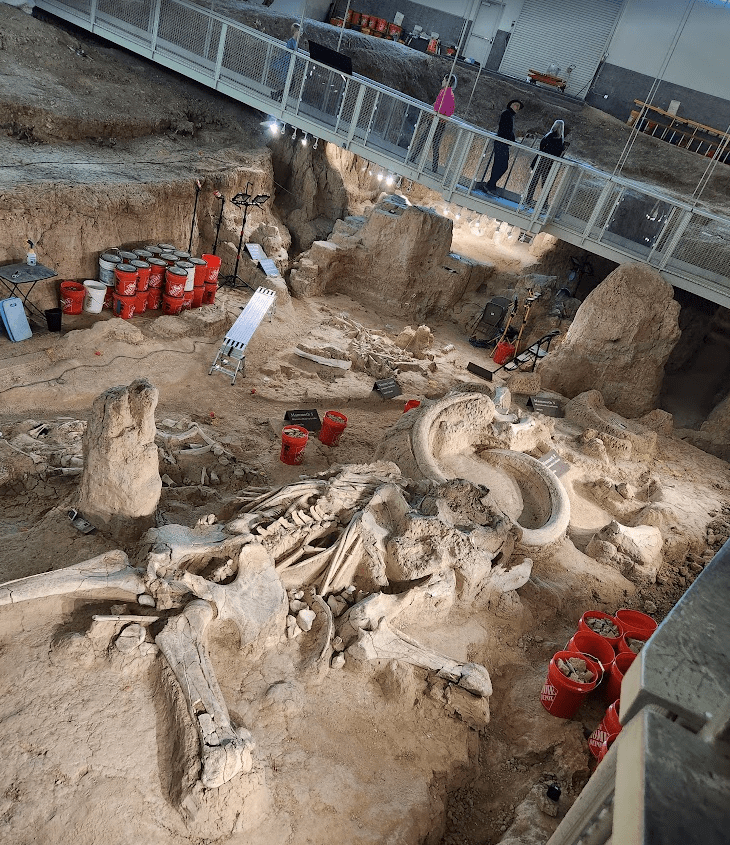
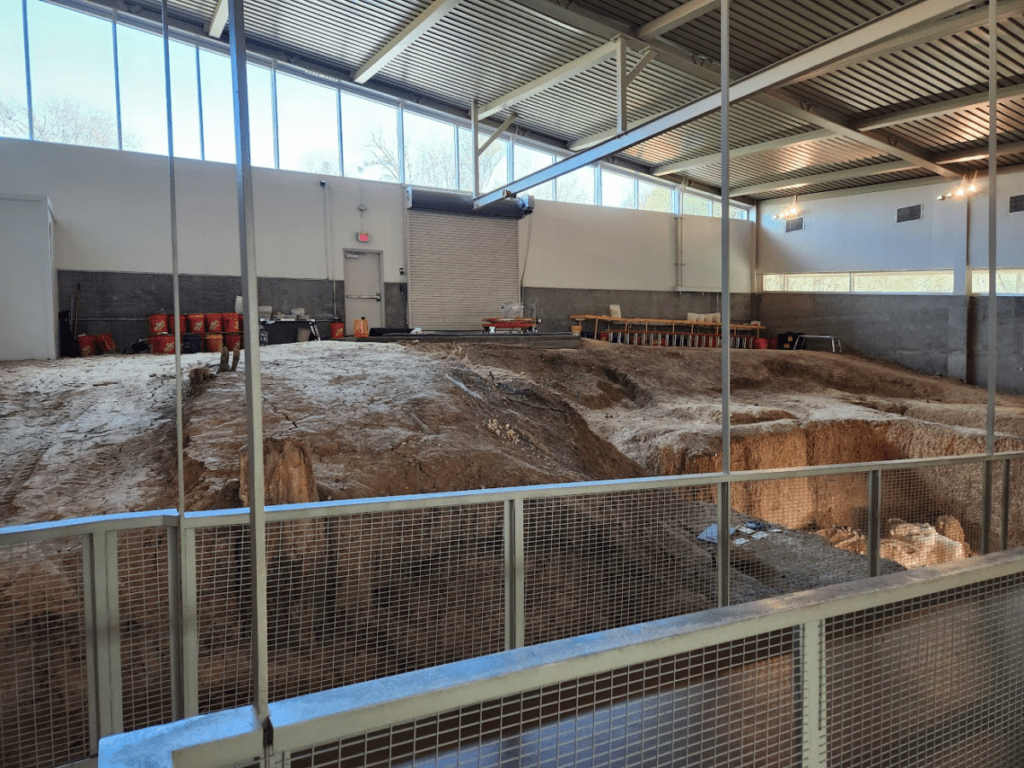
Waco Mammoth National Monument spans over 100 acres of wooded land along the Bosque River, very close to downtown Waco. The key exhibit is a climate-controlled dig shelter housing the fossilized remains of Columbian mammoths and other Ice Age creatures, preserved how they were discovered in the ground. This site blends scientific significance with a family-oriented visitor experience.
The monument is compact, so you can see the main attraction, hike a short trail, check out the gift shop, and let the kids dig in the fossil sandbox all within a couple of hours. When paired with the Magnolia Market or Cameron Park Zoo, it’s a perfect half-day stop.
Historical Context
In 1978, Paul Barron and Eddie Bufkin were searching for arrowheads along the Bosque River when they found an unusual bone. They brought it to Baylor’s science department and learned that it was a femur bone from a Columbian mammoth, kicking off decades of excavation.
Since the initial finding, paleontologists have found the remains of 24 Columbian mammoths, a camel, a saber-toothed cat, a giant tortoise, and other Ice Age Animals. This site is remarkable due to the age profile of the mammoths: they are mostly females and young calves in a nursery herd. Scientists hypothesize that a series of flash floods trapped and buried the herd in layers of sediment, preserving them.
In 2015, President Obama designated the site as a National Monument, recognizing it as the only known nursery herd of Columbian mammoths in North America. Research continues today, and they are still finding new mammoths at the site. This is a chance to watch science in action.
Best Things to Do at Waco Mammoth National Monument
Take the Guided Dig Shelter Tour. The guided tours run every 30 minutes throughout the day and last 45-60 minutes. Rangers will take you inside the shelter to view the fossils up close from elevated walkways, explain the science, and answer questions. No reservations are needed, just show up and purchase your ticket.
Walk the Nature Trails. Waco Mammoth maintains a short trail network through the Central Texas woodland, including the Eagle Trail, Deer Loop, and Honey Locust Trail. Together these form around a 0.6-mile loop. The scrubby woodland and smaller trees of Central Texas create a landscape that feels surprisingly different from forests found elsewhere in the country. You feel like you’re in the Ice Age waiting to see a mammoth around the corner.
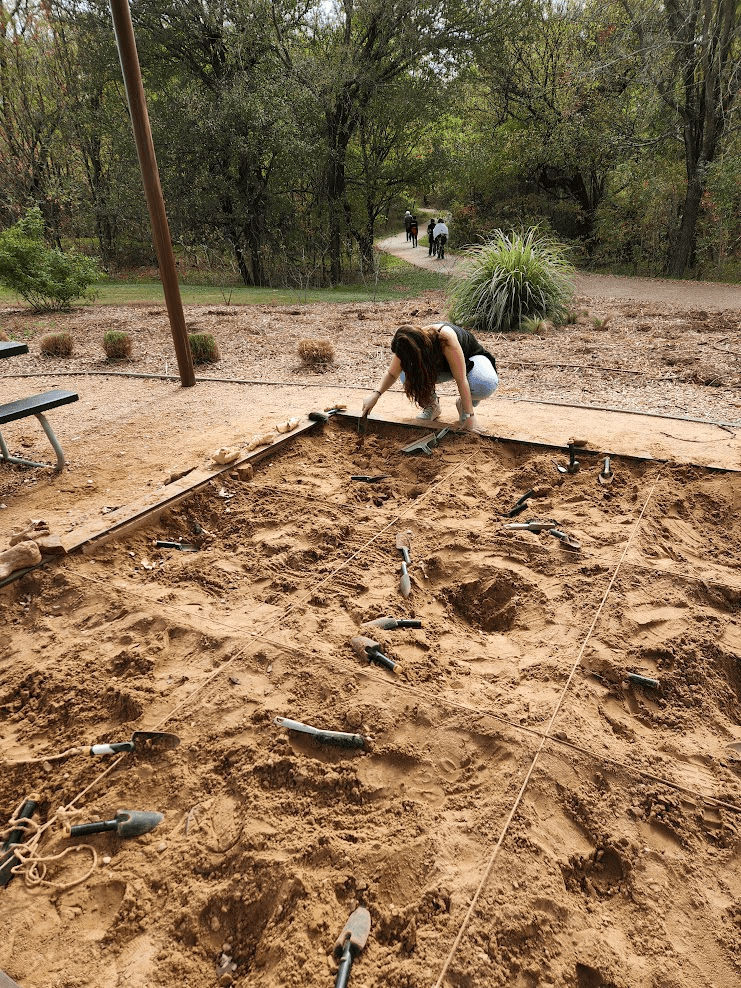
Visit the Dig Pit. Kids can pick up a free Junior Ranger workbook at the Welcome Center and work to earn a badge. The highlight for little kids is often the sandbox-style dig area where they can uncover replica fossils. If no kids are present, I have seen adults sharing the fun too.
Browse the Gift Shop. The Welcome Center gift shop is surprisingly well-stocked. It was outside in a tent when we visited, and they had a lot of clothes, books, and souvenirs.
Picnic on the grounds. There are shaded picnic tables throughout the wooded park. This is a relaxing spot to eat if you pack a lunch, especially in fall or spring.
Trails at Waco Mammoth National Monument
There are two main trails:
Mammoth Trail (Dig Shelter Path): This is a paved and ADA-accessible path of 300 yards from the Welcome Center to the Dig Shelter. This is level and stroller-friendly.
Nature Trail Loop (Eagle Trail/Deer Loop/Honey Locust Trail): This is around a 0.6-mile dirt loop through native Texas woodland. It is easy and well-maintained, partially as the result of Eagle Scout projects. No fossils are visible from the trail, but we saw a ton of deer tracks. Seriously, if you live in any part of the country with big trees, this trail feels like going back in time.
Both trails are dog friendly, but a leash is required. Pets are not allowed inside the dig shelter or on the tours.
For trail maps, check out https://www.nps.gov/thingstodo/all-about-hiking-at-waco-mammoth.htm
Our Experience at Waco Mammoth National Monument
My wife and I were in Central Texas for a November wedding, so we decided to take the drive over to Waco for a half-day to visit this National Monument and the Magnolia Silos. I didn’t know what to expect, and this site impressed us.
Tour at Waco Mammoth
As we paid our admission, we were told that we arrived right before the start of the next tour, so we ran over to catch up.
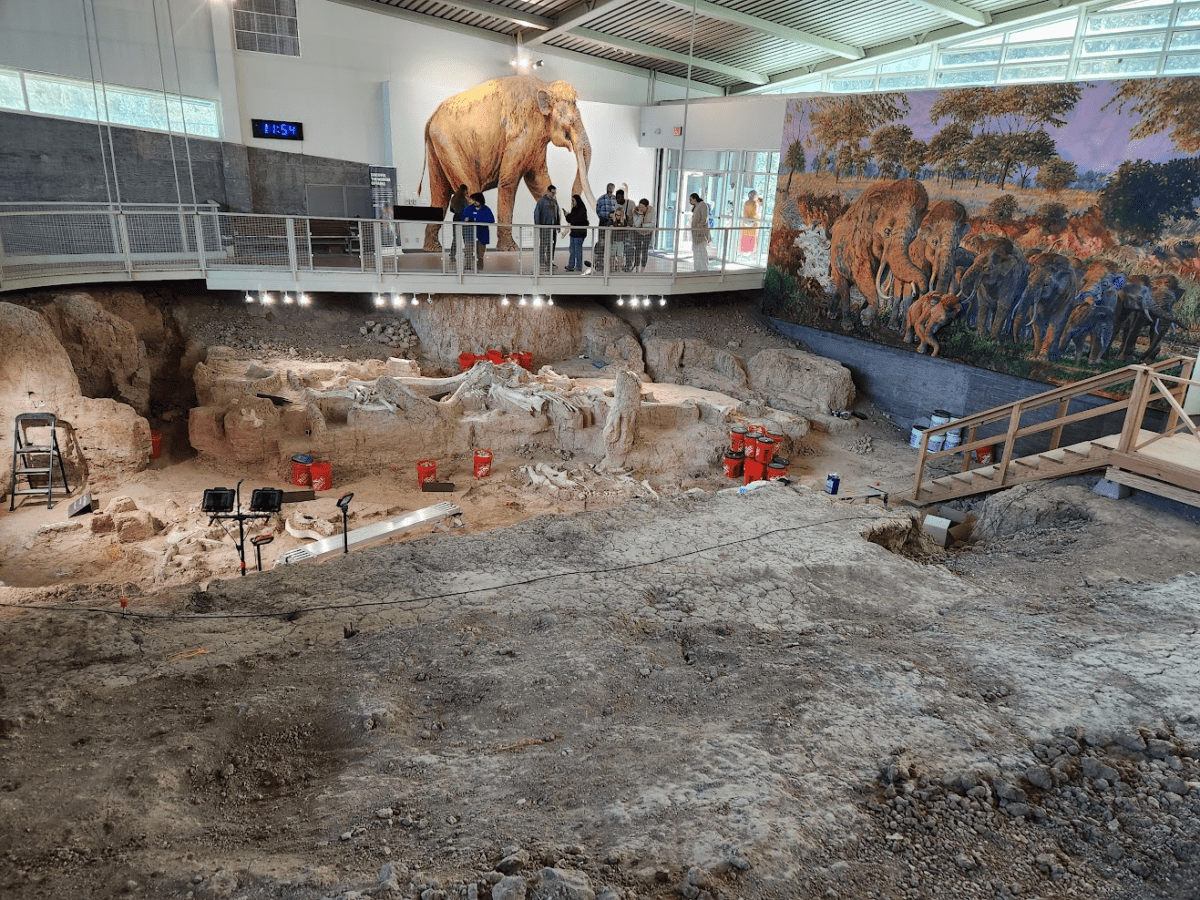
Stepping into the Dig Shelter felt like entering the scene of Night at the Museum. Right at the entrance, you are greeted by a life-sized 14-foot tall adult male Columbian Mammoth (mural).
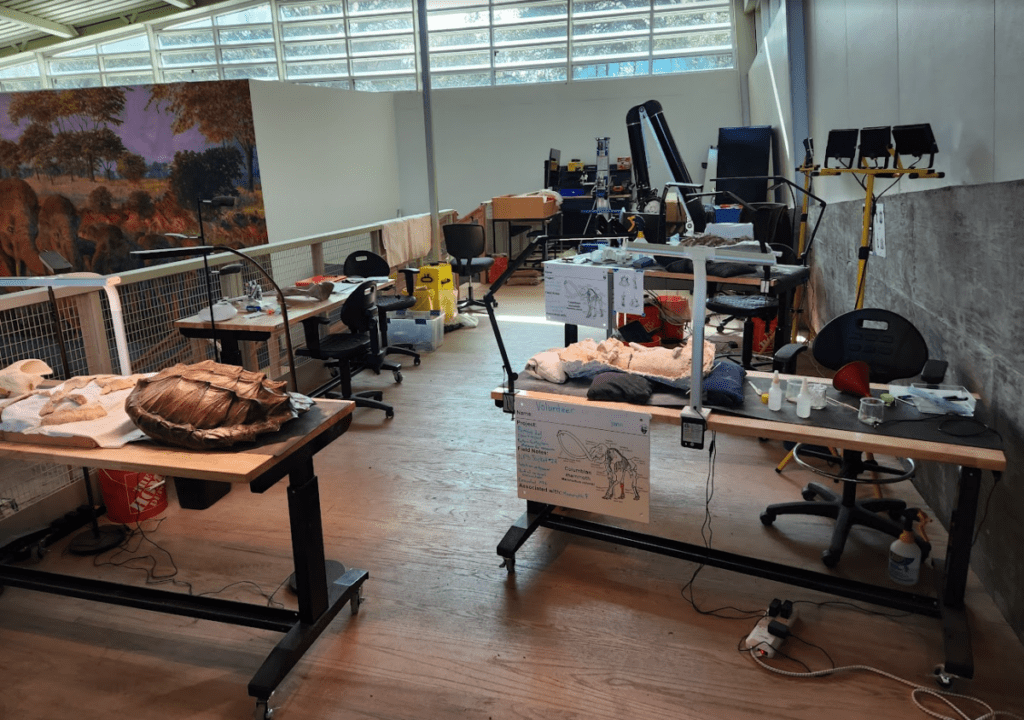
The dig site was very impressive, and still very much in progress. We geeked out about how they used Home Depot buckets to store rocks and specimens. As someone with no background in paleontology, I thought that they did all of their work with brushes and small hand shovels. I did not expect to see equipment from construction sites, like modern floodlights, knee pads, and stands.
Our ranger was very knowledgeable and explained the story of how this site was discovered. She also showed us with a laser pointer what each bone was, and we were surprised to learn about the camel, tortoise, and saber-toothed cat. The nursery site was very neat, with mammoths of different sizes.
Our key takeaway was learning that there are two types of mammoths in North America: Columbian and Woolly. The Columbian mammoth was larger and lived in warmer, southern climates like Waco, Texas. The Woolly mammoth was smaller and lived up north. The Columbian mammoths were so large, they could be multiple feet taller than Woolly mammoths.
We also learned that they don’t really know where additional mammoths may rest in the site. They sort of guessed how big and where to put the building around the dig pit. It was interesting to learn that they are still discovering new fossils and no not know the full extent of where they are buried..
Trails and Dig Pit at Waco Mammoth
Back outside, we enjoyed the crisp November air with a hike. I regret that I do not have a picture of the hike, since the small trees felt like you were in the middle of an Ice Age. We saw dozens of deer tracks, but no deer.
The trail was short, and while we did not see any mammoths on it, it felt like we might. Next, we investigated the junior ranger dig pit. No kids were present, so we practiced paleontology and buried and uncovered a couple fossils. This was a fun way to end our visit.
Last, we went to the gift shop, which was well-stocked. We got a shirt and our stamp.
Don’t Make Our Mistake
We visited midday, and the deer were off the trail by the time of our arrival. If we were the first people of the day, we likely would have seen a whole herd.
What We Would Do Differently
We would arrive early right as the park opens and grab the first tour of the day. We would also spend more time in Waco, which was surprisingly nice.
How To Visit Waco Mammoth National Monument in 2 Hours
- 9:00AM – Arrive at opening. Buy your tour ticket and join the first tour of the day
- 10:00AM – After the tour, do the nature trail loop, which takes about 20 minutes at a leisurely pace
- 10:20AM – Get your stamp and check out the gift shop
- 10:35AM – Let the kids try the fossil dig sandbox
- 11:00AM – Head out and visit Magnolia Market, the Cameron Park Zoo, or a restaurant
If You Only Do One Thing
Take the guided Dig Shelter tour. The rest of the site is enjoyable, but the fossils make this place one-of-a-kind.
Where to Eat Near Waco Mammoth National Monument
The monument itself has no food service other than vending machines, so plan to get coffee on your way in and food before or after. Personally, we ate at the food trucks at Magnolia Market.
Here are some other nearby options:
Magnolia Table – This is Chip and Joanna Gaines’ flagship restaurant, serving breakfast and lunch. On the weekends you will want a reservation.
Vitek’s BBQ – A Waco spot for no-frills Texas BBQ.
Union Hall – A downtown food hall with multiple vendors.
Café Homestead – Farm-to-table dining at Homestead Heritage around 15 minutes away
Where to Stay Near Waco Mammoth National Monument
Waco has a wide variety of hotels, most near I-35 and downtown:
- Hilton Waco
- Homewood Suites
- Comfort Suites Waco
- Hampton Inn & Suites
- For a splurge, check out Hotel 1928
- For something different, try glamping at Lake Waco in the safari tents and yurts
If you are ate a lot of Texas BBQ cheat meals on your trip like we did, here’s How to Stay Fit in a Hotel Gym While Traveling.
Tips For Visiting Waco Mammoth National Monument
Waco Mammoth is a compact site, but the following tips can help you make the best of your visit:
- Time your arrival to land just before the start of a tour, they run every 30 minutes
- Bring water, especially in summer
- Wear close-toed shoes, as there are some thorny branches on the trails
- Bring insect repellent in warm months
- The America the Beautiful pass does not cover the Dig Shelter Fee, though general park entry and grounds access is free
- Strollers and wheelchairs are accommodated on the paved Mammoth Trail and inside the Dig Shelter
- The last tour departs 30 minutes before closing, so plan accordingly.
When to Visit Waco Mammoth National Monument
Best seasons: Spring (March–May) and fall (September–November) offer the most comfortable temperatures, typically in the 60–80°F range, with wildflowers in bloom in spring and colorful foliage along the Bosque River in fall.
Summer: Expect temperatures well above 90°F, sometimes above 100°F. If visiting June–August, go early for the best experience.
Winter: Mild by most standards (40–60°F), with smaller crowds. The Dig Shelter is climate-controlled year-round, so the fossil experience is unaffected.
Hours & Location
Waco Mammoth National Monument is located at:
6220 Steinbeck Bend Drive
Waco, TX 76708
This is around 15 minutes from downtown Waco and is easy to reach.
The park is open daily from 9:00 a.m. to 5:00 p.m., closed on Thanksgiving Day, Christmas Day, and New Year’s Day. Always check the park website or call for the most current hours and conditions before your visit.
What To Bring to Waco Mammoth National Monument
You do not need to bring much to Waco Mammoth National Monument, but we would recommend the following:
- Water bottle
- Sunscreen and a hat
- Insect repellant
- Closed-toe shoes
- Snacks or lunch for picnic tables outside
- Money for entry
- Phone or camera
Fees & Reservations
Park entry: Free for the grounds, trails, picnic areas, and Welcome Center
Dig Shelter guided tour fee:
- Adults: $6
- Seniors, Military with ID, and Youth ages 4–17: $5
- Children 3 and under: Free
- Groups of 20+: $4 per person
No reservations are required, and tours depart every 30 minutes. Tickets are purchased at the Welcome Center. Federal interagency passes, including the America the Beautiful pass, do not apply to the tour fee.
Frequently Asked Questions
How did the mammoths at Waco die?
Scientists believe a series of flash floods along the Bosque River trapped and buried the mammoths around 68,000 years ago. Since the mammoths belong to a nursery hers, researchers believe they were gathered near the river when sudden flooding took them out. Layers of sediment covered the remains and protected the bones from scavengers. The sediments hardened and preserved the fossils.
Do I need a reservation for the guided tour at Waco Mammoth?
No. Tours run every 30 minutes throughout the day on a walk-in basis. Just arrive, buy your ticket at the Welcome Center, and join the next group.
Can I see the fossils without taking the guided tour?
The Dig Shelter is only accessible on a guided tour. The nature trails and general grounds are free to explore on your own, but the fossils are inside the shelter.
Is the monument accessible for wheelchairs and strollers?
Yes. The paved Mammoth Trail to the Dig Shelter is ADA-accessible, and the shelter itself includes ramps and ample space for mobility equipment and strollers.
Are dogs allowed at Waco Mammoth?
Dogs are welcome on the grounds and nature trails on a leash no longer than six feet. They are not permitted inside the Dig Shelter or on guided tours.
Does the America the Beautiful Annual Pass work at Waco Mammoth?
Not for the Dig Shelter tour fee. General park access is free regardless, but the tour requires a separate ticket regardless of what federal passes you hold.
How long does the guided tour last at Waco Mammoth?
Approximately 45 minutes to one hour.
Is there parking at Waco Mammoth?
Yes, free parking is available for standard vehicles, buses, and RVs.
How old are the mammoths at Waco Mammoth National Monument?
The fossils are approximately 68,000 years old and date to the Late Pleistocene Epoch.
Can you see real mammoth bones at Waco Mammoth National Monument?
Yes. The fossils displayed inside the Dig Shelter are the actual bones discovered at the site. Unlike many museums where fossils are removed and displayed elsewhere, the mammoths at Waco remain largely in place where they were found, allowing visitors to see the excavation site much as researchers do.
What animals have been discovered at Waco Mammoth National Monument?
In addition to Columbian mammoths, researchers have uncovered a camel, giant tortoise, saber-toothed cat, and several smaller Ice Age species.
Can you visit Waco Mammoth National Monument for free?
Yes and no. Access to the grounds, trails, picnic areas, and visitor facilities is free. A ticket is required for the guided Dig Shelter tour where the fossils are located.
Is Waco Mammoth National Monument good for kids?
Yes. The guided tour is family-friendly, and children can participate in the Junior Ranger program and dig for replica fossils in the discovery area.
What is unique about Waco Mammoth National Monument?
It is the only known site in North America where a nursery herd of Columbian mammoths was discovered together and preserved largely in place where they died.
Is Waco Mammoth National Monument worth visiting?
Yes. While relatively small, it offers a rare opportunity to see real mammoth fossils still embedded in the ground and learn about an active paleontological excavation site.
Conclusion
Waco Mammoth National Monument is much cooler than its size might indicate. For the same price as a cup of coffee, you get a real-life Ice Age encounter. You will see a nursery herd of Columbian Mammoths still in the ground after 68,000 years. The guided tour is great, the rangers are passionate, and the whole experience is accessible to all visitors.
If you’re in Central Texas, it is worth making a detour to Waco to see the mammoths. Plan for 1.5-2 hours and arrive just before the half hour mark to catch the next tour.
Other Sights Near Waco Mammoth National Monument
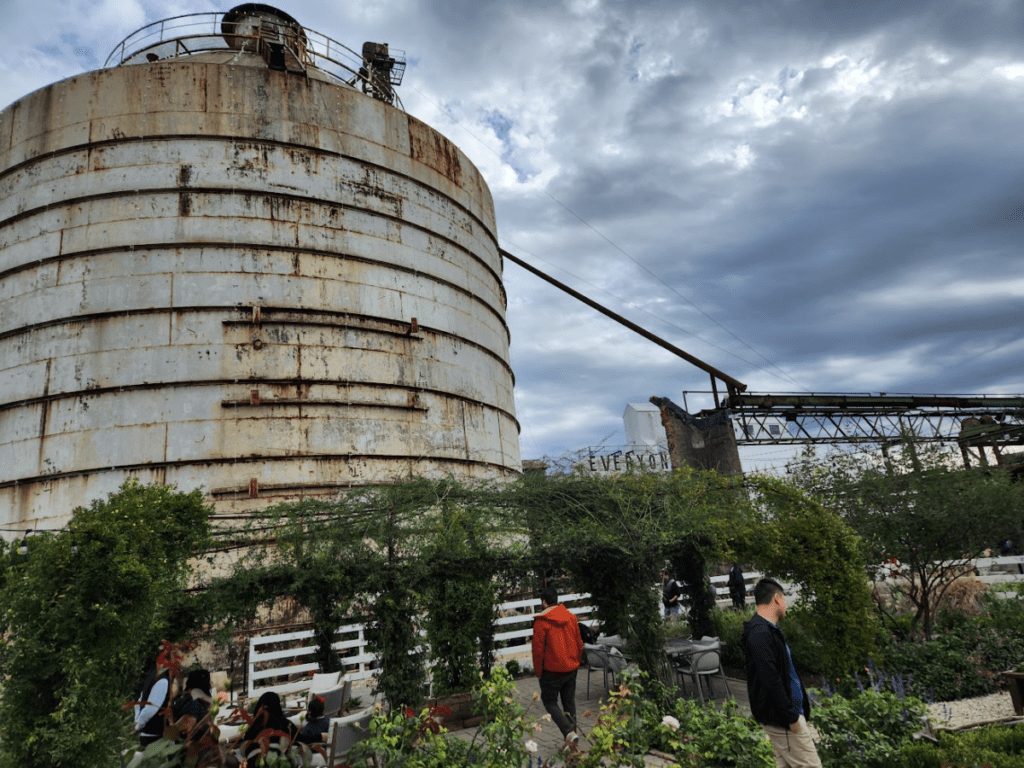
Magnolia Market at the Silos – 10 minutes away, this is Chip and Joanna Gaines’ flagship destination. It is worth a stop to round out your Waco day trip.
Cameron Park Zoo – This zoo is close to the monument and features a 50,000 gallon saltwater aquarium.
Cameron Park – One of the largest municipal parks in Texas, with 20 miles of multi-use trails and river views.
Mayborn Museum Complex – Baylor’s Natural History Museum includes a walk-in diorama of the mammoth site and additional Ice Age exhibits just a few miles away.
Texas Ranger Hall of Fame and Museum – This official state historical center is dedicated to the legendary law enforcement agency
Waco Suspension Bridge – An 1870 landmark in downtown Waco.
Leave a Reply