

Lincoln Boyhood National Memorial preserves the Indiana farm where Abraham Lincoln spent 14 of his most formative years. In the tiny community of Lincoln City, Indiana, this park combines a working pioneer farm, hiking trails, historic sites, and the grave of Abraham Lincoln’s mother into one of the most family-friendly National Park Service sites in the Midwest.
My wife and I visited in May of 2026. This guide will tell you everything you need to know to plan your visit.
Is Lincoln Boyhood National Memorial Worth Visiting?
Yes, and especially if you’re traveling with kids. This is the place that made Lincoln who he was. He arrived here at age 7, taught himself to read by firelight in a one-room cabin, and left at age 21 as the man who would one day pull the country through the Civil War intact.
This free National Memorial is low-key, relaxing, and one of the best family-friendly sites in Indiana’s national park system.
Quick Facts
Location: Lincoln City, IN 47552
Time Needed: 1-2 hours
Best For: Families, history enthusiasts, Lincoln buffs, road trippers, homeschool groups
Don’t Miss: The Living Historical Farm animals and the limestone sculpture panels
Best Time to Visit: Mid-April through September
Hours: Park grounds open daylight to dusk year-round; Visitor Center open Wednesday–Sunday 9:00 AM–12:00 PM and 1:00–3:00 PM; Farm staffed noon–3:00 PM mid-April through September
Admission: Free
Official Website: nps.gov/libo
Overview Of Lincoln Boyhood National Memorial
Lincoln Boyhood National Memorial sits on 200 acres in Lincoln City, Indiana, the land where Abe Lincoln lived in his most formative years.
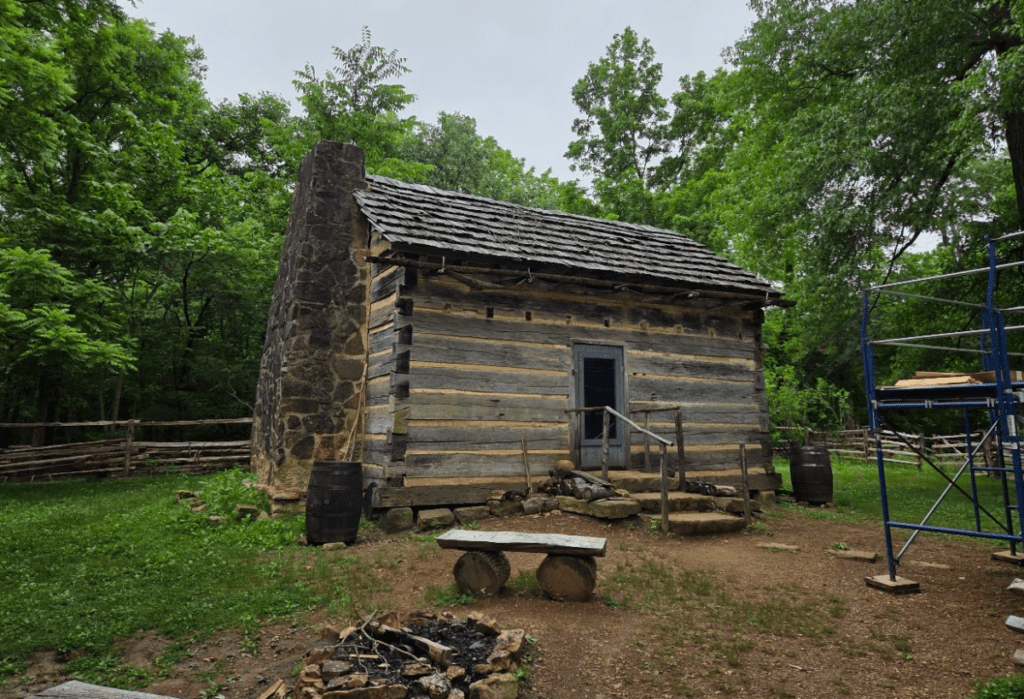
The park preserves several key sites: the Pioneer Cemetery where Lincoln’s mother Nancy Hanks Lincoln is buried, the Cabin Site Memorial marking the likely location of the Lincoln family’s last Indiana cabin, and the Lincoln Living Historical Farm. This recreation of an 1820s frontier homestead is complete with a log cabin, outbuildings, crops, and farm animals.
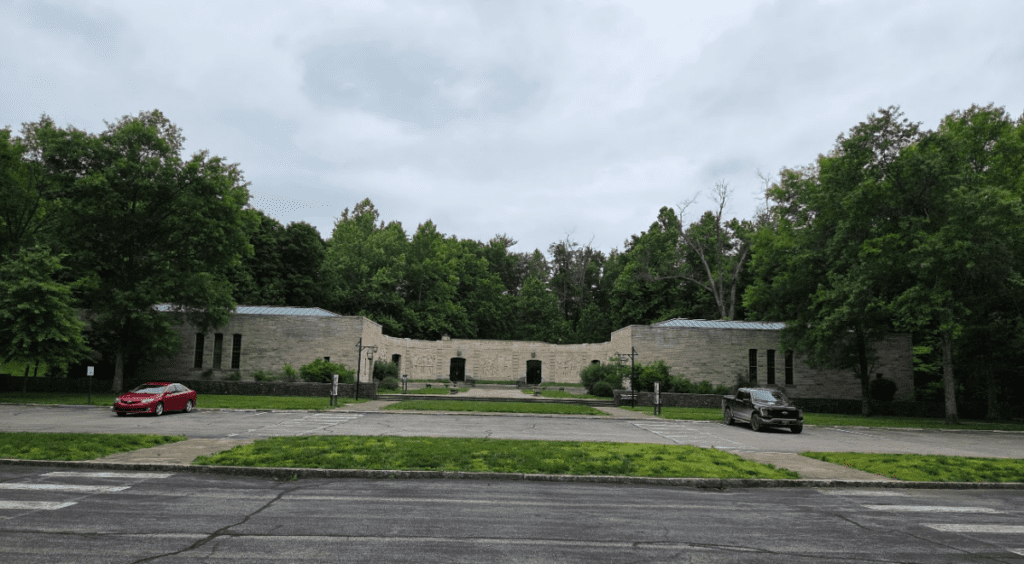
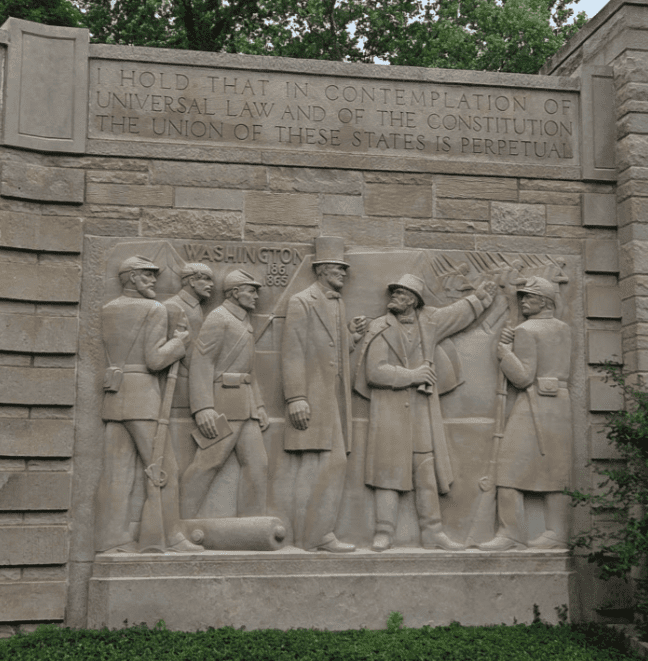
The Memorial Visitor Center, completed in 1943, features two Memorial Halls, and museum, an orientation film, and the exterior cloister wall carved with bas-relief panels by E.H. Daniels tracing Lincoln’s life from his Kentucky birth through his presidency and legacy.
The sites together provide an interactive portrait of Lincoln’s childhood that shaped him into the man he was.
Historical Context: Why Lincoln Boyhood Matters
Most people know the general story of Lincoln from the log cabin, self education, and rise from poverty to presidency. Few know that the cabin and years they imagine happened here in Indiana, not Kentucky.
The Lincoln family moved to Indiana in 1816 out of necessity. Thomas Lincoln had lost two Kentucky tracts of land to title disputes due to poorly surveyed property boundaries. Indiana offered federal land with clear surveys and the promise of ownership security.
You can visit the two units of Abraham Lincoln Birthplace National Historical Park nearby in Kentucky – click here for our free guide.
| Feature | Lincoln Boyhood | Lincoln Birthplace |
| State | Indiana | Kentucky |
| Life Stage | Ages 7–21 | Birth–Age 2, Age 2-Age 7 |
| Working Farm | Yes | No |
| Animals | Yes | No |
| Historic Cemetery | Yes | No |
| Cabin on site | Yes | Yes |
| Hiking Difficulty | Easy | Easy-Moderate |
| Memorial Building | No | Yes |
| Number of Units | One | Two |
Once Thomas staked his claim in Indiana, he returned for his family. They came by raft across the Ohio River and by wagon into dense forest. Two years after arriving, when Abraham was 9, his mother Nancy Hanks Lincoln died of milk sickness, caused by drinking milk from cows that had grazed on white snakeroot. Her death devastated the family, and she is buried in the Pioneer Cemetery that you can walk on the trail to the farm.

Thomas Lincoln remarried in 1819 to Sarah Bush Johnston, a Kentucky widow with three children. Sarah was transformative in Abe’s life, recognizing his intelligence and encouraging his love of reading.
By the time the family left Indiana in 1830, Abraham was 21 years old, six and a half feet tall, and had developed the core values of honesty, empathy, belief in education, and opposition to cruelty that would define his presidency. This National Memorial protects the land that shaped such a great man.
Best Things to Do at Lincoln Boyhood National Memorial

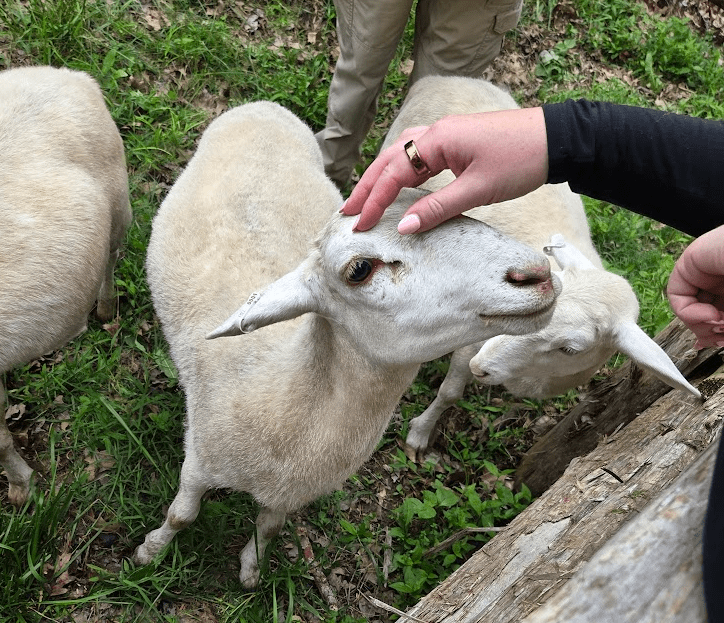
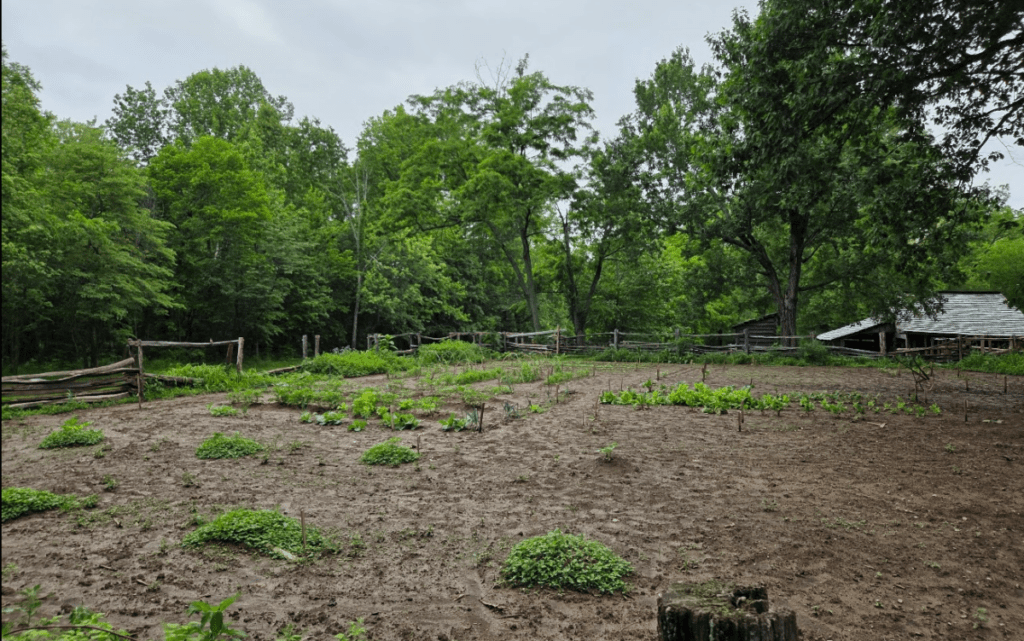
- Visit the Living Historical Farm and meet the animals. This was our favorite part of the park and is the best reason to visit with kids. Rangers were present to let us feed and pet the sheep and pet the horses. There are also chickens, and a lot of crops from corn to watermelon.
- Watch carpentry, blacksmithing, and cooking demonstrations. When the farm is staffed, rangers demonstrate the daily tasks of pioneer life: splitting wood, blacksmithing, cooking over a fireplace, and working the garden.
- Walk to the Pioneer Cemetery. The gravesite of Nancy Hanks Lincoln is a short, shaded walk from the Visitor Center.
- Explore the Visitor Center and its sculpture panels. Before hiking the trails, spend 20-30 minutes in the Visitor Center. The external wall features sculpture panels carved from Indiana limestone in 1940, depicting key chapters of Lincoln’s life. It is a beautiful and relatively unknown work of art. Inside, the 15-minute park film is a helpful orientation, and the exhibits are well-kept.
- Visit the Cabin Site Memorial. Along the trail from the Pioneer Cemetery to the Living Historical Farm sits the Cabin Site Memorial: a bronze casting of sill logs and fireplace hearthstones marking the likely location of the last Lincoln cabin in Indiana.
- Hike the Trail of Twelve Stones. This unique walk winds through the forest back towards the Visitor Center. 12 stones are gathered from places significant to Lincoln’s life, from his Kentucky Birthplace, where he delivered the Gettysburg Address, and more. Walking the trail is like moving through Lincoln’s biography.
Best Hikes
The trails at this park are wide, smooth gravel or dirt and are well-maintained. Think easy walking, not rugged backcountry. They are more historical than strenuous.
- Lincoln Boyhood Trail (0.4 miles each way, easy) – The main route from the Visitor Center to the Living Historical Farm. It begins at the flagpole, passes through the Pioneer Cemetery, stops at the Cabin Site memorial and Lincoln Spring, and ends at the farm.
- Trail of Twelve Stones (0.4 miles, easy) – The return route from the farm back to the Visitor Center. 12 memorial stones are arranged at intervals along the trail, each with a plaque identifying its origin. The overall southern loop with the Boyhood Trail out and Trail of Twelve Stones back is around 1.1 miles.
- Boyhood Nature Trail (1 mile, easy) – This is the northern loop through the wooded north section of the park. It connects with the main trail network near the Living Historical Farm. This trail has exhibits identifying native trees and plants. It is good to get a better leg stretch than just the other trails, but it has less historical significance.
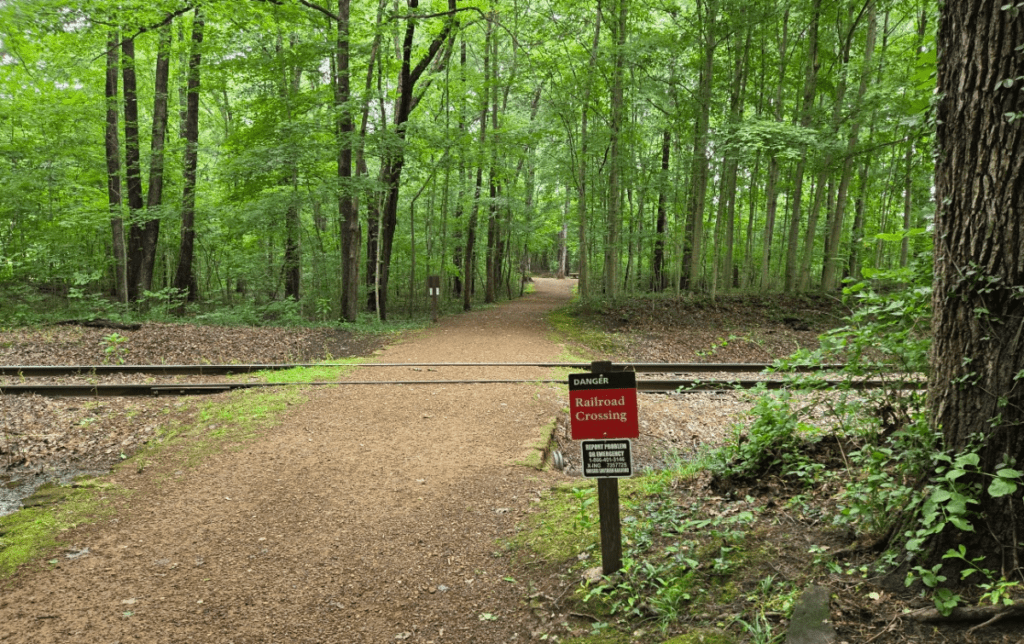
Key Areas In Lincoln Boyhood National Memorial
- The Memorial Visitor Center – Your starting point, with two Memorial Halls, a museum, the 15-minute park film, and a gift shop inside, and the sculpture panels outside.
- The Allee – This is the long grass-and-flagpole ceremonial walkway directly behind the Visitor Center. This is the dignified path that visitors take at the start of the trail loop.
- The Pioneer Cemetery – The resting place of Nancy Hanks Lincoln and at least 26 other settlers of the Little Pigeon Creek community.
- The Cabin Site Memorial – A bronze casting of cabin sill logs and a fireplace hearth, marking the most likely location of the Lincoln family’s last Indiana cabin.
- Lincoln Spring – The natural spring that served as the Lincoln family’s water source, a short walk from the Cabin Site Memorial. This reminded us of Sinking Spring at Abraham Lincoln Birthplace National Historic Site.
- The Lincoln Living Historical Farm – the four-acre recreation of the Lincoln homestead, with authentic log buildings. The farm includes a one-room log cabin, a carpenter shop, a smokehouse, a lean-to barn, gardens, field crops, and the farm animals.
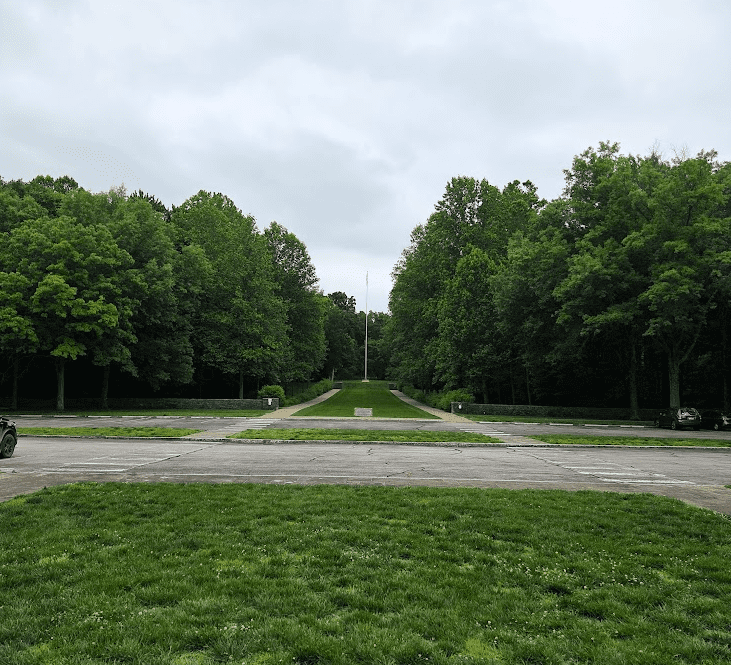
Our Experience At Lincoln Boyhood National Memorial
My wife and I visited Lincoln Boyhood National Memorial while on a trip for a cousin’s graduation. We had a lot of free time on our multi-day trip, so we decided to head over to Lincoln Boyhood National Memorial. In true Indiana style, we started off with a tenderloin sandwich to-go from Snap’s in Jasper.
We made the short drive over through Santa Claus and parked at the Visitor Center. Walking up, we were impressed by the limestone sculpture panels outside depicting Lincoln’s life. The quality of the panels had me surprised that I had not heard of this site before planning the trip.
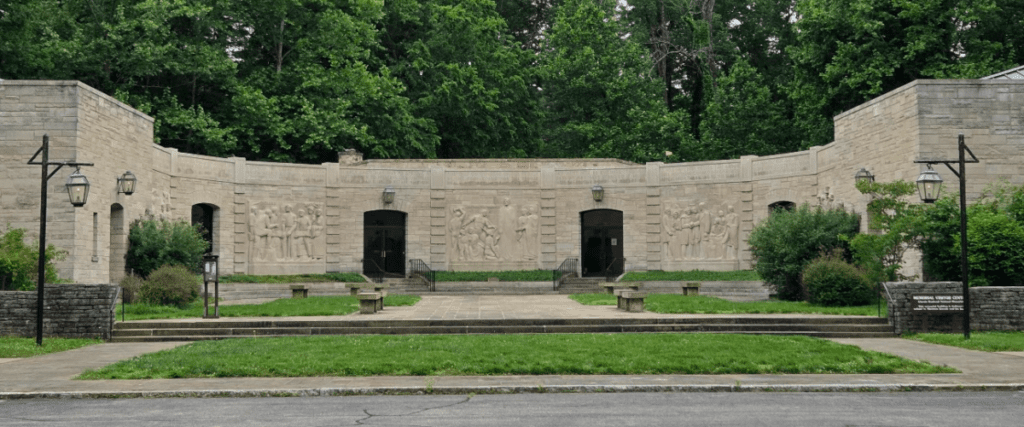
The inside of the Visitor Center contained Nancy Hanks Lincoln Hall, with a large rug and period-accurate cherry wood furniture. We learned about milk sickness and how it killed a lot of local settlers.
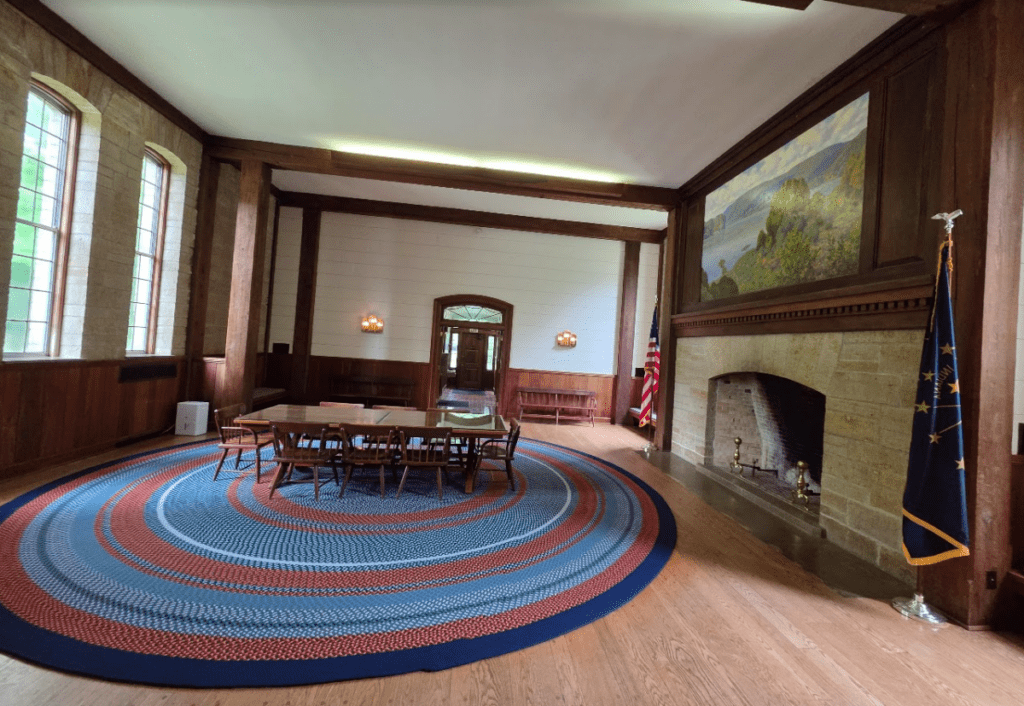
On the other side of the Visitor Center was the Abraham Lincoln Hall, which looked like an old chapel/gathering place.
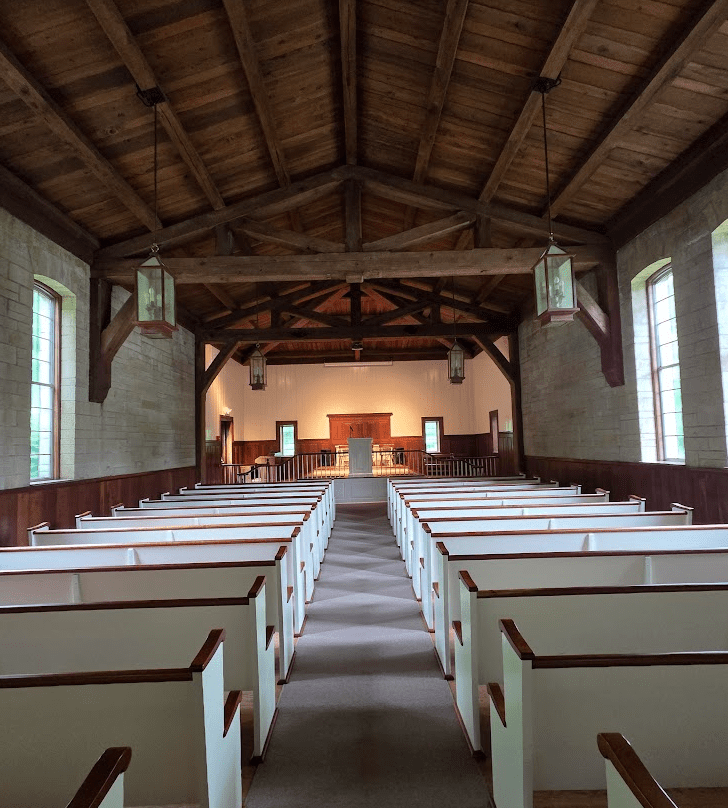
The nice park rangers turned on the park film upon our request, giving us a private showing. During our half hour in the Visitor Center, we only saw one other family. We got our stamp and headed back outside.
We started along the Trail of 12 Stones, which was a unique monument to Lincoln. I would have never thought to commemorate somebody with stones from where they lived, but the idea and its execution worked. My personal favorite stone was one from the Jones Store at Jonesboro, associated with Lincoln’s early manhood. This was unexpected, seeing as the site was about Lincoln’s boyhood.
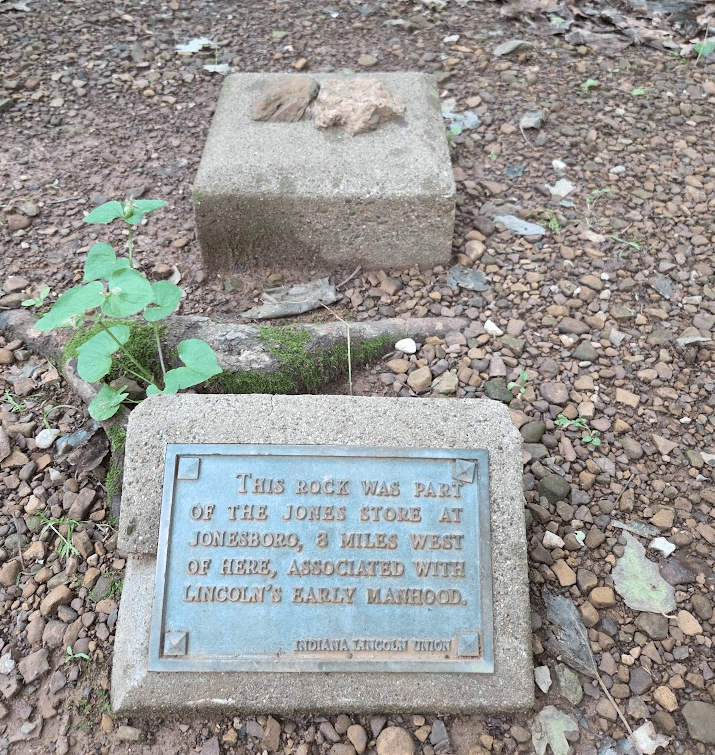
The northern tract continued with the Boyhood Nature Trail, and at the start we saw something totally awesome: a log cabin outhouse! This is my favorite outhouse yet and was much nicer than the ones at other National Parks.

We saw several rabbits as the loop continued to the Cabin Site Memorial. The ruins present at the Cabin Site Memorial reminded us of Fort Frederica on the Georgia coast, and there was not a whole lot left. There was a reconstructed cabin, but it was closed at the time we got there.
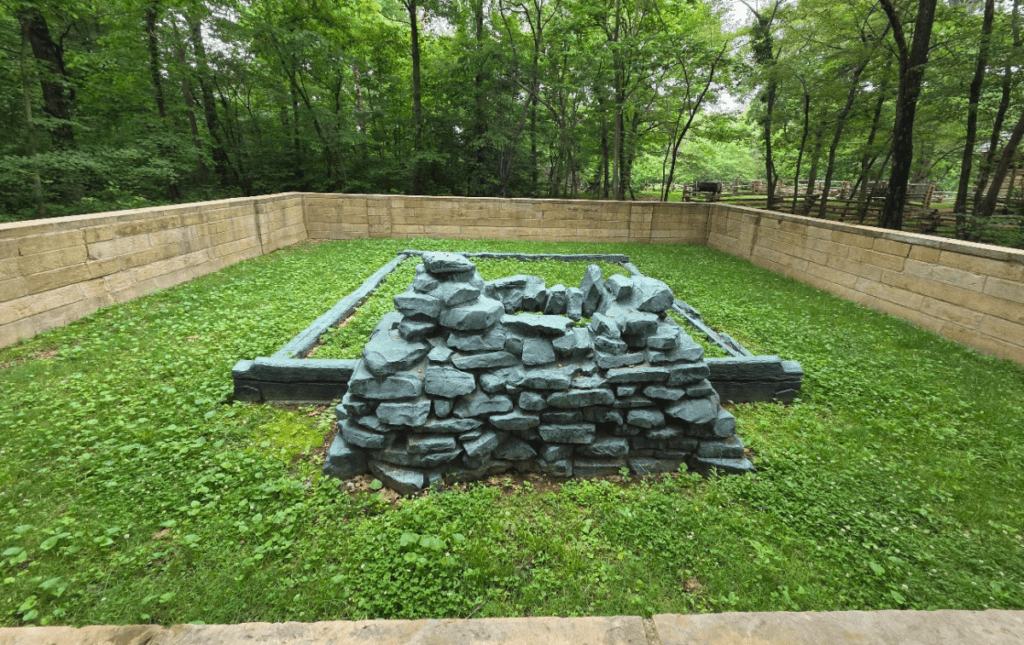
Lincoln Spring was found via a short detour, but it was covered by a large rock. I was very tempted to lift the log and try to drink some water, but my wife advised against this. Maybe next visit the spring will be un-capped.
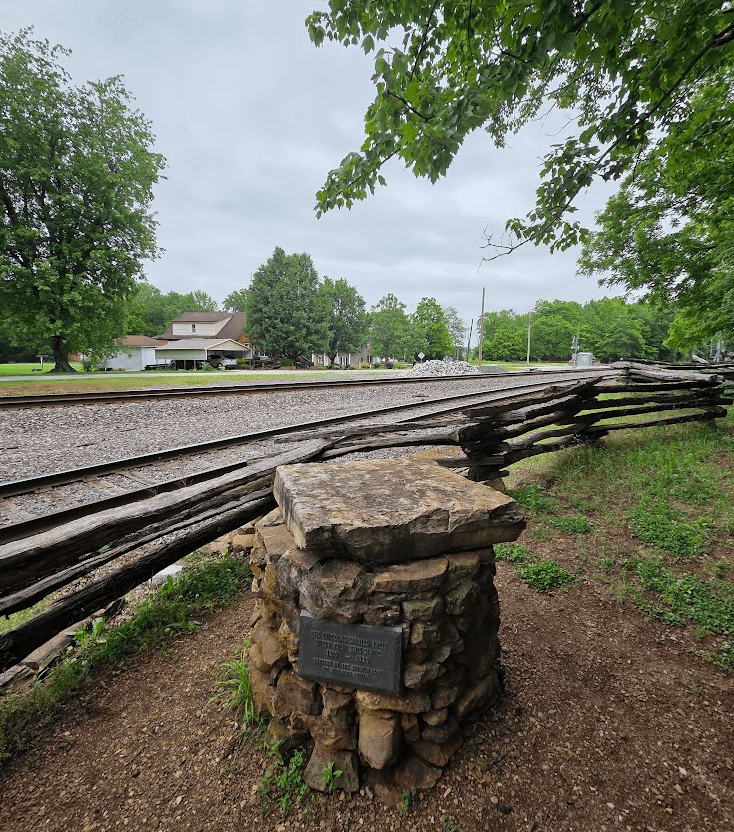
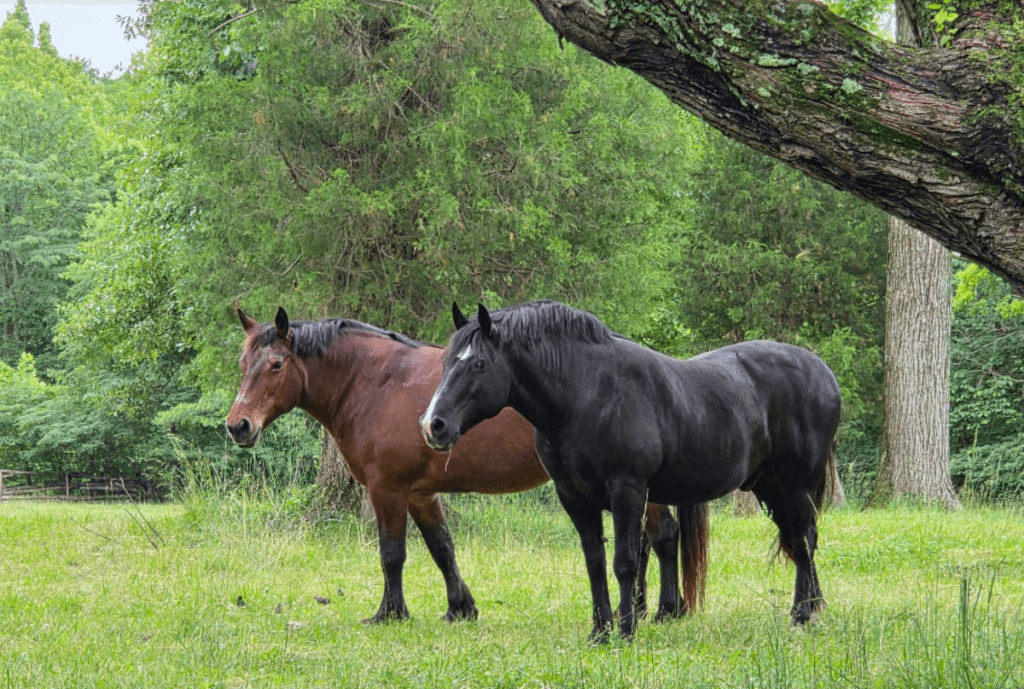
At the Lincoln Living Historical Farm, we saw the biggest horses I have ever seen. They were not exceptionally tall, but they were exceptionally wide. Two rangers brought the horses over and let us pet them, a highlight of the trip for my wife.
Next up were the sheep, and the park rangers let us feed them. They were hair sheep, and they were very friendly. This was probably the highlight for me.
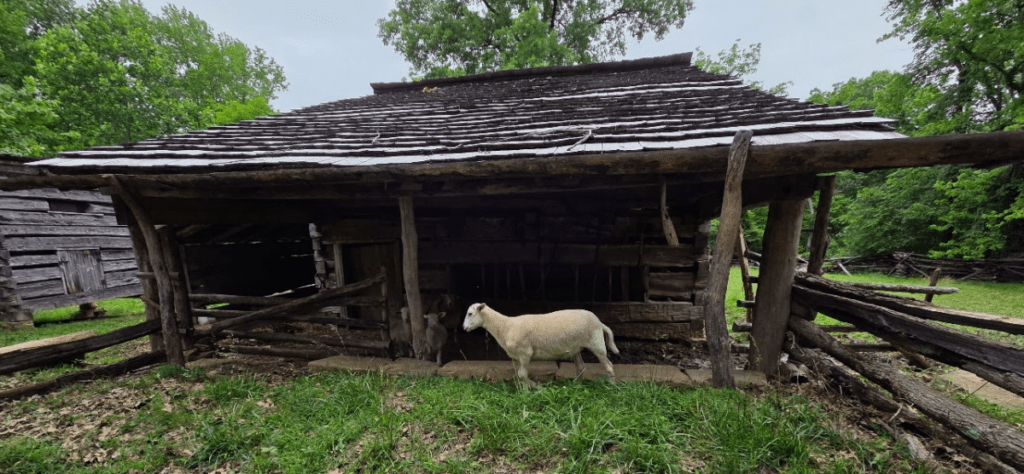
The chickens were already put to bed, so we did not get to interact with them.
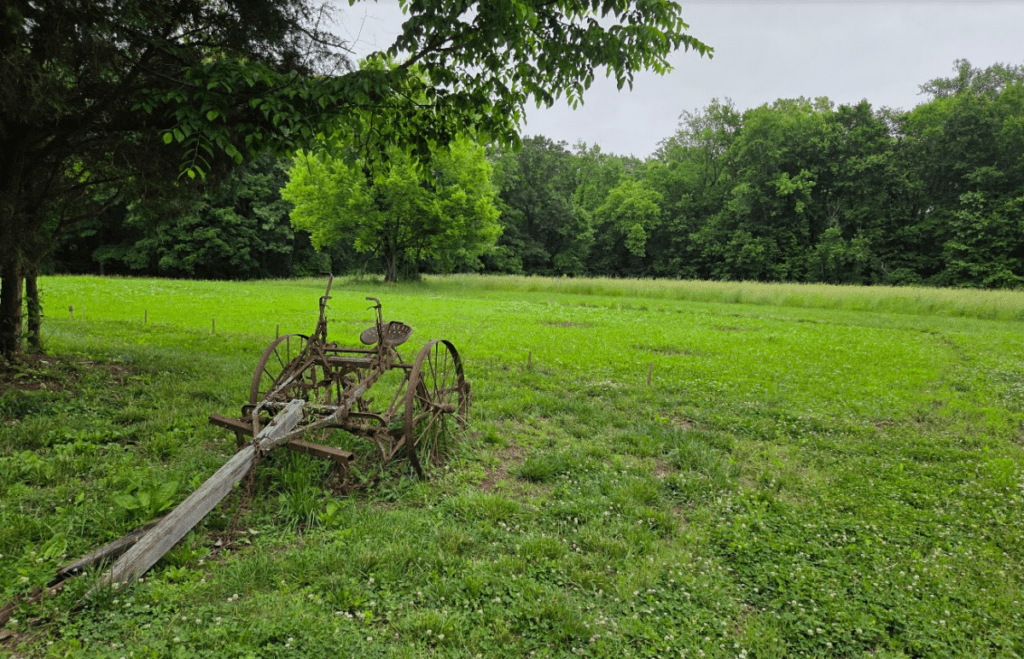
The rest of the Historical Farm was neat, and we saw fields of corn and even watermelon mounds starting. There was a huge field of flowers blooming which was another nice touch.
Our last stop on the way back to the Visitor Center was the Pioneer Cemetery. This was a solemn way to end our time at Lincoln Boyhood National Memorial, so I would recommend that you do this first on your way out on the trail, and the Trail of 12 Stones on your way back to end in a lighter mood.
Our visit was around 2 hours, totally free, and satisfying. We finished up our afternoon with a trip across the street to Lincoln State Park and hiked around the lake.
Don’t Make Our Mistake
Lincoln Boyhood is in the Central Time Zone. This was a problem for us because our lunch in Jasper was in the Eastern Time Zone, so we ended up arriving at the park kind of late. The Visitor Center is only open until 3pm, and while we had enough time to see that in its entirety, we missed out on see the Living Historic Farm in action.
We got to feed and pet some of the animals as they put them away for the day, but we missed out on seeing the farm buildings, demonstrations, and inside of the cabin.
What We Would Do Differently
- Arrive earlier to see the Living Historic Farm in action
- Hike the trails clockwise instead of counterclockwise, to start with the Pioneer Cemetery and end with the Trail of 12 Stones

How To Visit In 2 Hours
- 1:00PM – Arrive, stop at the Visitor Center, Watch the 15-minute film and browse the exhibits and sculpture panels
- 1:30PM – Head to the allee and Pioneer Cemetery, hike clockwise to the Cabin Site Memorial and Lincoln Spring
- 1:45PM – Arrive at the Living Historical Farm, meet the horses, sheep and chickens. See the ranger demonstrations, cabin, and crops growing
- 2:20 PM – Hike the Nature Trail and the Trail of Twelve Stones back
- 3:00PM – Head to Lincoln State Park for more hiking, or conclude your trip
If You Only Do One Thing
Walk to the Living Historical Farm and spend time with the horses and sheep. The other areas and activities in the park add context and meaning, but the farm and working demonstrations will stick with you and provide an immersive experience into Lincoln’s early life.
Where To Eat Near Lincoln Boyhood National Memorial
There are no food options inside the park, and Lincoln City is small. Your best bets are Santa Claus and Dale, 5-8 miles away.
- Darlena’s Lincolnland Restaurant – The most thematically accurate pick with homestyle breakfast and lunch
- Santa Claus Brewing Co. — A local craft brewery and casual restaurant in Santa Claus
- Jimador Bar & Grill — A full-menu Mexican restaurant in Dale
- Jenk’s Pizza (Dale) — A local pizza favorite in Dale
Where To Stay Near Lincoln Boyhood National Memorial
The closest and most immersive choice is camping at the Lincoln State Park Campground across the street.
Other nearby options are:
- Quality Inn & Suites, Rockport — About 20 minutes south on the Ohio River Scenic Byway
- Baymont Inn and Suites / Motel 6, Dale — About eight miles north in Dale
- Holiday World Area Hotels, Santa Claus – Five miles east in Santa Claus
Our recommendation would be to stay in Jasper, which is a little more populated and has more options.
Tips For Visiting Lincoln Boyhood National Memorial
- Call ahead to verify hours, especially for the Living Historical Farm. It is normally open from mid-April through September
- The Visitor Center is Closed Monday and Tuesday, make sure to visit Wednesday through Sunday
- Admission is free
- The park is in the Central Time Zone, which is different from many nearby towns and cities
- Bring hand sanitizer to clean up after petting the animals
- Dogs are allowed on the trails but not in the buildings
- The trails are gravel or smooth dirt and are not fully ADA accessible
- A second parking area is available near the Living Historical Farm
When To Visit Lincoln Boyhood National Memorial
The park grounds are open year-round, daylight to dusk. The Pioneer Cemetery, Cabin Site Memorial, farm grounds, and trails are accessible every day.
The Visitor Center is currently open Wednesday through Sunday, 9:00 AM to 12:00 PM and 1:00 to 3:00 PM. Closed Monday, Tuesday, Thanksgiving, Christmas, and New Year’s Day.
The Living Historical Farm is staffed from mid-April through September, noon to 3:00 PM. Outside those dates, the farm grounds and animals remain visible but buildings are locked and demonstrations don’t run. Call ahead to verify hours.
Best time to visit: Mid-April or September for the full farm experience without super oppressive weather.
Always check the Lincoln Boyhood National Memorial website at nps.gov/libo or call for the most up-to-date information.
What To Bring To Lincoln Boyhood National Memorial
- Walking shoes
- Water
- Hand Sanitizer
- Sunscreen and Bug Spray in summer
- Light Jacket for spring and fall
- Camera
- Picnic lunch
Fees & Reservations
Admission is completely free with no entrance fee or reservations needed.
Frequently Asked Questions
Is Lincoln Boyhood National Memorial worth visiting?
Absolutely. The Living Historical Farm, pioneer cemetery, trails, and exhibits provide a unique look at the years that shaped Abraham Lincoln’s character and values.
What is the best thing to do at Lincoln Boyhood National Memorial?
For most visitors, the Living Historical Farm is the highlight. Seeing the animals, crops, and ranger demonstrations makes Lincoln’s frontier childhood feel real in a way exhibits alone cannot.
Can you see Abraham Lincoln’s actual cabin?
No. The original cabin no longer exists. The Cabin Site Memorial marks the likely location of the family’s final Indiana home, while the Living Historical Farm recreates what the homestead would have looked like during Lincoln’s youth.
Can you pet the animals at Lincoln Boyhood National Memorial?
Yes! The horses, sheep, and sometimes the cows at the Living Historical Farm can be approached along the fence and are accustomed to visitors. Rangers are present during staffed hours (noon–3 PM, mid-April through September) and can introduce you to the animals and tell you about the breeds, which are chosen for period authenticity. Bring hand sanitizer.
When is the farm staffed?
Mid-April through September, noon to 3:00 PM daily. Outside those hours, the farm grounds and animals are visible but buildings will be locked. Call (812) 937-4541 to confirm current staffing before you visit.
Is Lincoln Boyhood good for kids?
Yes. The farm animals, easy trails, demonstrations, and hands-on atmosphere make it one of the most family-friendly National Park Service sites in Indiana.
Is the park accessible?
The Visitor Center is accessible. The trails are gravel and dirt with some hills and are not fully ADA compliant, though visitors in wheelchairs with larger tires can sometimes reach the farm with assistance. A secondary parking area near the farm is available for visitors with mobility limitations — ask rangers at the Visitor Center for details.
How long does it take to visit Lincoln Boyhood National Memorial?
One to two hours covers the Visitor Center, Pioneer Cemetery, Cabin Site Memorial, Living Historical Farm, and Trail of Twelve Stones at a relaxed pace. Budget closer to two hours if you plan to linger at the farm.
What is milk sickness?
Milk sickness is the illness that killed Nancy Hanks Lincoln in 1818 and many other settlers in the Ohio River Valley during the early 1800s. It’s caused by ingesting milk or dairy products from cows that have grazed on white snakeroot, a shade-loving plant common to the region that contains the toxin tremetol. The cause was not identified until the 1820s–1830s. The Visitor Center has an excellent exhibit on the disease and its devastating impact on frontier communities.
Is there anything to do here in winter?
The park grounds are open year-round. The Pioneer Cemetery, Cabin Site Memorial, farm grounds, and trails are accessible every day dawn to dusk. The Visitor Center operates on a reduced schedule (Wednesday–Sunday). The farm animals remain on-site year-round though demonstrations don’t run. The Candlelight Evening at the Farm (November/December) is a popular winter event.
Can I drive to the farm instead of hiking there?
Yes. There is a secondary parking area closer to the Living Historical Farm accessible from South Street. Ask for directions at the Visitor Center or check the park map.
Conclusion
Lincoln Boyhood is a laid back and interactive NPS site which left a lasting impression. The combination of the quiet cemetery and humble cabin with artistic sculpture panels and a working pioneer farm really resonated with me and my wife.
If you ever find yourself in Southern Indiana, you won’t regret stopping at this National Memorial.
Other Sights Near Lincoln Boyhood National Memorial
Lincoln State Park: Directly across the road from the park entrance, Lincoln State Park offers hiking trails, a swimming lake, camping, and the Lincoln Amphitheatre, which hosts outdoor musicals in summer. (See our gull guide to Lincoln State Park for more details.)
Lincoln Pioneer Village & Museum, Rockport(30 minutes south): Thirteen Lincoln-era replica log cabins assembled in Rockport tell the story of frontier Indiana life.
Santa Claus, Indiana (5 miles east): A fun contrast to a day of historical reflection.
George Rogers Clark National Historical Park, Vincennes, IN(63 miles northwest): The free national park honoring the Revolutionary War hero who secured the Northwest Territory (See our full guide to George Rogers Clark National Historical Park for details.)
Abraham Lincoln Birthplace National Historical Park, Hodgenville, KY (117 miles southeast): The site of Lincoln’s birth, with the neoclassical First Lincoln Memorial, the symbolic birth cabin, Sinking Spring, and the Knob Creek boyhood unit. Combining Lincoln Boyhood Indiana with the Kentucky Birthplace site makes for a definitive two-park Lincoln road trip through his earliest years. (See our full guide to Abraham Lincoln Birthplace National Historical Park for details.)
Leave a Reply