
George Rogers Clark National Historical Park preserves the site of one of the most important American victories of the Revolutionary War. Located in Vincennes, Indiana, the park honors George Rogers Clark and his successful 1779 campaign to capture Fort Sackville, a victory that helped secure the Northwest Territory for the United States. Most Americans have never heard of, but this victory shaped the nation we live in today.
We visited while road tripping Indiana/Kentucky in May 2026. This guide contains everything you need to know before you go.
Is George Rogers Clark National Historic Park Worth Visiting?
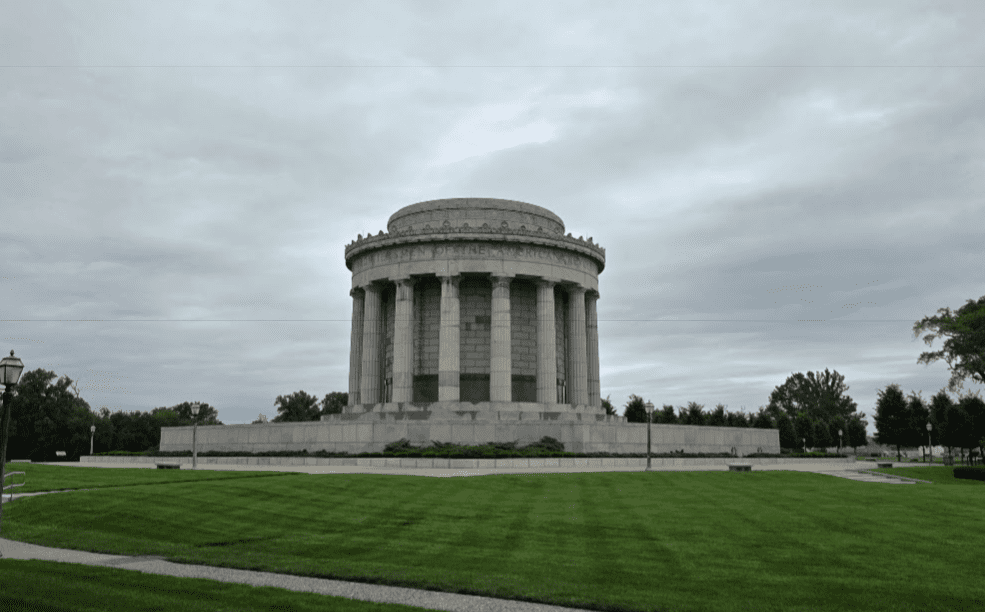
Yes, if you are in the area or combining it with a Vincennes or Lincoln Boyhood National Memorial visit. It’s free, beautiful, and introduces you to a chapter of the American Revolution that most people do not know about. This is one of the largest national monuments outside of Washington DC, with a classical rotunda, a bronze statue of Clark, and seven giant murals depicting one of the most audacious military campaigns in American history.
The park film had us on the edge of our seats. If you’re a history enthusiast, Revolutionary War buff, or just somebody who enjoys great architecture in unexpected places, this would make for a good visit.
Quick Facts
Location: 401 S. 2nd Street, Vincennes, IN 47591
Time Needed: 1-2 hours
Best For: History enthusiasts, road trippers, architecture lovers, families
Best Feature: Clark Memorial
Don’t Miss: The Long Knives film
Best Time to Visit: Spring and fall; any weekday for the fewest crowds
Hours: Visitor Center open daily 9:00 AM – 5:00 PM; Memorial open 9:00 AM – 4:45 PM
Admission: Free
Official Website: nps.gov/gero
Overview Of George Rogers Clark National Historic Park

George Rogers Clark National Historic Park sits on 24 acres along the Wabash River at the believed sight of Fort Sackville – a British-held fort that fell to Clark and his frontier force in 1779. That victory, unknown today, secured American claims to the Northwest Territory, an area the size of the original 13 states combined.
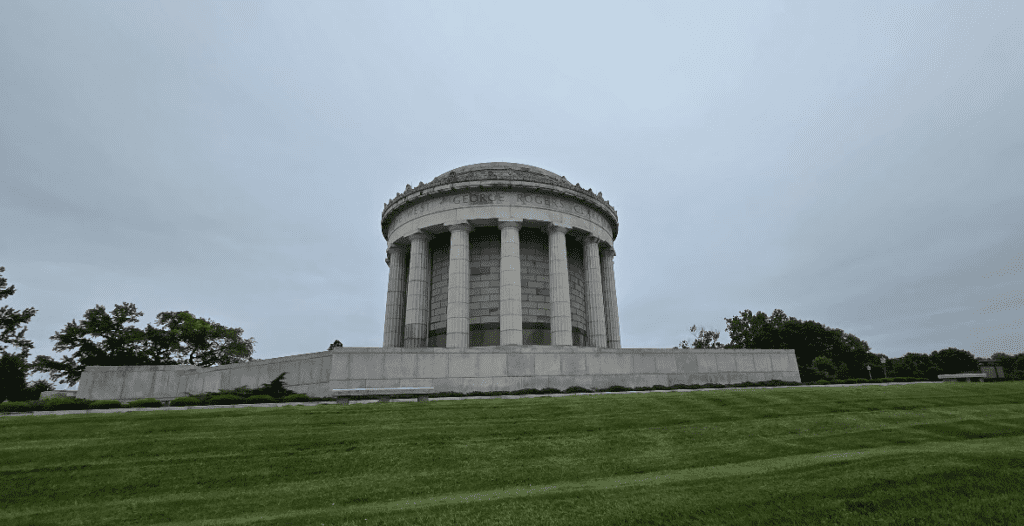
The park’s centerpiece is the George Rogers Clark Memorial, a massive circular granite structure completed in 1933 and dedicated by FDR in 1936. It stands as the largest national monument outside Washington D.C. Adjacent to the memorial is a Visitor Center with exhibits, a small gift shop, and a 30-minute film. The Wabash River setting on the Illinois border makes the surrounding area as pleasant as the monument.
Historical Context: Why This Place Matters
The story behind this park is one that I was never taught in school, and chances are that you weren’t either.
In 1778, the western frontier of the young United States (between the Appalachian Mountains and the Mississippi River) was effectively controlled by the British and their Native American allies. British Lieutenant Governor Henry Hamilton (nicknamed “Hair Buyer Hamilton” by American settlers for reportedly paying bounties for American scalps) held Fort Sackville at Vincennes as a key strategic stronghold.
Twenty-five-year-old Lieutenant Colonel George Rogers Clark conceived a plan as bold as it was improbable: march a force of roughly 170 American frontiersmen and French volunteers from Kaskaskia, Illinois, across 180 miles of flooded winter wilderness, and take the fort by surprise. In February 1779, in freezing floodwaters sometimes chest deep, Clark’s army did exactly that. On February 25, 1779, Hamilton surrendered.
The victory handed the United States a legitimate claim to the Northwest Territory (present-day Indiana, Ohio, Illinois, Michigan, Wisconsin, and part of Minnesota) in the Treaty of Paris that ended the Revolution four years later. Clark’s older brother William would later co-lead the Lewis and Clark Expedition into the Louisiana Purchase territory. But George Rogers Clark, who died in poverty and obscurity in 1818, largely faded from the national memory his campaign helped create.
This park is his memorial.
Why George Rogers Clark Matters
Before visiting this park, I had never heard of George Rogers Clark. After spending an hour here, I couldn’t believe I had made it through school without learning his story.
At just 25 years old, Clark led a campaign that helped secure the Northwest Territory for the young United States during the Revolutionary War. Today, that territory includes Indiana, Illinois, Ohio, Michigan, Wisconsin, and part of Minnesota. Looking at a map, it’s hard to overstate how much land that is. Without Clark’s victory at Vincennes, America may have looked very different after the war.

What makes his story even more surprising is how little recognition he received. While George Washington became a household name, Clark died in relative poverty and was largely forgotten by history. Yet the territory his campaign helped secure became home to millions of Americans and played a major role in the country’s westward growth. Standing inside the massive memorial, it’s hard not to wonder why more people don’t know who he was.
How George Rogers Clark Helped Win the American Revolution
When most people think about the American Revolution, they think about battles on the East Coast. Names like Yorktown, Saratoga, and Lexington come to mind. Meanwhile, hundreds of miles away on the frontier, George Rogers Clark was fighting a very different kind of war.
In the late 1770s, the British controlled Fort Sackville at Vincennes and much of the territory north of the Ohio River. To challenge that control, Clark assembled a force of frontiersmen and French allies and marched across what can only be described as miserable conditions. During the winter of 1779, his men traveled roughly 180 miles through flooded wilderness, sometimes wading through freezing water for days at a time.
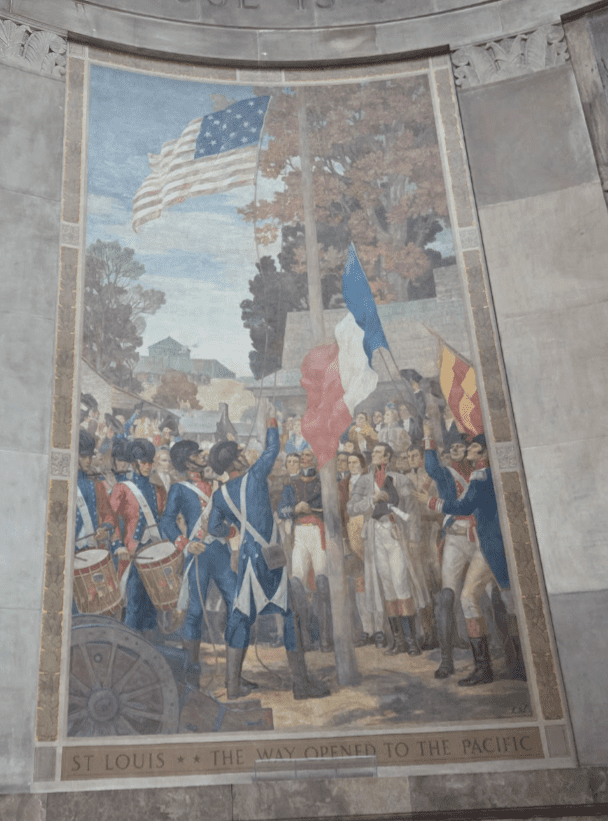
When they finally reached Vincennes, Clark’s exhausted force surrounded Fort Sackville and demanded its surrender. Against all odds, British commander Henry Hamilton gave up the fort on February 25, 1779.
The victory didn’t end the Revolutionary War, but it gave the United States a strong claim to the Northwest Territory when peace negotiations began a few years later. After watching the park film and seeing the memorial murals, it became much easier to understand why this battle mattered. Clark’s march wasn’t just an impressive military feat—it helped shape the map of the United States that we know today.
Best Things to Do at George Rogers Clark National Historic Park
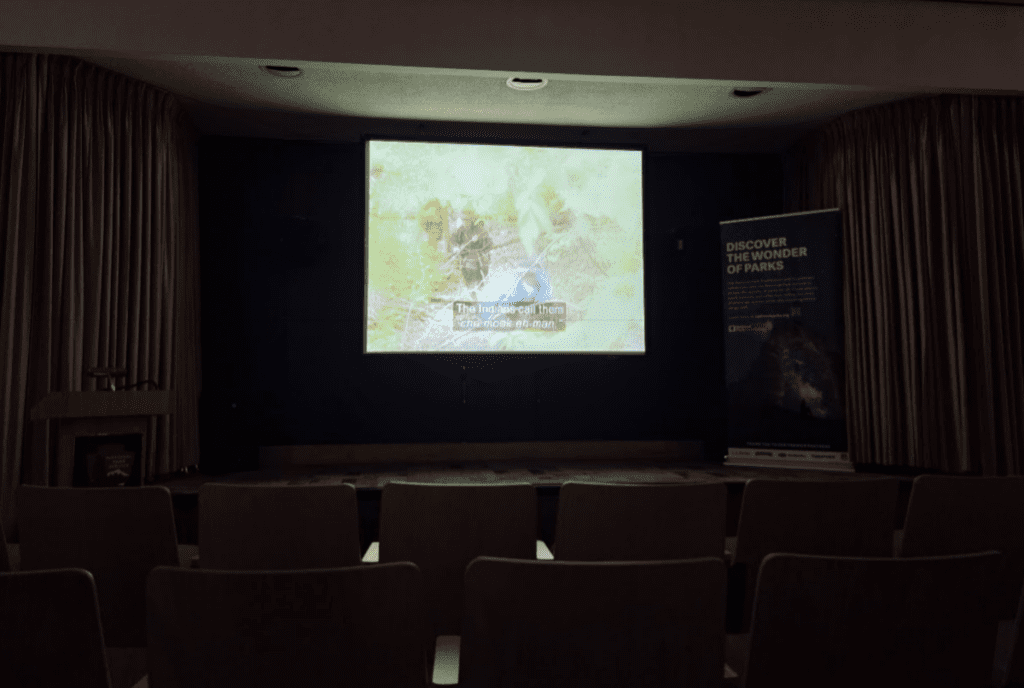
- Watch the Long Knives film. This 30-minute film is the best way to gain context before stepping outside. It has a strong production value as a live-action documentary style. You will learn about Clark’s campaign and famed winter march to victory.
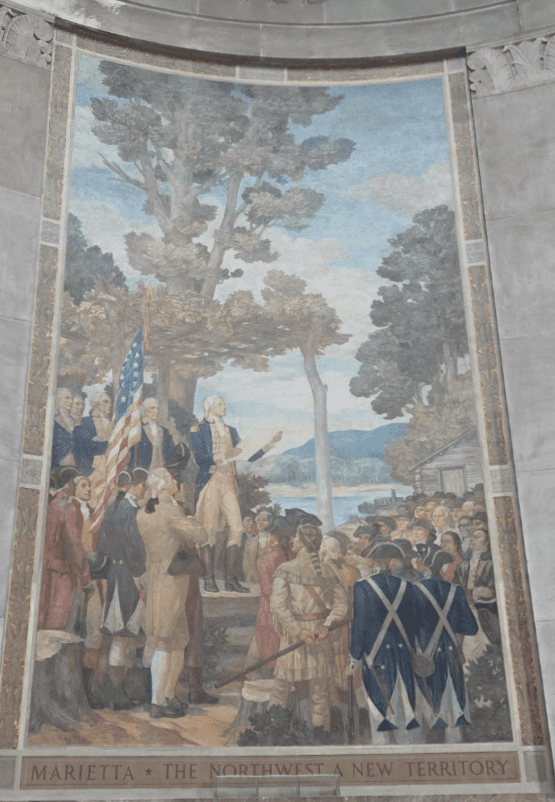
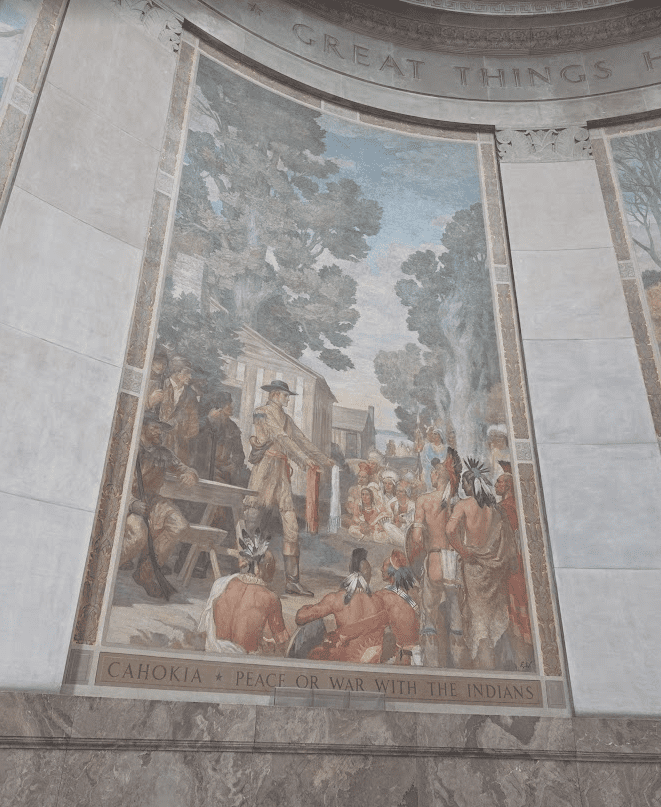
- Explore the Clark Memorial. Built in ancient Greek style, the memorial building is the main event at 80 feet high and 90 feet across. Inside it stands a 7.5-foot tall bronze statue of Clark, along with seven murals by Ezra Winter. Each is 16ft wide by 28 ft tall and depicts key scenes from Clark’s campaign.
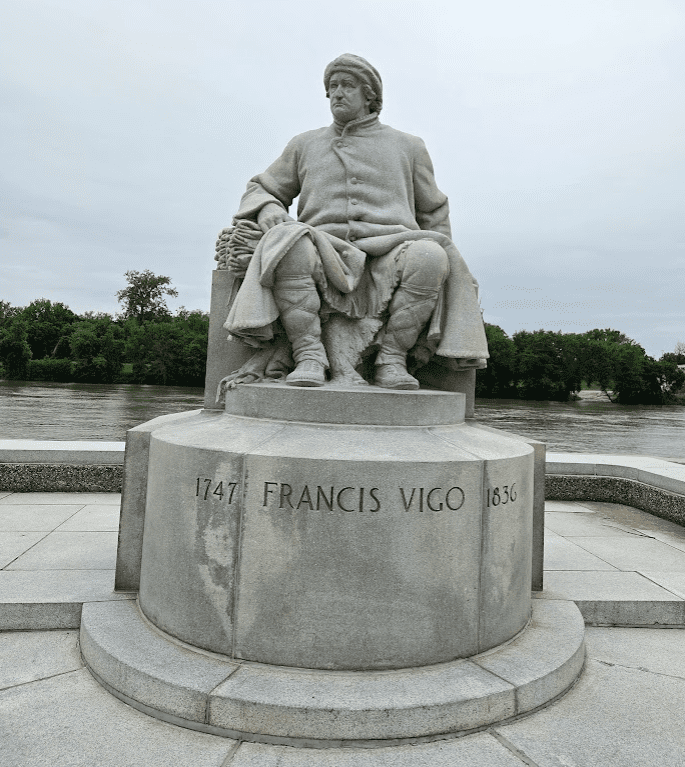
- Stroll the grounds and wayside exhibits. A statue of Francis Vigo, the Spanish merchant who funded Clark’s campaign, stands next to the river. A 15-minute walk covers the full grounds.
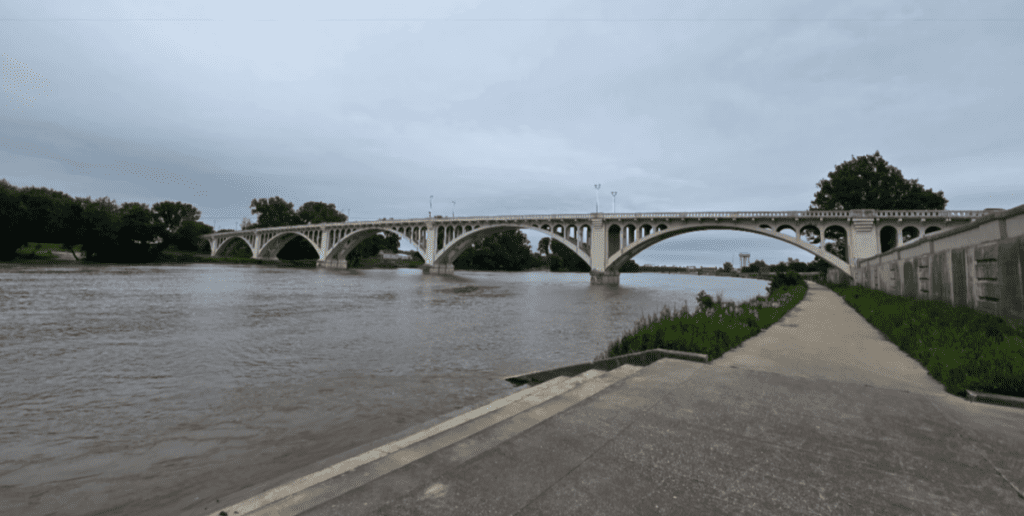
- Walk to the Lincoln Memorial bridge. A short walk takes you to the Lincoln Memorial Bridge spanning the Wabash River from Indiana to Illinois. It offers a sweeping view of the river, the memorial, and the Vincennes skyline.
- Talk to a park ranger. The park normally has rangers present in the memorial building and can answer any questions that you have. During our visit, that ranger helped us fill gaps in our knowledge from the film.
Hiking and Outdoor Exploration
This is not a hiking destination, and the park is 24 acres and urban. There are no designated hiking trails, but the grounds are pleasant to walk. It is flat, paved, and accessible. A stroll down the river is nice too and was uncrowded during our May visit.
Key Areas In George Rogers Clark National Historic Park
- The Visitor Center – Your first stop, with exhibits on the American Revolution in the Northwest Territory, a diagram of the frontiersmen, and the theater showing the Long Knives film.
- The George Rogers Clark Memorial – The circular granite rotunda at the heart of the park, housing the seven Ezra Winter murals and the bronze statue of Clark. It is open upon request.
- The Outdoor Sculpture Garden – On the grounds surrounding the memorial, look for the granite statue of Francis Vigo and the statue of Father Gibault. Make sure to read the plaques.
- Lincoln Memorial Bridge Overlook – The river walk is peaceful and reflective, and you can try to imagine what the Long Knives’ trek would have been like in the dead of a flooded winter through the water.
Our Experience At George Rogers Clark National Historic Park
My wife and I snuck away on a trip to see family to check out this site, located under an hour from where we were staying. We arrived around 9am, not really sure what to expect.
On our walk to the Visitor Center, we saw people dressed in colonial garb and getting ready for a reenactment. We were unable to make it to that, but we did hear somebody playing marching songs on a flute!
Starting at the Visitor Center, the rangers turned on the Long Knives film upon our request. Having seen dozens of park films, this one was the best by far. It had unexpectedly high production quality and the story it told kept us on the edge of our seats. I couldn’t believe the march from Kaskaskia, that had to have been the one of the fist ultramarathons, completed in the dead of winter on flooded rivers. For the starving, frigid soldiers to win that fight after a 180-mile slog on minimal food blew my mind.
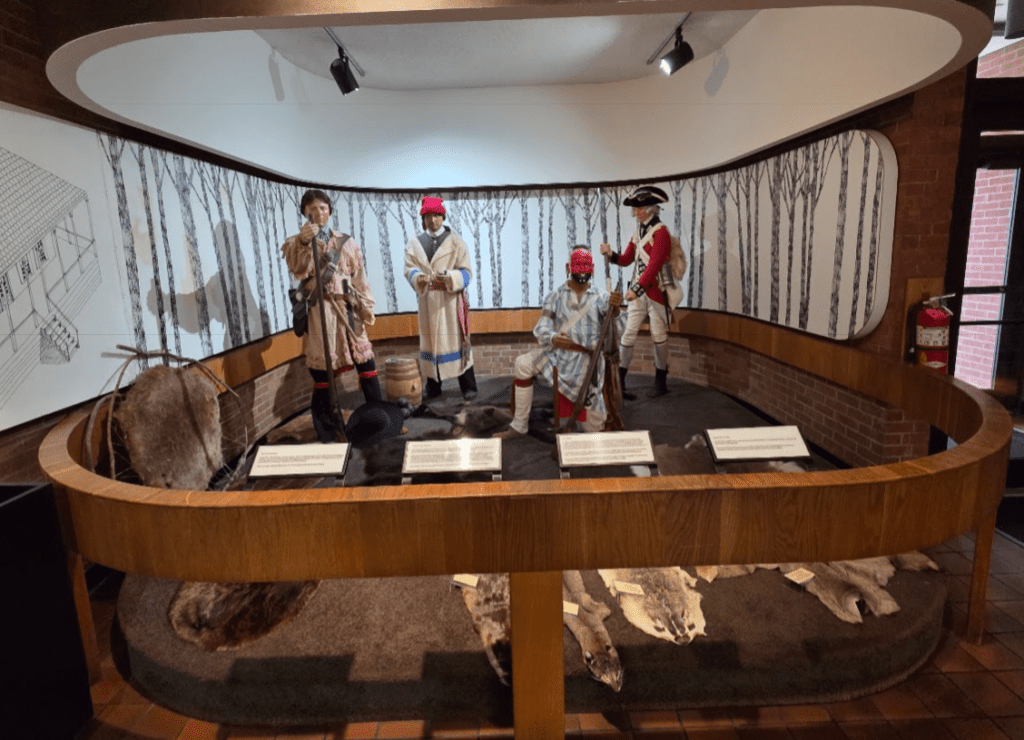
The Visitor Center displays were small, but powerful. I particularly enjoyed seeing the animal-skin rugs and the beaver pelt being stretched out.
After getting our stamp and buying a sticker, the nice park ranger took us over to the memorial and unlocked it. He stood by while we viewed the statues and murals. My wife and I were legitimately shocked at the quality of this memorial.
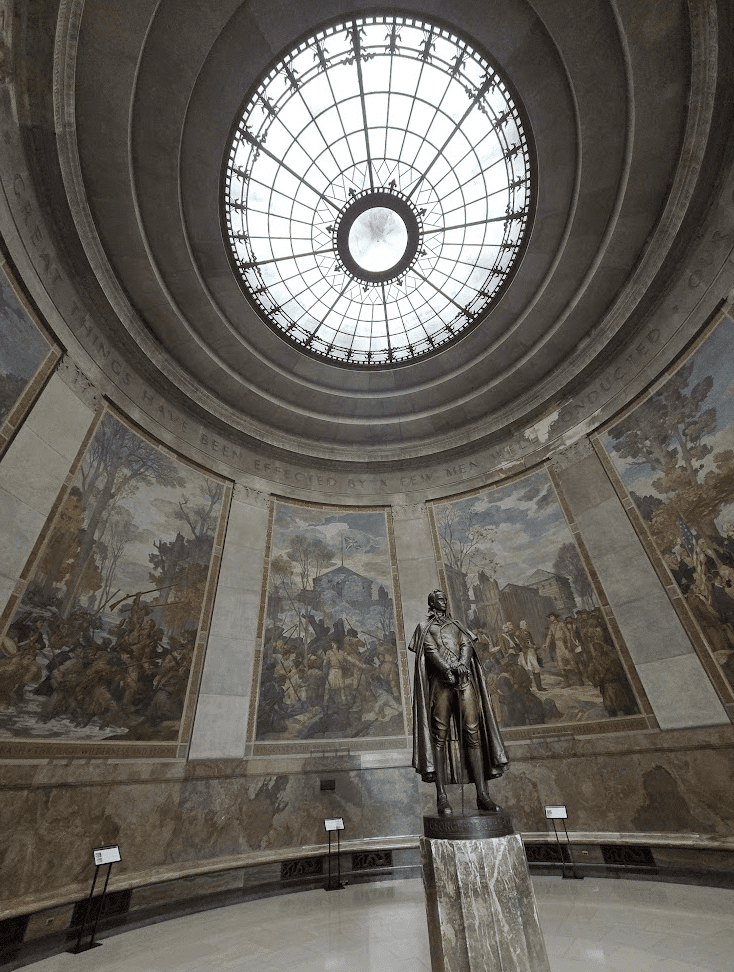
For somebody who I had never heard of, George Rogers Clark pulled off an impressive, impossible-sounding military feat that secured our claim to double the size of America. The memorial murals document his story, and the film provided the context we needed to fully understand it.
We conversed with the ranger, who answered all of our questions about America after the battle and how long it took to fully evict the British.
Walking the grounds was nice, and we enjoyed the statues. The river was moderately high, and we walked down the steps to feel the water (still cold in May!) that the Long Knives spent days crossing.
The total time we spent at this site, including parking, was around an hour and a half.
Don’t Make Our Mistake
We almost skipped the film, since it was not playing on a loop when we arrived. Talk to the rangers, they were happy to start the film for us at our leisure. The Indiana NPS rangers have been the nicest we have met yet in our travels, and they seemed like they really enjoyed sharing this missing chapter in American history.
What We Would Do Differently
We were a day too early for the reenactment, so we would try to time this visit along with a reenactment. My wife was hoping we could see somebody swim across the river, but we will have to attend to find out if they actually do that.
How To Visit In 1-2 Hours
This is a short-visit park and 1-2 hours is the right amount of time to fully experience it.
- 9:00am – Arrive at the Visitor Center and settle in for the 30-minute Long Knives film
- 9:30am – Get your stamp, view the exhibits, and talk to the rangers
- 9:45am – Climb the 33 steps to the Clark Memorial, and spend some time taking them in. Ask the ranger any additional questions that come up as you visualize the journey and battle
- 10:10am – Walk the grounds and go the river, try to imagine what it would have been like to travel so far, cross in the freezing cold, and fight a winning battle with limited men to double the size of America
If You Only Do One Thing
Watch the Long Knives film and step into the memorial rotunda. The film takes 30 minutes and the memorial takes 15. This 45-minute combination captures the essence of the park and expands your understanding of the founding of America.
Where To Eat Near George Rogers Clark National Historic Park
There are no food options inside the park, but Vincennes has several good options:
- Graze 1885 – Dining in one of the downtown historic buildings, good for breakfast or lunch.
- Impressed Coffee Company – Highly regarded local shop on Main Street.
- Old Thyme Diner – Comfort food with daily lunch specials, and an old-school atmosphere.
- Café Moonlight – A more upscale option with fresh-made sandwiches and soups at lunch and an elevated dinner menu.
Where To Stay Near George Rogers Clark National Historic Park
Vincennes has a cluster of national chain hotels within a few miles of the park:
- Hampton Inn Vincennes
- TownePlace Suites by Marriott Vincennes
- Holiday Inn Express Vincennes
- Comfort Suites Vincennes
Tips For Visiting George Rogers Clark National Historic Park
- Watch the film first. The murals will make a lot more sense once you understand the march and battle.
- Confirm the memorial is open before you travel. Check to make sure there are no closures.
- Bring or use a wide-angle lens if possible in the rotunda.
- The park is completely free. No passes or reservations required, just show up.
- The Visitor Center and grounds are wheelchair accessible, but the memorial itself is not.
- Free parking is available adjacent to the Visitor Center.
- Rangers are exceptionally knowledgeable. Don’t hesitate to ask questions, they almost always know the answer.
- The park is in the Eastern Time Zone. This is worth noting if you are coming from Illinois, Evansville, or Kentucky.
- Special events happen here. We narrowly missed a reenactment and wish we could have attended.

When To Visit George Rogers Clark National Historic Park
The Visitor Center is open daily from 9:00 AM to 5:00 PM. The Clark Memorial is accessible on request from 9:00 AM to 4:45 PM. The park grounds are open dawn to dusk.
The park is open year-round. It is closed on Thanksgiving Day, Christmas Day, and New Year’s Day.
We recommend visiting in spring (April–May) or fall (September–October). The landscaped grounds are at their most attractive, temperatures are comfortable for the outdoor portions of the visit, and crowds are minimal. The park is not heavily visited in any season — it’s a well-kept secret — but spring and fall are particularly pleasant.
Summer visits are perfectly fine; the Visitor Center is air-conditioned and the film provides a cool 30-minute break. Expect slightly longer days and the possibility of more tour groups, particularly in June and July.
Winter visits are quiet and perfectly viable — the memorial and Visitor Center are heated, and the austere granite monument takes on a different, dignified character against bare trees and gray sky. February 25 is George Rogers Clark Day, with special programs commemorating the fort’s surrender in 1779 — worth planning around if you’re an American Revolution enthusiast.
Always check the George Rogers Clark National Historic Park website at nps.gov/gero or call for the most up-to-date information.
What To Bring To George Rogers Clark National Historic Park
- Camera (with a wide-angle lens if possible)
- Comfortable shoes
- A light jacket in fall, spring, or winter
- Water bottle
- A small daypack if you want to carry anything
Fees & Reservations
Admission is free. There are no entrance fees for the Visitor Center, the film, or the memorial.
No reservations are required for individual or family visits. You may wish to call ahead if you have a large group to arrange a tour.
Frequently Asked Questions
Is George Rogers Clark National Historical Park worth visiting?
Yes, especially for history lovers interested in the American Revolution and westward expansion. The memorial, film, and exhibits provide a compelling story rarely taught in schools.
How long does a visit take?
One to two hours covers everything comfortably: 30–45 minutes in the Visitor Center including the film, 15–20 minutes in the memorial, and 15 minutes walking the grounds. History enthusiasts who linger over wayside exhibits and spend time with the rangers may stay closer to two hours.
Is there really no admission fee?
Correct. The park and all its programs, including the film and access to the memorial, are entirely free. Donations are accepted.
What is the Long Knives film?
A 30-minute live-action documentary narrated by actor Peter Coyote that dramatizes Clark’s winter march and capture of Fort Sackville. It’s independently produced and licensed by the NPS. Reviewers consistently describe it as far better than you’d expect for a park film — think historical documentary rather than a government educational video.
Is the park accessible?
The Visitor Center and grounds are wheelchair accessible. The Clark Memorial itself has 33 steps and is not accessible for mobility-impaired visitors.
Who was George Rogers Clark?
A Virginia-born frontiersman and military officer who, at age 25, led a force of roughly 170 American and French fighters on a midwinter march through flooded wilderness to capture the British-held Fort Sackville at Vincennes on February 25, 1779. His victory secured American claims to the Northwest Territory — present-day Indiana, Ohio, Illinois, Michigan, Wisconsin, and part of Minnesota — which became US territory at the Treaty of Paris in 1783. He was the older brother of William Clark of the Lewis and Clark Expedition.

Is George Rogers Clark related to William Clark?
Yes. George Rogers Clark was the older brother of William Clark.
What happened at Fort Sackville?
In February 1779, George Rogers Clark captured the British-held fort after a difficult winter march across flooded wilderness, securing American claims to the Northwest Territory.
Is there parking?
Yes, free parking in the paved lot directly adjacent to the Visitor Center at 401 S. 2nd Street.
When is the best time to visit for special events?
The Spirit of Vincennes Rendezvous on Memorial Day weekend is the park’s marquee annual event, drawing Revolutionary War reenactors and large crowds. George Rogers Clark Day on February 25 features special commemorative programs. The Muster on the Wabash in fall focuses on 18th-century living history. Check the park website for the current events calendar.
Conclusion
The story told at this site is foundational to the shape of American history, yet most citizens are not aware of it until they are already at George Rogers Clark National Historic Park. The film is awesome, the memorial is stunning, and the whole experience is free and takes less than 2 hours.
If you’re passing through Indiana or building a road trip through the region’s Revolutionary and frontier history sites, plan a stop in Vincennes.
Other Sights Near George Rogers Clark National Historic Park
Grouseland (William Henry Harrison Mansion) ( 0.5 miles away) – The Federal-style mansion of William Henry Harrison, governor of the Indiana Territory and ninth president of the United States.
Old Cathedral (Basilica of Saint Francis Xavier) (0.5 miles away) – the oldest church in Indiana, built in 1826 where Catholic churches have stood since the 1700s.
Indiana Military Museum (0.3 miles away) – One of the most extensive collections of military artifacts in the Midwest, spanning the Revolutionary War to the present day.
Evansville, Indiana (30 miles south) — For a broader day trip, Evansville offers the Angel Mounds State Historic Site (a well-preserved Mississippian culture mound complex, circa 1000–1450 AD) and the Evansville Museum of Arts, History & Science, among others.
Lincoln Boyhood National Memorial (75 miles southeast) – the 200-acre homestead where Abraham Lincoln grew from a 7-year-old boy to a 21-year-old man. It features the gravesite of his mother, Nancy Hanks Lincoln, a working 1820s living historical farm, and museum exhibits detailing his formative frontier years. See our complete guide to visiting Lincoln Boyhood National Memorial.
Mammoth Cave National Park (112 miles southeast) – The world’s longest known cave system, easily combined with an Abraham Lincoln Birthplace visit for a full central Kentucky trip. See our Mammoth Cave guide for details on tours and planning.
Leave a Reply