

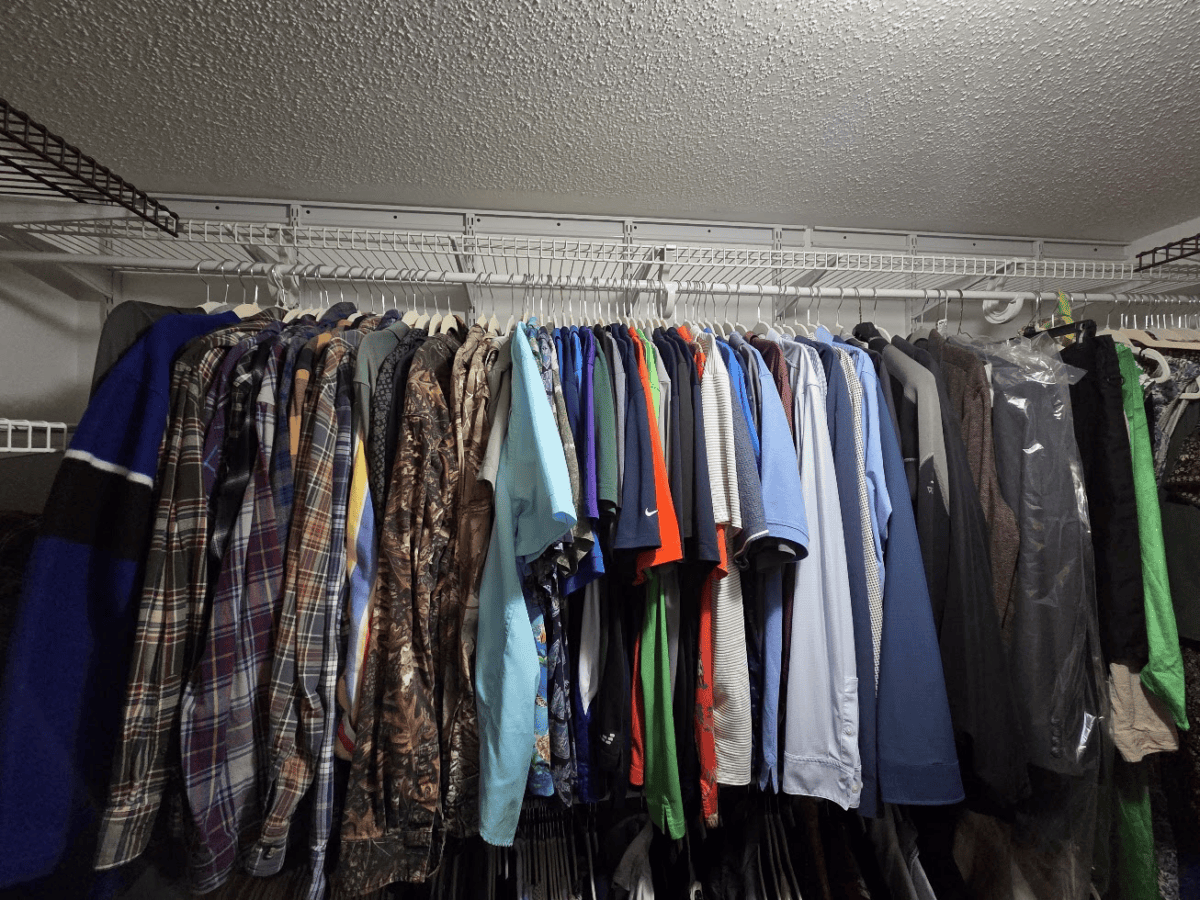
You wouldn’t run your tackle box on vibes. Stop running your closet that way.
A well-organized closet does something most men have never experienced: it makes getting dressed fast, consistent, and automatic. The right outfit for any context is findable in thirty seconds, and nothing is wrinkled from compression. Athletic gear is all in one drawer, reducing friction for starting your workout. Work shirts are separated from weekend shirts without having to think about it.
Most men’s closets are the opposite of this. They’re a geological record of accumulation, good pieces mixed with worn-out pieces, athletic gear wedged next to dress shirts, suits at one end that haven’t moved in months, a drawer of mystery items that gets shuffled every time someone looks for socks. Getting dressed in the morning starts your decision fatigue early.
This guide fixes that. Implement this system in one afternoon for permanent improvement.
The principle is simple: organize by context. Your closet should reflect how you actually live. When you need to dress for work, date night, the boat, or the gym, everything you need is grouped, accessible, and ready.
Before we get started, remember the five rules:
- Remove what you don’t wear.
- Group by context.
- Everything gets one home.
- Match your hangers.
- Put it back immediately.
Whether you have a walk-in closet or a small apartment closet, the principles are the same. Remove what you don’t wear, group clothing logically, give everything a permanent home, and make the system easy enough to maintain.
Before You Touch a Hanger: The Audit
You cannot organize a closet that has too much in it.
Pull every item out, and lay it on the bed or floor, wherever there’s space. Sort into four piles:
Keep: Fits today, earns its place in your life, in acceptable condition. Not “might fit again,” not “I’ll alter it someday.”
Cascade: Still functional and presentable, but replaced at its current level. This goes somewhere lower, the WFH pile, the work-around-the-house pile, or the fishing shirt pile. Give it a specific destination.
Donate or consign: Good condition and still has some life left, but not for you anymore. Quality pieces can move through consignment shops or donations. Let them serve someone else.
Discard: Worn out, stained past correction, broken. Throw away any worn-through athletic wear, pilled sweaters beyond saving, or shoes that can’t be resoled.
The test for the keep pile: if you were packing for a two-week trip tomorrow, would this item make the bag? If not, examine why. Often the answer is “it doesn’t fit right,” “I don’t like how it looks,” or “I already have three better versions of this.” You should remove these from your closet.
If your closet is significantly over-full, you have a problem: too many clothes, not too little organization.
The Architecture: What Goes Where
When you open the closet, you should immediately understand where everything belongs. It all starts with one decision:
Organize the rod by formality, casual to formal, left to right.
This mirrors how most men think about getting dressed — “what context am I in today?” — and makes the visual scan effortless. Every morning you look at the rod and your eye goes to the correct zone without having to think.
Here’s the full sequence, left to right:
Zone 1: Casual Shirts (Far Left)
This section is for casual tees, henleys, casual button-downs (chambray, flannel, casual OCBD), and casual long-sleeves. Personally, I keep casual tees in a dresser.
Group by type first, then by frequency of wear. Casual shirts can go on standard plastic hangers. They don’t carry the same preservation stakes as the professional tiers.
Zone 2: Polos and Smart Casual Shirts
Polos and other smart-casual shirts bridge the gap between casual and professional clothing. Arrange them from casual WFH shirts on the left to dressier polos on the right.
Zone 3: OCBDs and Professional Casual Shirts
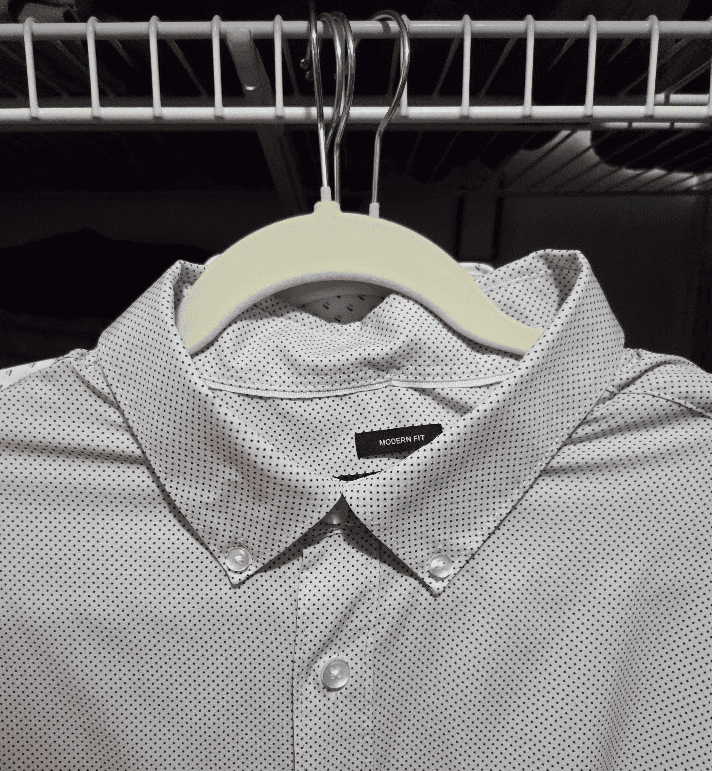
Oxford cloth button-downs in white, blue, and any patterns. The shirts that serve the widest range of contexts in a professional wardrobe, like WFH, business casual office, casual Friday, date night, and appointments.
Use wooden or quality contoured plastic hangers. Button the top button and one below to maintain collar shape. If you iron before hanging, hang immediately after to set the work.
Zone 4: Dress Shirts
Group whites together, then patterns, then colors. If possible, use quality wooden hangers only. Never wire dry-cleaner hangers, they distort the shoulder over time and leave a point at the collar that doesn’t iron out.
Zone 5: Blazers and Sport Coats
Blazers naturally sit between dress shirts and suits because they pair with both. That makes them easy to find whether you’re dressing for work, church, or date night.
Use wide, shaped wooden suit hangers. The hanger shoulder should fill the jacket shoulder completely without deforming it. A narrow hanger on a structured jacket crushes the shoulder padding and misshapes the collar.
Don’t compress blazers. They need air circulation to stay fresh and space to hang without wrinkling. If you have to choose between more clothes and more air between blazers, choose air.
Zone 6: Suits (Far Right)
Suits anchor the formal end of the rod. Navy suits, charcoal suits, and any formal separates live at the right end where they’re visible and accessible but out of the way of daily use.
Use quality wooden suit hangers with a full shoulder bar and a trouser bar. Hang the jacket and trousers of each suit together on the same hanger — this keeps suits as units rather than mixing jacket A with trouser B over time.
Use breathable cloth garment bags for suits you’re not wearing weekly. Plastic traps moisture, so don’t use the sealed bag from the dry cleaner. In a humid climate, a cloth bag or no bag is better than a sealed one.
A suit compressed against other suits wrinkles and doesn’t air properly. If two suits are touching, you have too many suits on the rod, not a spacing problem. Use a second rod, a garment rack, or a storage rotation if the closet is genuinely small.
Trousers, Chinos, and Jeans
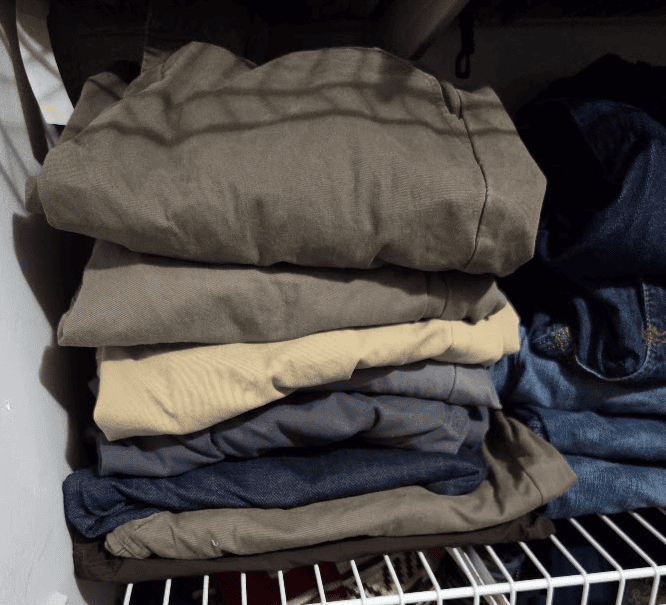
Trousers get their own rod section or their own dedicated shelf, separate from the shirt rod. If your closet has a second rod (most reach-in closets have one above and one lower), use the lower rod for trousers. Ideally, you will hang chinos and dress trousers. Personally, I used to fold my chinos and didn’t have any issues.
The sequence on the trouser rod, again left to right:
Jeans (dark to light) → chinos (casual to dressier colors) → dress trousers (by color, navy through charcoal)
Use trouser clip hangers at the cuff, or a proper trouser bar hanger at the waistband. Never drape trousers over a single bar, this creases the thigh permanently. For dress trousers with a crease, the crease should be preserved by hanging, not compressed.
Folded alternative for jeans: If you’re short on rod space, dark jeans stack acceptably on a shelf. Fold them in half lengthwise, then in thirds, this keeps them flat and visible. If possible, don’t fold dress trousers or chinos; hang them.
Outerwear and Jackets
Outerwear lives near the door or in a secondary location, like a coat closet, a mudroom hook, a dedicated entry area. It doesn’t belong on the main closet rod competing with shirts and suits.
If you only have one closet, outerwear goes at one end, separated from the main clothing rod by a visible gap or a divider. I hang mine in a separate area of the closet.
What counts as outerwear here: Overcoats, rain shells, winter jackets, casual bombers and field jackets you grab on the way out. Technical outdoor gear, like rain shells for hiking, hunting jackets, and waterproof layers should be stored near where you use it, not in the main closet.
Shoes
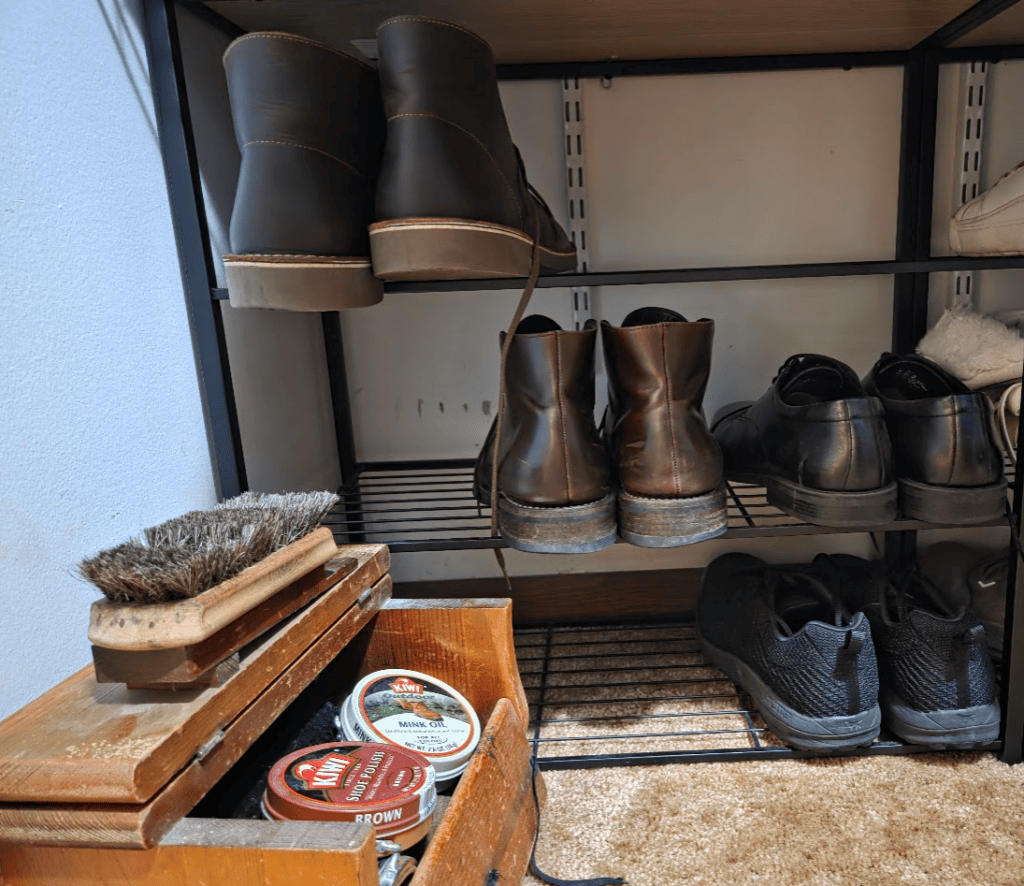
Shoe organization has one rule that supersedes everything else: cedar shoe trees in every pair, all the time, including in storage. Cedar shoe trees absorb moisture, maintain shape, and extend the life of leather shoes. Use them in every pair.
Keep a brush and shoe maintenance items near your shoes.
Beyond that:
Placement logic: Shoes you reach for daily near the front, shoes for specific occasions further back. Don’t sort by color or type; sort by frequency of use.
Athletic shoes separate from dress shoes. Running shoes and gym shoes near the door, not mixed in with leather oxfords on the closet floor.
Visible storage beats hidden storage for shoes you actually wear. A simple low shoe rack on the closet floor, a floating shelf at the bottom of the closet, or an open cubby system keeps daily shoes accessible and off the floor. Shoes piled on the floor get scuffed, misshapen, and lost.
Seasonal or occasion-specific shoes: dress shoes worn only for formal events, and boots for cooler months can go in boxes or bags. Label them. A quick label on the end of the box is the difference between a shoe collection and a shoe archaeology project. If you have the space, leaving boots and dress shoes on an open shelf is even better because they can breathe between wears.
Accessories
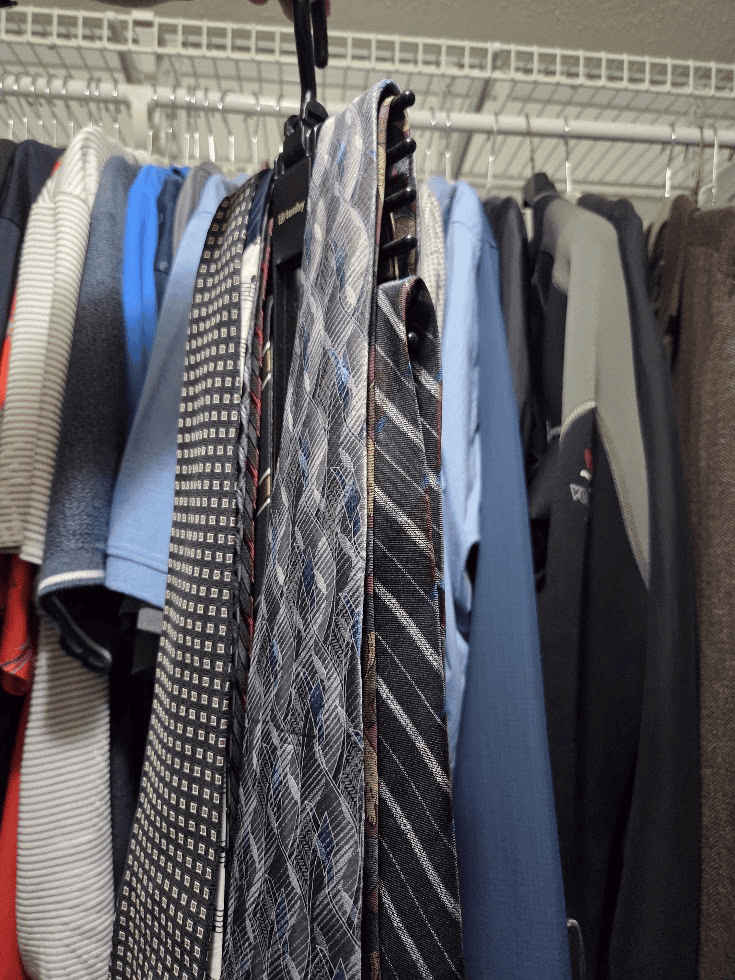
Belts, ties, pocket squares, watches, and miscellaneous accessories need their own designated space.
Belts: Hang belts on a belt rack inside the closet door or roll them into a drawer. Every man should own at least one brown and one black belt.
Ties: If you wear ties regularly, a tie rack inside the closet door keeps them visible and wrinkle-free. If you own fewer than eight ties, rolling them into a shallow drawer or small bin works fine.
Watches and small accessories: Keep your everyday carry in a tray on top of the dresser. A dedicated landing zone keeps you from searching for your wallet and keys every morning.
Pocket squares and dress accessories: A small drawer or divided tray inside the dresser top drawer or a shallow bin on the shelf.
The Dresser: A System, Not a Drawer
The dresser handles everything that doesn’t hang: athletic wear, tee shirts, casual base layers, underwear, socks, and folded casual items. Most men treat their dresser as a storage unit: things go in, get shuffled, and have to be excavated. The fix is simple: one category per drawer or section, athletic wear all together, and visibility built in.
Drawer by Drawer
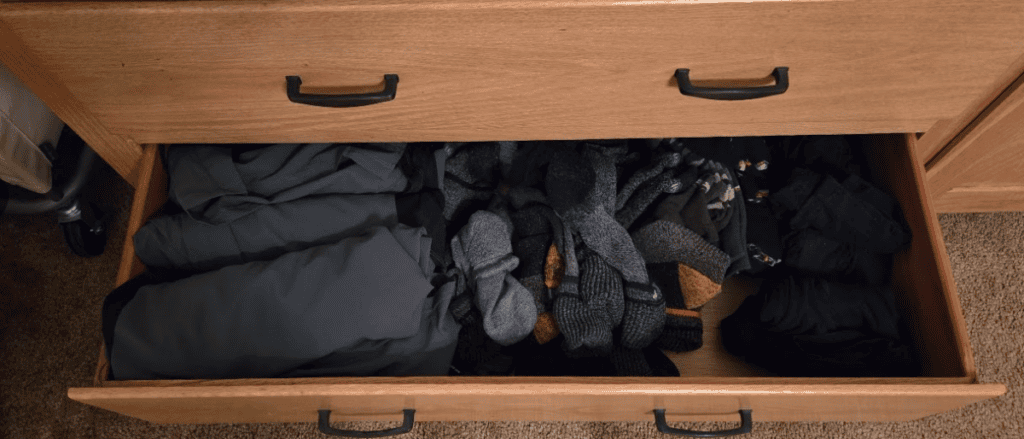
Here is how I would recommend setting up your dresser:
Top drawer — daily essentials: Underwear, everyday socks, and a handkerchief or pocket square if you carry one. This drawer gets opened every single day. Keep it the most organized and the most accessible. Fold underwear in thirds. Roll or pair socks so you can see what you have without digging. No mystery items in this drawer.
Second drawer — athletic wear: Everything needed to work out, run, fish from the bank, or be physically active lives here as a complete unit. Training shorts, compression shorts, athletic tees, running socks, wicking underlayers, swim trunks — all of it in one drawer. Click here for our guide to start running.
For active men, this is the biggest win: you should be able to reach into one drawer in the dark and pull a complete athletic outfit. No going to two drawers for the shirt and then hunting for the right socks. Grab and go.
Within the drawer: group by activity if it helps — gym stuff together, run stuff together, water stuff together. A simple divider or a small bin keeps these subgroups readable even when the drawer gets shuffled during the week.
Third drawer — casual base layers and sweaters: Folded tees, henleys, casual long-sleeves, lightweight crew-neck sweatshirts, any knit that’s not delicate enough to hang. Fold vertically (file folding) so you can see every item at a glance without unstacking.
Bottom drawer — seasonal or specialty: Cold-weather items in summer, warm-weather casual items in winter. Compression socks, specialty athletic gear, extras. This is also a reasonable home for beach gear (rashguards, swim fins, water shoes) if you’re a Florida man with a small closet.
My dresser has three drawers and a side cabinet, so I organize as follows:
- Top Drawer (Lounging around the house and fishing): long-sleeve UPF fishing shirts, everyday socks and underwear, gym shorts
- Middle Drawer (Nice tee shirts): This is where reasonable tee shirts go, that could be worn while hiking or around town.
- Bottom Drawer (Running and dress): I keep running shorts, running socks, dress socks, and nice underwear in this drawer.
- Side Cabinet (Jeans and running tee shirts): This is where I keep jeans in a stack, along with older and more worn tee shirts that are now used for running.
The File Fold
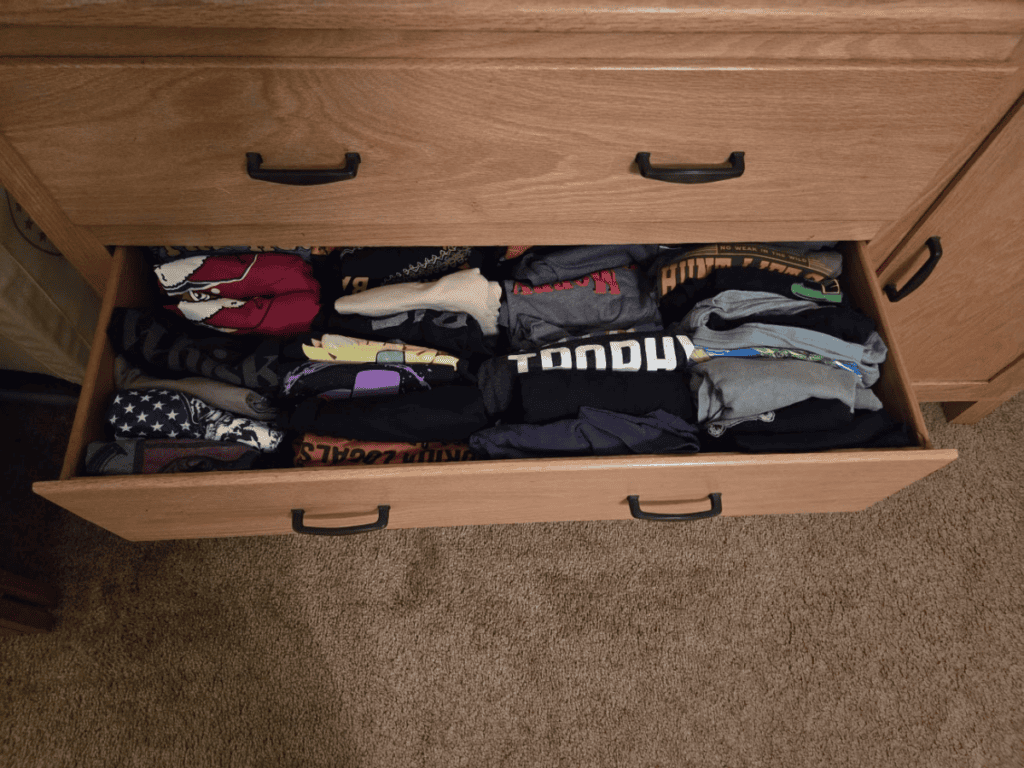
The single biggest improvement most men can make to drawer organization takes five minutes: file fold everything.
File folding keeps every shirt visible and prevents stacks from collapsing. Fold the shirt into a rectangle that stands upright in the drawer. Once you switch, it’s hard to go back.
How to Organize a Small Closet
Small closets can be difficult. When I was renting a room in college, I found it a challenge to fit clothes and gear together in the same small space.
A small closet limits your space, but it doesn’t change the system:
- Organize by context
- Remove anything you don’t wear
- Maximize vertical space
- Use slim matching hangers
- Move seasonal clothing elsewhere
- Keep athletic gear in the dresser
If rod space is limited:
- Hang shirts
- Fold jeans
- Store seasonal jackets elsewhere
- Rotate seldom-used suits
An organized small closet beats a large disorganized one.
The Two-Minute Maintenance System
An organized closet stays organized if and only if clothes go back in the right place. The system only works if things go back where they belong.
Two rules that make this automatic:
Everything has a specific home. After returning home or from the cleaner, return each article to its home. The navy blazer goes back in Zone 5. The running shorts go back in the athletic drawer. When everything has a place, returning it takes no thought. This should be done by default every time you do laundry or get home.
The one-in-one-out principle. When a new shirt comes in, an old one goes out or cascades down. When a new pair of shoes goes in the rotation, an old pair gets assessed. This keeps volume stable and prevents the slow drift back to a stuffed-and-shuffled closet. At the very least, if you purchase a new piece of clothing, cascade the old one to a less formal function.
Revisit your closet every six to twelve months during a season change. You’ll quickly notice what’s getting worn and what’s just taking up space.
Rotate Your Closet Twice a Year
You probably don’t need heavy sweaters in July.
Likewise, linen shirts don’t need premium rod space in January.
Every spring and fall:
- move out-of-season clothing into storage
- inspect for repairs
- donate what wasn’t worn
- clean everything before storage
A twice-yearly rotation prevents your closet from slowly becoming overcrowded.
The Hardware Worth Buying
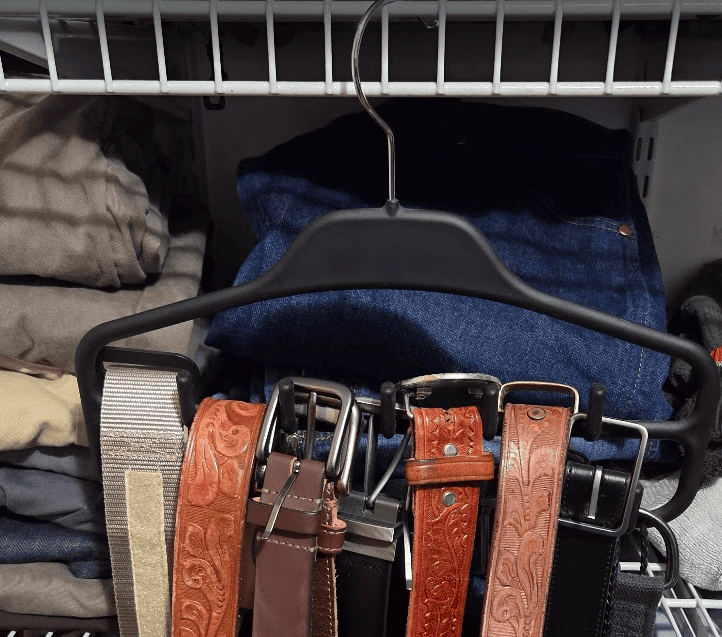
You don’t need to spend much to set up your closet, and the impact-to-cost ratio on closet hardware is high. While researching this article, I realized I was storing suits and trousers incorrectly, so I ordered hangers and garment bags to get my closet right.
Wooden suit hangers (6): The most important purchase. They protect shoulder shape, last decades, and make the closet look like it belongs to someone who has their life together. A set of 6 matching wooden hangers from Amazon runs around $35. The extras can be used to hang blazers, sports coats, and bomber jackets.
Suit Bags: A pair of suit bags can be purchased for under $20 on Amazon and makes a great alternative to dry cleaning bags. These are perfect for travel too.
Matching hangers for casual shirts: Replace mismatched hangers with one matching set. It’s one of the fastest ways to make a closet look organized. A set of 30 costs under $20 and the visual improvement is immediate.
Trouser clip hangers: For chinos and dress trousers. Hang by the cuff, which preserves the crease and avoids the thigh crease from bar-draping. A set of 10 runs $15–$25.
A belt rack: $10–$15, inside the closet door. Completely solves the belt problem.
A tie rack: $10–$15 and will completely solve the tie problem.
Cedar shoe trees: $25 per pair for quality cedar, less for basic versions. Buy them for every pair of leather shoes you own.
Drawer dividers or small bins: For the athletic drawer and accessories. A $15 set of adjustable dividers keeps the athletic drawer from re-collapsing into chaos within a week.
Optional: If you are a watch guy, get a watch box to store them.
How to Organize a Closet in One Afternoon
If you’re starting from scratch, follow this order:
- Remove everything.
- Sort into Keep, Cascade, Donate, and Discard.
- Clean the shelves and vacuum the closet.
- Install matching hangers and organizers.
- Hang clothes from casual to formal.
- Organize drawers by purpose.
- Put shoes and accessories in their designated locations.
- Remove empty boxes, wire hangers, and anything without a permanent home.
Frequently Asked Questions
How long does it take to organize a closet?
Most closets can be completely reorganized in two to four hours. The initial decluttering takes the longest. Once every item has a permanent home, future maintenance usually takes less than five minutes per week.
How many clothes should a man own?
Enough to comfortably cover your weekly activities without overflowing your closet. Most men benefit from owning fewer, higher-quality pieces that all earn regular use.
Is it better to hang or fold clothes?
Structured garments like shirts, jackets, and trousers generally benefit from hanging. Knitwear, sweaters, and many casual items should be folded to prevent stretching.
Should clothes be organized by color?
Color can be useful within categories, but category should come first. Organizing by purpose (work, casual, athletic, formal) makes getting dressed much faster.
How often should you declutter your closet?
Review your closet every six to twelve months. Remove anything that no longer fits, hasn’t been worn, or no longer matches your lifestyle.
What clothes should never be hung?
Heavy sweaters, knitwear, and delicate knits should be folded because hanging stretches the fibers over time.
How do you organize shoes in a closet?
Keep frequently worn shoes near the front, use cedar shoe trees in leather shoes, and store seasonal footwear separately.
Is it worth buying matching hangers?
Yes. Matching hangers instantly make a closet look cleaner while keeping clothes evenly spaced. Slim hangers also create additional rod space.
Should I organize clothes by season?
Yes. Store off-season clothing separately if space is limited. Rotating clothes twice a year keeps your daily wardrobe easier to access.
How do you keep a closet organized long term?
The easiest way is to give every item a permanent home, return clothes immediately after laundry, and follow a one-in, one-out rule whenever buying something new.
What is the best way to organize a walk-in closet?
Use separate zones for shirts, trousers, shoes, and accessories. Reserve the most accessible areas for clothing you wear every week, and store seasonal or formal items farther away.
The Bottom Line
Organizing your closet is a one-afternoon project with years of payoff. Give every item a permanent home, organize by context, and return things to that home after every use. Build the system once, then let it save you time every day.
If you’ve organized your game freezer, tackle bag, or hunting pack, you already know the formula. Your closet is no different. Keep removing obstacles in your life, and use that brainpower on something productive.
This post is part of our practical style series. For what to own, see Men’s Capsule Wardrobe: A Practical Guide for Real Life. For how to care for it, see How to Care for Clothes So They Last: Laundry, Storage & Repairs. For what to wear in each context, see The Ultimate Men’s Style Guide for Every Occasion.
Leave a Reply