
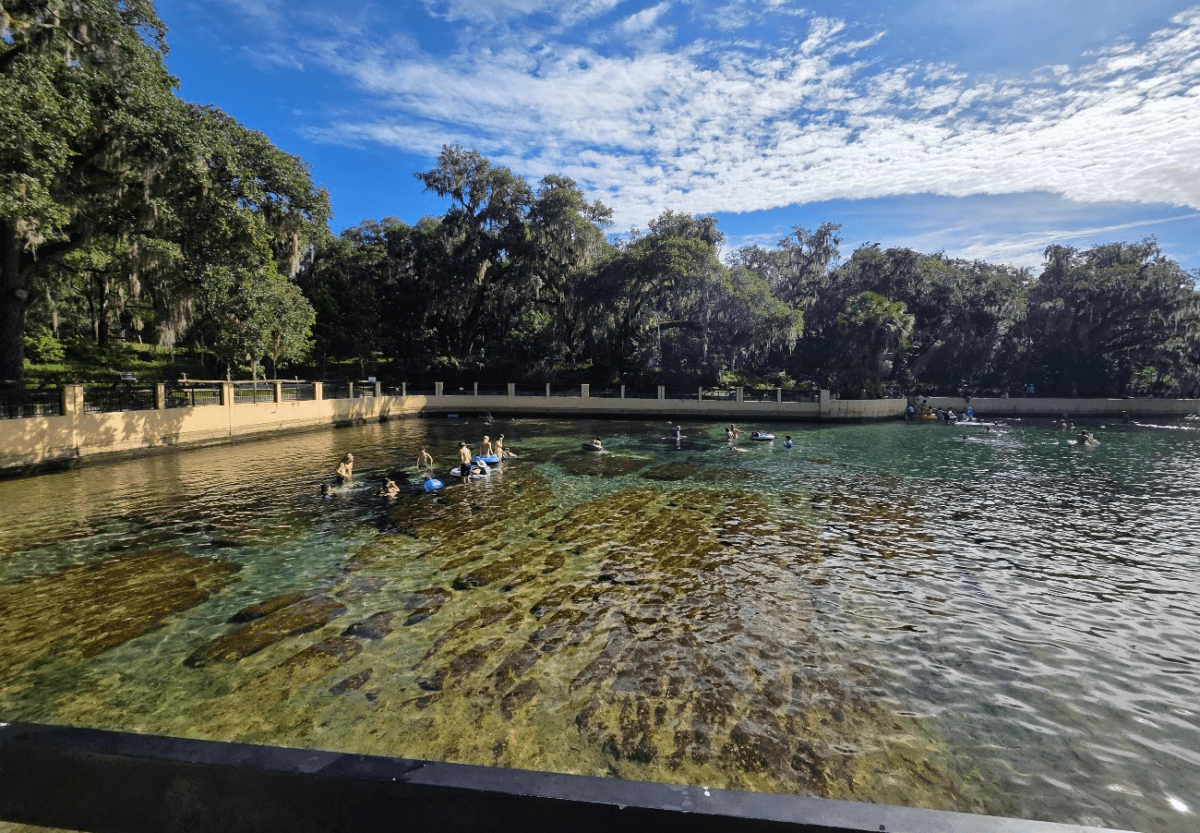
This is the Ocala National Forest destination for blue crabs, mineral water, and springs hopping. We visit often, most recently in June 2026.
Our verdict: Salt Springs is one of Florida’s most unique springs thanks to its mineral-rich water, blue crabs, excellent snorkeling, and proximity to Silver Glen, Alexander, and Juniper Springs. We recommend it most for spring enthusiasts and campers.
Quick Facts
- Location: 13851 SR 19, Salt Springs, FL 32134 (Ocala National Forest)
- Water Temp: 72°F year-round
- Entrance Fee: $14.50/person for day use, Florida State Park Pass not accepted
- Hours: 8am-8pm daily, but call ahead as closing hour can differ
- Activities: Swimming, snorkeling, kayaking, fishing, hiking, birdwatching, camping
- Wildlife: Blue crabs, striped bass, mullet, turtles, bears, birds
- Best For: Families, spring hoppers, snorkelers, campers, wildlife watchers
- Campsite Reservations: https://www.recreation.gov/camping/campgrounds/233920
Overview
Salt Springs is a geologically unique second-magnitude spring that does not play by the usual freshwater rules. Deep in the Ocala National Forest, Salt Springs pumps over 52 million gallons of mineral-rich, 72°F water daily. What sets this spring apart is the dissolved mineral salts that the water caries, that is salty enough to sustain oceanic species in a landlocked forest spring.
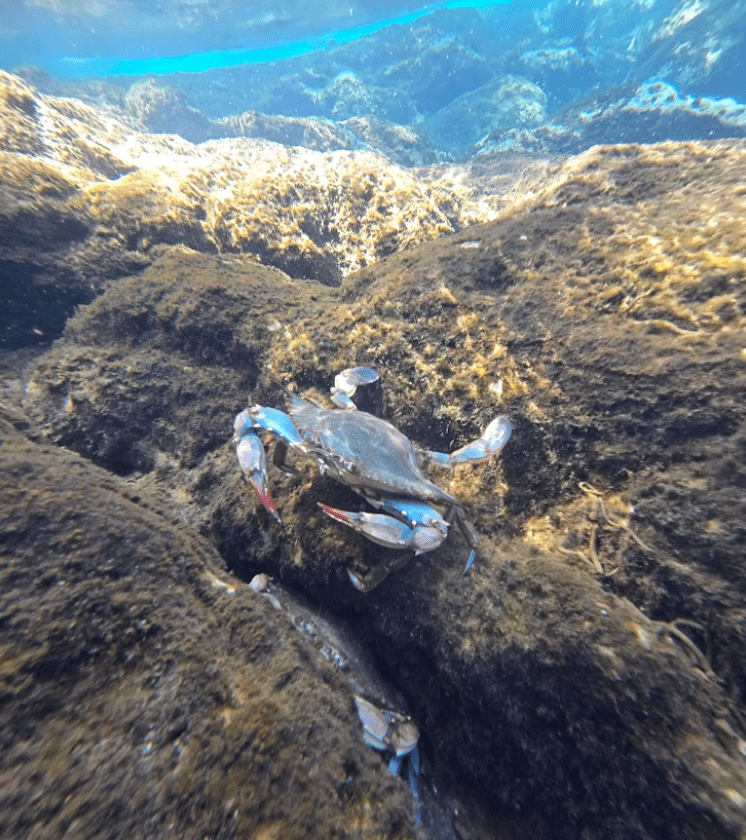
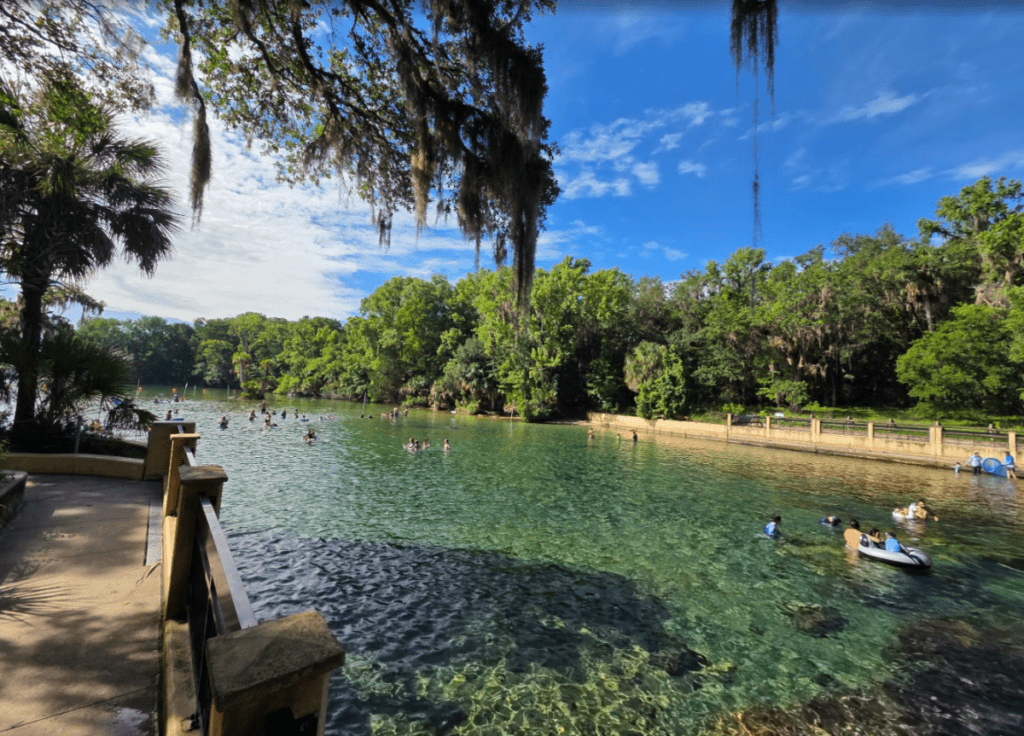
The result is unusual: blue crabs scuttling across the limestone bottom, and an atmosphere that feels less like inland Central Florida and more like the Mediterranean coast. Draped in live oaks covered with Spanish moss, the basin has a sun-dappled, otherworldly quality. The water is turquoise, the canopy is green, and there is a gentle current. If you have been to a few springs and are looking for a unique visit, try Salt Springs next.
Salt Springs is also strategically located for spring hopping. Juniper Springs, Silver Glen Springs, and Alexander Springs are all nearby, making this the anchor point for some serious Springsmaxxing.
Things to Do at Salt Springs
Salt Springs has several activities available. Whether you are visiting several springs in one day or just here for a lazy afternoon, there is plenty to do.
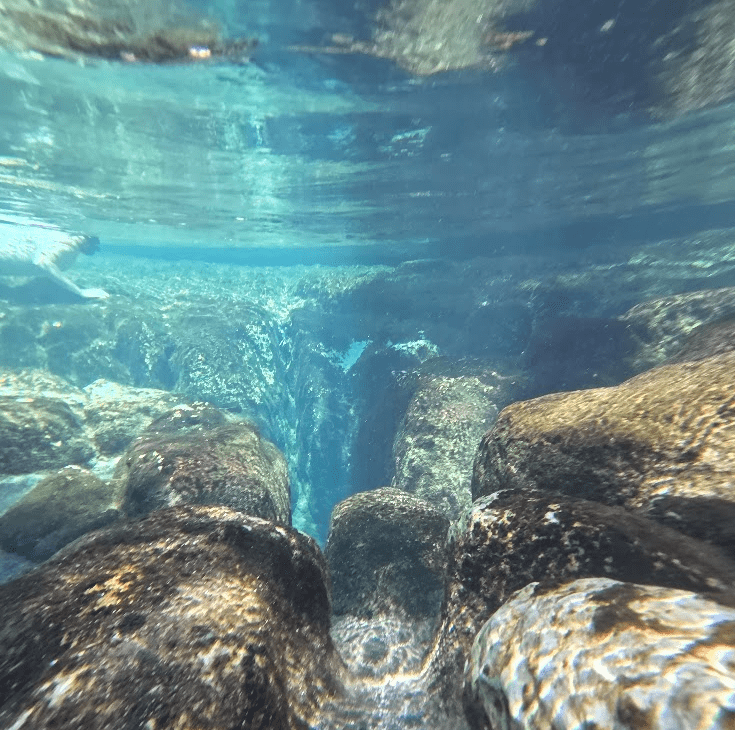
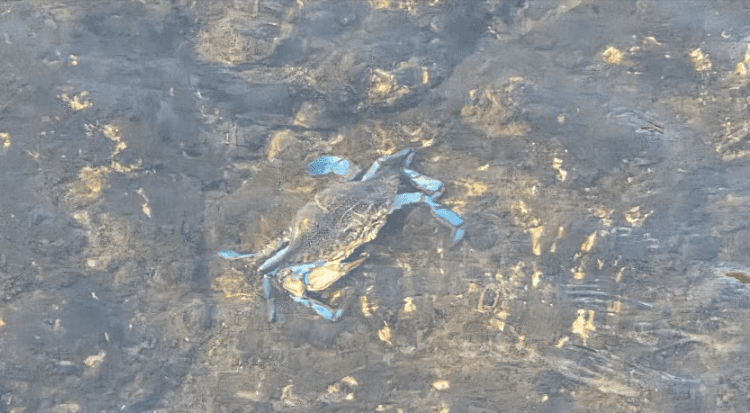
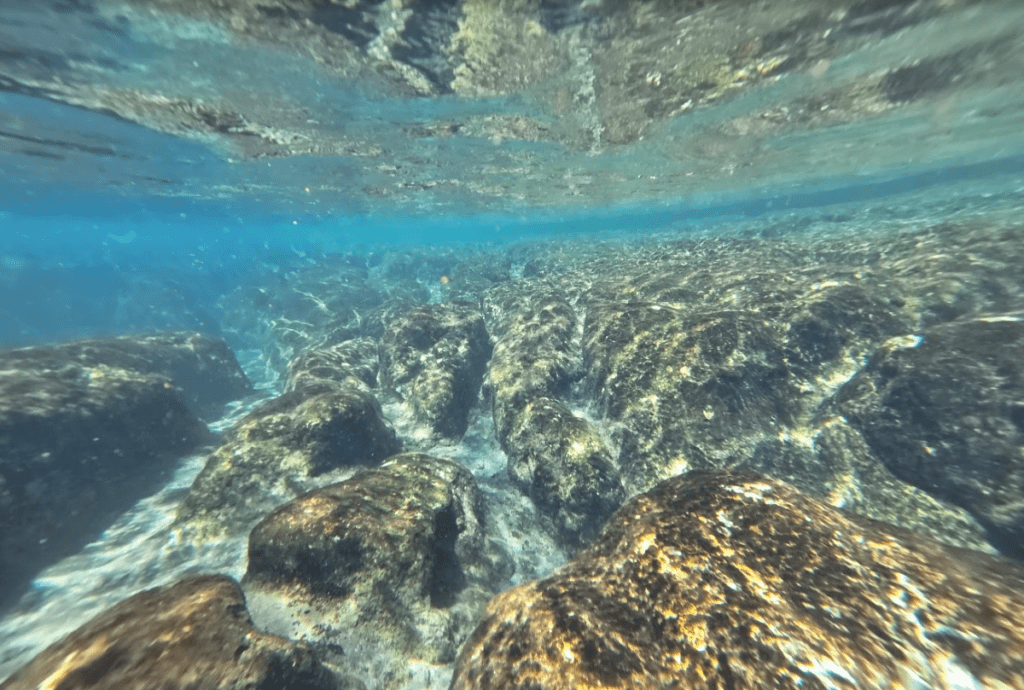
Swimming and Snorkeling: The spring basin and upper section of Salt Springs Run are the main swimming areas. The bottom is exposed limestone and small rocks with sand. Visibility is excellent for snorkeling, and you are likely to spot bass, striped bass, mullet, and uniquely for springs: blue crabs.
Kayaking and Paddling: Salt Springs Run flows 4.5 miles to Lake George. You can depart from the marina, and the run passes through cypress-lined banks, quiet coves, and pristine forest habitat before reaching Lake George.
Fishing: This is not permitted in the swimming area, but it can be good along the run if you brought a boat or kayak.
Hiking: There are two notable trails associated with Salt Springs, see the Hiking Trails section below for full details. Both are short and a good way to warm up before jumping in the water.
Camping: Salt Springs has the largest campground in the Ocala National Forest, and the only one with full RV hookups. Sites are spacious and separated from the day-use swimming area.
Birdwatching: The Salt Springs Observation Trail leads to a dedicated observation deck overlooking Salt Springs Run.
Swimming at Salt Springs
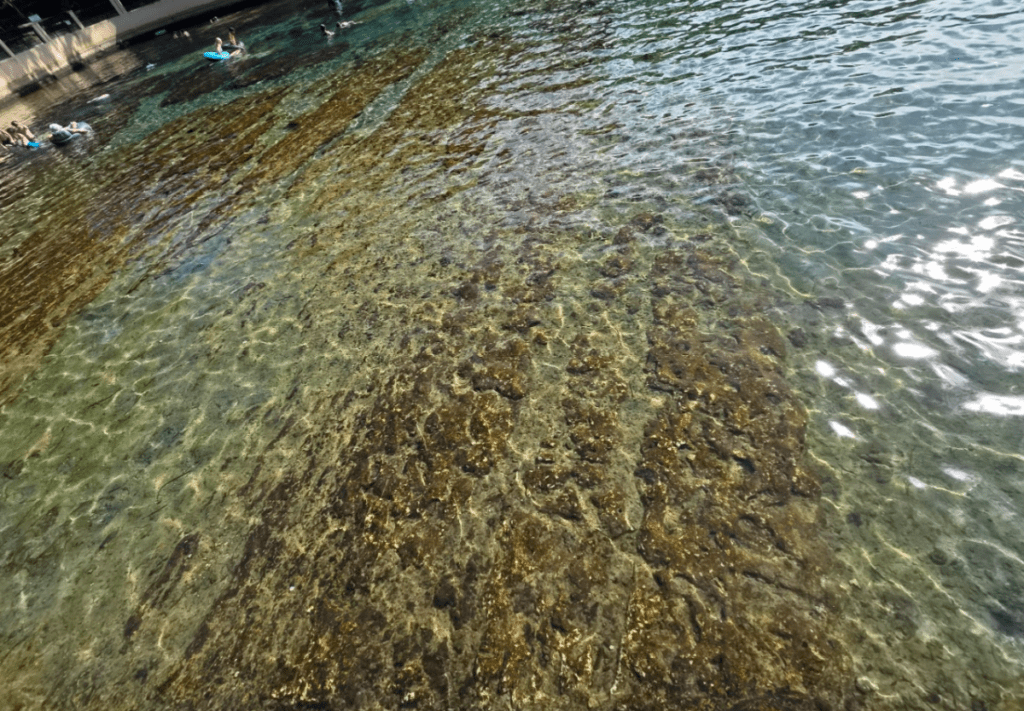
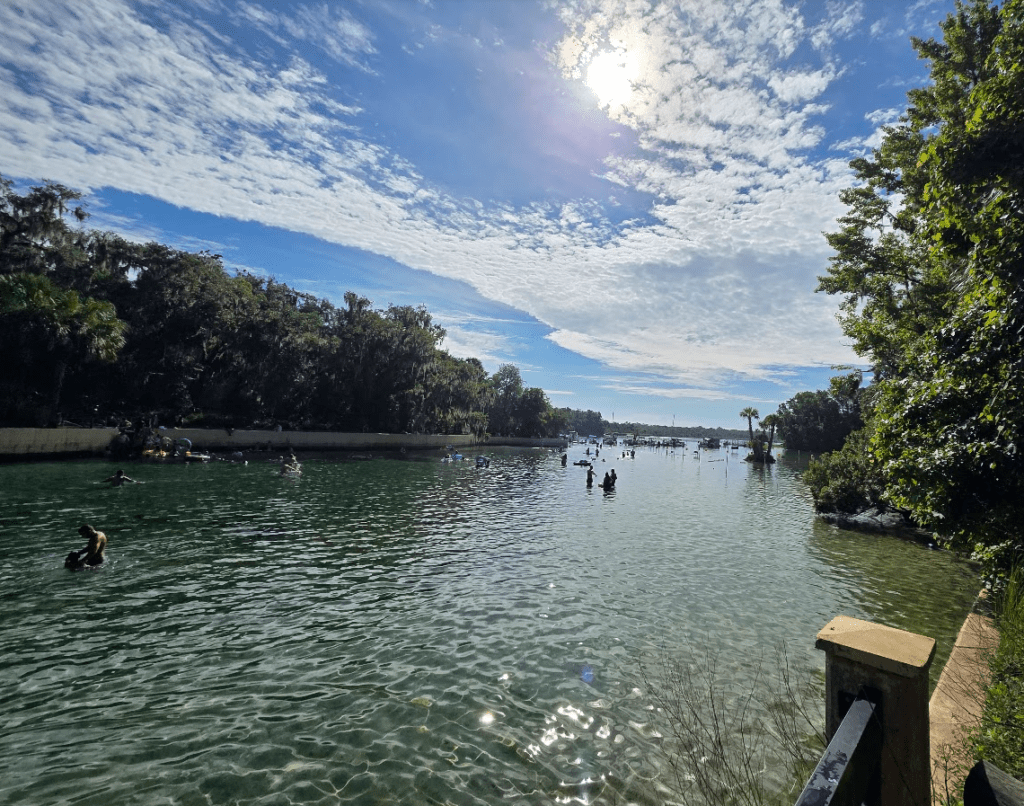
The swim area at Salt Springs is the main event, and it delivers a rare experience among Florida springs: the feeling that you’re snorkeling in the Mediterranean rather than in the middle of a national forest.
The water is clear, mineral, and a cool 72°F year-round. It is not salty to the taste like the ocean, but it is mineralized enough to support creatures only normally found in brackish and coastal environments. The real draw for spring enthusiasts is the blue crabs emerging from limestone shelves. Striped bass and mullet are common and add a second layer to the snorkeling experience.
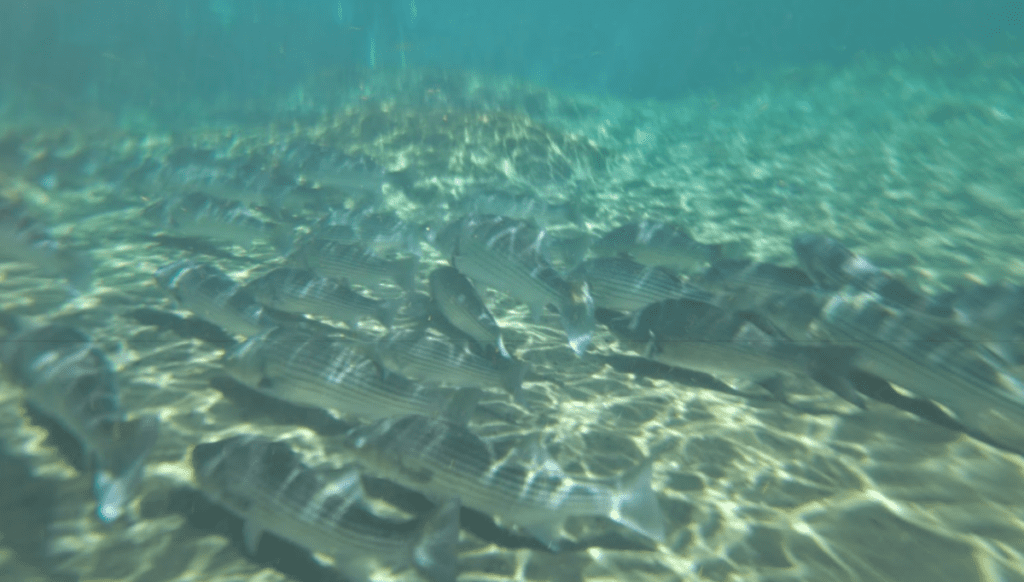
The spring pool has several vents, and the shallower edges are great for younger kids. Deeper sections near the main vents are better for snorkeling, but the whole swimming area is relatively shallow. Bring your own gear as there are no rentals on-site. The swimming area is roped off to prevent conflicts with fishing and paddling and swimmers.
Kayaking and Paddling
If you want to extend your time on the water beyond the spring head and turn this into an all-day event, Salt Springs Run is a rewarding paddle route in the Ocala National Forest. The run flows quietly for about 5 miles through cypress-lines banks before emptying into Lake George, one of the largest lakes in Florida.
The upper section near the spring is calm and shallow, and the water deepens as you move downstream. Normally you can spot turtles and wading birds.
Why Are There Blue Crabs at Salt Springs?
Salt Springs is one of the most unusual springs in Florida because it contains significantly higher concentrations of dissolved minerals and salts than most freshwater springs. The spring water rises through deep underground limestone formations, picking up minerals that create a mildly brackish environment.
While the water does not taste salty like the ocean, it contains enough dissolved salts to support species rarely found in Florida’s inland springs. The most famous example is the blue crab.
Blue crabs can often be seen walking across the limestone bottom, hiding in cracks near the spring vents, or swimming through deeper sections of the basin. Seeing them in crystal-clear spring water is a strange experience for first-time visitors, as most people associate blue crabs with coastal estuaries and salt marshes.

If you’ve already visited several Florida springs and are looking for something unique, the blue crabs alone make Salt Springs worth the trip.
Best Time to Visit
Salt Springs is good year-round, and the 72°F water means that there is no real off-season. Timing your visit strategically can help to define your experience.
Winter is the sweet spot for serious visitors. Crowds are minimal, the water feels warm relative to the air, and manatees occasionally pass through. The campground can fill up with snowbirds, but the day-use area is peaceful.
Spring brings more visitors as the weather warms, but it is still much quitter than summer. The forest is green and the wildlife is active. Blue crabs are visible throughout the year.
Summer is peak season. The weekends are busy, and the recreation area regularly reaches capacity. Arrive early on weekends to ensure that you can get in.
Fall is another excellent window. Crowds significantly decline after labor day, the water stays perfect, and the forest takes on seasonal changes.
Entrance Fees, Hours, and Reservations
Day Use Fee: Approximately $14.50 per person (confirm current pricing at the gate or by calling 352-685-2048). Note that the Florida State Parks Annual Pass is not accepted here — Salt Springs is in the Ocala National Forest, operated under a USDA Forest Service concession, not the state park system.
Hours: Daily 8 AM – 8 PM (seasonal hours may vary; call ahead or check fs.usda.gov for updates).
Dogs: Not allowed in the day-use area. Leashed dogs are welcome in the campground and on the Bear Swamp Trail (accessible from the campground).
Camping Reservations: Campsite reservations can be made at Recreation.gov or by phone. The campground has 148 total sites — 98 with full electric and water hookups (accommodating RVs up to 40 feet) and 50 tent-only sites. At the time of this writing, nightly fees range from approximately $30–$80. Reservations can be booked up to six months in advance. Book early for winter stays — the campground fills quickly November through March.
Day Use: No advance reservations required for swimming/day use, but the area can reach capacity on busy summer weekends and may close temporarily. Have a backup plan.
How to Get There
Address: 13851 SR 19, Salt Springs, FL 32134
Salt Springs is in the northeastern section of the Ocala National Forest, right off of SR 19. It is roughly an hour and a half from both Orlando and Jacksonville, or roughly an hour from Gainesville.
The area has a gas station, grocery store, and post office in the community of Salt Springs, so you do not need to arrive fully stocked. It would still be wise to bring what you need so that you can spend more time at the springs.
Remember that cell service is limited in and around the Ocala National Forest, though we had decent reception within Salt Springs.
What to Bring
You will want the usual basics for a springs day:
- Camera or phone
- Polarized sunglasses
- Dry bag for camera and phone for underwater pictures
- Hiking shoes/socks
- Mineral sunscreen
- Bug spray if it’s that time of the year
- Money for entry
- Water
- Snacks of picnic lunch
- Mask and snorkel
- Towel
- Swimming clothes
- Change of clothes if you are not sticking around to dry off
- Layers in the winter
- Florida Springs Passport or journal
- Camping reservations if you’re staying the night
Tips to Avoid Crowds
Salt Springs is popular, and you will really feel it on summer weekends. While it regularly reaches capacity in the summer, you do not need to line up at 5 like at Kelly Park/Rock Springs.
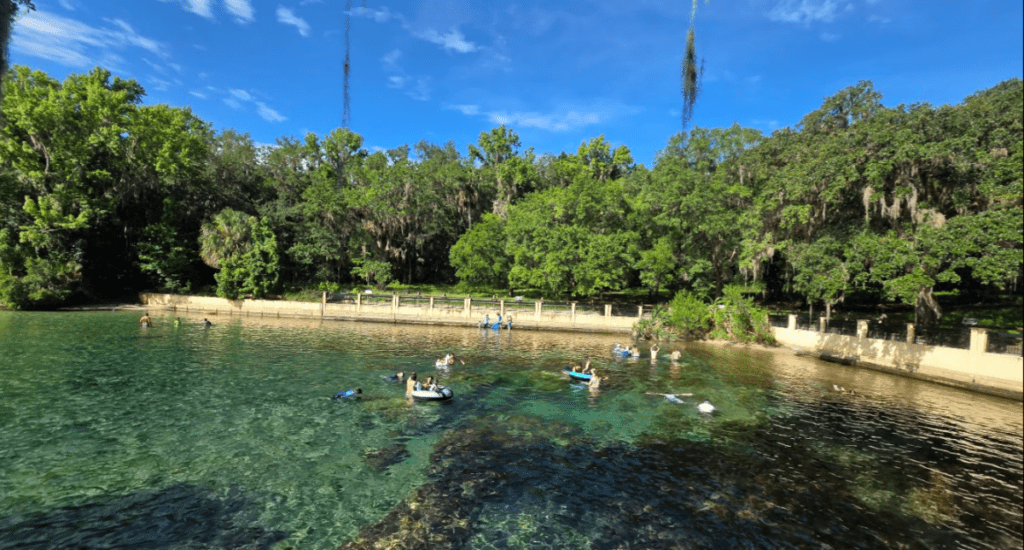
To avoid crowds:
- Arrive early. Gates open at 8AM. Arrival prior to 9 on the weekend pretty much guarantees parking if it is not a holiday, before the crowds build.
- Go on a weekday. Even in the peak of summer, Tuesday through Thursday will be a lot less crowded than Saturday. You may have the water mostly to yourself.
- Visit in the off-season. October through February offers minimal crowds and stunning forest conditions.
- Have a backup spring. On peak summer Saturdays, the recreation may close temporarily when it reaches vehicle capacity. Juniper Springs is a good backup. Silver Glen Springs and Alexander Springs are too, but you need to have a reservation ahead of time in the summer. This would be perfect for springs hopping, beginning at Salt Springs. If Salt Springs is at capacity, simply head to where you already have your reservation.
- Skip the holidays. Memorial Day, 4th of July, and Labor Day weekends are the busiest days of the year at Ocala springs. If you must visit on a holiday, arrive at opening.
Where to Stay Nearby
Camping at Salt Springs Recreation Area is the most immersive option. Being on-site means that you can swim early before day-use crowds, but be aware that you will need to walk back and forth from the campground to the swimming area, as they do not want you to move your car over to the day-use parking area next to the swimming area.
Vacation rentals through Airbnb or VRBO are the best option for conventional lodging, and there are several lakefront cabins and homes available for nightly rental. These are excellent for groups or families.
Ocala is the nearest option for full hotel amenities. This is a good option if you’re splitting time between springs and other Ocala attractions.
Nearby Things to Do
Salt Springs sits in the Ocala National Forest, which means that you are surrounded by options beyond the Spring itself.
Lake George – Salt Springs Run empties into Lake George, one of Florida’s largest lakes and a good fishery. The marina at Salt Springs provides access for fishing and boating.
Ocala National Forest Scenic Drives – Check out the 60-mile Florida Black Bear Scenic Byway, a peaceful escape through hardwood swamp and pine scrub. There are a lot of options for offroad exploration in the national forest as well.
Manatee Watching – During the cooler months, manatees make there way up into the warm spring-fed waters of the Ocala National Forest. Manatees may be seen at Silver Glen Springs and Salt Springs run, though you are unlikely to see the numbers you would at Blue Spring State Park.
Florida National Scenic Trail – A long segment of the 1,400-mile Florida Trail passes through the Ocala National Forest including the Salt Springs area.
Other Springs Near Salt Springs
Springsmaxxing is where Salt Springs truly shines: it’s positioned within easy striking distance of three other excellent Ocala National Forest springs, making it a great hub for a multi-spring day.
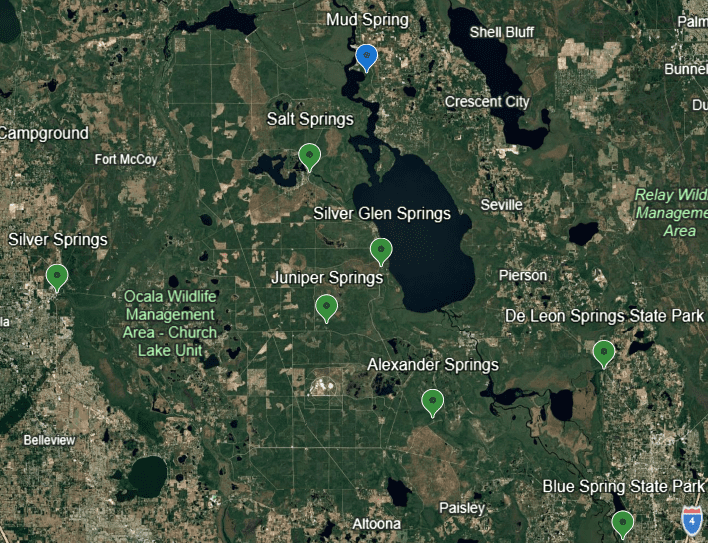
- Silver Glen Springs (11 miles south on SR 19) – A stunning spring with a short run flowing into Lake George. It is known excellent snorkeling and massive striped bass congregations at the spring head.
- Alexander Springs (28 miles southwest): A spacious and peaceful springs in the Ocala National Forest with camping and a long, scenic spring run for kayaking.
- Juniper Springs (18 miles south) – One of the most historic and iconic springs in the Ocala National Forest. The 7-mile Juniper Springs Run is one of the best in the state if you can dodge the gators.
All four springs are on or near SR 19 and SR 40, a natural loop that makes springs hopping easy. Most visitors can hit two springs comfortably in a single day, or 3 with early starts and efficient timing.
De Leon Springs State Park is 36 miles away and has a large swimming area and historic pancake house.
Blue Spring State Park is only 53 miles away and is also worth mentioning since it is among Florida’s finest springs, with a mass congregation of manatees every winter and a tube run.
Salt Springs vs. Other Nearby Springs
One of the best things about Salt Springs is its location. Several great Florida springs are within a short drive. Here’s how they compare:
Salt Springs vs Silver Glen Springs
Choose Salt Springs if you want unique wildlife (blue crabs), camping, and a more relaxed atmosphere. Choose Silver Glen Springs if snorkeling is your top priority and you want to see huge schools of striped bass.
Salt Springs vs Juniper Springs
Juniper Springs is the more historic and scenic destination, with its iconic mill house and famous paddle run. Salt Springs offers a larger swimming area, better snorkeling, and a more unusual ecosystem. Juniper springs has eels, and Salt Springs has crabs.
Salt Springs vs Alexander Springs
Alexander Springs is often the best choice for families with young children because of its large shallow swimming area and sandy bottom. Salt Springs offers more distinctive wildlife.
Which Spring Is Best?
If you can only visit one spring in the Ocala National Forest, Silver Glen Springs is probably the most visually impressive. If you’re looking for the most unique experience, Salt Springs wins because of its blue crabs, mineral-rich water, and unusual ecosystem.
For visitors spending a full weekend in the area, we recommend combining Salt Springs, Silver Glen Springs, and Juniper Springs for the best overall experience.
Hiking Trails Near Salt Springs
There are three notable trails related to Salt Springs.
Bear Swamp Trail
The Bear Swamp Trail is a 1.6-mile loop accessible from the edge of the campground at Salt Springs Recreation Area. It passes through longleaf pines, pine flatwoods, and a riverine swamp, and it includes a boardwalk section through the wettest part.
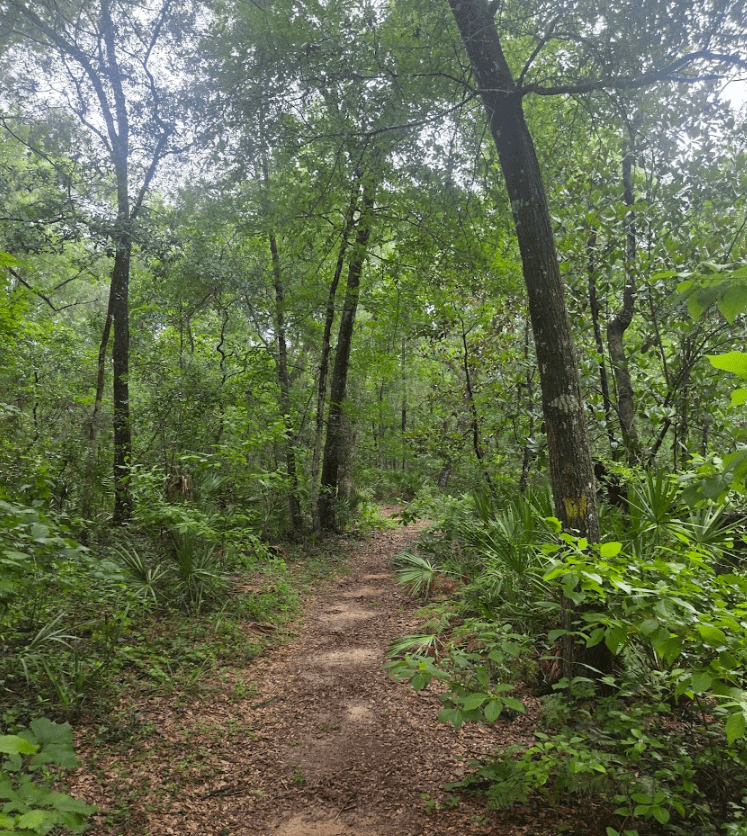
When it is maintained, the trail is gem, with large cypress and pine trees. You may see Florida wildlife, and hikers sometimes report seeing fresh bear scat. Use AllTrails or ask the campground for directions to the trailhead.
Leashed dogs are permitted on the trail, but not in the day-use area.
Salt Springs Observation Trail
This is a 2-mile loop located just south of and separately from the main recreation area. It showcases the slope from Big Scrub down toward Salt Springs Run, with a birdwatching observation deck overlooking the run at the end. This is good for families and a leisurely hour-long nature walk.
Note: When water levels are high, a stretch near the boardwalk can flood in the pine woods section.
Florida National Scenic Trail
A segment is accessible from the campground off of SR 19, connecting to the broader 1,400-mile trail. This is suitable for longer day hikes deeper into the national forest.
Restaurants Near Salt Springs
Dining options in the immediate Salt Springs community are limited.
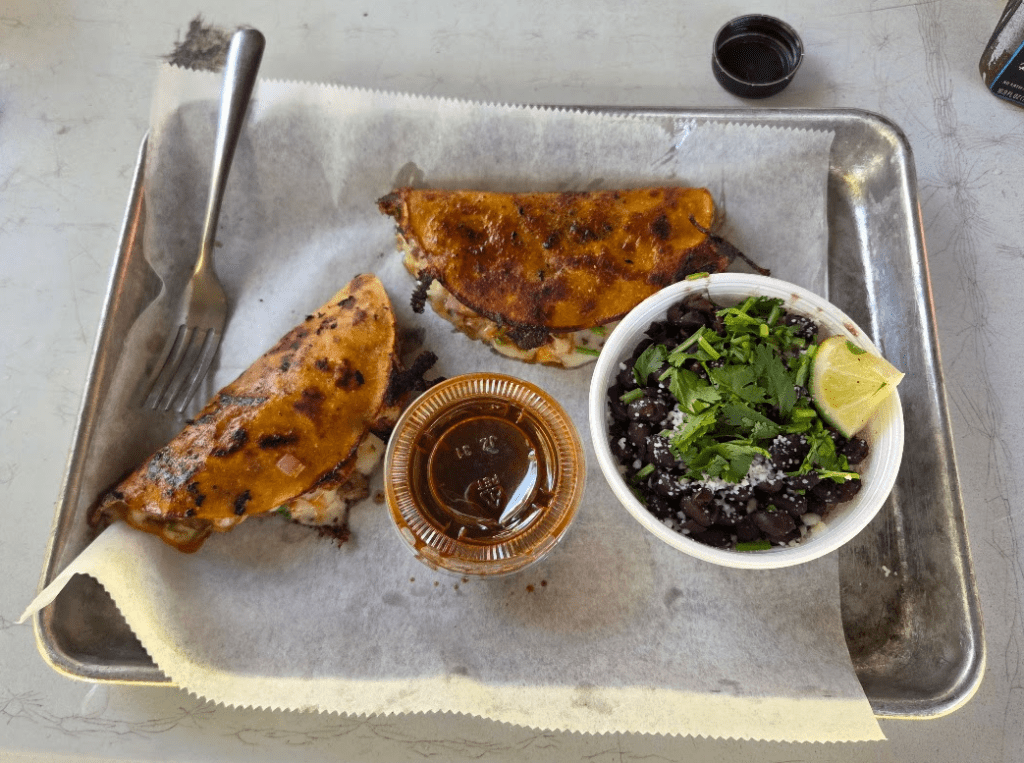
Our favorite is Odd Todd’s, located less than a mile from Salt Springs Recreation Area. The menu features tacos, burritos, quesadillas, and more. This is a solid, filling meal after swimming in the springs.
Salt Springs Pizza is a local favorite, also with good reviews.
There are additional options in Ocala for a full range of restaurants. If you are headed south, there are more options in the Altoona and Umatilla areas.
Pros and Cons
Though not super well-known, Salt Springs is one of our favorite springs, and we aim to go annually.
Pros:
- Completely unique ecosystem – the only Florida spring where blue crabs live in the vents
- Mediterranean-feel atmosphere – turquoise mineralized water, ancient trees with Spanish moss, and saltwater wildlife create an aesthetic unlike other inland springs
- Perfect year-round water temperature – 72°F always feels comfortable
- Excellent for snorkeling – clear water, diverse wildlife, and interesting limestone bottom
- Strategic location for spring hopping – Silver Glen, Alexander, and Juniper Springs are all within easy reach
- Largest campground in the Ocala National Forest – full RV hookups, great for multi-night stays
- Accessible from multiple major Florida cities – easy drive from Orlando, Jacksonville, Gainesville, and Ocala
- Wildlife variety – blue crabs, striped bass, seasonal manatees, turtles, and even bears
Cons:
- Price – We pay $30 for entry for two people. Camping is even more expensive. A sticker in the concession area costs $5.50 in June 2025. This is a much more expensive destination when compared with nearby state parks.
- Bear Swamp Trail not maintained – fallen trees and slippery, mildewed boardwalk limit the trail experience and can cause injury. My wife slipped while we were on the short boardwalk. Given the admission cost, we would like to see better maintenance of the trail system.
- Weekend crowds in summer – The park can reach capacity despite the high price, so early arrival is essential June-August
- Limited cell service – especially on the drive through Ocala National Forest
- Raccoon problem – Raccoons can be aggressive about unattended food at the picnic area
- No gear rentals – bring your own snorkel equipment. Some is available for purchase but you are better off bringing your own
Sample Itinerary
Here’s what a day of Springsmaxxing in the Ocala National Forest could look like:
- 7:30AM – Hike the Salt Springs Observation Loop
- 8:00AM – Arrive at Salt Springs around opening. Swim, snorkel, and watch the wildlife
- 10:00AM – Early lunch at Odd Todd’s
- 10:30AM – Drive the short distance to Silver Glen Springs (get a reservation ahead of time)
- 10:45AM – Hike the Silver Glen Springs to Lake George Trail, then the Spring Boils Trail
- 12:15PM – Swim, snorkel, and have a blast in the water
- 2:00PM – Drive to Juniper Springs (the early crowd has likely left by now and the park reopened)
- 2:15PM – Swim, snorkel, and have a good time at Juniper Springs. Check out the historic mill
- 4:00PM – Head home or back to your lodging
Theoretically, you could substitute the hiking for a 4th spring, Alexander, but that would compress your timelines and make for a more rushed experience.
If you want to spend the half day at Salt Springs, I would bring a picnic lunch and hike both trails. You could kayak the run too, which would make this a full-day event.
Frequently Asked Questions
Is Salt Springs worth visiting?
Absolutely — and it’s worth visiting specifically because it’s different from every other Florida spring. The blue crabs in the vents, the mildly saline mineral water, and the Mediterranean-like atmosphere of ancient oaks and turquoise water make it a genuinely one-of-a-kind experience. If you’re doing a spring-hopping trip through the Ocala National Forest, Salt Springs should be your anchor.
Can you swim year-round?
Yes. The water holds at 72–74°F in all seasons, making it comfortable to swim any month of the year. Winter is particularly magical — minimal crowds, the possibility of manatee sightings, and the warm water contrasts beautifully with the cool air. The recreation area is open daily year-round.
Are there alligators?
Alligators are present throughout Florida’s freshwater systems, including the Ocala National Forest. Salt Springs Run and Lake George have resident gator populations, as do most natural waterways in the area. Swimming at the designated spring head and swim area is considered safe, as the clear water provides good visibility and the area is actively managed. As always, use common sense — don’t swim at dawn or dusk, don’t enter water in areas posted as unsafe, and keep pets away from the water’s edge.
Do you need reservations for day use?
No reservations are required for day use. However, the recreation area can reach vehicle capacity on busy summer weekends and may close temporarily to new arrivals. Arriving before 9 AM on Saturdays and Sundays in summer is strongly advised. For camping, reservations are recommended and can be made at Recreation.gov or by calling.
Does the Florida State Park Annual Pass work here?
No. Salt Springs is part of the National Forests in Florida, managed by the USDA Forest Service under a concession agreement — not the Florida state park system. The Florida State Parks Annual Pass is not accepted. The America the Beautiful Disabled Veterans Pass is also currently not honored here (a noted frustration among veterans who’ve visited).
Are there bathrooms available?
Yes. Restrooms and changing rooms are available at the concession area near the day-use entrance.
Can you bring dogs?
Dogs are not permitted in the day-use swimming area. Leashed dogs are allowed in the campground and on the Bear Swamp Trail (accessible from the campground). If you’re bringing a dog, plan to have a dog-friendly person stay with them at camp while others swim.
Is Salt Springs really the best spring to see blue crabs?
Yes, it’s the top Florida spring for blue crab sightings, and it’s not particularly close. The mineral salt content of the water is high enough to sustain true saltwater species, including blue crabs, which congregate in the deeper portions of the spring vents. No other first-magnitude spring in Florida offers this experience.
How deep is Salt Springs?
The swimming area is generally shallow around the edges, with deeper water near the spring vents. Most visitors can comfortably stand in many portions of the spring basin.
Can you kayak Salt Springs Run?
Yes. Salt Springs Run flows approximately 4.5 miles from the spring to Lake George and is one of the most scenic paddling routes in Ocala National Forest.
Are blue crabs really found at Salt Springs?
Yes. Salt Springs is famous for its blue crab population. The spring’s mineral-rich water contains enough dissolved salts to support species rarely found in freshwater springs.
Is Salt Springs good for families?
Yes. Clear water, shallow areas, wildlife viewing opportunities, and picnic facilities make Salt Springs one of the more family-friendly springs in Ocala National Forest.
Can you fish at Salt Springs?
Fishing is not permitted within the designated swimming area, but anglers can fish Salt Springs Run and Lake George. Popular catches include striped bass, largemouth bass, and panfish.
Is Salt Springs spring-fed?
Yes. Salt Springs is a second-magnitude spring that discharges more than 50 million gallons of water per day from the Floridan Aquifer.
Is Salt Springs crowded?
Salt Springs can become crowded on summer weekends and holidays, but it is generally less crowded than Kelly Park, Blue Spring State Park, and several other well-known Central Florida springs.
What’s the best spring-hopping route from Salt Springs?
Salt Springs to Silver Glen Springs to Juniper Springs to Alexander Springs. When visiting in this order, each spring is less than 20 minutes from the next. This circuit covers four excellent springs in one day or over a weekend, and all are within the Ocala National Forest. Make sure to bring your wallet as each charges a steep entry fee. Make sure to get reservations too if coming between Memorial Day and Labor Day.
Our Experience at Salt Springs
This is one of my wife’s favorite springs, so we try to visit annually. It’s truly one of a kind, with blue crabs in the vents. The sunny swimming area quickly heats the water in the summer, which feels ever so slightly warmer than other Florida springs.
Hiking the Bear Swamp Trail
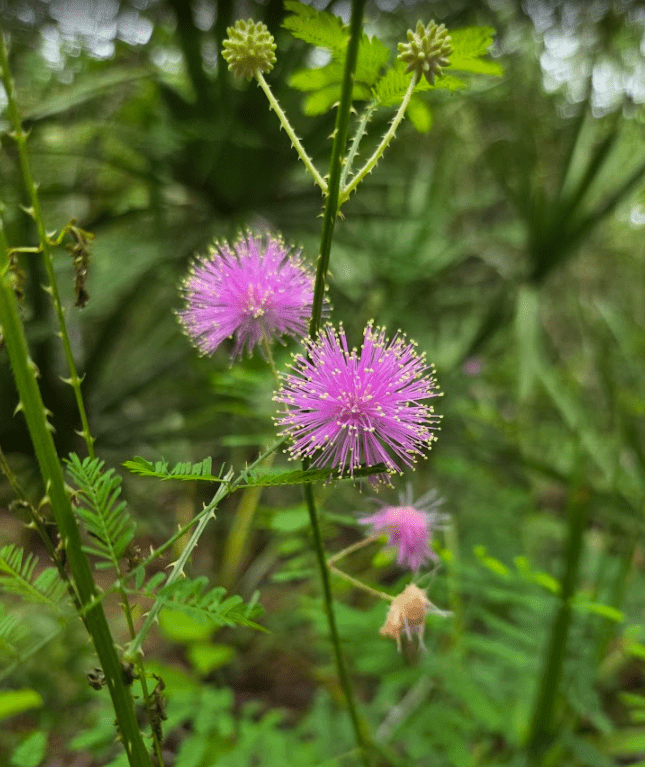
During our most recent visit, we arrived around 8:30am and started by driving over to the camping area to hike the Bear Swamp Trail. It started off nice, with sunshine mimosa blooms along and throughout the overgrown trail. Within the first quarter-mile, two kids came out of nowhere and zoomed by with their electric bikes. We had to jump off of the trail to dodge them.
We made it to the boardwalk, where we saw the kids again. They were headed back, as the trees that had crashed through the boardwalk were too big for them to go over with their bikes. I guess that’s karma for them.
The boardwalk was very slippery and has clearly not been maintained in a long time, so we went slow. When we arrived at the tree, my wife slipped on the sloped, mildewed boardwalk and hit her shin and knee.
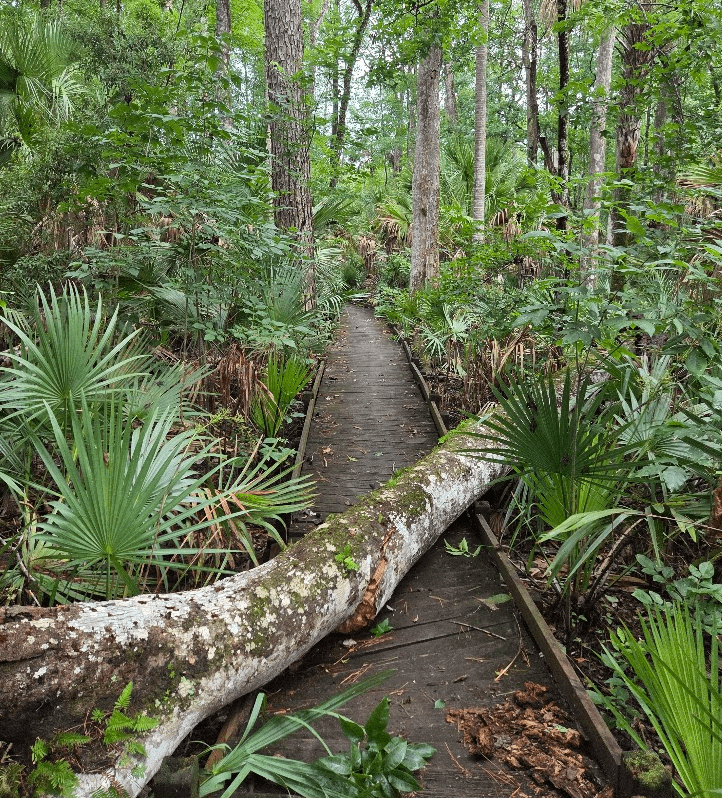
We continued on the loop and finally reached the end of the boardwalk. About this time, I got stung by something on my calf, either a yellow jacket or swarming fly. This set off a swarm of them to chase us all the way back to our vehicle, so we had to run back the final half mile. All in all, I got bit 4 times, and my wife once.
All in all a pretty bad hike, but we knew the spring would be better.
Swimming at Salt Springs
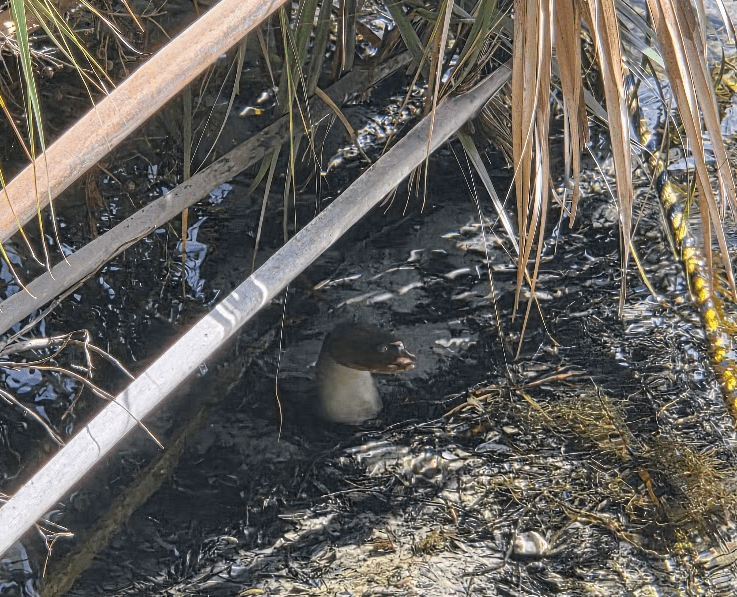
We headed over to the swimming area and walked the perimeter. We saw a softshell turtle buried in the sand with his head outside the water, looking around. This was awesome, I had not seen this before anywhere. We also saw several blue crabs from the surface, which was reassuring.
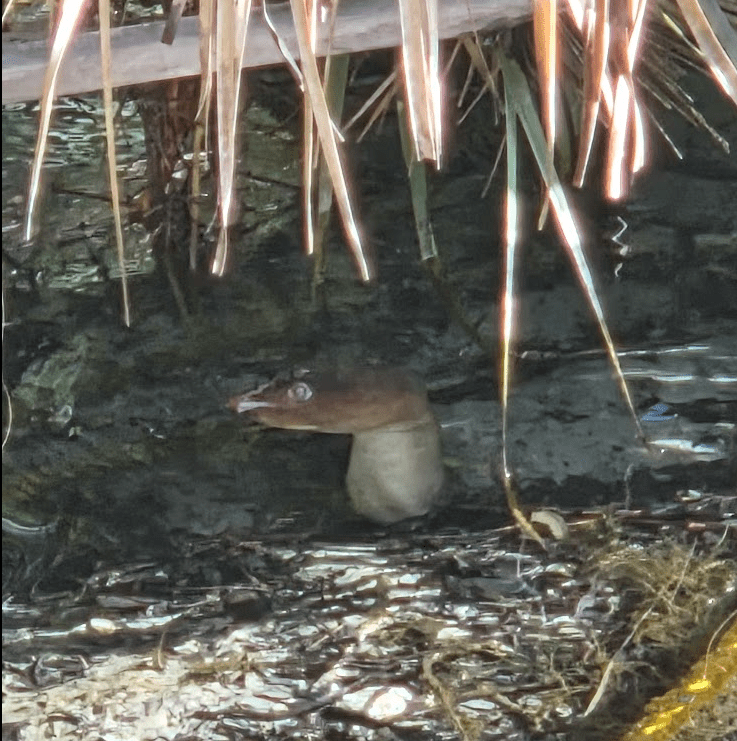
Jumping in, the water was cool and felt good on my stings. We swam the perimeter of the swimming area and snorkeled in each of the heads, seeing plenty of crabs in each.
After getting the lay of the land, we swam over to watch the softshell turtle, then the crabs. The crabs moved throughout the springs a lot more than I remembered. It was interesting watching them swim.
I swam over to grab my phone and dry bag to take pictures. There were large mullet, and even larger striped bass. The striped bass were not as numerous as at Silver Glen Springs, but there were a few dozen.
We spotted a buried crab, as well as a huge one in the spring vent. He had to be over a foot wide.
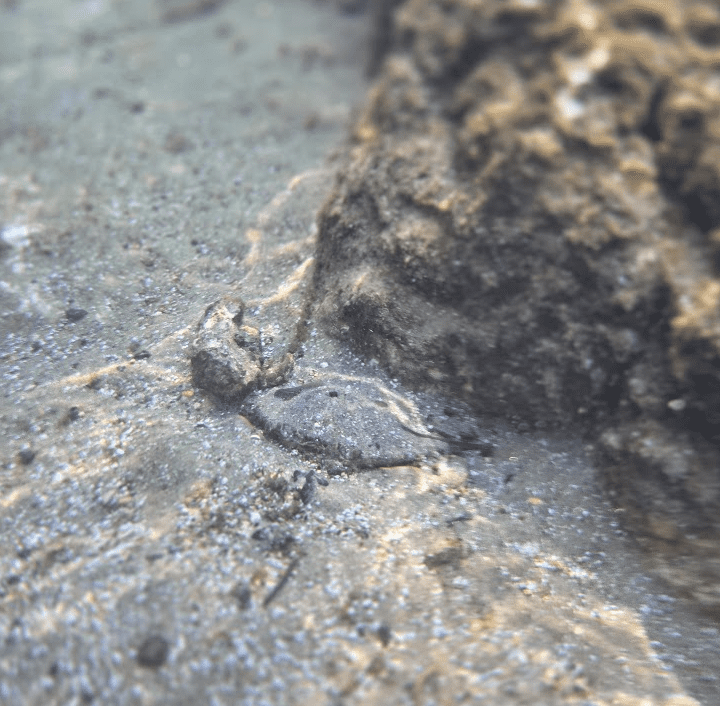
After hanging out for a while and soaking in the sun, we went to Odd Todd’s for some birria tacos and key lime pie before continuing to Juniper Springs.
Final Thoughts
Salt Springs is one of the most unique in Florida, and it is one I would recommend to all serious springs-goers. You should visit Salt Springs after you have been to a few others, so that you can really appreciate the uniqueness. Salt Springs is great for kids, and the crabs are our favorite part.
Salt Springs does not have significant name recognition, but if you are looking for something different, it is worth a trip.
Leave a Reply