
One of the roughest, wildest, most challenging paddles in Florida — not for the faint of heart.
Quick Facts
- Location: Gulf Hammock/Otter Creek, Levy County, FL
- Launch Point: Waccasassa Bridge on State Road 24 (between Bronson and Otter Creek)
- Take-Out: SE Hwy 19 Bridge, approximately 3 miles south of Otter Creek
- Route: NE SR 24 Bridge → Waccasassa River → SE Hwy 19 Bridge
- Distance: 8.7 miles
- Time Required: 3-8 hours
- Difficulty: Advanced/Expert
- Water Type: Spring-fed river that gets tannin-stained
- Current: Moderate to strong with rain
- Best For: Challenging adventure, remote paddling, wildlife, Old Florida scenery
- Activities: Kayaking, Canoeing, Paddleboarding, Jumping over logs
- Wildlife: Alligators, otters, wading birds, turtles, fish, hogs
- Fees: Free Public Access
- Reservations Required: No
Safety Warning
This is not a beginner or intermediate route. This stretch of the Waccasassa River is regarded as one of the most technically demanding paddle routes in Florida. You will encounter log jams, overhanging branches, fallen trees, shallows, tight turns through dense swamp, and even karst waterfalls over jagged limestone when the water is low. Depending on your provider, you may not have cell service on the majority of the river.
The surrounding area is mostly private hunting clubs, and leaving the river without permission is trespassing. You will have to exit your boat many times to drag or portage over obstacles – dozens when the water is low. Capsizing is almost guaranteed for all but the experts. Do not attempt this route unless you are an experienced paddler in excellent physical condition with a lot of safety gear and a trusted traveling partner.
Overview: Why This Paddle Trip Is Worth It
The Waccasassa River from State Road 24 to Highway 19 is not a lazy float trip, nor is it a leisurely afternoon on the water. This is not a route that is suitable for your cousin who is here on vacation. This stretch of river through tangled, tannin, alligator-patrolled Florida backcountry is one of the last genuinely wild paddle trips left in the state, and it will test every bit of skill and endurance that you have.
That’s why I love it.
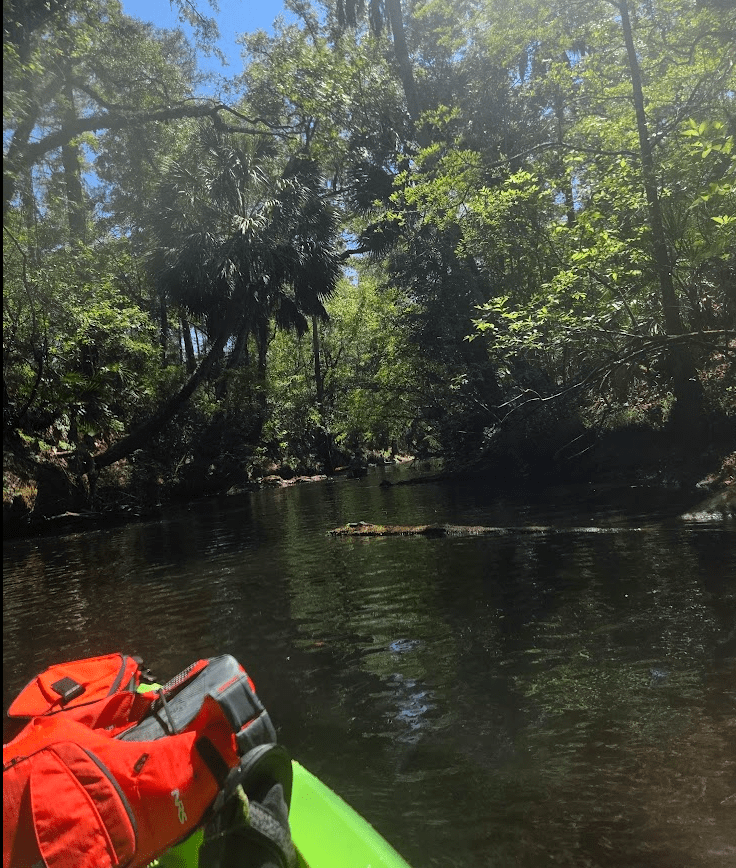
This river is 29 miles long and is born from Bronson Blue Springs and Wekiva Springs, winding through Levy county and through Waccasassa Bay Preserve State Park before emptying into the Gulf of America. The upper section flows through Devil’s Hammock Swamp and the Upper Waccasassa Conservation area, through dense and abrasive wilderness. You will be surrounded by cypress knees, wild boars, alligators, and snakes. Oh yea, and the river is clogged with trees over a sharp limestone bottom.
This route has been the course of the annual Wild Hog Canoe Race, one of the toughest paddle races in Florida, for almost 50 years. Locals call it the roughest, wildest, most challenging canoe race in America. Having paddled it myself, I won’t argue.
You do not need to race it to experience it. You can paddle on your own terms, but come prepared. This is an unforgiving route through brutal landscape, and you better be in shape and ready.
Route Breakdown
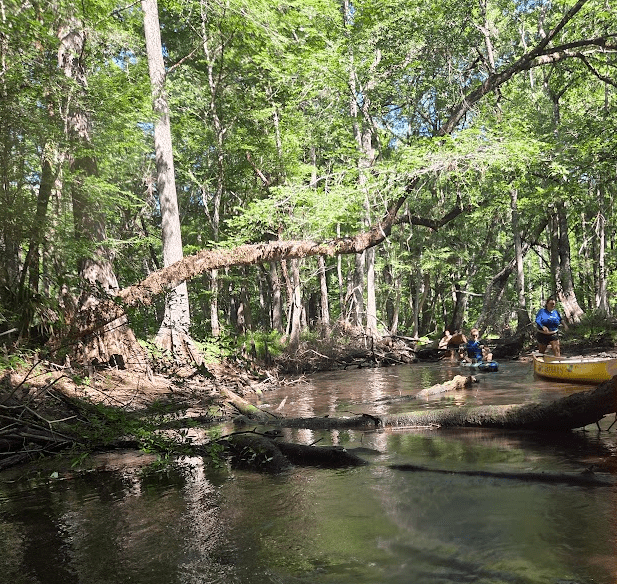
There are not a lot of segments involved on this paddle. Launch at the SR 24 Waccasassa Bridge. There is roadside space to unload boats. If the river is low, the first 2-3 miles will be hell. Expect to exit your boat dozens of times to jump over logs. Expect also to get skinny and go under logs.
For the next 5 or so miles on the rest of the route, the river opens up. The water becomes marginally deeper, and there are fewer log jams. You may still need to exit your boat many times to jump over logs and small waterfalls, and the limestone is sharp.

The take-out is located at the SE Hwy 19 Bridge, located about 3 miles south of Otter Creek. During the Wild Hog Canoe Race, a crowd gathers here to watch participants navigate a notorious final obstacle: a log positioned across the river. Paddlers on the race are required to pull their boats over this before crossing the finish. On a solo paddle, the bridge is your signal to celebrate survival.
Difficulty/Safety
There is not a polite way to say this: this route is dangerous for unprepared paddlers. Before you launch, keep the following in mind:
Physical Demands
Expect to be in and out of your vessel many times to clear obstacles. Dragging your loaded canoe or kayak over submerged (or stacked up!) logs in knee-chest deep, murky water requires strength, balance, and composure. Even elite paddlers (veterans and winners of the canoe race, the absolute best) take 2+ hours to negotiate this stretch of river. Those who struggle take over 6. Plan to be out for a long day, and for every muscle to hurt at the end.
Obstacles
You will encounter log jams, partially submerged trees, overhanging branches, shallows, stumps, and sharp limestone along this entire route. The difficulty increases when the water is low. Seriously, no sane person attempts this paddle during the dry season.

No Cell Service
This is a backcountry route, and many providers may not have coverage. File a float plan with someone not paddling with your launch time and expected takeout and ask them to call for help if they do not hear from you. Also, bring a Garmin InReach if you are headed out there alone.
Private Property
The wilderness bordering the river is mostly hunt clubs, and it is private property. Leaving the river is considered trespassing. If you need to stop, try to stay on the riverbank itself. During the Wild Hog Canoe Race, rescue personnel are stationed along the river to help. On a solo trip, you are on your own.
Alligators
There are alligators in this river. The water is murky in a lot of this river. You will have to exit your boat to clear obstacles in this river. Keep a wide berth, do not feed the alligators, and try not to get eaten.
Snakes
There are both venomous and nonvenomous snakes on this river. Watch where you put your hand when grabbing and passing over or under logs. Keep an eye out when passing under tree limbs. Getting bitten by a cottonmouth out here would be very bad.
Recommended Skill Level
To even consider this, you need to be comfortable with extended paddling, maneuvering in tight spaces, reentry after a capsize, jumping over and passing under log jams, and swiftwater awareness. You and your paddling partner both need to be experienced.
Wildlife and What You Will See
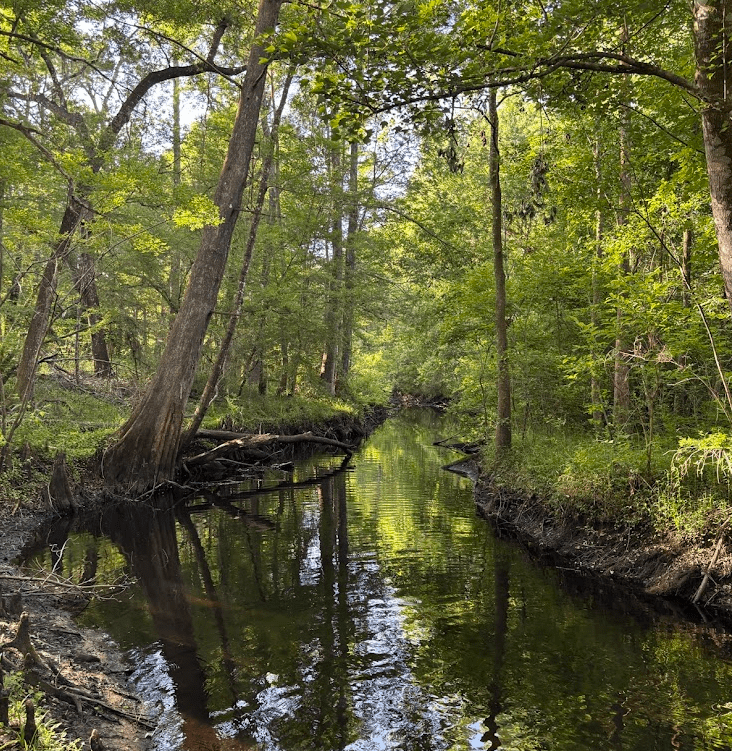
This is a very biodiverse paddling environment, combining a spring-fed river with tannin swamp drainage. Alligators, turtles, snakes, otters, and fish are common in the water. Deer, hogs, and even black bear can be seen along the bank, as well as many species of birds.
The forest canopy is great, with giant cypress trees and palm trees. Hurricane damage leads many of these trees to be blocking the river, and you will have to negotiate them.
Swimming Conditions
Do not swim in this paddle section if you can at all avoid it. You will likely not be able to avoid it, as you will have to jump out and over a lot of trees. Swimming here can lead to a variety of dangerous situations, like getting cut on sharp branches and limestone, as well as exposure to animals in the water.
The ground is mucky and may try to swallow your shoes. You can easily go ankle deep if not deeper in spots.
If you want to swim after your paddle, visit nearby Bronson Blue Springs like we did. This is the source of the water in the river, so it makes for a neat way to round out your day.
Best Time To Visit
I am not convinced that there is a best time to visit this river, it is more about weighing your options.
The safest time to visit is when there are other people and paramedics present, which is during the annual Wild Hog Canoe Race (occurring annually in April). I would do this run for the first time as a participant in the canoe race, so help is available.
In the spring, water levels are low, so you will have to deal with the most obstacles. During the winter, the temperature is cooler, so you will get bitten by fewer insects, and the river is a little bit higher.
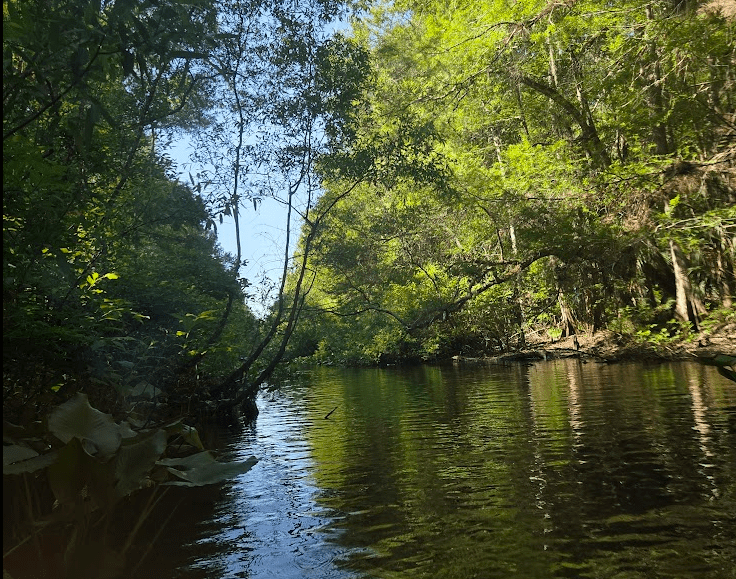
In the summer, the weather is hot, and there are afternoon showers. There are also a lot more insects than other times of the year.
If you go in the spring, water is lower, so there are more obstacles. If you go in the summer/fall, water is higher, so the water is deeper when you have to clear the obstacles. Both situations are dangerous.
Fees, Rentals, and Reservations
There are no fees or reservation for launching your kayak, canoe, or paddleboard on this public waterway. This also means that nobody knows you are out there, so if you paddle this independently, make a float plan.
The Wild Hog Canoe Race requires registration, which can be done online or day of. The entry fee traditionally includes a t shirt and barbeque lunch at the finish line.
Shuttle and Transportation Logistics
Shuttling is mandatory for this point-to-point route.
For an independent paddle, drop off one truck at the finish line at Hwy 19 and one at the start line.
For the Wild Hog Canoe Race, a shuttle is typically provided from the finish line to the start line, so you can drop off your vehicle ahead of time.
How to Get There
This is straightforward and the put-in (between Bronson and Otter Creek) and take-out (Between Otter Creek and Guld Hammock) are both at bridges, so it is easy to find.
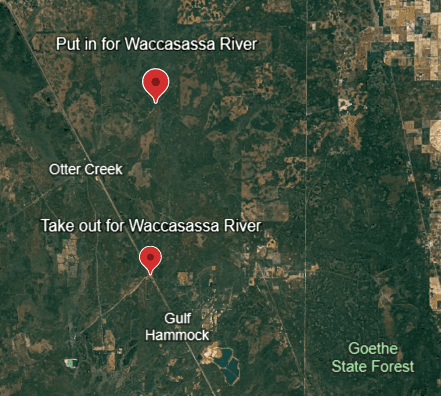
Make sure you download offline maps just in case.
What To Bring
Essentials:
- Dry Bag
- Lots of Water
- Snacks
- Lunch
- Sunscreen
- Well-Stocked First Aid Kit
Recommended:
- Long Sleeves
- Hat
- Waterproof Phone Case
- Shoes with good strap (Teva or Chaco) with socks
- Bug Spray
- Knee/shin protection from logs
- Garmin InReach
Gear:
- Kayak
- Paddle
- Spare Paddle
- Life Jacket (PFD)
- Whistle
- Float Plan
Tips to Avoid Crowds
This is not a concern on a normal day on the Waccasassa. If anything, you would want more people here, since this stretch is remote and difficult.

Luckily, the Wild Hog Canoe Race attracts around 150 boats and is a piece of Florida culture worth attending.
Where to Stay Nearby
This area is gloriously remote, with authentic backcountry hospitality (your tent).
Plan to camp at Manatee Springs State Park of Otter Springs.
For motels and hotels, Chiefland and Gainesville are your best bet.
Nearby Things to Do
While Bronson is rural, it is right in the middle of wild Florida. There are plenty of springs in driving distance that can be clustered with this paddle trip. I recommend Bronson Blue Springs, one of the watersources for the Waccasassa River.
Cedar Key is a popular community for a post-paddle celebration.
Hiking Trails Nearby
Here are my recommendations for hiking in the nearby area:
- Watermelon Pond Wildlife and Environmental Area – try the 6.2-mile Watermelon Pond and Blue Heron Loop
- Goethe State Forest – try the 5.5-mile Tidewater Blue Loop or the 7.8-mile Tidewater Purple Loop
Florida Springs Nearby
Bronson Blue Springs – small-town charm: an affordable, refreshing end to your day
Manatee Springs State Park – a large spring with natural borders on the Suwannee River
Fanning Springs State Park – easy access and family-friendly with small flounder-like fish
Devil’s Den Prehistoric Spring – go diving in a sinkhole
Blue Grotto Spring – well-lit cavern fit for diving
Rainbow Springs State Park – great for swimming, epic tube and paddle run
Food Nearby
Bring your lunch on this paddle trip – I recommend buying a Publix sub on the drive up if you are doing this independently.
If you are participating in the Wild Hog Canoe Race, they will have food waiting for you at the finish line. This is oneA of the best meals you will ever eat.
For local fare in Bronson, I would try Julie’s Diner or A&A Barbeque.
Pros and Cons
Pros:
- Wild, remote, uncrowded (except for race day)
- Great wildlife viewing
- Legendary paddle tradition
- Old-growth trees
- Free to paddle outside of race day
- Bragging rights
- Additional hair on your chest
Cons:
- Actually dangerous for inexperienced paddlers
- Minimal cell service
- Shuttle logistics have to be solved (multiple cars)
- Many log jams and portages
- Sharp limestone
- Deep mud
- Swimming is not the safest thing
- Remote, minimal services nearby
- Low water levels make this a next-level challenge
Sample Itinerary
Wake up, eat a huge breakfast and your coffee, drive to finish line. Drop off a car, drive to start line. Portage as need, try to stay alive. Eat lunch on the riverbank. Work your way to the finish line, staying hydrated on the way. Jump over the final log. Shuttle back to your other vehicle. Get a good meal and treat any injuries.
Frequently Asked Questions
- Is the Waccasassa River SR 24 to Hwy 19 route worth it? If you are an experienced paddler looking for one of the last pieces of wild Florida, yes. If you are not an advanced paddler looking to test your skills and fortitude, no.
- Are there alligators? Yes, there are alligators on this river. They normally try to avoid paddlers, but you will have to jump out and do portages. Keep in mind that there are alligators present.
- Can beginners do this? No, this one is for the experienced paddlers. Try the Emerald Cut to Wekiva Island or Rainbow River for a more forgiving experience.
- Do you need a reservation? No for an independent paddle, but you will need to register if you would like to do the Wild Hog Canoe Race.
- How long does it take? Realistically, plan for 4-6 hours depending on water level. If you are an elite paddler racing, it is possible to complete in 2 hours, but if you are one of the few that can complete this in 2 hours you are not reading this post.
- Can you swim year-round? Do not swim here if you can avoid it. There is murky water, alligators, snakes, soft banks, and sharp limestone. Go swimming at Bronson Blue Springs instead.
- What happens if I need help on the water? You are largely on your own if paddling this independently. Fill out a float plan, bring an experienced buddy, carry a whistle and your Garmin InReach. Be honest about your skill level. During the Wild Hog Canoe Race, paramedics and rescue personnel are normally stationed. We passed people that needed them.
Personal Experience
I first heard about the Waccasassa when I was looking for my next race. Still recovering from my half marathon, I figured a kayak race would be fun to fill in the gap. On a Tuesday morning, I found out that the Wild Hog Canoe Race was that weekend. I looked it up, watched a video, and realized that this was the challenge I needed in my life.
I called my friend and told him what I found. Without hesitation, he said he would race with me. I made sure he did some research to find out what he was getting into.
The morning of the race, we drove up to North Florida. The start line was easy to find, with dozens of boats, police, and EMS already onsite. We unloaded and got ready to go. The race started with a prayer and the national anthem.
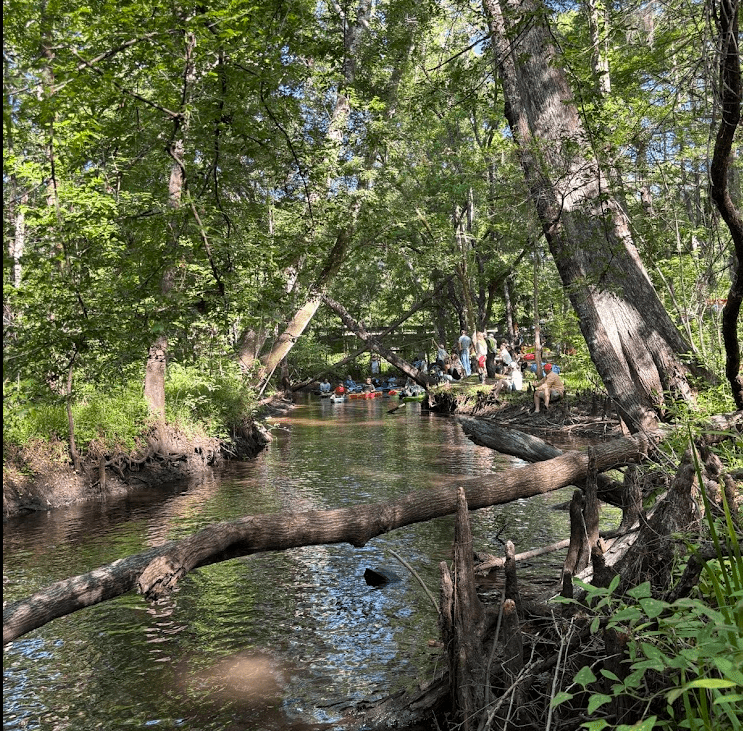
When it was our turn to start, we were off. We paddled fast and got to the first log jam within 10 minutes. With a little hesitation, we jumped out, threw our boats over the log, and carried on. We had to drag our boats for the next 200 yards through a series of log jams, waiting for and bumping into other contestants. It was chaos.
Finally, back paddling. 50 yards later we came around a bend and jumped out again. This time without hesitation. I was tracking this activity as a workout on my Garmin watch and after an hour, we had only traveled a mile. Not good.
We cleared log jam after log jam, sometimes over, sometimes under. I learned how to get flat on my back on top of my kayak and squeeze through under the higher logs. Not a skill I expected to develop.
Before long, we were getting scraped up. My buddy broke both of his croc straps pulling his feet out of the mud. He had to finish the race barefoot.
We got through the first 2 miles without major injury, but there were some close calls. You can’t see sharp sticks and limestone in the muck. We passed a lady who had cut her shin deep, to the point of needing stitches. She was bleeding badly and had to be picked up and would not be able to finish the race. We gave her the medical supplies we had and carried on.
After the first 3 miles, the river began to have more water in it. Instead of jumping over a log every 20 yards, it was more like every ¼ mile. This was nice. We went over some small waterfalls in the limestone. Those were less nice.
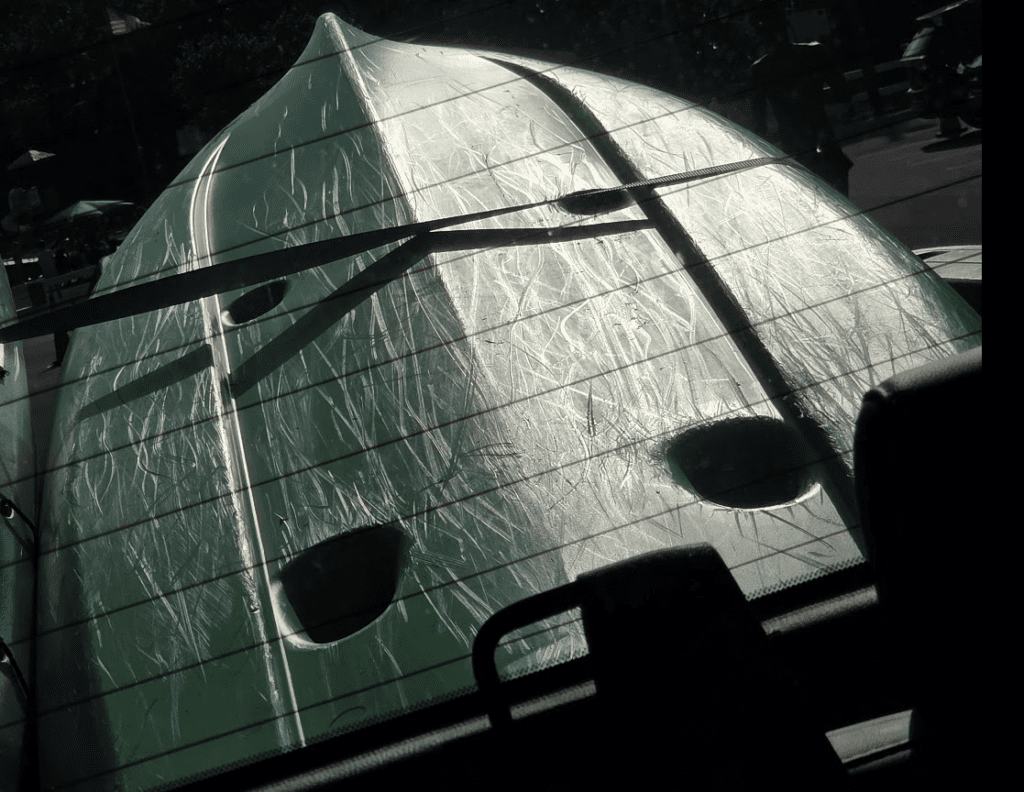
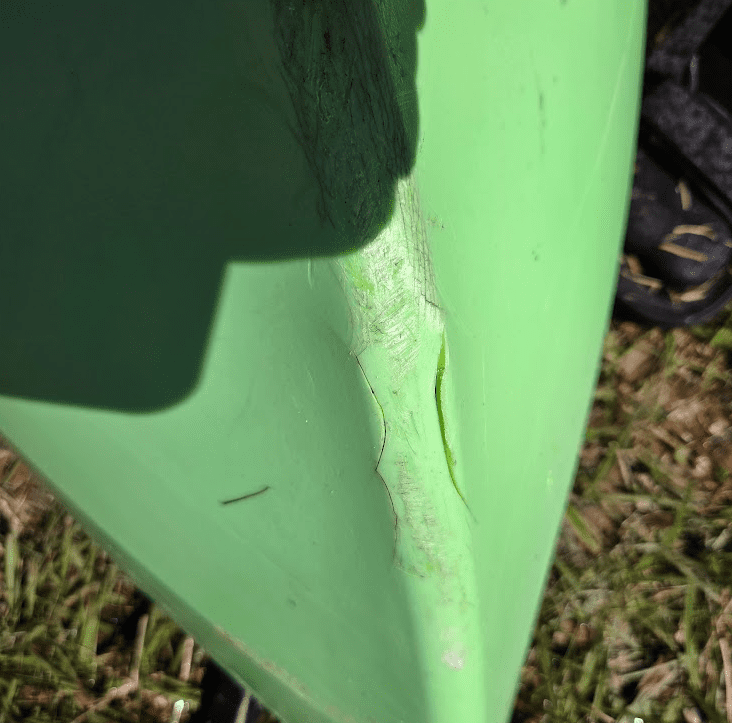
I cracked my kayak in 3 places going over one of the waterfalls and started to slowly take on water. This made paddling harder. My kayak got heavier and heavier as it filled with water, leading me to slow down.
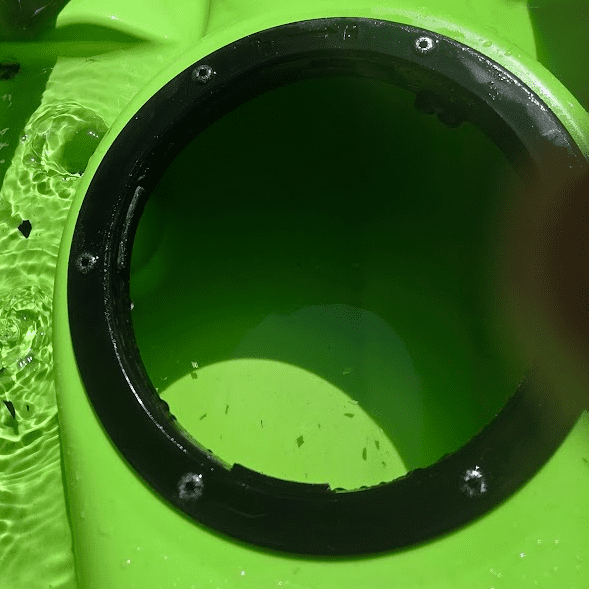
By the time I saw the Hwy 19 bridge, I was exhausted, bruised, scraped, covered in mud, and fulfilled. The feeling of earning a wild place on its own terms is something very few paddle routes can offer. The Waccasassa can.
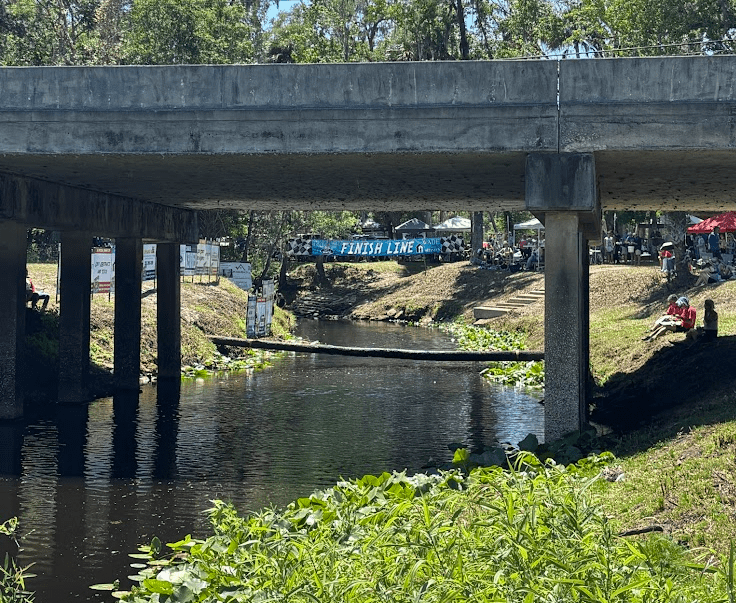
I reached the final log 2 hours after my expected finish time and had to push it over the final log. It was now full of water, so this took some serious effort. I am looking forward to doing this again, with a better kayak.
Final Thoughts
The Waccasassa River from NE State Road 24 to SE Highway 19 is the kind of paddle that Florida used to have everywhere but now doesn’t. This is unfiltered wilderness that demands your respect and earns your courage with an unforgettable experience that can’t be replicated.
If you are an advanced paddler looking for a challenge, put this on your list – participate in the Wild Hog Canoe Race. If you are a beginner or intermediate paddler, build your skills somewhere more forgiving. This river will be here when you’re ready.
This is a wild little river, and about the closest you can get to the feeling that De Soto had during his famous expedition.
Leave a Reply