
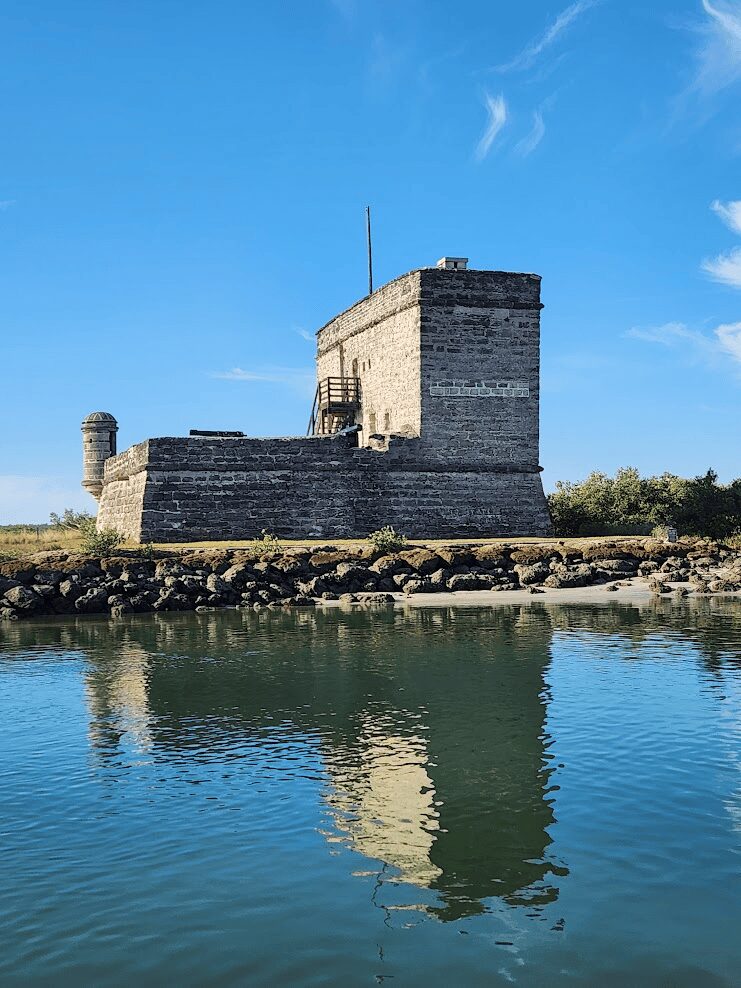
We visited Fort Matanzas National Monument in the morning and spent around 2 hours here. We took the free ferry to the fort, toured it, climbed the ladder to the roof, and walked the Nature Trail near the Visitor Center. This guide covers how the boarding passes work, what the fort is like inside, and how to fit it into a St. Augustine trip.
Is Fort Matanzas Worth Visiting?
Yes, if you want a short, free stop that’s different from a normal fort visit. Fort Matanzas is a small 1740s coquina watchtower on an island in the Matanzas River, and the only way to reach it is a free National Park Service boat. The ferry runs Thursday through Monday only, and the boarding passes are free and cannot be reserved in advance. They’re distributed at the Fort Matanzas Visitor Center on a first-come, first-served basis.
Who should skip it: if you want a big fort to walk around, go to the Castillo de San Marcos instead. The fort’s only entrance is a 15-step staircase, so the interior isn’t wheelchair accessible. Pets can’t board the boat or enter the fort.
Quick Facts
Location: 8635 A1A South, St. Augustine, FL 32080, about 15 miles south of downtown St. Augustine
Time Needed: 2 hours to fully experience
Best For: Families, history buffs, Floridians, people who want a boat ride to a small fort
Don’t Miss: Climbing the ladder to the top of Fort Matanzas
Best Time to Visit: Winter for best temperatures
Grounds Hours: 9:00 a.m. to 5:30 p.m. Closed Thanksgiving and Christmas
Admission: Entry and ferry are both free
Official Website: https://www.nps.gov/foma/
Know Before You Go
- There is no ferry on Tuesdays or Wednesdays
- Boarding passes are day-of only, and they often run out before 11 a.m. They can be acquired at the Fort Matanzas Visitor Center, and every passenger needs one, including kids.
- The ferry stops for lightning and high wind, sometimes without notice. Summer afternoon visits may be tricky.
- Arrive at the dock early for boarding.
- No food or drinks other than water are allowed on the boat or at the fort.
- Use the restrooms at the visitor center before you board. There are none on the island.
- Call 904-471-0116 the day before. Some NPS alert pages show old update dates.
Overview and History Of Fort Matanzas
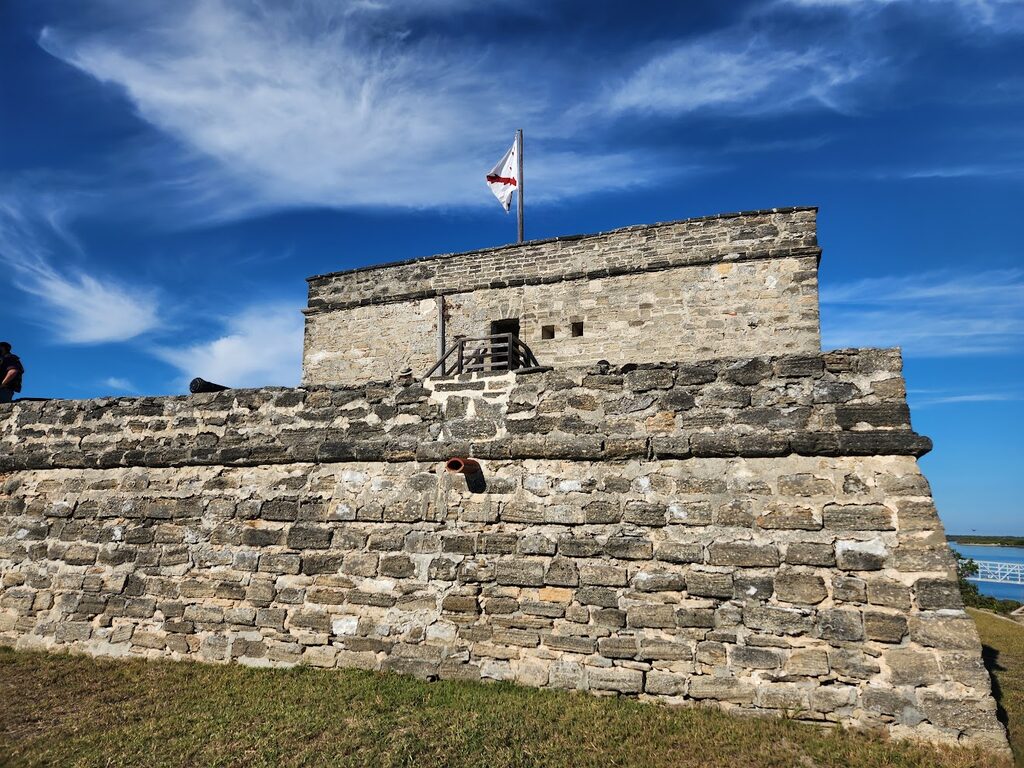
Spain built Fort Matanzas from 1740 to 1742, right after British General James Oglethorpe’s 1740 siege of St. Augustine. Engineer Pedro Ruiz de Olano designed it, and it’s made of coquina, a local shellstone historically mined at Anastasia State Park. The fort guards Matanzas Inlet, the back door to St. Augustine that bypassed the guns at Castillo de San Marcos.
The fort is much smaller than the Castillo, at only 50 feet on each side with a 30-foot tower. The garrison was one officer, four infantrymen, and two gunners, and this crew protected Florida from invasion.
“Matanzas” is Spanish for “slaughters.” The name comes from 1565, when Spanish forces killed French Huguenot colonists at the inlet. The fort became a national monument in 1924.
Fort Matanzas did fire its cannons during the 1742 British campaign, but it never experienced a major battle at the fort. A Spanish cannon shot in September 1742 helped drive off British boats approaching the inlet. Fort Matanzas never endured a major battle or siege, like the damaged Castillo or destroyed Fort Pulaski.
Best Things to Do at Fort Matanzas
This is a small fort, but there are still plenty of activities for the whole family.
Ride the ferry and tour the fort
Crossing the river is short, and once on the island, a park ranger provides an orientation before you explore the fort. You can view the soldiers’ room, the officer’s quarters, the powder magazine, and the gun deck. The gun deck has five cannon positions, including two original cannons from around 1750. A nearly vertical ladder leads from the officer’s quarters up through a small hole in the roof observation deck coquina.
Walk the Nature Trail
This half-mile boardwalk through coastal hammock forest and scrub is a good way to pair wildlife with the cultural fort. It starts near the Visitor Center and has stops covering the local flora, fauna, and 1565 massacre. Most of it is shaded, and it is a good way to stretch your legs after the ferry ride.
If you want a less structured trail, the Marsh Trail marks an unpaved sandy route under a mile long.
Beach, Picnics, and Fishing
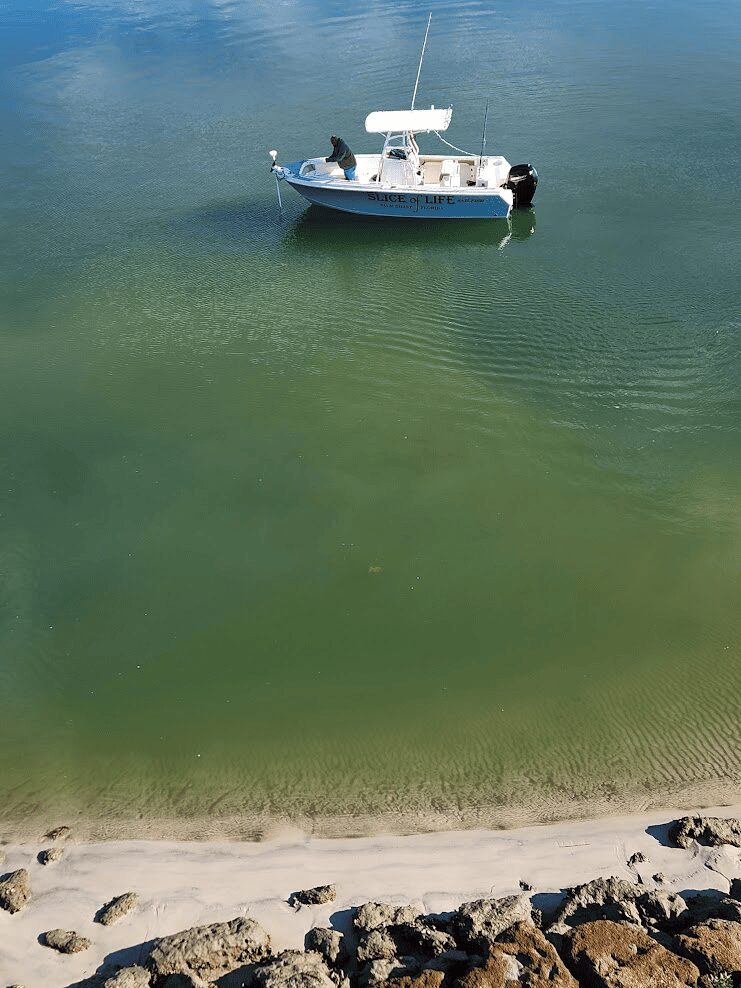
There’s a shaded picnic area under old oaks at the visitor center entrance, with restrooms. Saltwater fishing is allowed along the shorelines except near the ferry docks, and you need a Florida saltwater fishing license.
Our Experience at Fort Matanzas
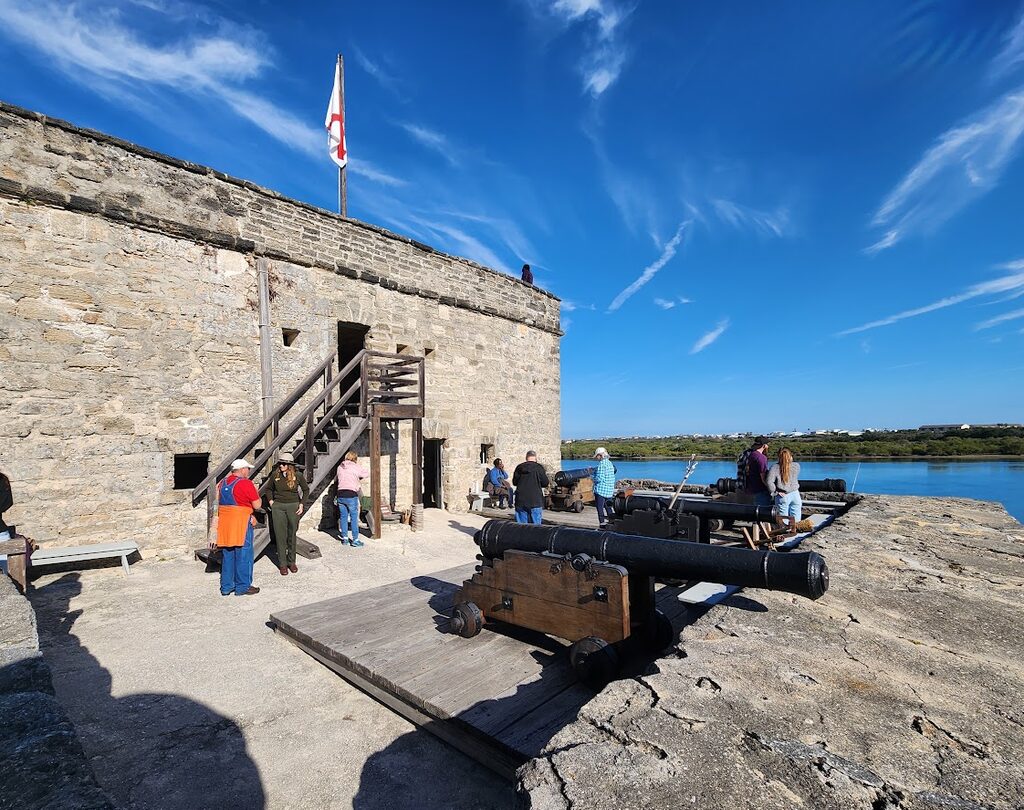
My wife and I took a December weekend trip up to St. Augustine. We started our day with Fort Matanzas, arriving around opening to ensure that we could get a ferry ticket. We didn’t have to wait, and got seats on the first boat. The ranger said that passes often run out midday, so it was worth arriving early. We got our stamps and bought our sticker while waiting the few minutes for the ferry to leave.
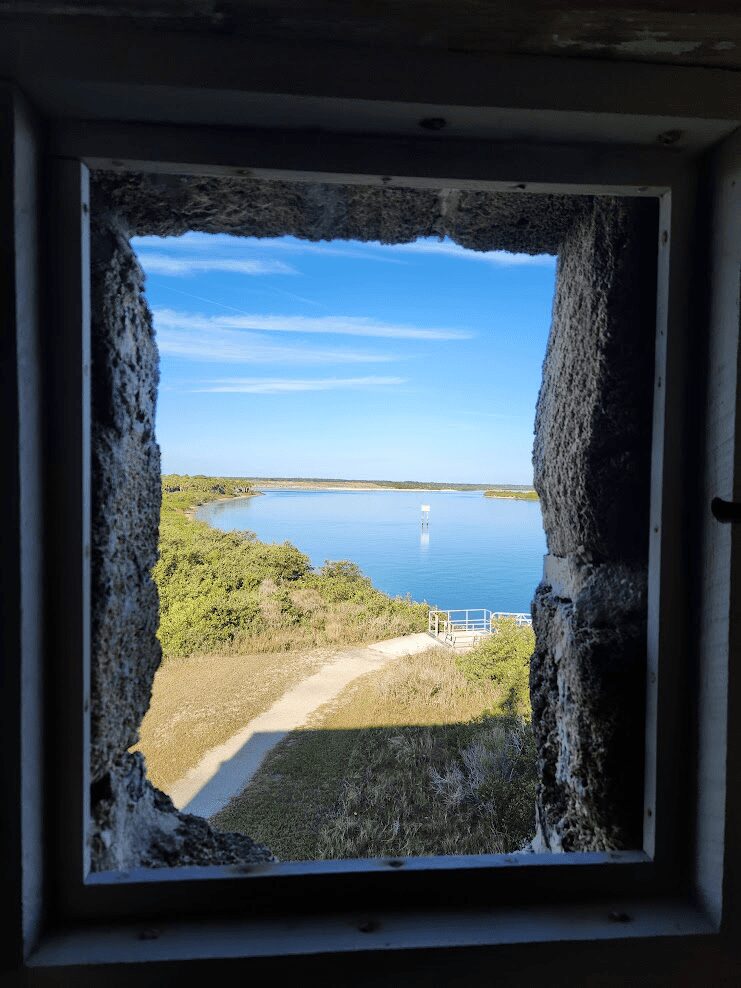
The boat crossing was short, and I brought only a water bottle. Once on the island, the ranger showed us around, then we had around a half hour to explore the fort. I enjoyed watching the wind blow the trees out of the windows of the fort.
The fort reminded me of the 1700s version of my first college rental house with roommates. While it would have been awesome to live on the island fort in late fall and winter, I can’t imagine what a Florida summer was like here. The heat, mosquitos, no-see-ums, and humidity must have been hard to bear for the soldiers stationed here. It was fun to imagine what life was like back then.
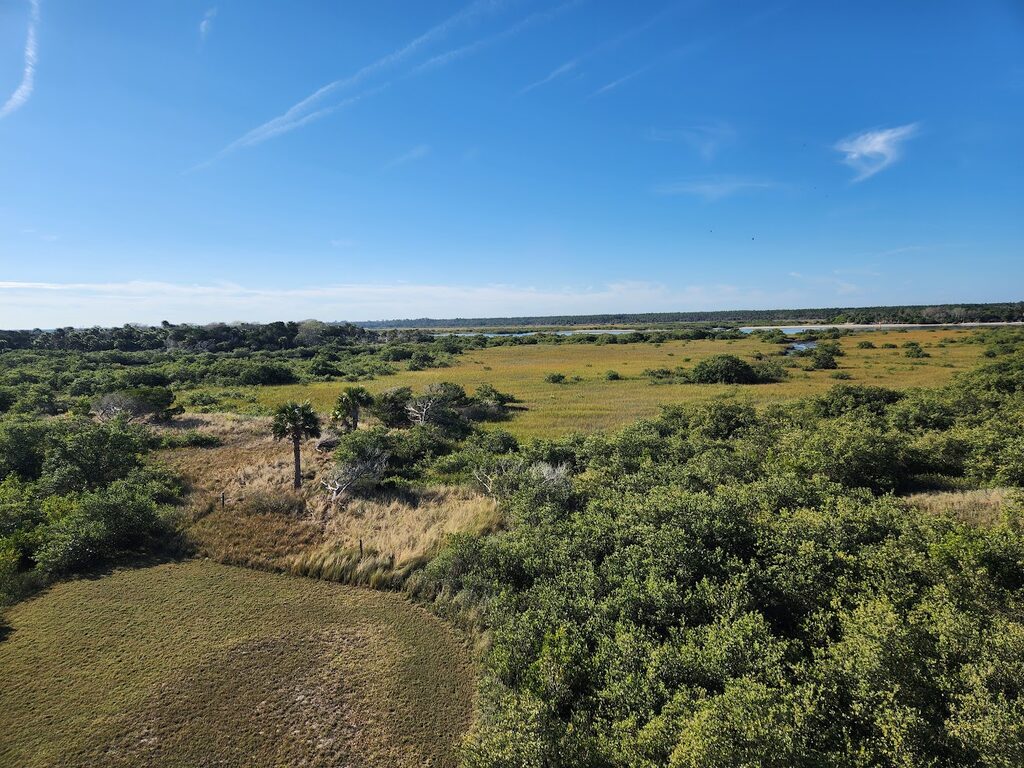
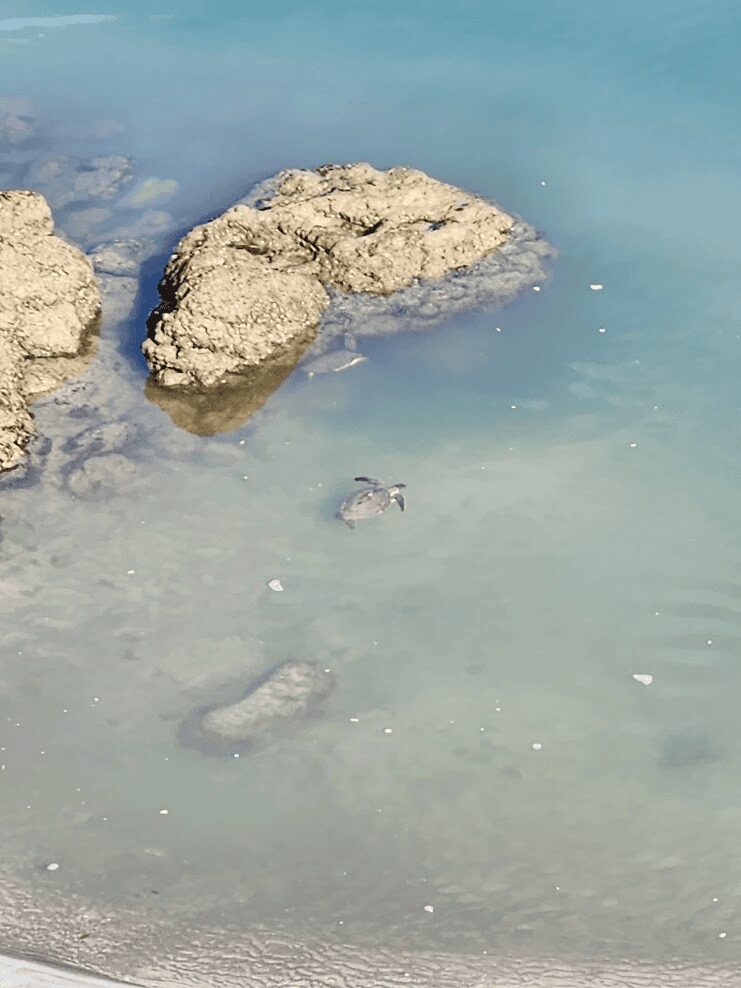
We climbed to the roof one at a time, and the ladder was tight. The hole in the roof that you enter is so tight that I had to turn my legs sideways so that my knees could fit. I imagine the Spanish stationed here were shorter on average. The view from the top of the fort was great, and we saw somebody fishing nearby. We were thrilled to see sea turtles from the roof!
We climbed back down off the roof, careful to have our legs bend sideways so they would fit. We got back on the ferry and returned to the mainland.
Last, we walked the Nature Trail. We noticed that the yaupon holly had red berries, marking the Christmas season. The trail was short and sweet, and we spent around 2 hours total, from parking to leaving Fort Matanzas.
We went to Washington Oaks Gardens State Park for the trails and plant sale right after, and we did the Castillo de San Marcos and Anastasia State Park the next day. Fort Matanzas and the Castillo are both built from coquina cut on Anastasia Island, so seeing the quarry at the end tied the whole trip together.
How To Visit Fort Matanzas in 2 Hours
This is the route we took (about 2 hours total):
- Arrive as early as you can. Park and go straight to the visitor center for boarding passes.
- Use the restroom and fill your water bottle.
- Be at the dock early for boarding.
- Ferry, ranger talk, and fort: 45 to 55 minutes.
- Nature Trail: about 20 to 30 minutes if you stop at the numbered markers (our estimate).
- Optional picnic or beach stop before you leave.
If You Only Do One Thing
Ride the ferry and explore the fort.
Full-Day Itinerary
You don’t need a full day here. For a full day of park exploration, I would pair this with the Castillo de San Marcos and nearby state parks. Make sure to start with Fort Matanzas to ensure you get a ferry ticket.
Where to Eat Near Fort Matanzas
There is no food service at Fort Matanzas, so plan to eat before or after your visit. St. Augustine and the restaurants along A1A offer plenty of options.
Where to Stay Near Fort Matanzas
I would recommend staying at one of the hotels in St. Augustine.
Tips For Visiting Fort Matanzas
When to go: NPS lists weekends, holidays, and spring school months as the busiest times. The ferry doesn’t run Tuesday or Wednesday, so your quieter weekday options are Thursday, Friday, and Monday. Go in the morning. Fall and spring are the most comfortable, at 70 to 80°F.
What to bring: Water, a hat, sunscreen, and closed-toe shoes. Bring bug spray for the boardwalk in warm weather, and remember to leave food in the car.
Parking: The visitor center lot is limited and can fill during busy periods. There’s no parking for buses, RVs, or oversized vehicles. NPS recommends carpooling. Your best bet is to arrive early.
Fees: Everything is free. You don’t need an America the Beautiful pass.
Frequently Asked Questions
Is Fort Matanzas free?
Yes. Entry, the ferry, and the grounds are free.
How much time do you need at Fort Matanzas?
Plan on about 1 hour for the ferry and fort visit alone. Give yourself about 2 hours if you also want to walk the Nature Trail, which is what we did.
If you want to add a picnic, beach time, fishing, or the Marsh Trail, you could easily spend longer here.
Do I need a reservation for the ferry?
No, and you can’t make one. Boarding passes are handed out at the visitor center on the day of your visit only.
What time does the Fort Matanzas ferry run?
Current ferry schedule: Thursday through Monday at 9:30 a.m., 10:30 a.m., 11:30 a.m., 12:30 p.m., 1:30 p.m., 2:30 p.m., and 3:30 p.m., weather permitting. There is no ferry service Tuesday or Wednesday.
What days is the Fort Matanzas ferry closed?
The ferry does not operate Tuesday or Wednesday. Fort Matanzas itself remains open for the visitor center grounds, Nature Trail, fishing, and other activities.
How long does Fort Matanzas take?
The ferry tour is 45 to 55 minutes. Plan about 2 hours with pass pickup and the Nature Trail.
Can you go inside the fort?
Yes, via the ferry. The only entrance is a staircase of about 15 steps, so the interior isn’t wheelchair accessible.
Is the ladder to the roof hard?
It’s nearly vertical. It’s manageable, but tall visitors should go slowly and watch their heads. You can skip it and still see the rooms and the gun deck.
Can I bring my dog?
Only to the beach and trails, on a 6-foot leash. Dogs can’t go on the boat, into the fort, or into the visitor center. Service animals are allowed.
Is Fort Matanzas good for kids?
Yes, particularly for children who enjoy boats, forts, and short walks. The ladder requires additional caution, and the NPS specifically advises watching children when they use it.
Are there restrooms?
Yes, at the visitor center. Visitors report none on the island.
Can I bring food?
No food or drink on the boat or at the fort. Water is fine. Use the picnic area before or after.
Fort Matanzas or Castillo de San Marcos?
Do both if you can. The Castillo is the big fort. Matanzas is the small watchtower with the boat ride.
Is Fort Matanzas better than Castillo de San Marcos?
They’re different experiences rather than substitutes. Castillo de San Marcos is the much larger fort; Fort Matanzas is a smaller watchtower reached by a free boat ride. If you have time, visiting both gives you a better sense of how St. Augustine’s defenses worked.
Can you visit Fort Matanzas without taking the ferry?
Yes. You can visit the Visitor Center, Nature Trail, picnic area, beaches, and other park areas without taking the ferry. The fort itself can only be accessed by the NPS ferry.
Conclusion
Fort Matanzas is a free, 2-hour stop to learn more about a small but interesting fort just south of St. Augustine. This is a great pairing with the Castillo, but make sure to go early to ensure a ferry ride.
Other Sights Near Fort Matanzas
- Castillo de San Marcos National Monument: About 15 miles north in downtown St. Augustine.
- Anastasia State Park: The Spanish coquina quarry that supplied stone for both forts.
- Washington Oaks Gardens State Park: South on A1A, good mix of manicured gardens and wild Florida.
- Faver-Dykes State Park: Nearby state park that is good for spotting wildlife
- Crescent Beachfront Park (6930 A1A South): Public beach with parking, restrooms, and showers.
Leave a Reply