
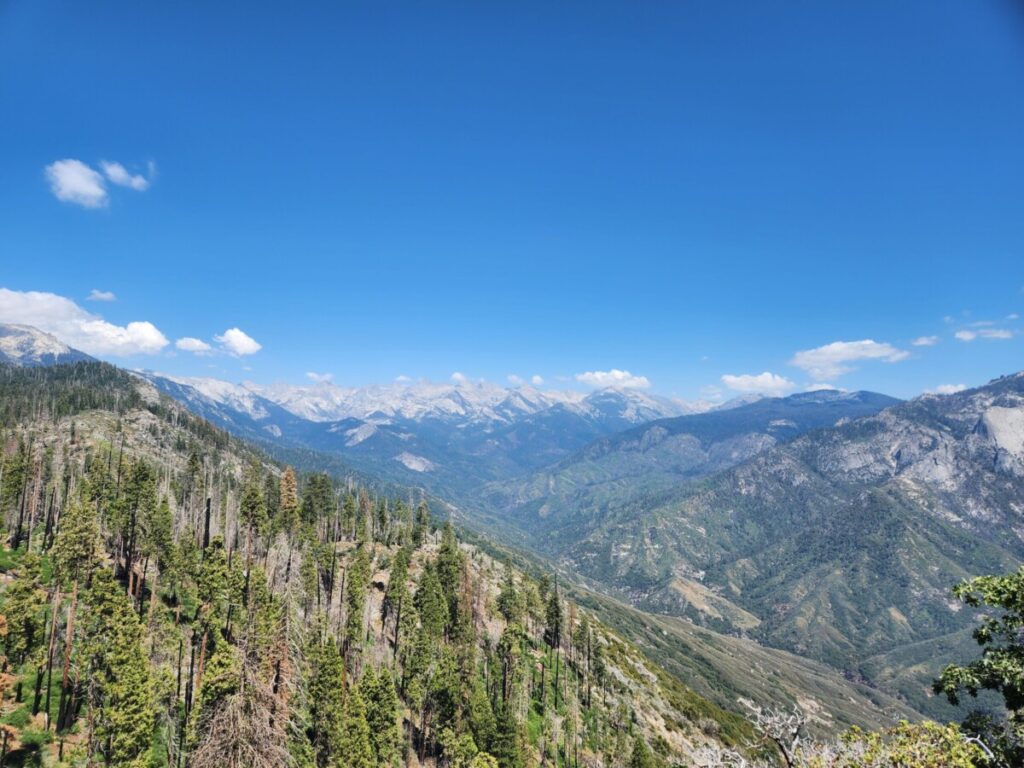

If you found my blog, the odds are that you are an explorer. Just like the explorers of early America, I am a hunter. If you aren’t already a hunter, I would encourage you to become one. Hunting a great way to learn more about wildlife and conservation, reflect, and provide high-quality meat of a known origin for your family. It is a great way to find peace and disconnect in a loud world.
You are probably curious about the economics of deer hunting. This post is intended to share my experience on a recent hunt, associated expenses, and meat yield. Hopefully, it will give you the tools to convince your spouse that hunting is a worthwhile endeavor to produce moderate-cost, high quality meat.
Every year or two I am invited to join my cousin and uncle on a late-season deer hunting trip to their ranch in Texas. This results in an epic, multi-day drive from my house in central Florida to West Texas. As it is over 1400 miles and 20 hours of drive time from my front door to the hunt camp, I had to make a lot of stops along the way. I left at 4:30 am and stopped at my grandparents’ house along the way to say hi, exchange Christmas gifts, and take a nap before heading to my uncle’s house for the night.
At 4:30am the second morning, my uncle and I started a safari-style trek with my truck and his SUV for the remaining day of driving. We met up at a second uncle’s house to top up on coffee and pick him up. Around 9am, we arrived at my cousin’s house and picked him up. The four of us trekked west until we arrived at the camp, stopping only for fuel, more coffee, and hunting licenses.
When we arrived at the camp, we turned on the water, electricity, and unpacked our vehicles. We went to bed and rose early the next morning to start our hunt, with both of my uncles and my cousin harvesting a deer in the first morning. This year, our goal was to fill my cousin’s new chest freezers, which he got for a smoking deal on Black Friday. Over the course of 3 hunt days, we saw over 50 deer, a pack of hogs, a mountain lion, and a multitude of varmints.
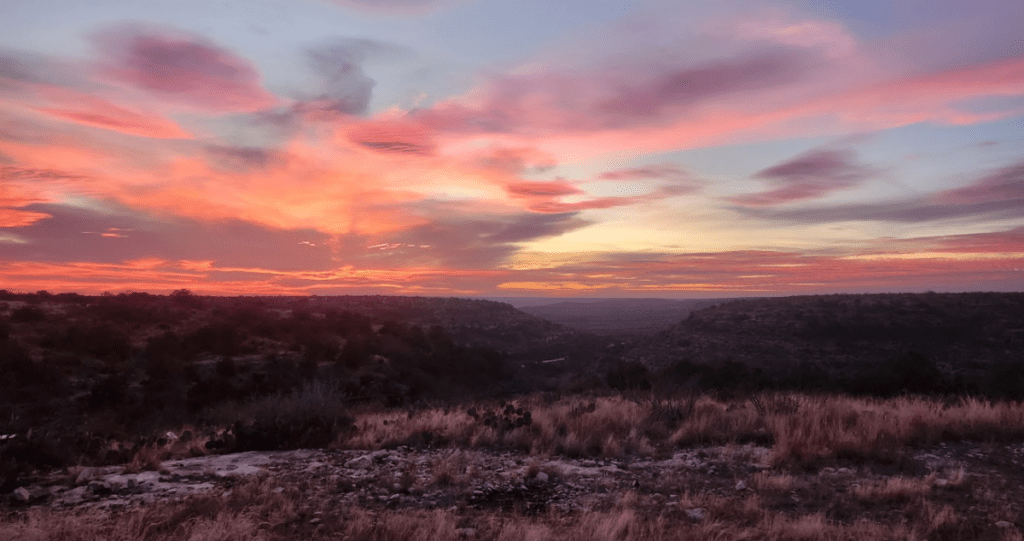
I was blessed to be able to harvest two does and an 7-point buck, which was taken on our last hunt. My cousin harvested a 6-point buck and a doe. One uncle harvested a 7-point buck, and the other harvested an antlerless buck, which he thought to be a doe, taken from with a perfect shot even in his advanced age. Every shot taken by my family was ethical and precise, and each animal went down with a single shot. Minimal meat was wasted.
Necessary Inputs and Cost Breakdown
To go on a hunt like this, you need somewhere to go. While I was lucky to be invited to private land, I am an avid public land hunter in my home state. It would be possible to replicate these results on public land, and not having access to private land is by no means an excuse to sit on the sidelines this next season.
My lifestyle means that I have accumulated hunting and outdoors equipment and have a capable truck, rifle, warm clothes, coolers, and a lot of freezer space. We kept costs down on the trip by eating at relative’s houses, but I did consume a lot of food, gas (luckily cheap in Texas!), coffee, and ice on the road trip.
The cost breakdown for my hunt was as follows:
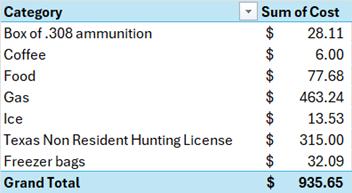
As you can see, my vehicle is not the most fuel efficient, and I had a long drive. But in comparison to a guided hunting trip, the cost is not excessive. My cost was kept down by cooking most of our meals (such as deer spaghetti!) and by buying ice only at Bucees where it was cheap. I am proud to report that the hunt cost less than $1,000 including meat processing, and I got to spend great quality time with family both along the way and on the trip.
I bought a box of ammo prior to the trip and fired 4 shots at the range to verify my zero at different ranges (3 shot group at 100 yards and one shot at 25 yards). I harvested 4 animals, so I had 12 bullets left over, but I am counting the whole 20 count box of ammo since I had to buy it prior to the trip. I had already planned a range trip to sight in a different rifle, so I am not counting the costs associated with the range trip in this analysis. Look forward to a range trip cost breakdown in a later post!
I used multiple rolls of vacuum seal bags as well as 21 1-lb bulk game meat bags. I already owned a vacuum sealer and meat grinder combo purchased on Black Friday for $150, as well as cutting boards and knives, so the only consumable was the freezer bags.
Meat Yield
I brought home three deer: a buck and two does. I had minimal meat loss on my journey, but I did have a gallon-sized bag of scraps spoil on the two-day road trip home. My coolers kept ice and the meat cold, but I may have contaminated that bag. The rest of the meat was kept dry and good, and I processed it with the help of my wife the day after I returned. It was a late night, but very rewarding.
My wife requested more roasts this year for meal prep instead of focusing on bulk ground. As such, we butchered the 6 hind quarters into constituent muscle groups and only ground the front shoulders and scraps. The backstraps and tenderloins were retained as steaks. The femurs will be used to make bone broth or will be cooked as bone marrow.
My meat yield from the three deer was as follows:
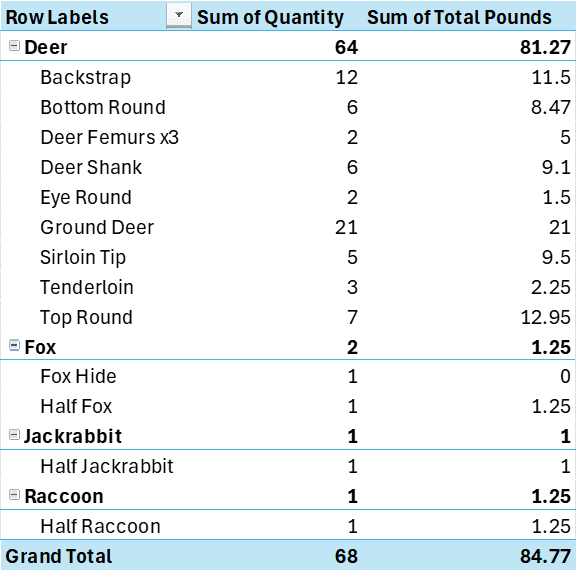
So, from 3 west Texas deer, I yielded around 81lbs of meat, or around 27 lbs/deer of processed meat. I got a good shot on a fox and since they were legal game in Texas, I took it. I plan to have the hide tanned. My cousin harvested a jackrabbit and a raccoon. We split the meat for the jackrabbit, raccoon, and fox in half so my cousin and I could each try each kind of meat.
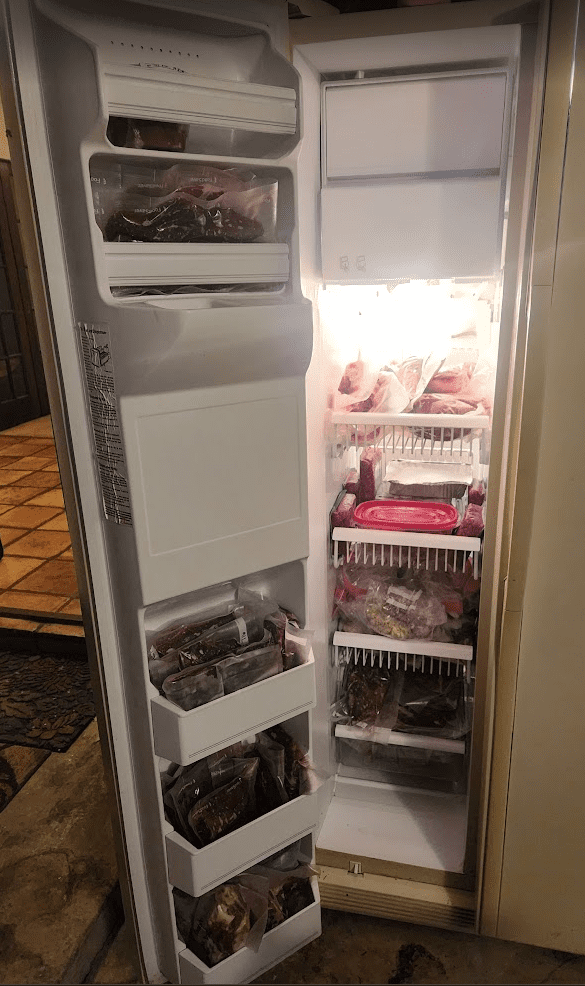
My cousin yielded a similar amount of meat, around 90 lbs. This was from 3 whole deer and a half of a deer (the rest was consumed as camp meat).
Cost Analysis
Since I spent $935.65 and yielded 84.77lbs of meat, my cost per pound was $11.03 for all types of meat harvested. For deer only, my cost per pound was $11.51.
As we are new to detailed deer butchery, we were surprised to learn that the hind shanks we saved and packaged are known as osso bucco. My wife is excited to try new venison recipes with the cuts we saved.
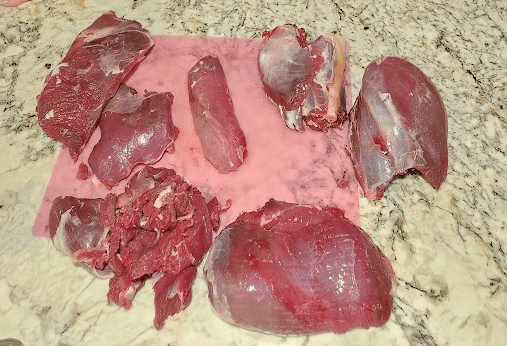
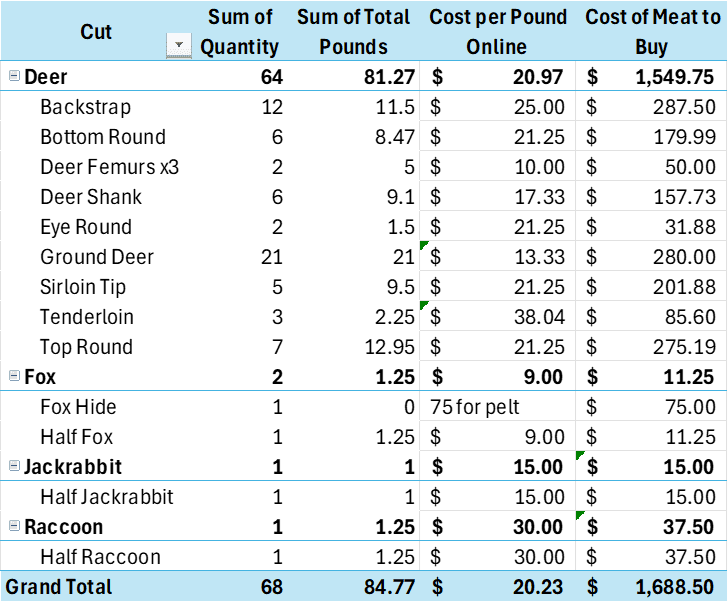
I researched farmed venison online to try to determine the cost it would be to purchase this quantity of meat. While farmed meat is lower quality than wild, you cannot legally purchase wild venison, so it is as close as I can get. For Bottom Round, Eye Round, Top Round, and Sirloin Tip comparisons, I found deer stew meat for sale.
The average cost per pound for the farmed versions of the game meat harvested was $20.23. The total cost to procure the meat harvested on my hunt would be $1,688.50. If I wanted to buy the meat and quantities harvested, I would have to spend an additional $752.85, on top of the $935.65 I spent on the hunt! The cost of meat to buy is the cost per pound online multiplied by the number of pounds processed. Here is the breakdown:
What I learned in this exercise is that DIY hunting, even as a non-resident, can be less expensive than buying meat at the store! Now, you are unlikely to purchase game meat in your normal life for daily consumption, but just leave that part out when you tell people that you saved money by hunting.
Ways to Reduce Cost per Pound of Meat Harvested
Now, my cost as a nonresident hunter was high, but not extraordinary. My spending on the 7-day trip, with 3 hunting days, was not extravagant, but there are still two major ways I could reduce my cost per pound of meat.
The first major way to reduce cost per pound of meat on a Texas deer hunt would be to punch my remaining two tags. This would not increase my costs in any appreciable way, but it would increase my meat yield by 67%. As a hunter in Texas, I was allowed 5 deer, but I only harvested 3. If I had harvested 5 deer, my meat yield likely would have been 135 lbs of deer meat. This would result in a cost per pound of $6.74, which is cheaper than the average cost of grass-fed, organic beef in my area!
The other major way to reduce cost per pound would be if I was a Texas resident, or if I hunted in my home state of Florida. This would significantly reduce gas expenditure, which I will estimate at 1/4 of the cost for an in-state hunt. As a Texas resident, my hunting license would have only cost $25. This would have brought the cost of the hunt down to $298.22. If I harvested the same meat yield as I did this year as an in-state hunter, the cost per pound would have been only $3.52. If I had harvested 5 deer as a Texas resident, my cost per pound would have dwindled down to $2.66.
Summary
I believe that hunting is a great way to produce high-quality meat for you and your family, while also building memories with loved ones. It is a great way to kick back and spend some quiet time in nature. I hope that you can use some of my data points to justify your hunting lifestyle to your spouse!
Leave a Reply