
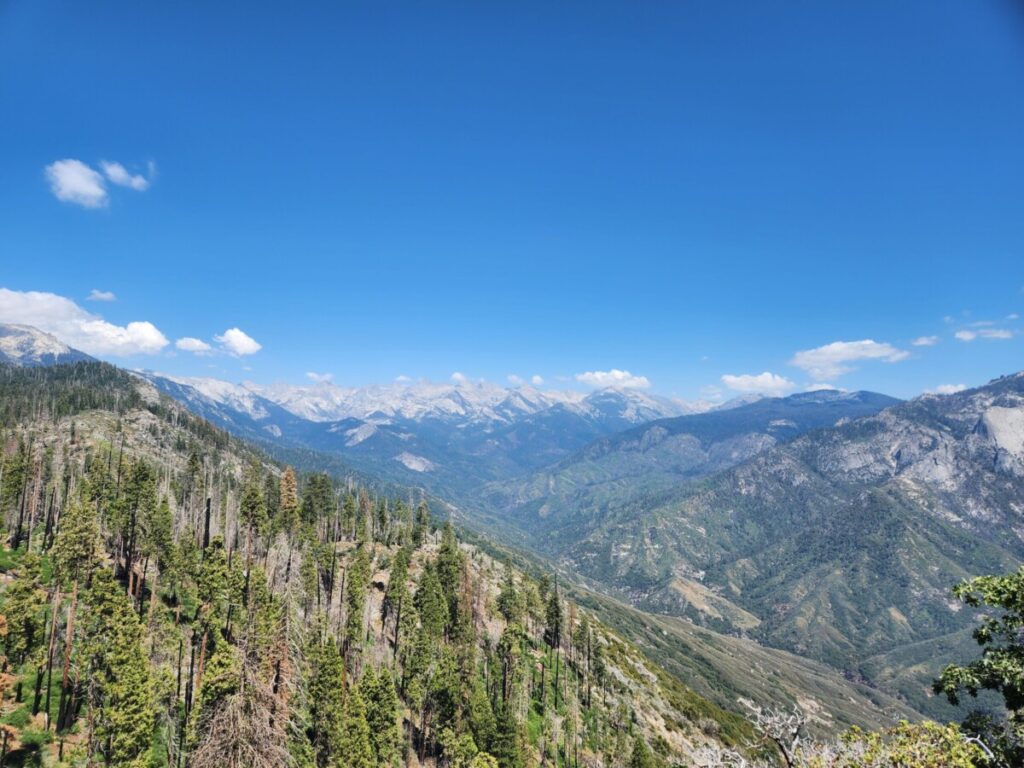
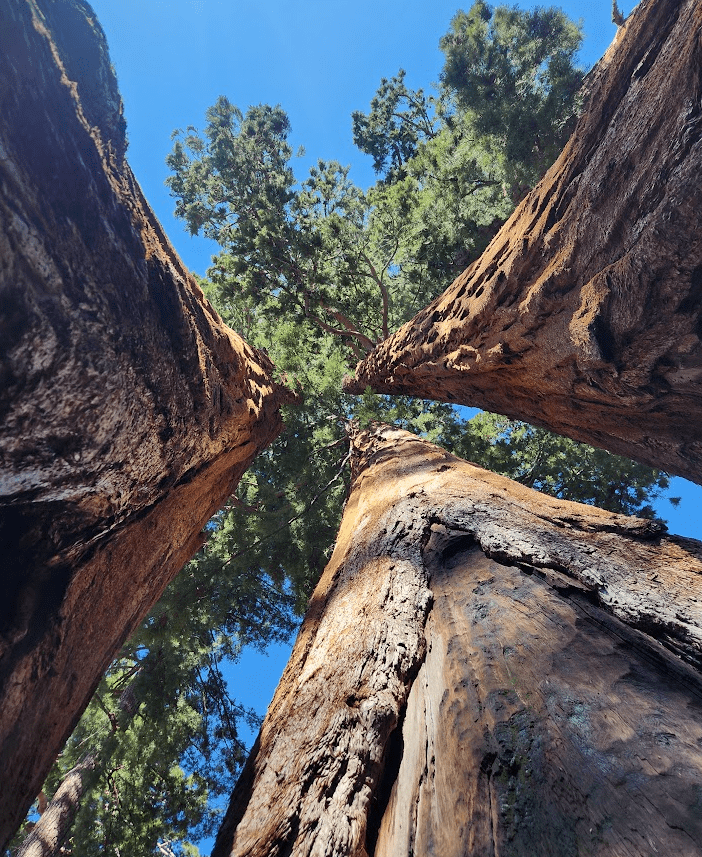
We expected to see big trees at Sequoia National Park, but we were not prepared for how large they really were.
If you want to see trees larger than most buildings, 6000 feet up in the California mountains, plan your next visit to Sequoia.
Quick Facts
Location: Southern Sierra Nevada Mountains, California
Time Needed: 1-2 Days
Best For: Giant trees, lupine meadows, easy hikes, and families
Don’t Miss: General Sherman, the largest tree in the world
Best Time to Visit: May-October
Overview Of Sequoia National Park
Sequoia National Park is home to the largest living trees on the planet. These giant sequoias have grown for thousands of years, rising from granite cliffs, meadows, and alpine peaks.
Sequoia is comanaged with Kings Canyon National Park and spans more than 400,000 acres. The highlight of your trip will be the Giant Forest area, home to 5 of the 10 largest trees on Earth.
This park can be experienced in a day but offers plenty of opportunities to expand into a longer trip.
Why Should I Visit Sequoia National Park?
You should visit Sequoia to immerse yourself in 2000-year-old trees that dwarf buildings in size. There is nothing like standing next to a sequoia tree, craning your neck to see the top.
The drive up the Generals Highway from the California Valley up into Sequoia National Park makes you feel like you are traveling to another planet – one with trees larger than you have ever imagined.
If you are from the east coast, being amongst these huge trees will undoubtably change your perspective and sense of scale.
The sights and opportunities include:
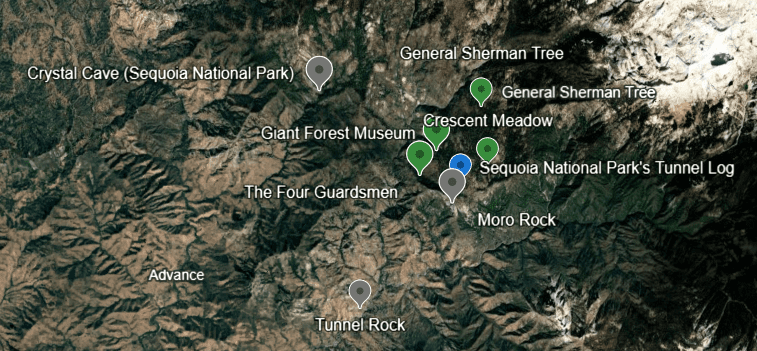
- Moro Rock, with panoramic views of the Sierra Nevada mountains
- A selfie here will be your next facebook profile pic
- The Giant Forest, and Giant Forest Museum
- See the largest tree in the world – General Sherman
- Easy, paved hikes
- Crescent Meadow – the “Gem of the Sierra”
- Tunnel Log – drive through a tree
- Crystal Cave – one of the largest marble caves in California
Our Experience At Sequoia National Park
We spent one full day at Sequoia, starting with The Giant Forest Museum, Tunnel Log, and Crescent Meadow. Around lunch time we took a tour to Crystal Cave, and we spent the afternoon at Moro Rock and then the Congress Trail
The Generals Highway and Giant Forest Museum
My wife and I started off bright and early and drove up the Generals Highway. Generals Highway takes you up in elevation, but it felt a lot safer than our experience driving in Kings Canyon. To our delight, it contained guard rails!
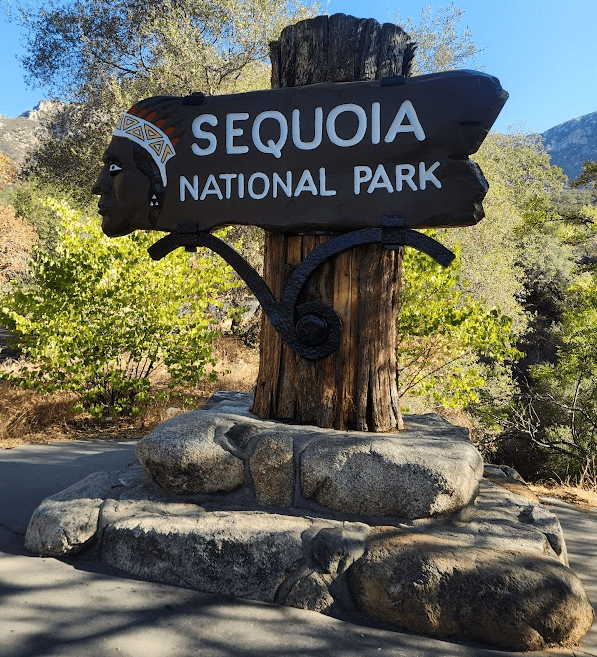
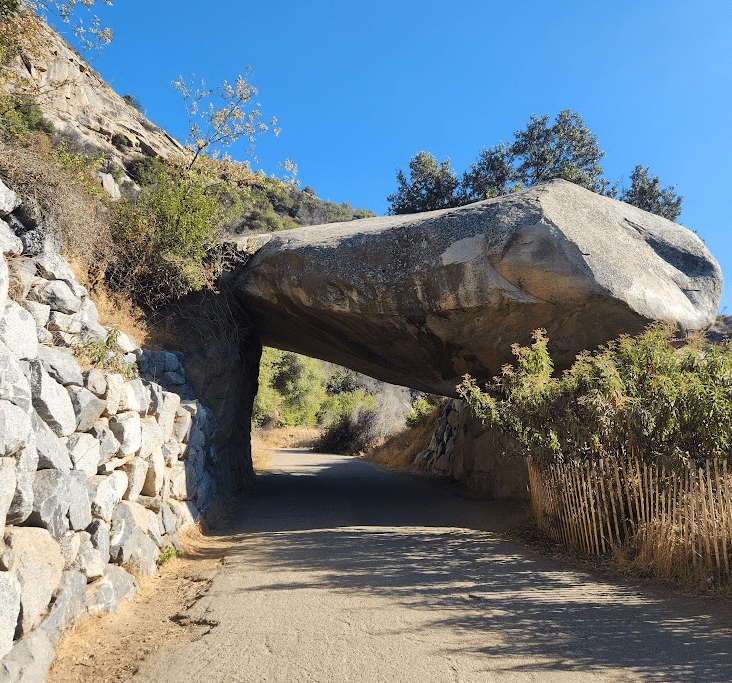
On our way up, we stopped to take a picture with the entrance sign, and then at Tunnel Rock.
We saw a pretty huge buck in velvet on the drive up, and we passed the turn off to Crystal Cave.
Parking was easy early in the day at the Giant Forest Museum, and we got to see the Sentinel Tree as we walked in.
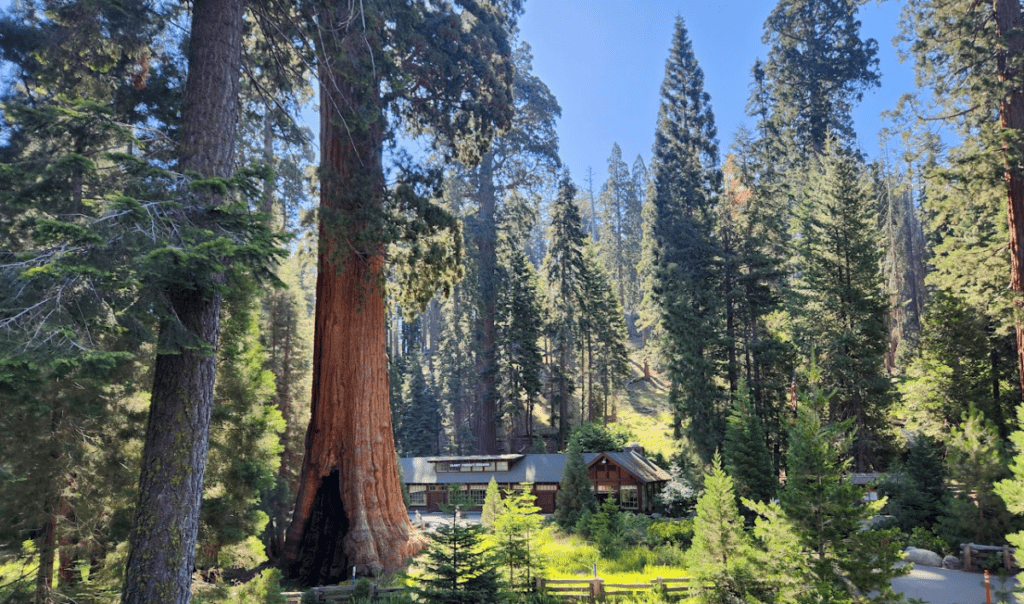
The Giant Forest Museum had some neat exhibits showing the different types of pinecones, and we enjoyed spinning the wheel to figure out if we would survive or not as sequoia trees. My seed never sprouted, and my wife’s sprout could not reach the soil.
Crescent Meadow
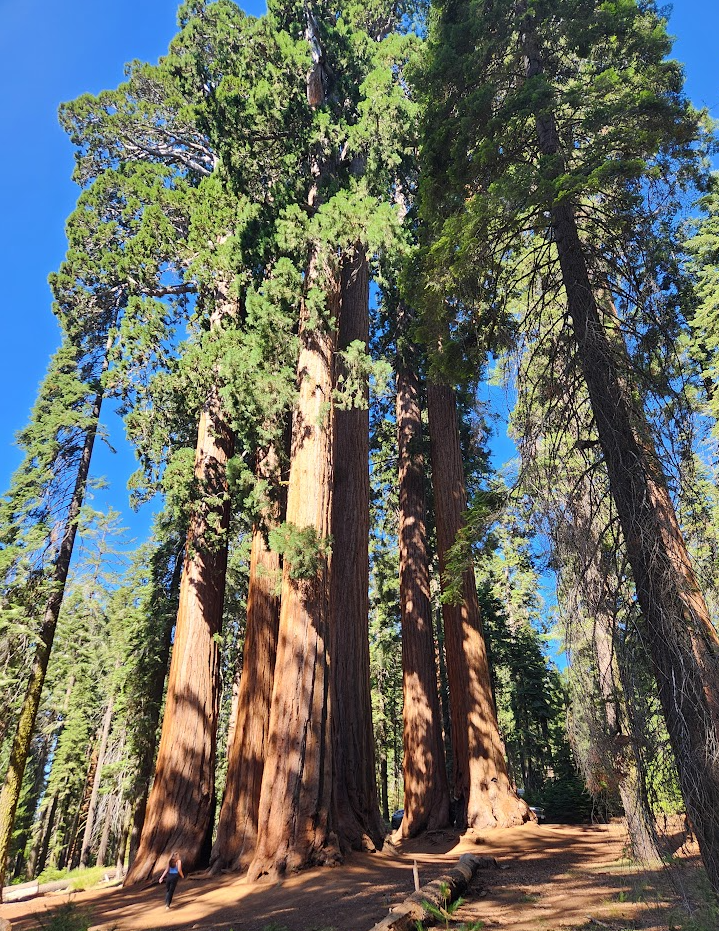
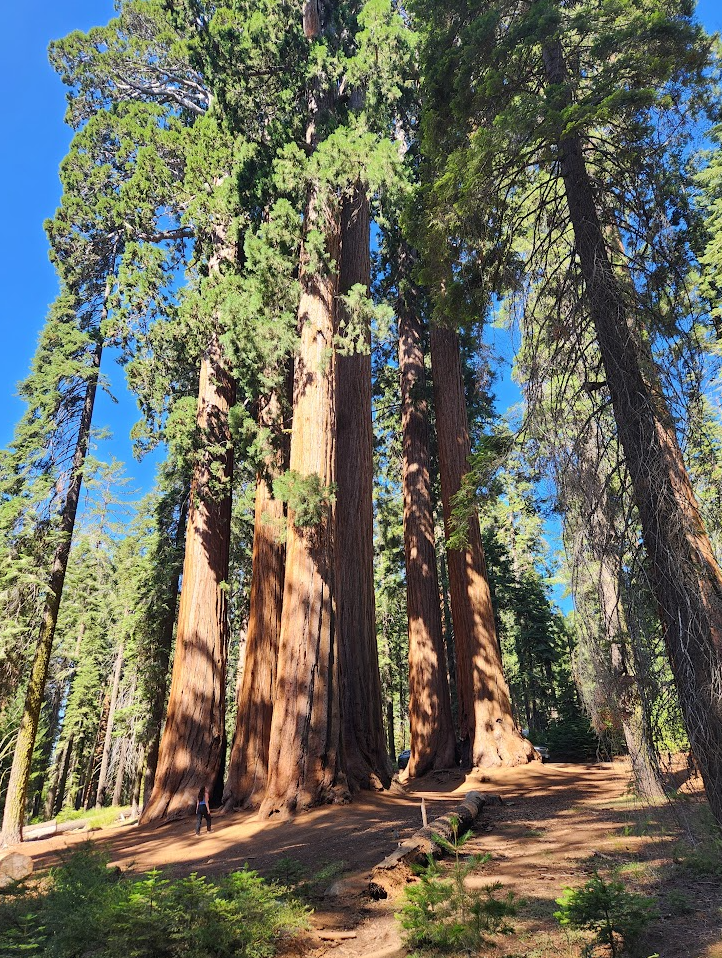
We left the Giant Forest Museum and headed over to the Tunnel Log and Crescent Meadow. We stopped at the Parker Group – a set of particularly massive sequoias. Their size and proximity had us feeling extra small.
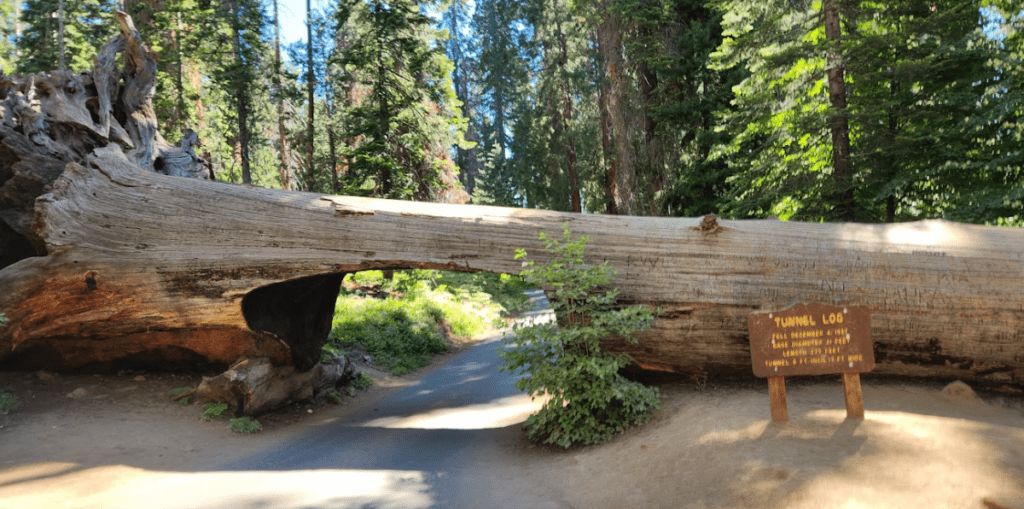
Next, we drove through the tunnel log, which reminded us of the drive on the Needles Highway in South Dakota. Driving through a tree with your car really showcases the size of these giants.
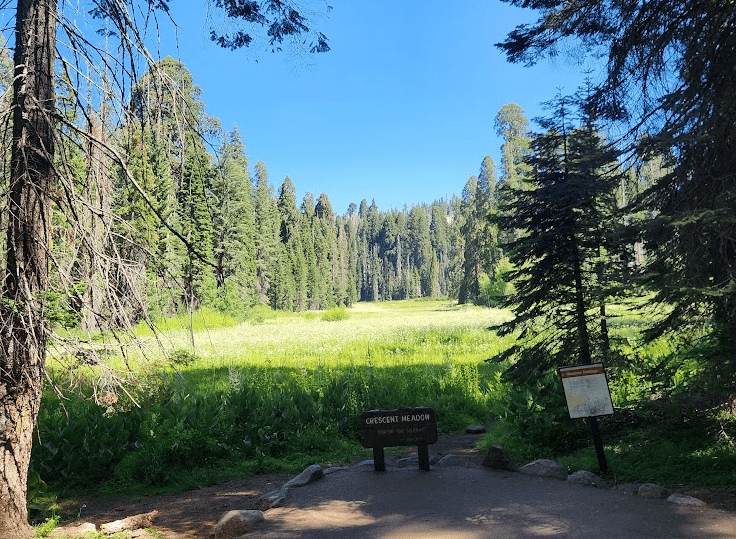
Last, we hiked a short 1.8-mile loop trail called “High Sierra, Tharp’s Log, and Crescent Meadow Loop”. It took us around Crescent Meadow, which John Muir called the “Gem of the Sierras”. We tended to agree. This felt to us like a higher-elevation Zumwalt Meadow from Kings Canyon.
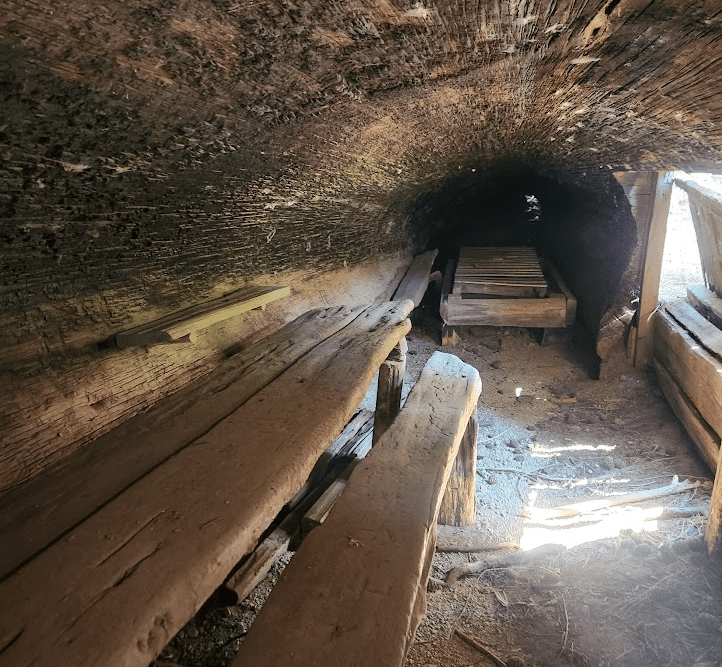
The trail took us to Tharp’s Log, where a man once lived in a hollowed-out tree.
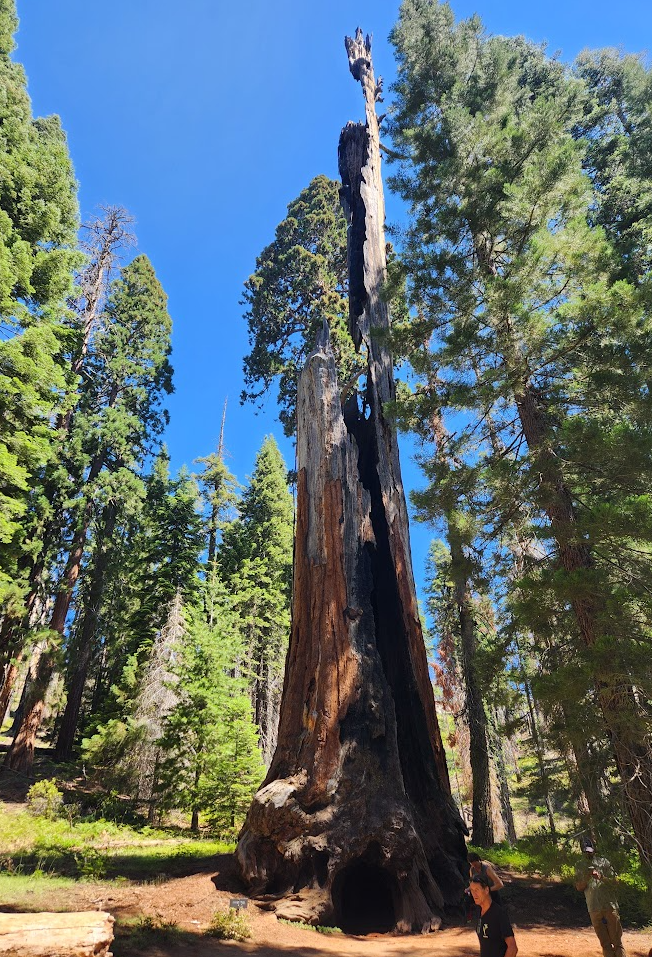
We investigated the Chimney Tree, a dead sequoia which was hollowed out like a chimney.
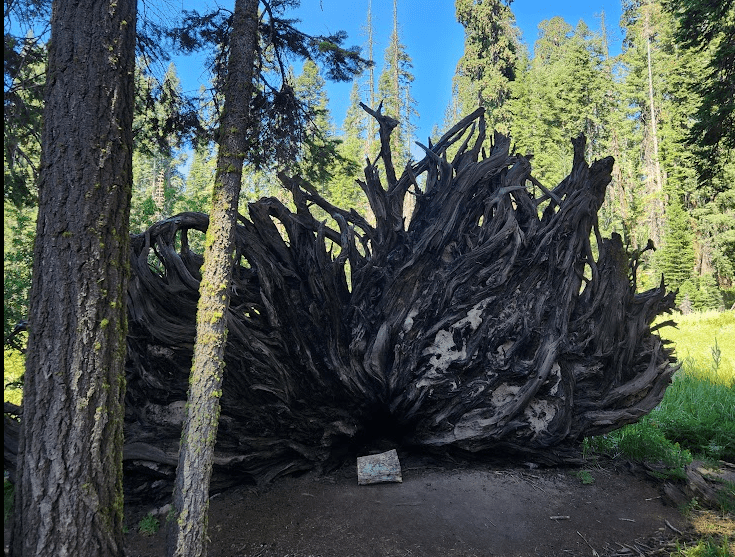
We saw a tipped sequoia on our way back to the car, which reminded us of the cypress trees back in Florida that get pushed over in hurricanes.
Crystal Cave
Back at the car, we drove down to Crystal Cave in time for our tour.
There is a steep hike from the parking lot to entrance of Crystal Cave. It took several minutes to walk, and we saw some people struggling to make it. If you are mobility-impaired, this is not the cave tour for you.
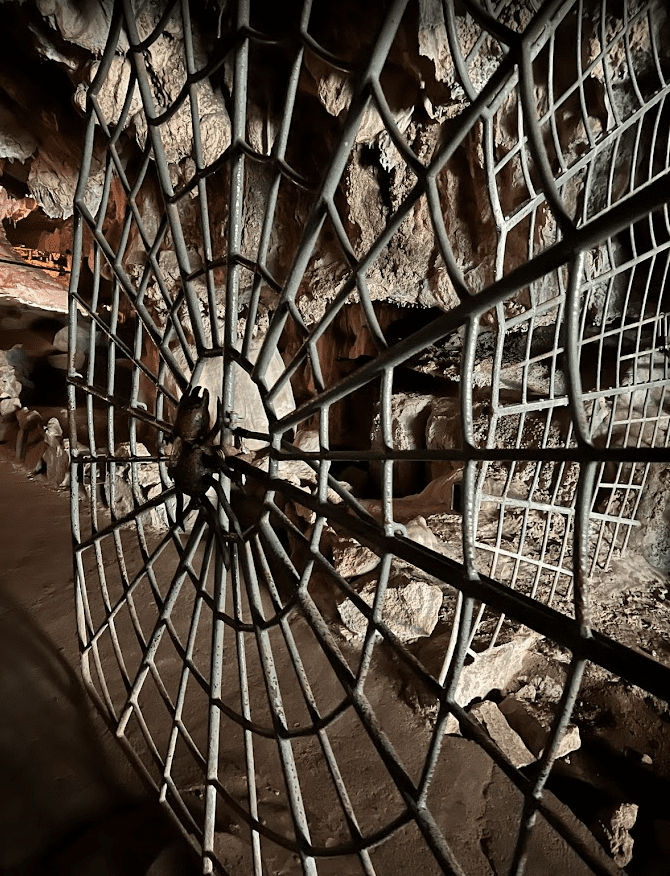
The entrance to Crystal Cave was shaped like a spider web with holes in it, and we are told that this is to allow bats to freely move through while keeping people out.
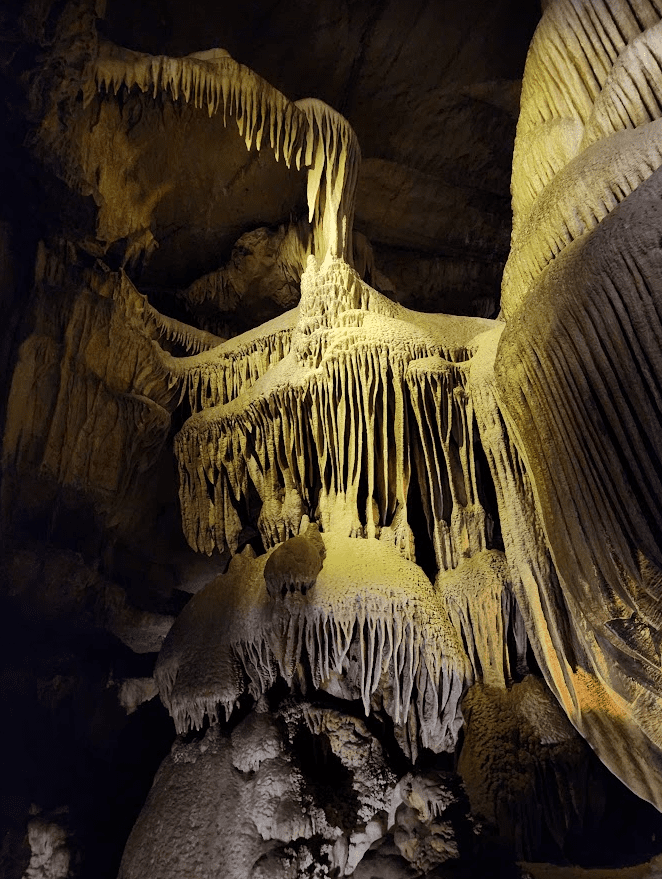
Crystal Cave is so neat because of the streams and water that run through it. The formations were large in this cave.
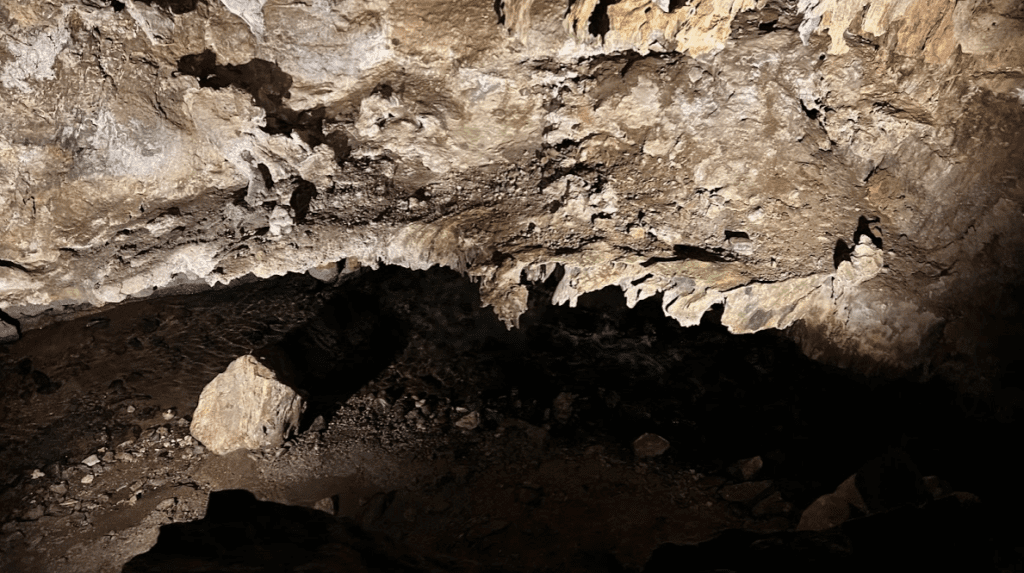
The big room of this cave was spacious, and we even got to see another slice of cave bacon!
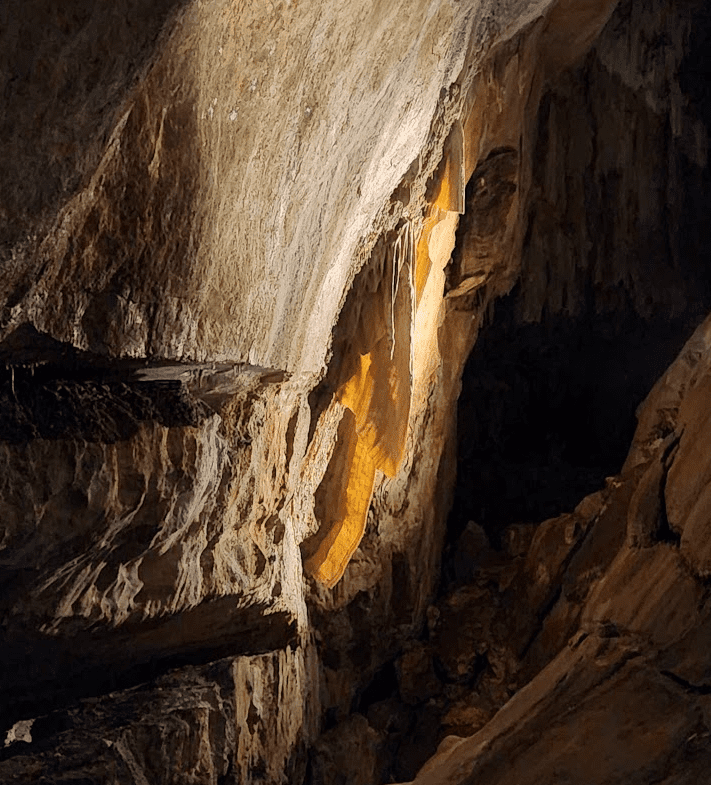
Our tour concluded and we hiked back on the steep trail to our car, passing a small waterfall.
Moro Rock
After our cave tour, we drove back to the Giant Forest Museum parking area. The Moro Rock Trail is very short, but it gains 183 feet in elevation.
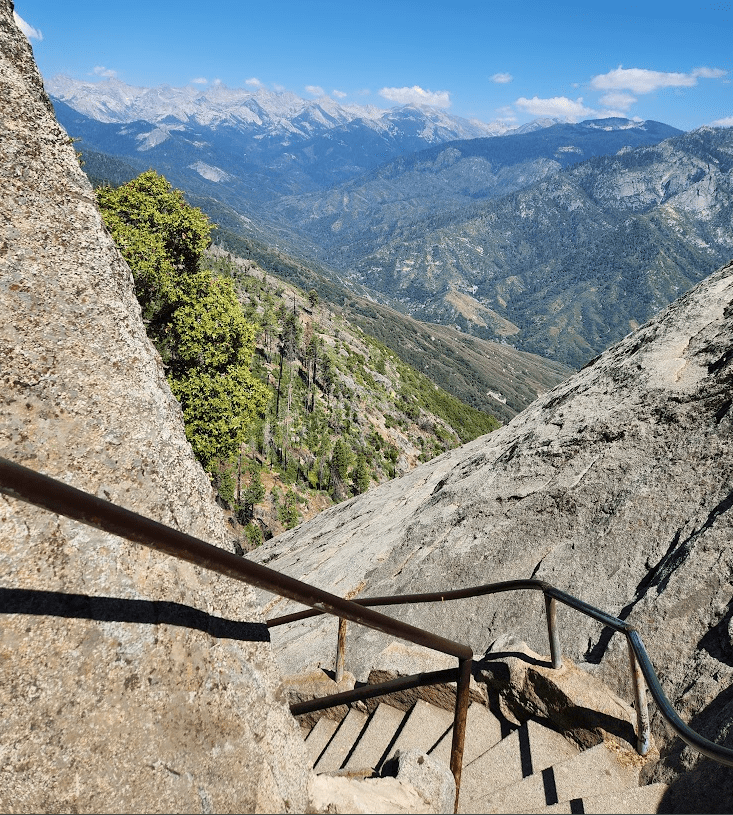
We saw many, many people on Moro Rock, but the trail was easy enough with stairs and guard rails chiseled into the rock. Most people were courteous and let you pass or take turns when traveling in opposite directions.
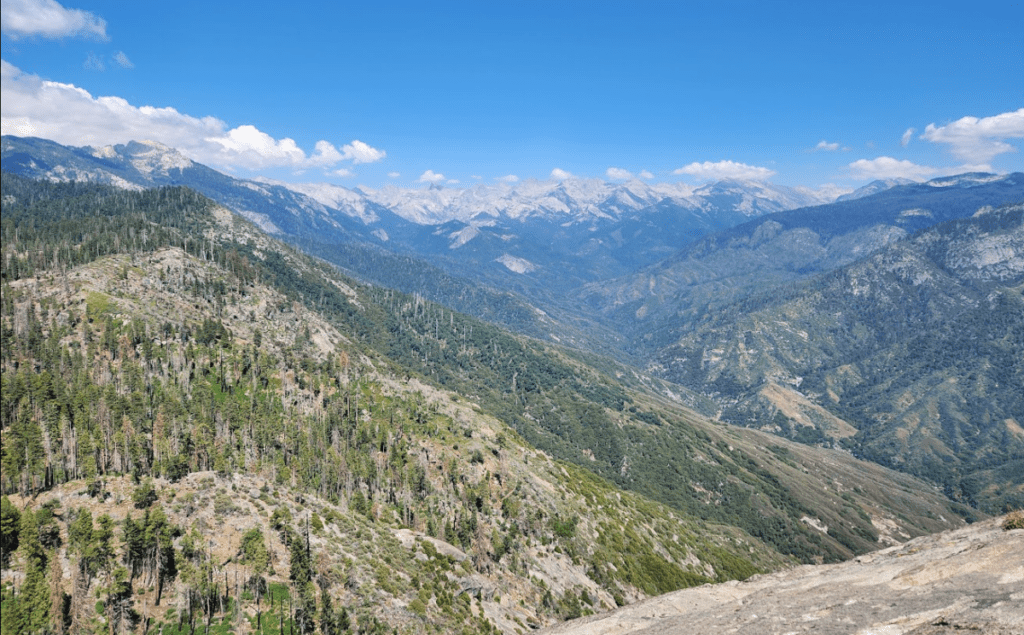
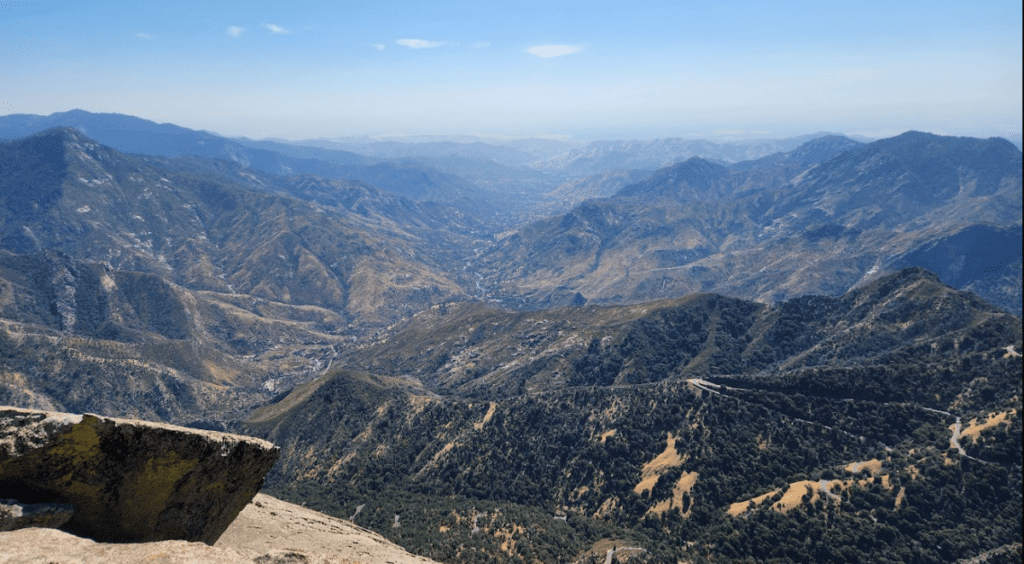
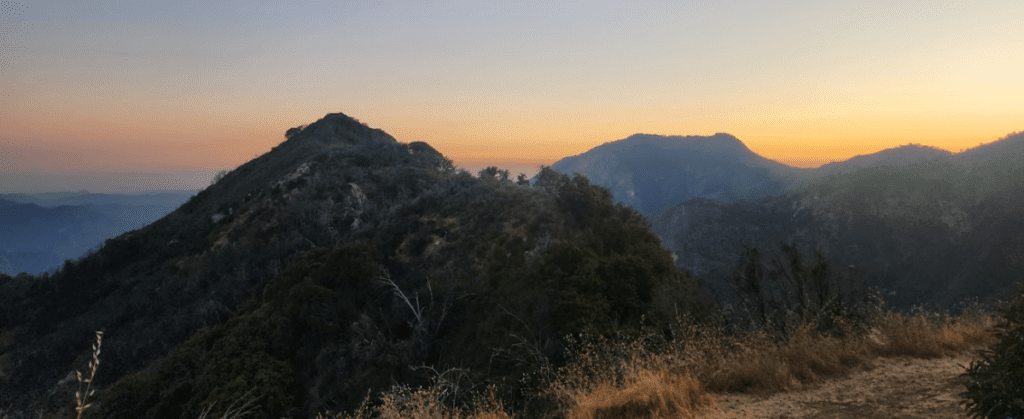
When we reached the top of Moro Rock, we found panoramic views of the Sierra Nevada mountains. We stopped at the top for around 15 minutes, taking in the views of giant trees, mountains that reached the clouds, and even the General’s Highway.
The Congress Trail
We finished our day by hiking the Congress Trail, which was mostly paved. There were multiple loops available, and the one we took was around 4 miles.
The air was cool at the high elevation of Sequoia National Park, especially in the shade of the massive sequoias.
Between this post and Kings Canyon National Park, I have emphasized how massive the trees are, but the Congress Trail shows the absolute largest in the world. The Giant Forest is large, and seems to go on and on. As far as you want to hike, you will be looking up at sequoias.
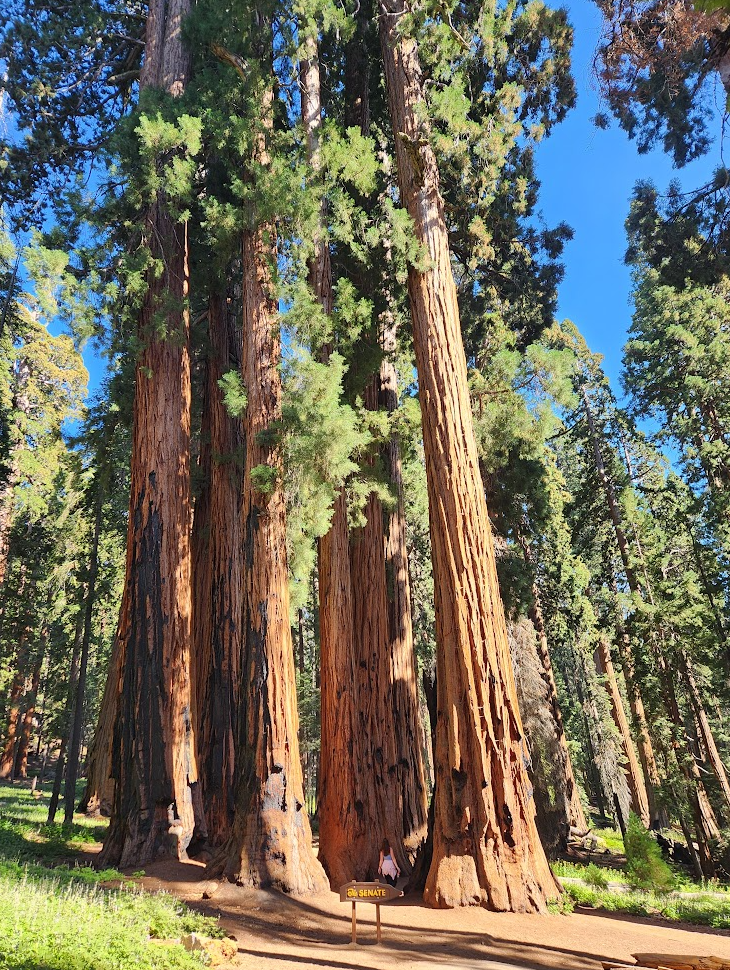
Most of the largest trees are named, and there are a few sections of extraordinary specimens named “The House” and “The Senate”.
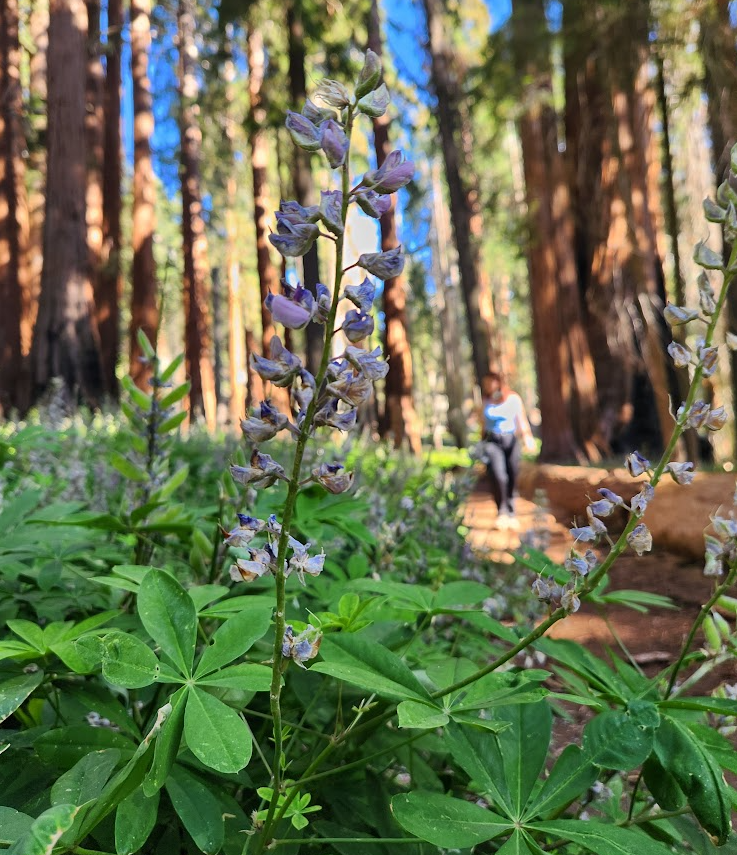
Lupines were in full bloom during our July visit, and there was something special about hiking through the blooming lupines and sequoias in the same grove.
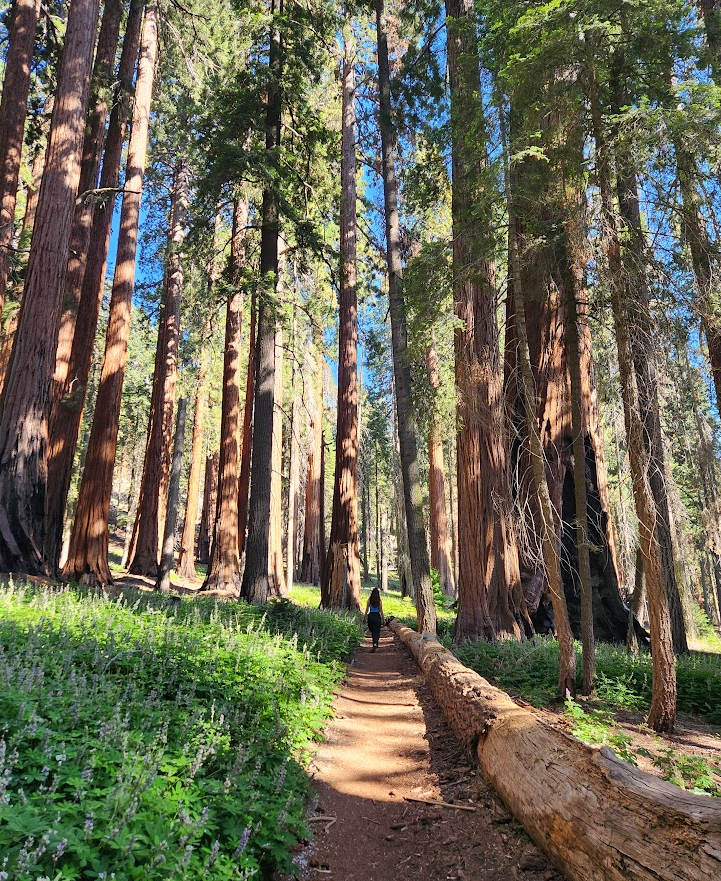
The trail took us through a hole in a smaller tree that reminded us of the one we drove through earlier that day.
We passed a small stream full of small trout and saw a display of a cross-section of a sequoia tree. The tree was so old that you could spend the afternoon counting growth rings if you wanted to.
A tree maintenance crew was out, dropping large standing dead trees. We appreciated this as it keeps the park safer for hiking.
Our final stop on the Congress Trail was the General Sherman Tree, the largest tree in the world! While not the tallest (only 285 feet tall) or the widest (only 103 feet around), the General Sherman Tree has the highest volume.
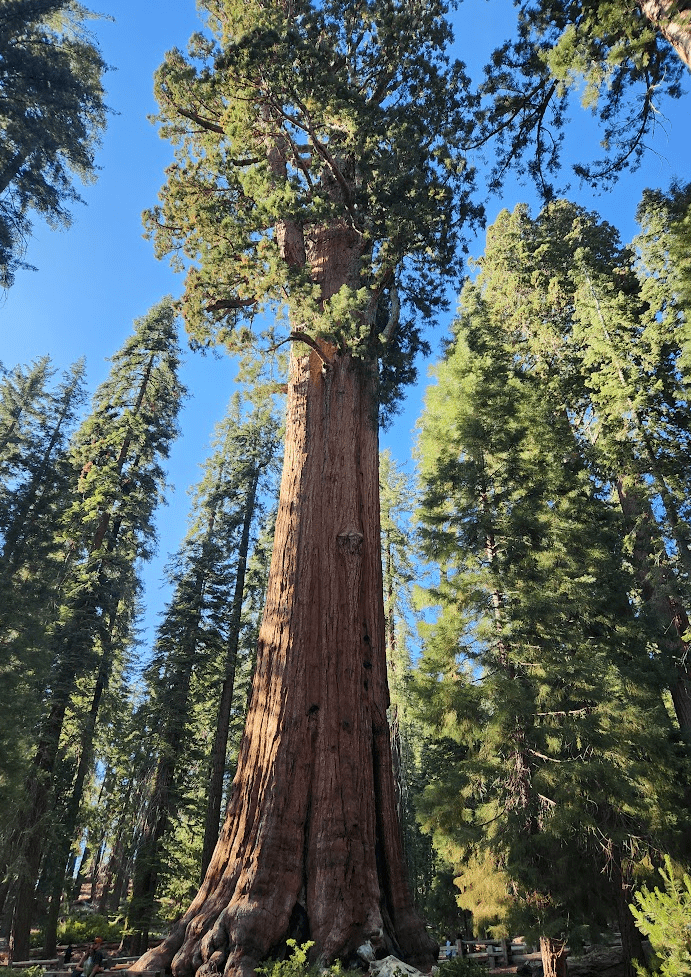
This massive tree also had a massive line, but of course we waited and had our picture taken with it.
We got ice cream at the large store/visitor center, then drove back down the General’s Highway as the sun set.
What We Would Do Differently
On our next trip to Sequoia National Park, we will make two key changes:
- Save up and stay in the Wuksachi Lodge
- Spend additional days here
If we stayed in the Wuksachi Lodge, we could have enjoyed dining in the restaurant, as well as a stargazing tour. We would not have had to drive up and down the General’s Highway, so we would have had more time to spend in the park.
Spending additional days at Sequoia would have allowed us to catch all the major sights and also done a high-elevation backcountry day hike. It would have been really neat to see this park from the top, as well as fish in alpine lakes.
Staying more days would also let us explore some quieter groves without as many tourists. We would have spent at least one day in the Mineral King unit.
Where To Eat Near Sequoia National Park
The best or only place to eat in Sequoia National Park is the Peaks Restaurant in the Wuksachi Lodge.
Make sure to pack a lunch, you will want to have a picnic looking at the giant sequoias.
There are other dinner options in Three Rivers, but they may close early in this gateway town. You will not want to drive down the General’s Highway to eat lunch, only having to drive back up. Three Rivers is where I would pick for a breakfast out.
Lodging Near Sequoia National Park
The absolute best place to stay for a Sequoia National Park trip is the Wuksachi Lodge, located inside the park. This will not be a cheap option.
Camping is available in the park but make sure to grab a reservation in advance.
Three Rivers has some hotels for a moderate price, this would be the best of both worlds, to save money while also staying relatively close to the park.
On our trip, we stayed in Tulare as it is relatively equidistant from our day trips. This was a good price, but it was kind of far away and also it was not somewhere you should walk around at night.
Tips For Visiting Sequoia National Park
- Use the park shuttle, parking can fill up especially on summer weekends
- Be prepared for the altitude, make sure you bring water and food and slow down if you feel lightheaded – the Giant Forest is around 6500 ft in elevation
- Watch for bears and store your food in bear boxes rather than your car
- Download offline maps ahead of time
- Fill up on gas before driving up to the park
- Book Crystal Cave Tours and camping reservations in advance
- Take your time exploring
- Plan for a multi-day visit if you would like to see Mineral King
We did not expect this to be so crowded after visiting Kings Canyon two days before. Sequoia National Park had easily 5x as many people.
When To Visit Sequoia National Park
Sequoia National Park is open year-round, but visitor services and road availability varies by season.
We recommend visiting in late May or late September to minimize crowds while seeing either wildflowers or fall colors.
Always check the Sequoia National Park website or call for the most up-to-date information.
What To Bring To Sequoia National Park
Sequoia is at high elevation and is relatively remote, though there are more facilities and people than at Kings Canyon. Plan to bring at least the following:
- Lots of water
- Snacks/picnic lunch
- Sunscreen
- Layered clothing
- Hiking shoes
- Offline maps
- Rain jacket
- First aid kit
- Bug spray
- Camera
- Battery backup for phone
- Full tank of gas
Does Sequoia National Park Have An Entrance Fee Or Require Reservations?
Yes, Sequoia charges an entrance fee of $35 per vehicle. This is good for 7 days and also grants access to Kings Canyon. You can skip the hassle by bringing your America the Beautiful Park Pass.
Reservations are not required for entry, but you should plan ahead and reserve your Crystal Cave tour and camping.
Itinerary For Sequoia National Park
We recommend that you visit for 1 full day to see the highlights, or 3+ days for a more immersive experience.
1-Day Itinerary:
- Drive up the General’s Highway
- Tour at Crystal Cave
- Visit the Giant Forest Museum
- Climb Moro Rock
- Tunnel Log and Crescent Meadow Hike
- Finish with the Congress Trail and General Sherman Tree for a lasting impression
3-Day Itinerary:
- Day 1: Follow the 1-Day Itinerary
- Day 2: Hike the 13.5-mile Alta Trail (the Pear Lake via Lakes, Hump, and Watchtower Trail would be just as good)
- Stay in the Wuksachi Lodge, eat dinner there
- Go for a stargazing tour
- Day 3: Drive to Mineral King
- Hike the 9.9-mile Monarch Lakes Trail and see the alpine lakes
If You Only Do One Thing
If your time is limited to one stop, you should see the General Sherman Tree, the largest living tree on planet Earth.
Summary
Sequoia National Park is one of the parks that lives up to the hype. This is a location that is so different from the California Valley that it is impossible to imagine. You have to see it to believe it.
Sequoia is a perfect pair to Kings Canyon, granting you iconic highlights as well as more remote scenery.
Other Sights Near Sequoia National Park
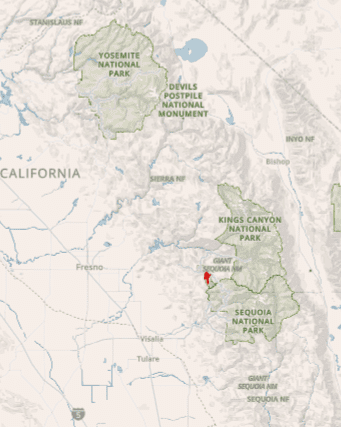
Kings Canyon National Park – A more remote complement to Sequoia. Come here to dodge crowds, see more huge trees, and hike in peaceful meadows.
Sequoia National Forest – Surrounds Sequoia and Kings Canyon National Park and contains the Giant Sequoia National Monument, home to sights like Boyden Cavern, Hume Lake, and the Chicago Stump.
Cesar Chavez National Monument – This nearby NPS Site tells the story of Cesar Chavez and the farm worker movement. It includes a Visitor Center, Memorial Garden, and the home of Cezar Chavez.
Yosemite National Park – Iconic scenery, hikes, wildlife, and waterfalls. This top-10 National Park is also one of the 7 Natural Wonders of North America.
Devils Postpile National Monument – An unusual rock formation of columnar basalt, with a fun hike and huge waterfall.
Leave a Reply