
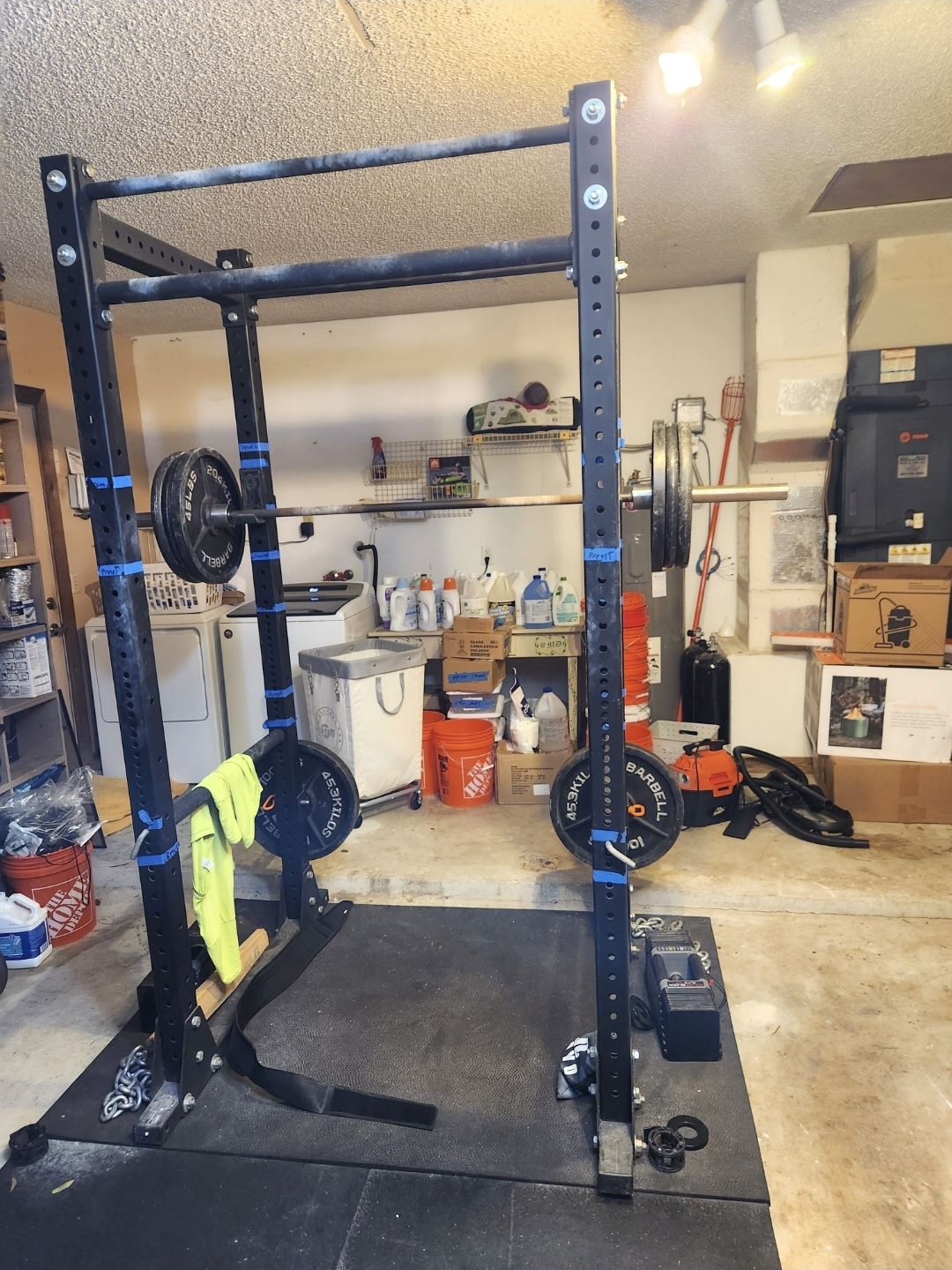
While we are already almost a month into the year, it is not too late to share my fitness goals for 2026. If you are a New Year’s Resolutioner, the odds are that you have already deviated from the goals you set on January 1st. While deviation is the first step to failure, you should allow yourself grace. We will talk about that. You need to be adaptable to the circumstances of life, and fitness should be integrated with your life, not the sole purpose of it.
I am not a proponent of New Year’s Resolutions, as roughly 80% fail within the first two weeks. Instead, I am a believer in SMART (Specific, Measurable, Attainable, Realistic, and Time-Bound) goal setting. The beginning of the year is a great time to revise your goals, but you should be revising your goals quarterly and monthly anyways and working your actionable plans. This is part of the REFINE in Roam and Refine. Your annual goals should be derived from your lifetime goals and bucket list.
Consistent self-improvement is essential: if you are not getting better, you are getting worse.
I am a hybrid athlete, and by that I mean I both lift weights and run. I am not the strongest or the fastest person in the world, and I am mediocre at both sports. Physical fitness is important to both my hobbies and general preparedness for life. You owe it to yourself to become the best version of yourself that you can be. You owe it to your family. Repeatedly doing hard things, and being comfortable being uncomfortable, is transferable to your job and your interactions with the outside world. Ask yourself, if somebody is in shape, do you assume them to be more or less capable?
Strength Training
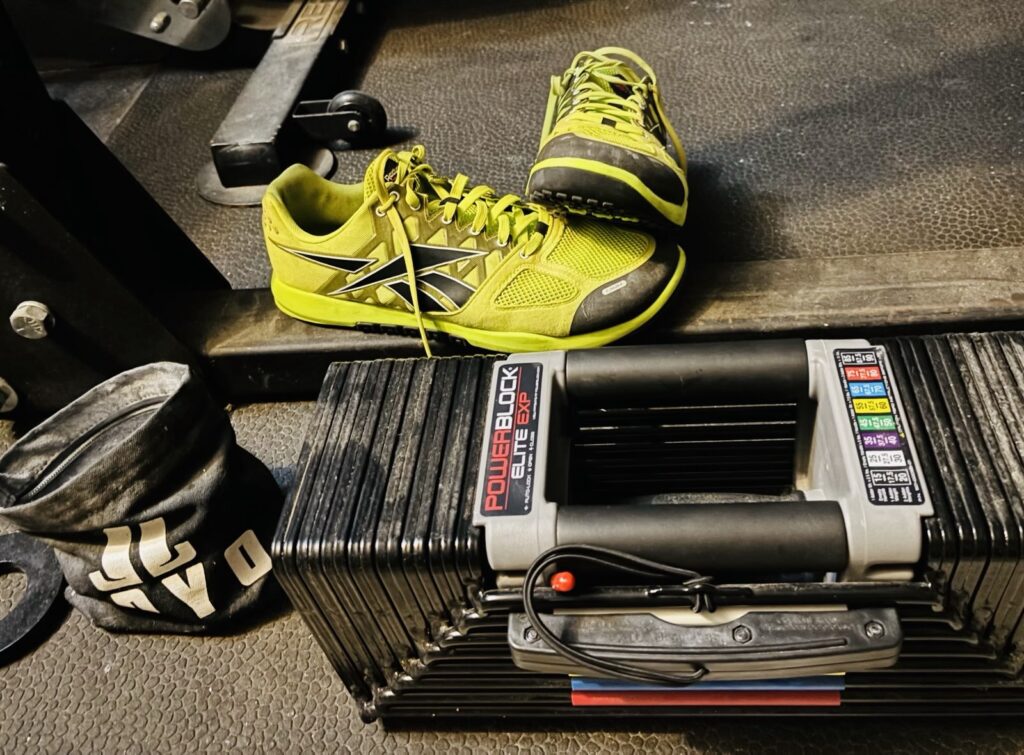
In lifting, I focus on compound movements that stimulate whole-body growth. I never plan to be a professional bodybuilder, so functional strength is more important to me than muscle growth. I have a goal to lose another 20 lbs this year and I am focusing on cardio to become a more balanced athlete, so my 1RM strength goals for 2026 are simple and achievable: 3/4/5 plates for bench, squat, and deadlift.
| Bench | Squat | Deadlift | |
| Lifetime Max | 280 | 320 | 445 |
| Current Goal | 315 | 405 | 495 |
I will be taking baby steps week by week and gradually increasing weight and volume. I find that the most sustainable way to improve is by taking small steps. Here is a list of variables you can tweak between workouts that will result in you becoming stronger:
- Increasing the weight lifted
- Improving your form
- Decreasing the time between sets
- Increasing the number of sets
- Increasing the number of reps
- Improving recovery by getting better sleep
- Improving recovery by getting better nutrition
- Adding exercises to routine (USE CAUTION)
Here is a real life example of what this can like in practice, using my actual workouts from this week and my plan for next week:
| This week | Next week | |
| Deadlift | 405 1×4 | 405 1×5 |
| Squat, heavy | 320 1×5 | 320 1×5 with better form |
| Bench | 235 5×5 | 235 5×5 with less rest time between sets |
| Squat, volume | 235 3×10 | 235 4×10 |
Not sexy, I know. You are thinking that is a small, almost unnoticeable improvement. But here is the thing. I do this every week. Every week I try to get better. You can do the same. If you are sick or out of town the past week, repeat the same workout from the week before you left. It is healthy to take a week off or a deload week a few times a year.
In future blog posts, I will detail how to decompose your goals against a window of time and how I am doing that this year to meet my strength goals. In the meantime, here are some intermediate strength goals of mine:
- Squat to 315 3×5
- Deadlift to 405 1×5 (Almost there!)
- Bench to 275 3×5
Running
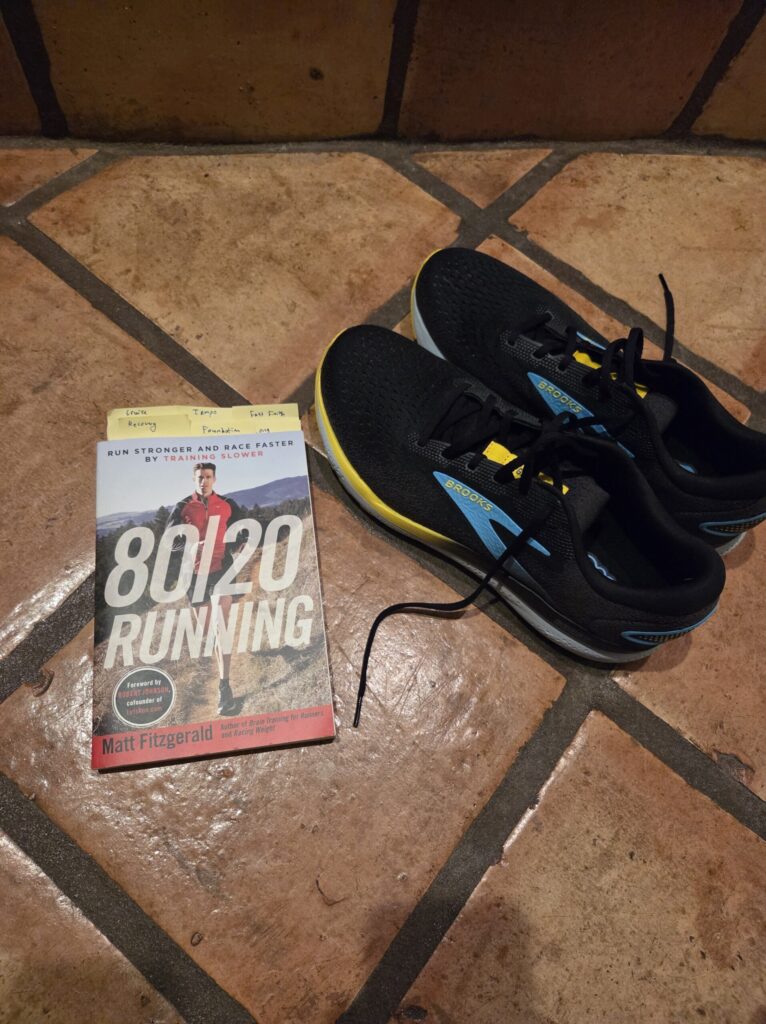
I have been a runner for about a year and a half and am still a beginner. My running journey started with couch to 5k, then bridge to 10k, then stagnated for a long time while I finished a degree. My current weekly mileage is around 20 miles a week, across 5-6 days.
My goal for running this year is to run a marathon. The farthest I have ever run to this point is 9 miles, which I did on my long run last Friday.
My first step to achieve the goal of running my first marathon is to finish the 80/20 half marathon training plan. It is a 6 day a week plan with short, fast, and long runs each week. Every 3rd week is a deload week, which I am grateful for as a beginner runner. I am scheduled to finish this training plan in March when I will do my first half marathon.
After finishing a half marathon, I will begin either the 80/20 plan for marathon training or the Hal Higdon plan. I am not sure which yet but expect a future post with my rationale after the half marathon.
Right now, my lifetime 5k PR time is 29 mins. Slow, but that’s what happens when you are a beginner who grew up as a fat kid. After the marathon, or perhaps on the way, I will get my 5k time to under 25 minutes and my 10k time to under an hour. This will happen in a dedicated block after the marathon training if I do not accomplish it along the way by increasing my weekly mileage and losing weight.
Weight Loss
I was always on the heavier side, and during Covid I gained an extraordinary amount of weight. My goal is to drop to 225 lbs this year. I may revise the goal when I hit it and shoot for a lower weight. I have a large frame, so it depends how I am feeling/looking when I get to 225lbs.
I will make a future post on my weight loss journey but as it stands right now, I am 246 lbs. Last year I gained weight to after my wedding to 260 lbs before I left a stressful work situation and transitioned to remote work and bought a house with my wife. So I am 14 lbs down in the past 3 or so months, with another 21 to go this year.
You can point out that the goals I set compete with each other, and you would be right. My approach to this problem is the following:
- Meal prep to keep nutrition on track and ensure a high protein diet
- Maintain intensity in the gym and keep pushing
- Be consistent in both running and lifting (stick to the plan)
- Focus on sleep and recovery
Losing weight makes lifting harder as you will lose some amount of muscle along with the fat. I am trying to minimize this by maintaining intensity in the gym and keeping my high protein diet of 1 gram per lb of body weight. If you keep lifting heavy, your body will be forced to make adaptations so that you do not crush yourself. This is how muscle is built, and retained even while on a caloric deficit. I kept my lifting goals moderate and realistic this year to accommodate the caloric deficit.
Luckily, losing weight makes running easier. I will have less weight to move which will make me more efficient. It will also make it easier to stay cool, which is important in central Florida.
Summary
This year, I will focus on running, while also improving on powerlifting. I will lose weight and continue refining to become a more balanced athlete. I want to be able to run a marathon, while also capable of lifting weights that bend the barbell. If you are not a lifter, start lifting. If you are not a runner, start running. I will make posts on how to begin both of these activities. You owe it to yourself to become an effective person and you owe it to your family to build a respectable physique.
Leave a Reply